Click image to open full size in new tab
Article Text
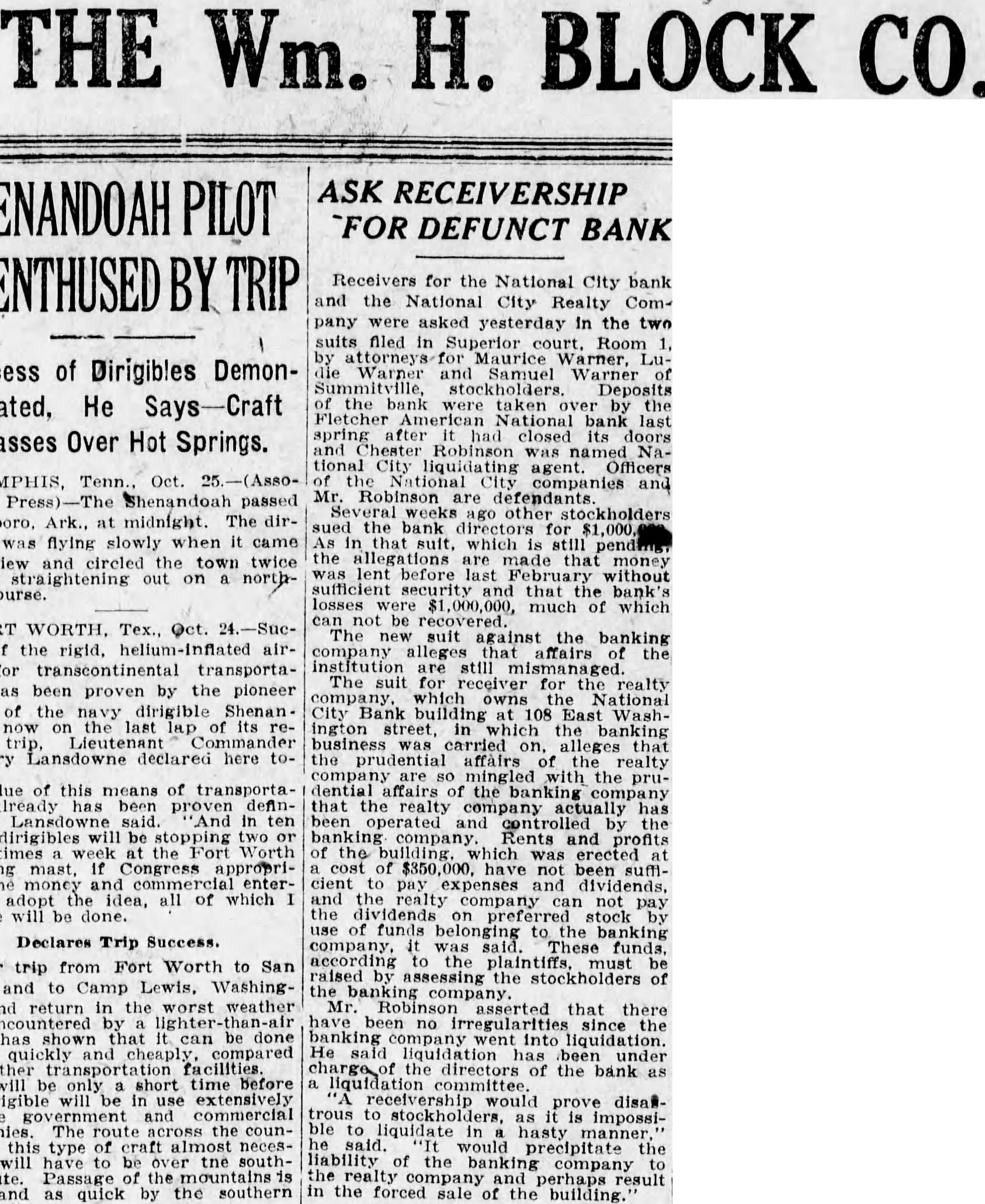
ASK RECEIVERSHIP FOR DEFUNCT BANK
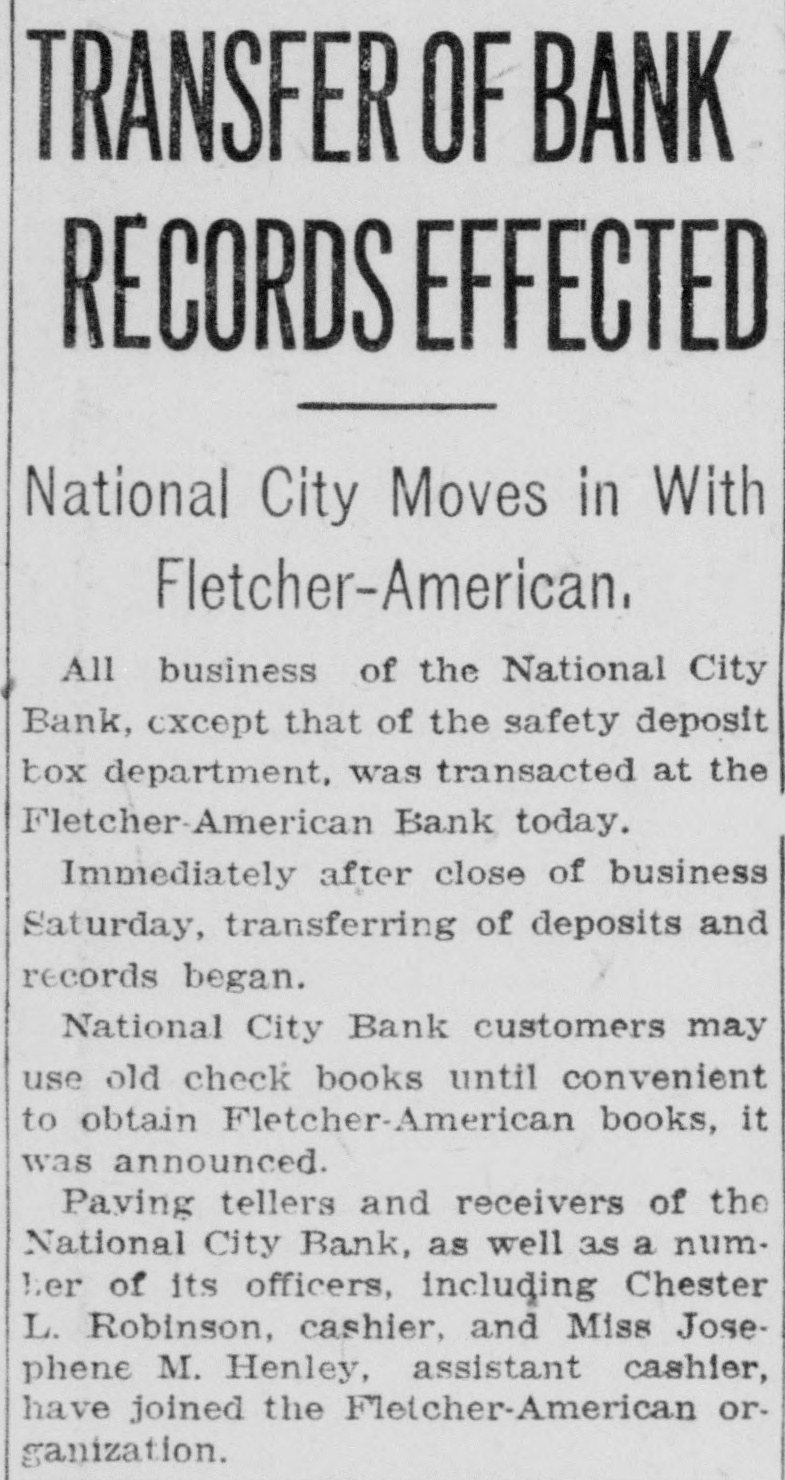
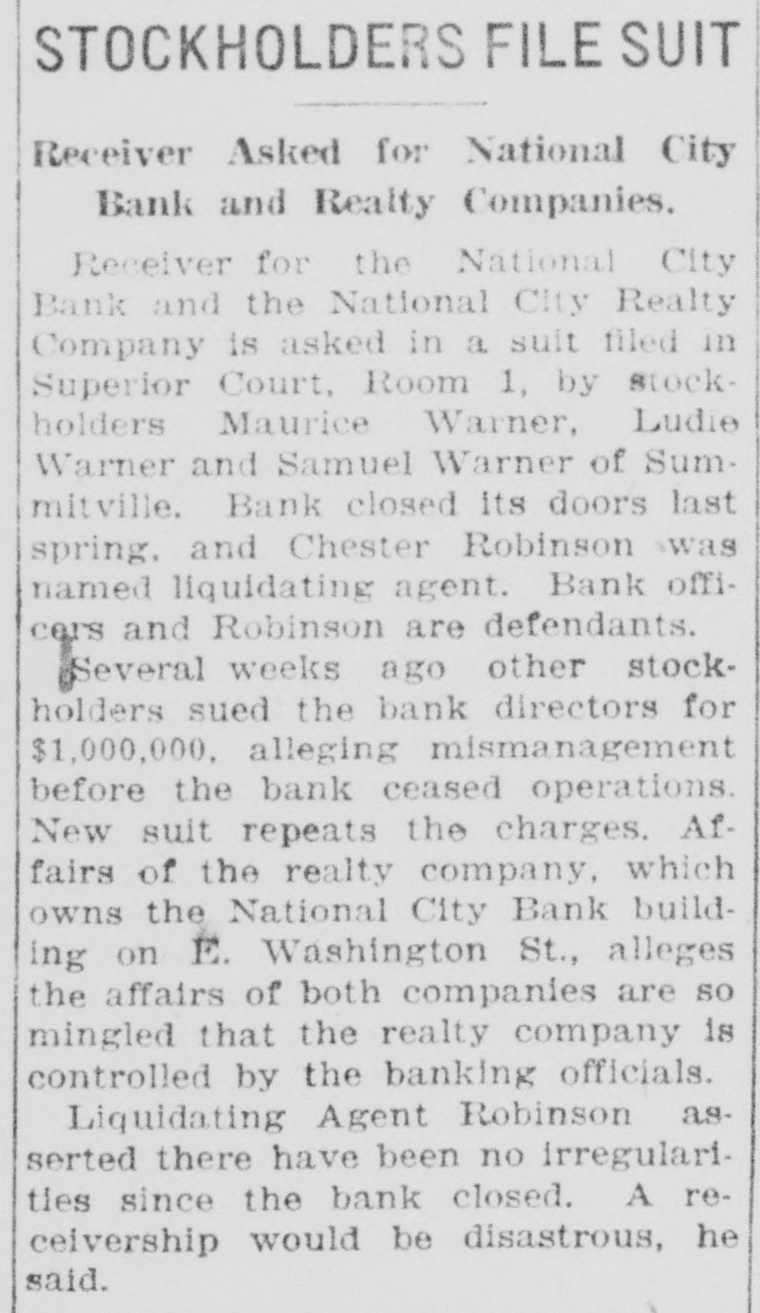
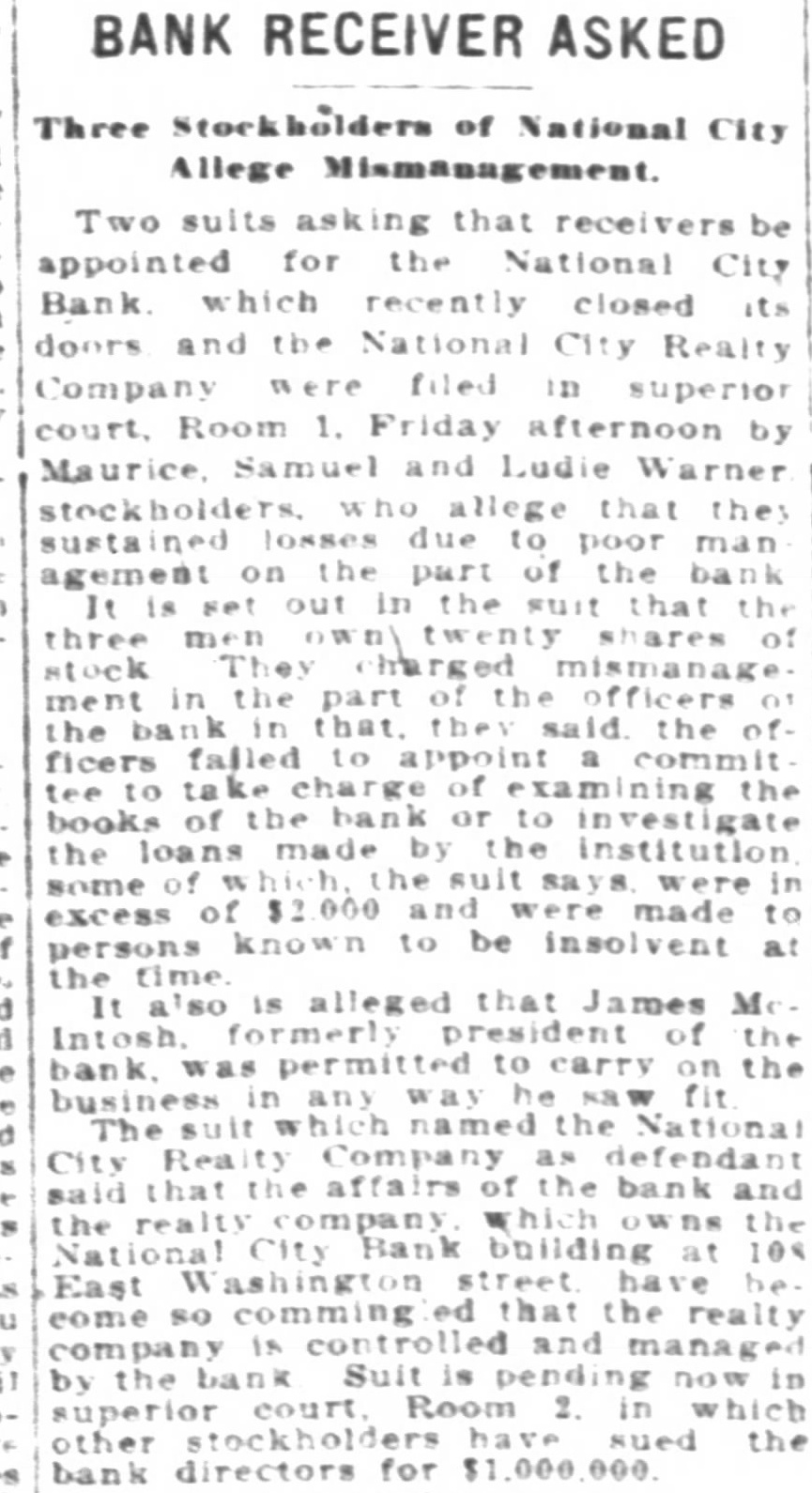
Receivers for the National City bank and the National City Realty Company were asked yesterday in the two suits filed in Superior court, Room 1, by attorneys for Maurice Warner, Ludie Warner and Samuel Warner of Summitville, stockholders. Deposits of the bank were taken over by the Fletcher American National bank last spring after it had closed its doors and Chester Robinson was named National City liquidating agent. Officers of the National City companies and Mr. Robinson are defendants.
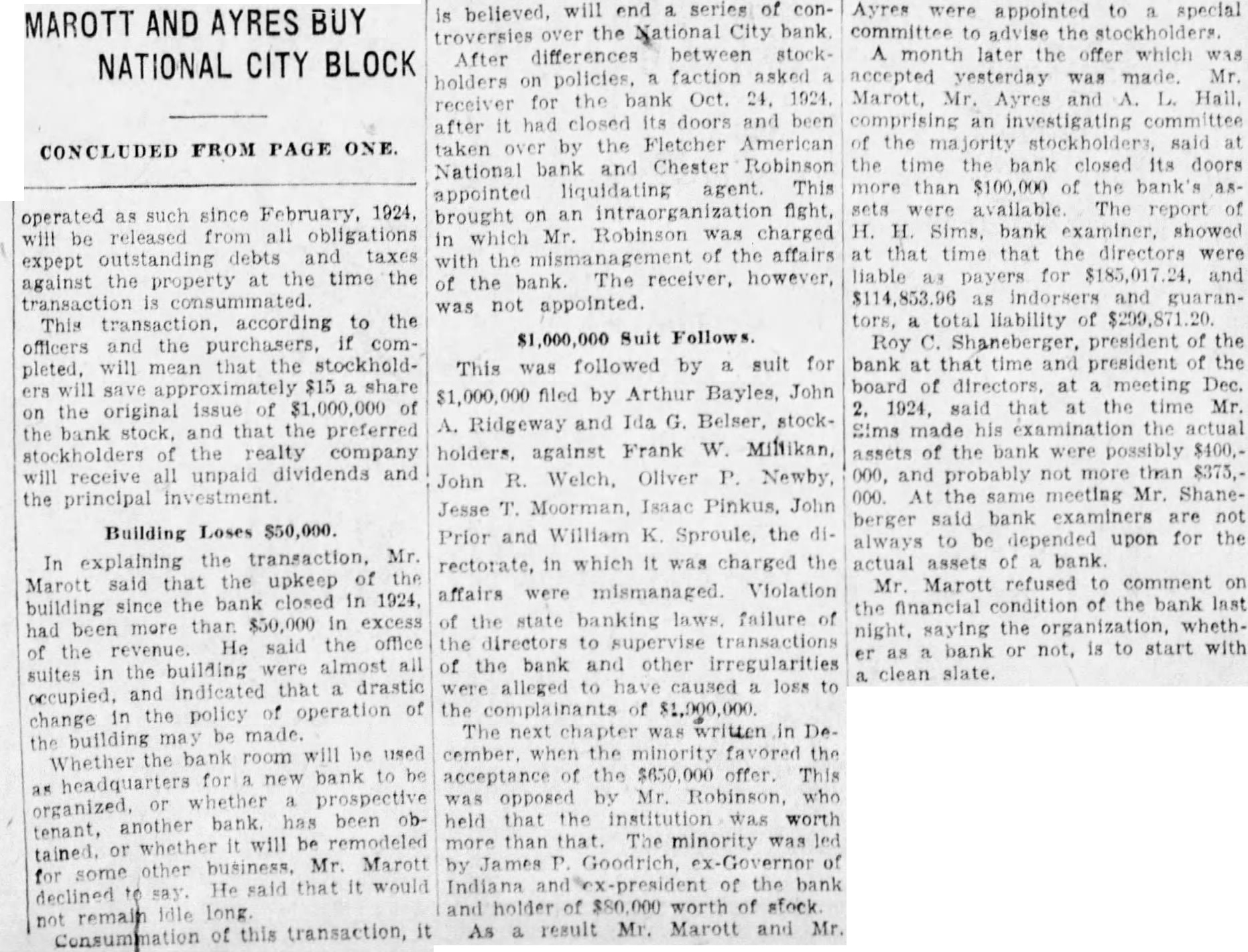
Several weeks ago other stockholders sued the bank directors for $1,000,000. As in that suit, which is still pending, the allegations are made that money was lent before last February without sufficient security and that the bank's losses were $1,000,000, much of which can not be recovered.
The new suit against the banking company alleges that affairs of the institution are still mismanaged.
The suit for receiver for the realty company, which owns the National City Bank building at 108 East Washington street, in which the banking business was carried on, alleges that the prudential affairs of the realty company are so mingled with the prudential affairs of the banking company that the realty company actually has been operated and controlled by the banking company. Rents and profits of the building, which was erected at a cost of $350,000, have not been sufficient to pay expenses and dividends, and the realty company can not pay the dividends on preferred stock by use of funds belonging to the banking company, it was said. These funds, according to the plaintiffs, must be raised by assessing the stockholders of the banking company.
Mr. Robinson asserted that there have been no irregularities since the banking company went into liquidation. He said liquidation has been under charge of the directors of the bank as a liquidation committee.
"A receivership would prove disastrous to stockholders, as it is impossible to liquidate in a hasty manner," he said. "It would precipitate the liability of the banking company to the realty company and perhaps result in the forced sale of the building."