Click image to open full size in new tab
Article Text
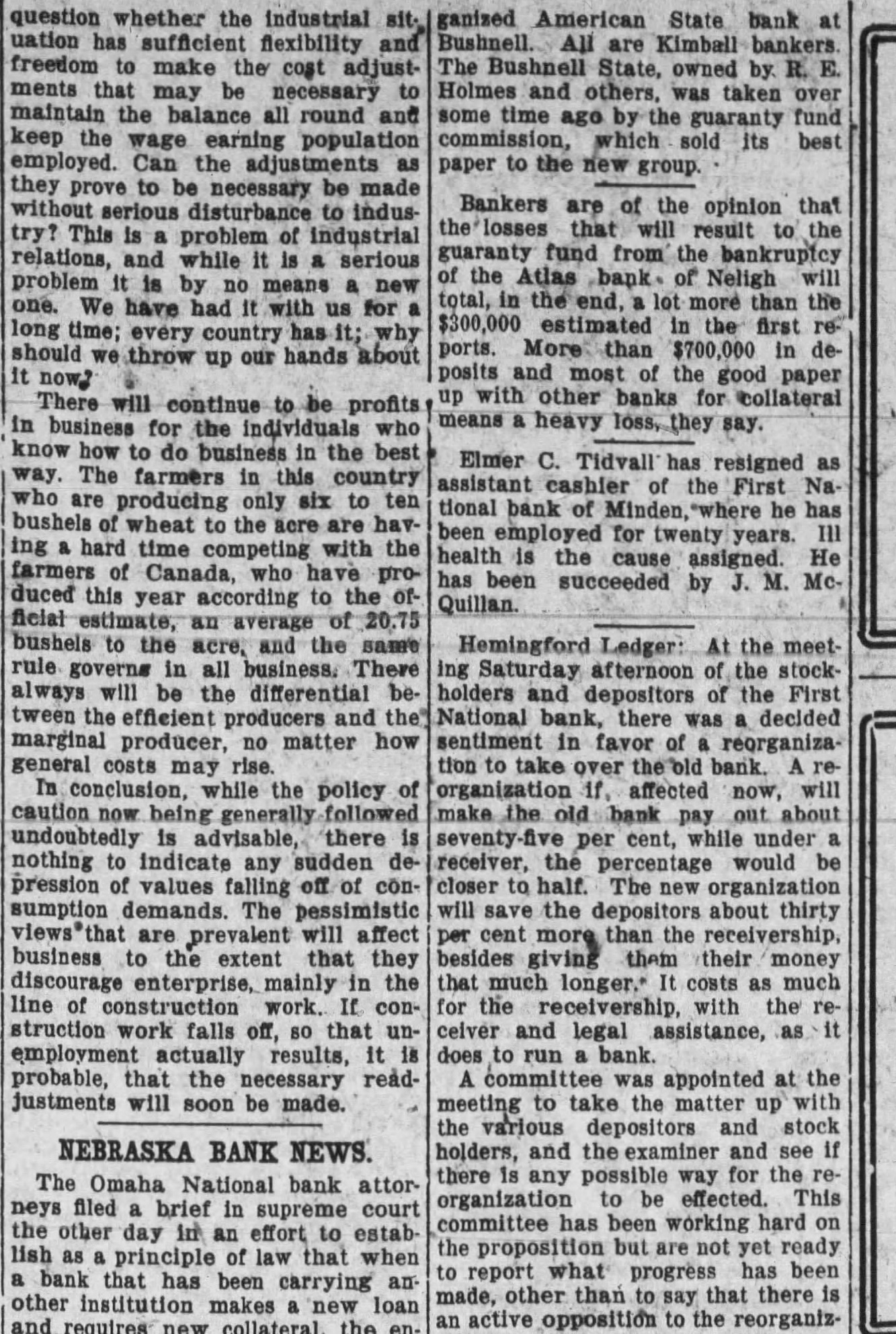
question whether the industrial situation has sufficient flexibility and freedom to make the cost adjustments that may be necessary to maintain the balance all round and keep the wage earning population employed. Can the adjustments as they prove to be necessary be made without serious disturbance to industry? This is a problem of industrial relations, and while it is a serious problem it is by no means a new one. We have had it with us for a long time; every country has it; why should we throw up our hands about it now?
There will continue to be profits in business for the individuals who know how to do business in the best way. The farmers in this country who are producing only six to ten bushels of wheat to the acre are having a hard time competing with the farmers of Canada, who have produced this year according to the official estimate, an average of 20.75 bushels to the acre, and the same rule governs in all business. There always will be the differential between the efficient producers and the marginal producer, no matter how general costs may rise.
In conclusion, while the policy of caution now being generally followed undoubtedly is advisable, there is nothing to indicate any sudden depression of values falling off of consumption demands. The pessimistic views that are prevalent will affect business to the extent that they discourage enterprise, mainly in the line of construction work. If construction work falls off, so that unemployment actually results, it is probable, that the necessary readjustments will soon be made.
NEBRASKA BANK NEWS.
The Omaha National bank attorneys filed a brief in supreme court the other day in an effort to establish as a principle of law that when a bank that has been carrying another institution makes a new loan and requires new collateral, the organized American State bank at Bushnell. All are Kimball bankers. The Bushnell State, owned by R. E. Holmes and others, was taken over some time ago by the guaranty fund commission, which sold its best paper to the new group.
Bankers are of the opinion that the losses that will result to the guaranty fund from the bankruptcy of the Atlas bank of Neligh will total, in the end, a lot more than the $300,000 estimated in the first reports. More than $700,000 in deposits and most of the good paper up with other banks for collateral means a heavy loss, they say.
Elmer C. Tidvall has resigned as assistant cashier of the First National bank of Minden, where he has been employed for twenty years. Ill health is the cause assigned. He has been succeeded by J. M. McQuillan.
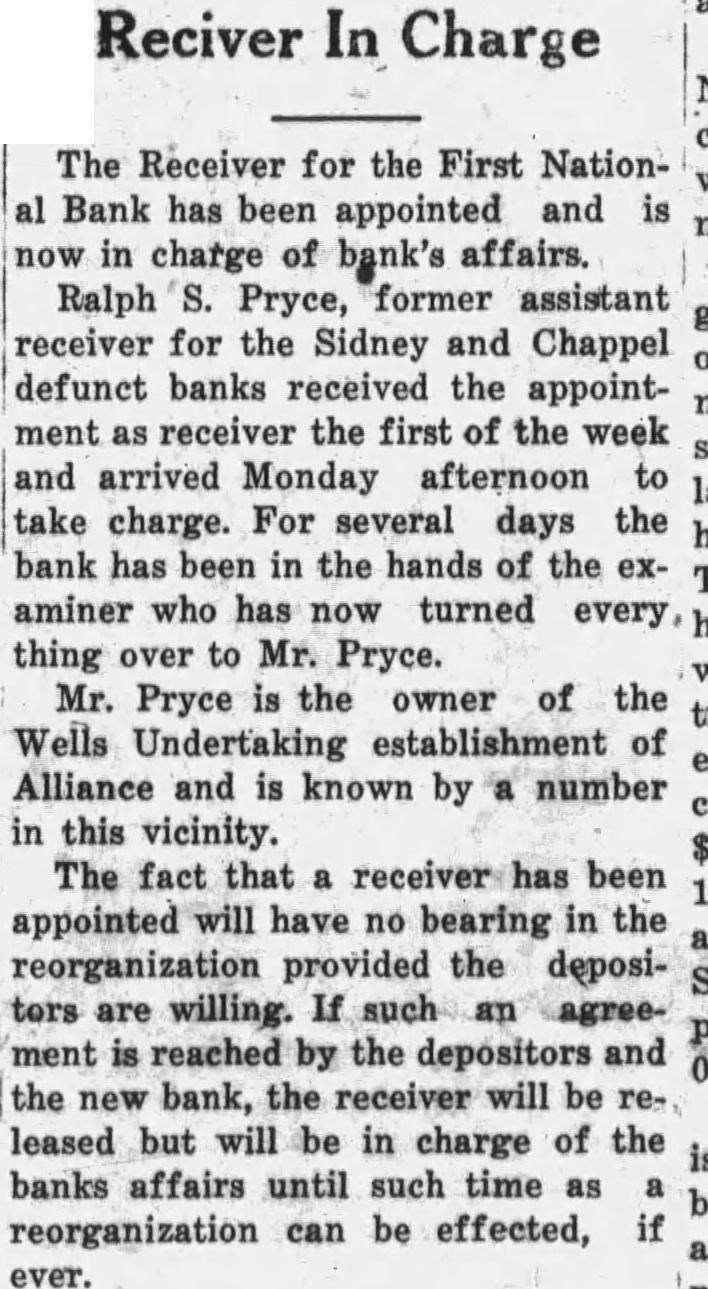
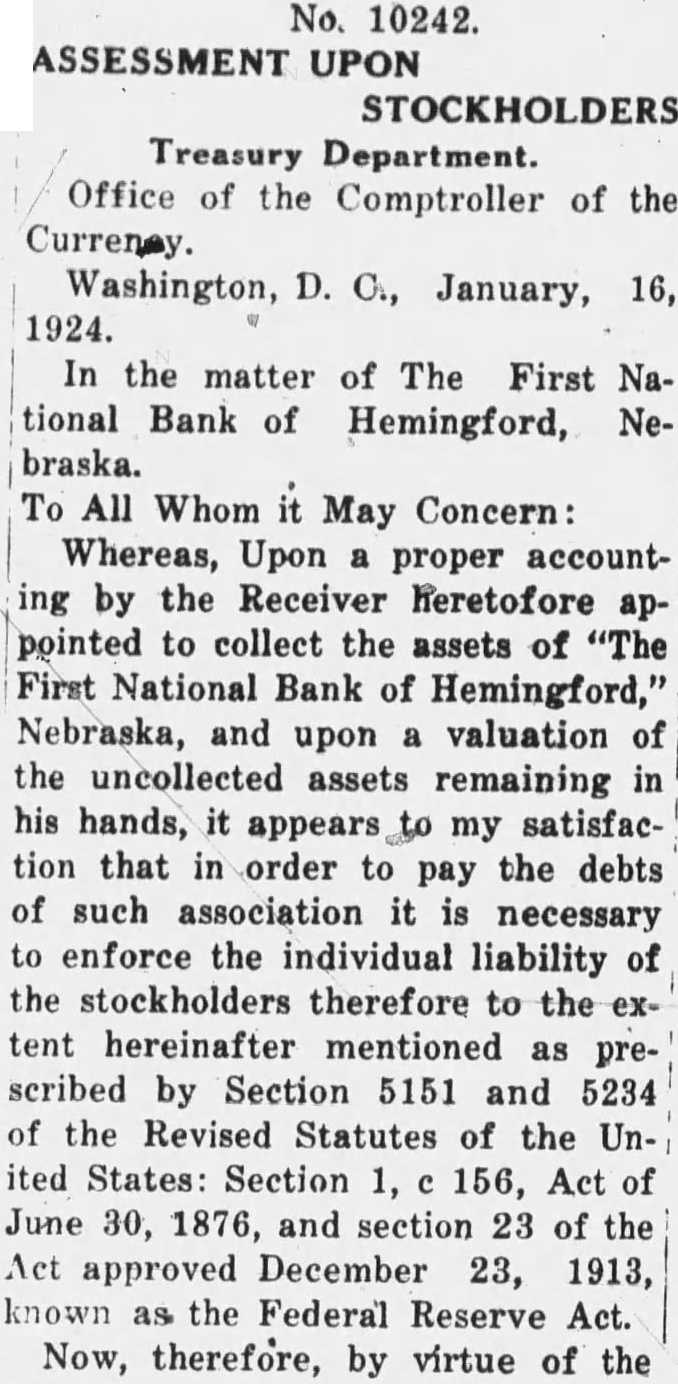
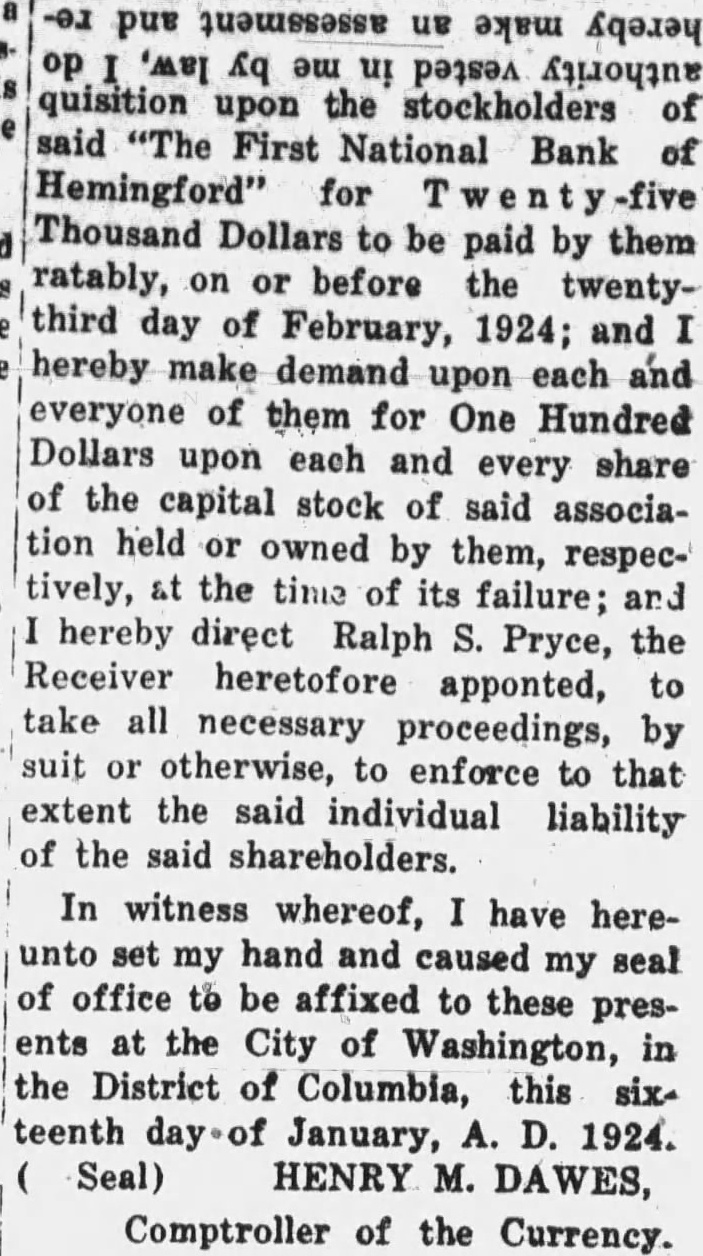
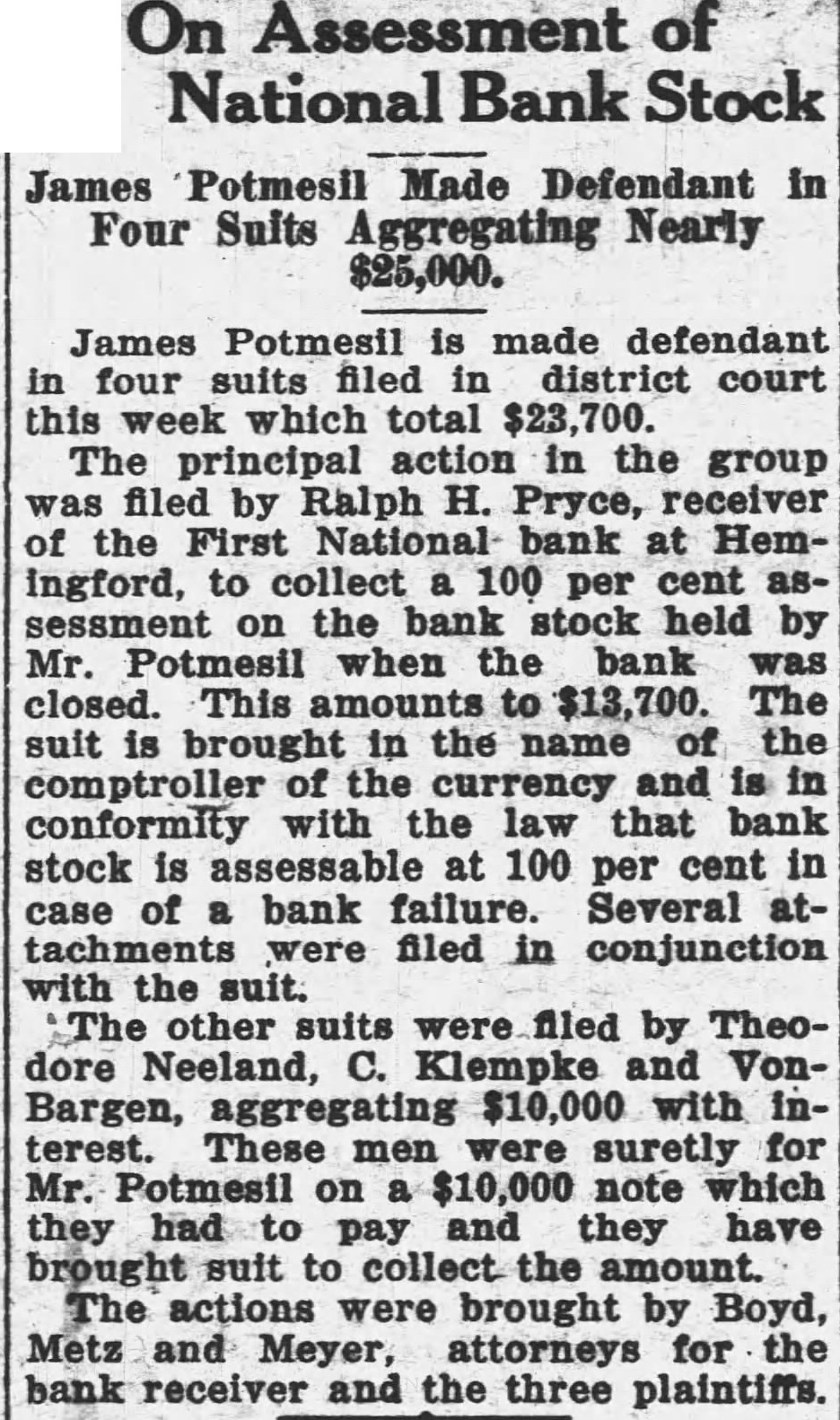
Hemingford Ledger: At the meeting Saturday afternoon of the stockholders and depositors of the First National bank, there was a decided sentiment in favor of a reorganization to take over the old bank. A reorganization if, affected now, will make the old bank pay out about seventy-five per cent, while under a receiver, the percentage would be closer to half. The new organization will save the depositors about thirty per cent more than the receivership, besides giving them their money that much longer. It costs as much for the receivership, with the receiver and legal assistance, as it does to run a bank.
A committee was appointed at the meeting to take the matter up with the various depositors and stockholders, and the examiner and see if there is any possible way for the reorganization to be effected. This committee has been working hard on the proposition but are not yet ready to report what progress has been made, other than to say that there is an active opposition to the reorganiz-