Article Text
PENSION VETO IS SUSTAINED
Harreld's Change Makes Poll One Less Than Necessary to Override President.
FIGHT WITH NEW BILL
Wadsworth Voted to Pass Bill but Changed on Issue of Upholding Coolidge—Minority Party Saves President From Defeat.
Washington.—By the margin of a single vote, President Coolidge's veto of the Bursum pension bill was sustained by the Senate. The roll call was 28 to 53; the last-minute switch of Senator Harreld, of Oklahoma, from the yea to the nay column saving the day for the President.
Senator Harreld first voted to override the veto, and Senators favoring the pension were all smiles, as with that vote the final count would have stood 27 to 54, an exact two-thirds of all the Senators voting.
Most of those regarded as Republican regulars failed to stand by the President. Only five of the Republican Senators who voted originally for the Bursum bill changed their votes to sustain the veto.
The five Republicans who voted for the bill originally and who changed to sustain the veto were Senators Cameron, of Arizona; Edge, of New Jersey; Harreld, of Oklahoma; Sterling, of South Dakota, and Wadsworth, of New York.
Senator Lodge, the Republican floor leader, was paired against sustaining the veto. The radical group of Republicans voted to a man against the President. Senator La Follette, their leader, is ill and was not present or paired.
Thirty-two of those who voted to override were Republicans. Of the nineteen Democrats opposing the veto, most of them were from Northern and Western States, although Senator Robinson, of Arkansas, the Democratic floor leader; Broussard, of Louisiana; Heflin, of Alabama, and Shields and McKellar, of Tennessee, joined with them.
It is generally considered that the effect of the vote in the Senate is to kill the measure for this session. According to the President's estimate of cost of the measure it would have taken $58,000,000 out of the Treasury.
Senator Neely, of West Virginia, who asserted that President Coolidge has become a lobbyist, and that he is using the "White House breakfast table" as a base from which to direct his "propaganda," supported Senator Bursum, while the defense of the President was made by Senators Dial, of South Carolina, Fletcher of Florida, and Wadsworth of New York.
Senator Dial commended the President for his courage, who, he said, deserved the support of Senators without regard to party affiliations. Senator Fletcher said he had originally voted for the bill, but that the message which accompanied the veto was unanswerable, and he had no choice but to switch.
"The country simply cannot stand this added expense," Senator Wadsworth said. "I should like to do something for the Spanish War Veterans, for they are deserving and have not been asking very much of us. I hope a bill to do justice to those men will be passed."
Senator Bursum, Republican, New Mexico, author of the measure, reintroduced it almost at once, but with important modifications. Among these were a reduction of $12 a month from the base pension which was provided in the original bill, bringing the rate to $60 for veterans of all wars, except the World War, and an average reduction of $5 a month in the rate proposed for widows of veterans.
Senator Bursum was said to have met objections of several senators when he provided in the amended bill for veterans of the Spanish-American and Indian wars to be placed on the same footing with other military pensioners.
The bill was referred to the pensions committee, but it was the opinion among Senate leaders that insufficient time remained in the present session for it to come to a vote by the regular parliamentary route.
WALL STREET ENDS BETS
Stock Exchange Forbids Members to Hold Wagers.
New York.—Wall Street's role as the nation's betting commissioner was curtailed by a ruling of the board of governors of the Stock Exchange forbidding members to hold or place election wagers for customers.
Millions of dollars have been bet through exchange members during close city, state and national campaigns of the past, and this year large wagering was expected.
KLAN IN BANK FAILURE
Drovers National of East St. Louis Suspends
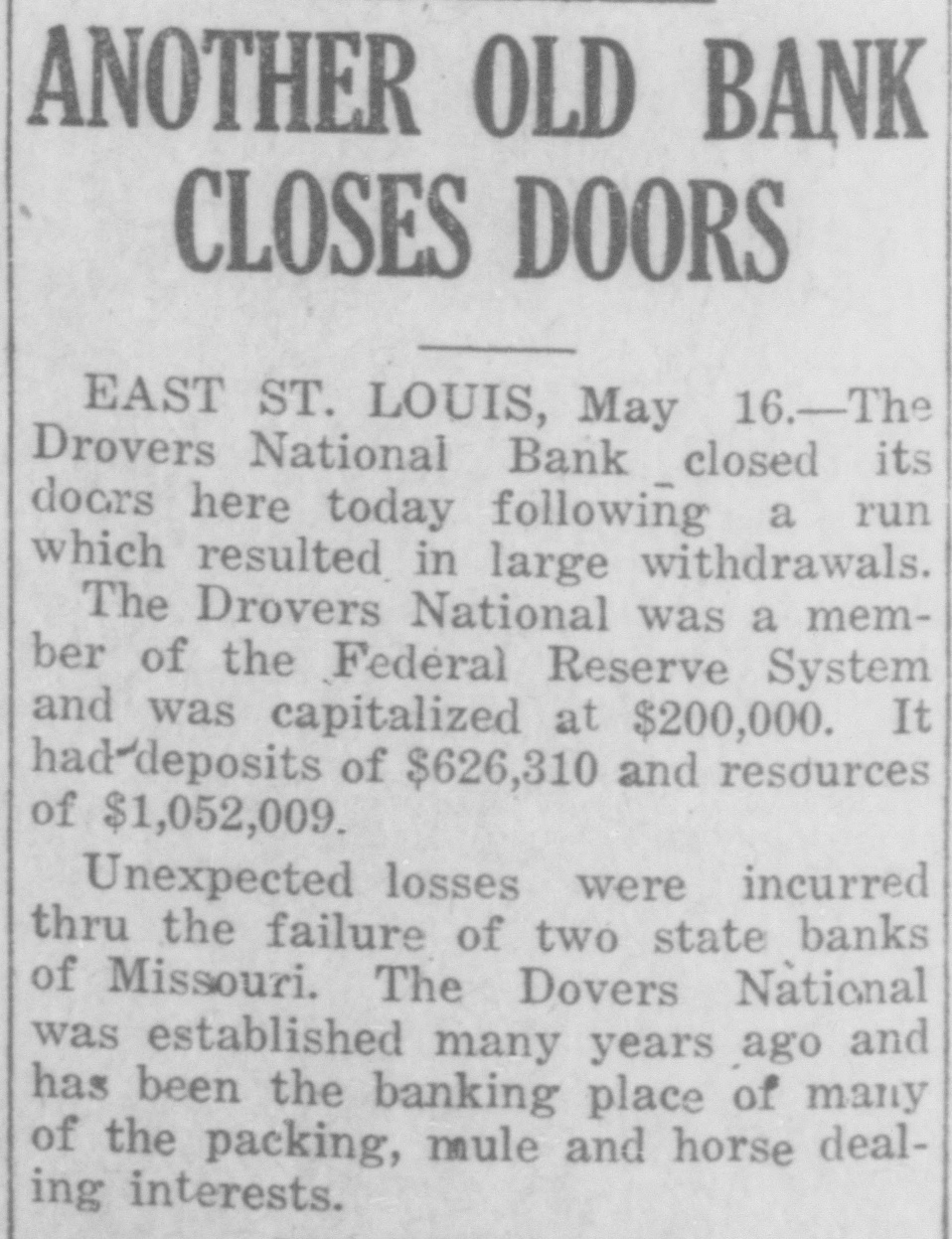
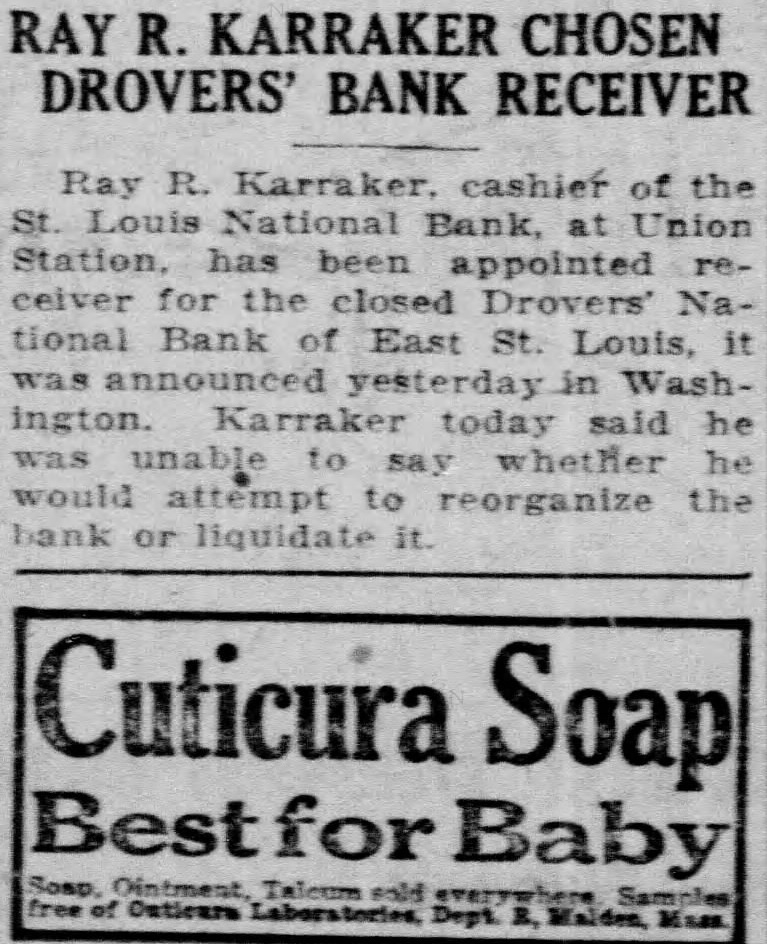
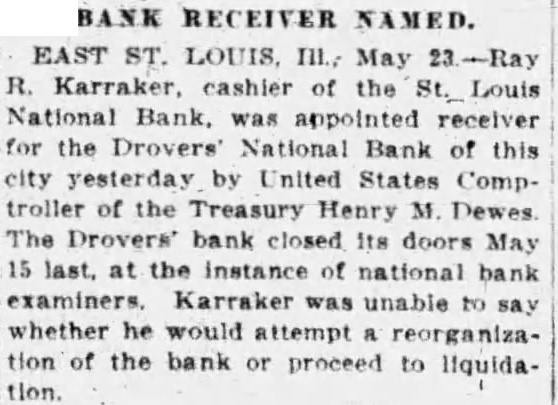
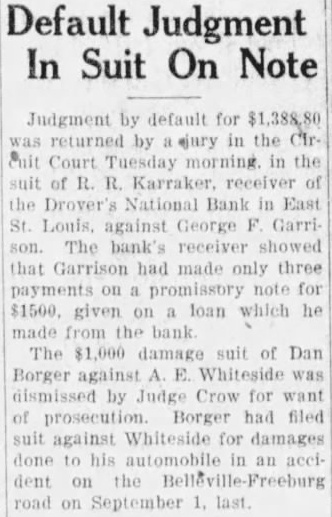
St. Louis.—The Drovers National Bank of East St. Louis, commonly known as the Ku-Klux Klan "bank," one of the largest financial institutions in Southern Illinois, was closed by order of its board of directors. A United States examiner was placed in charge.
Hatred, and intense feeling, inspired by the Klan, caused a quiet five-day run on the bank, resulting in closure.