Click image to open full size in new tab
Article Text
FAILURE OF B
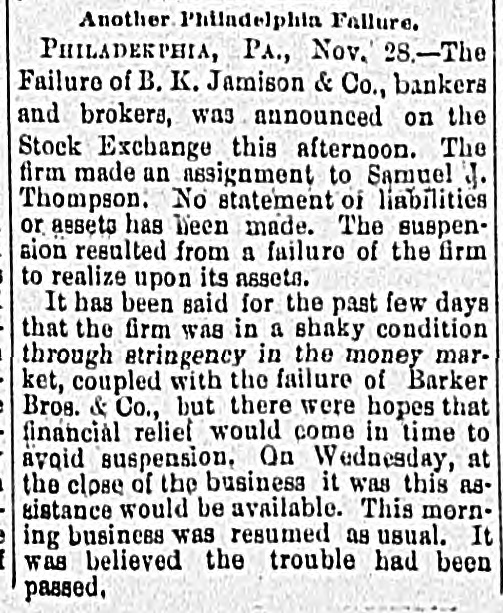
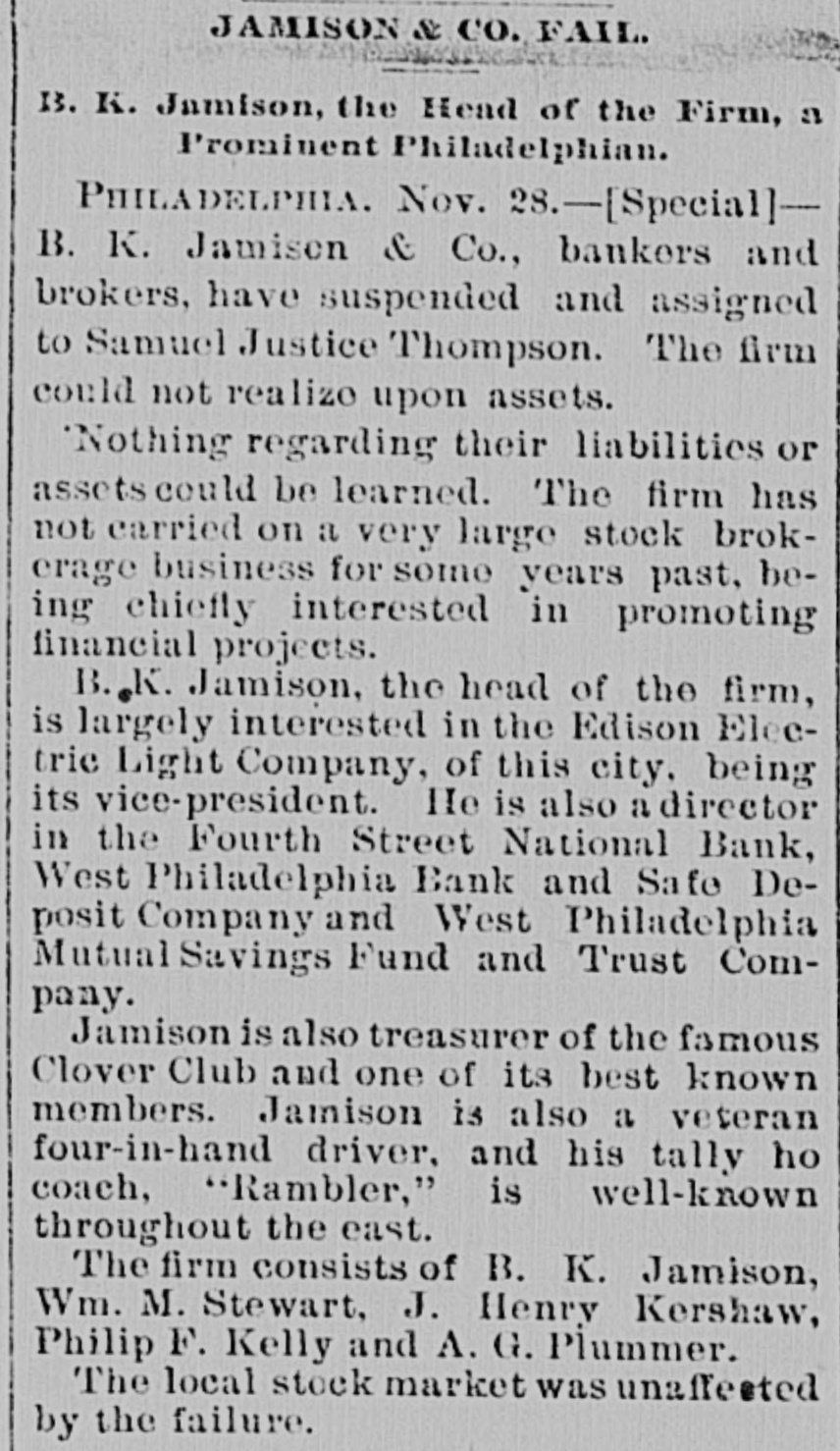
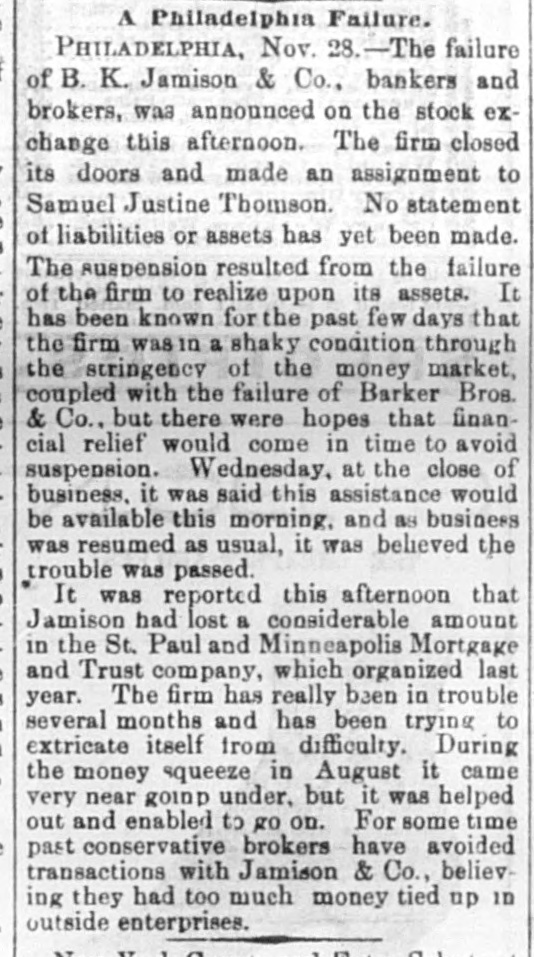
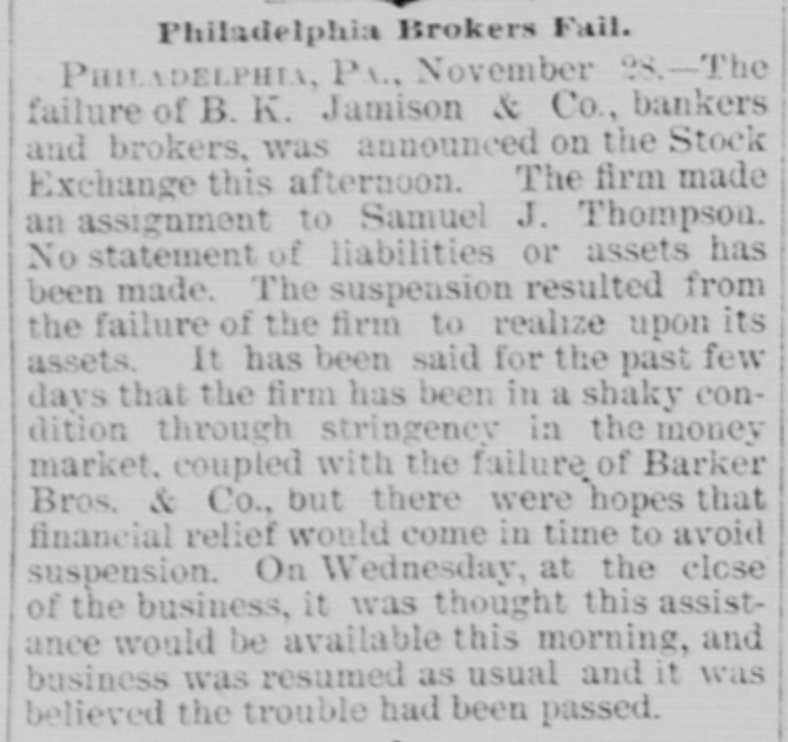
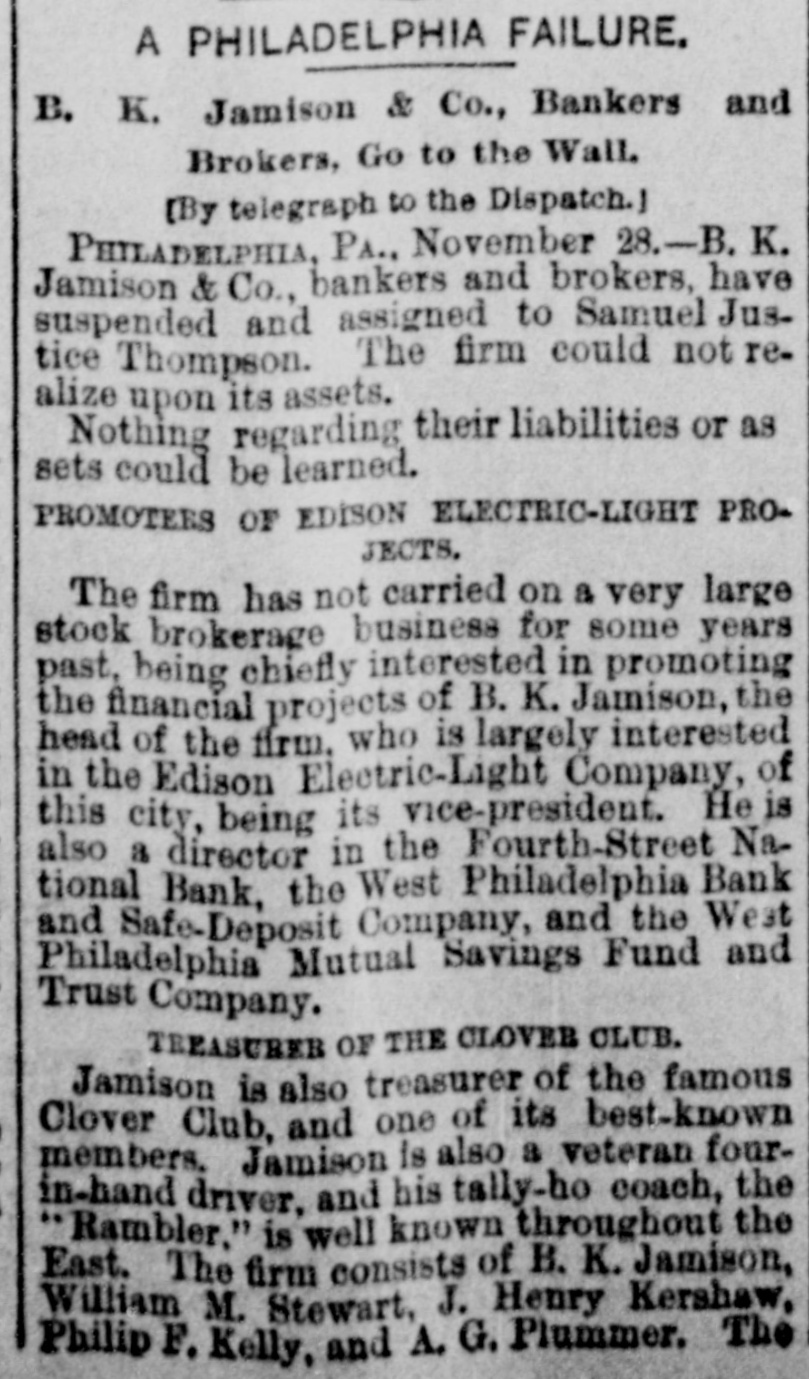
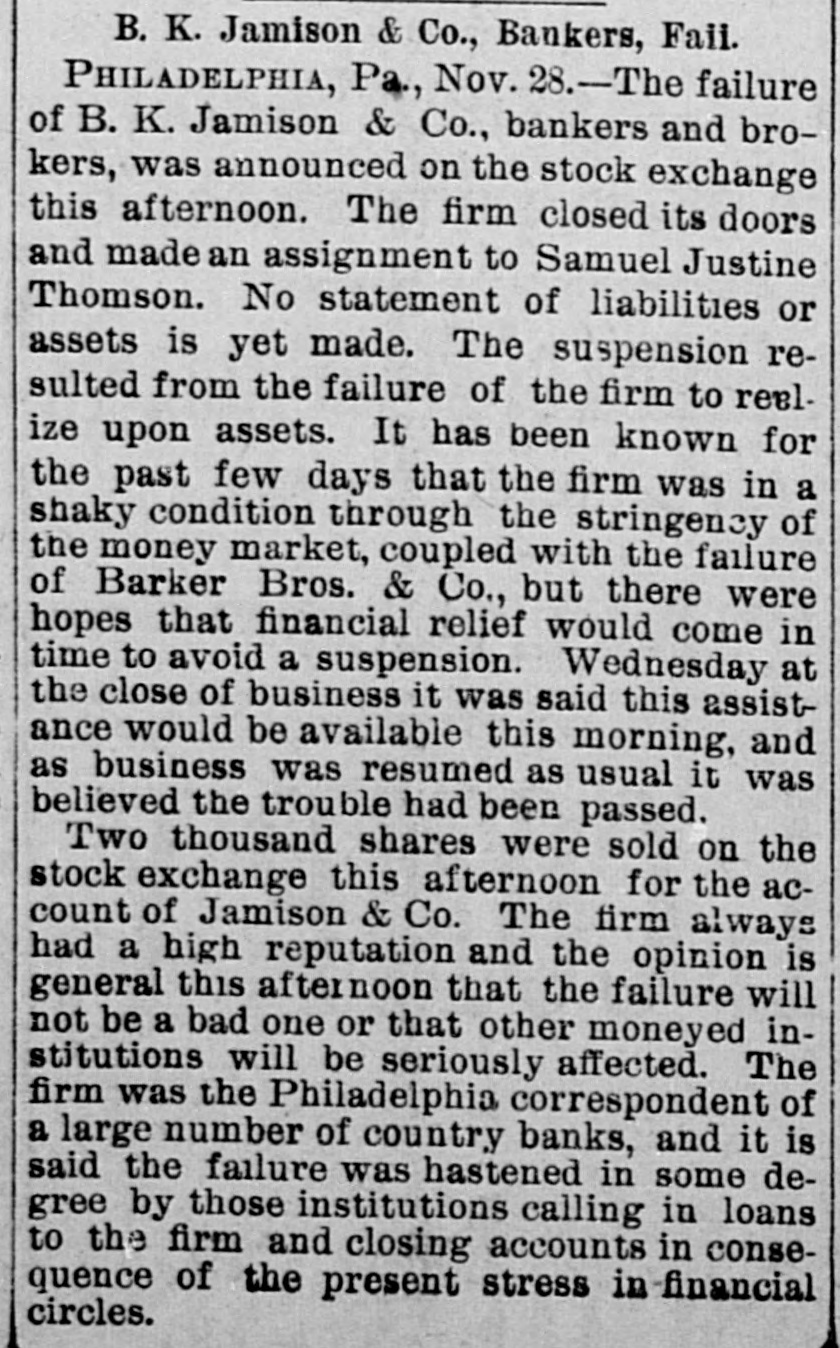
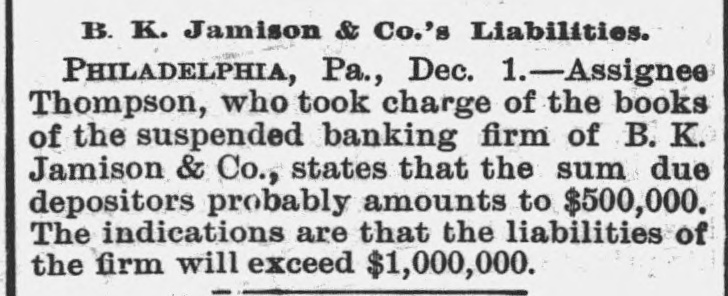
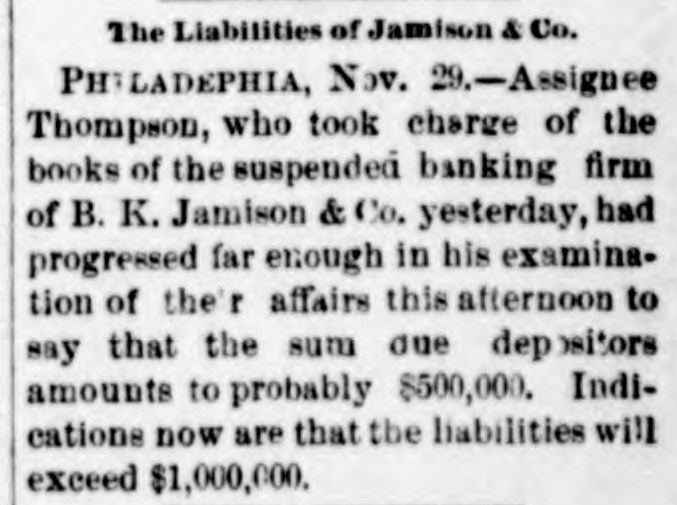
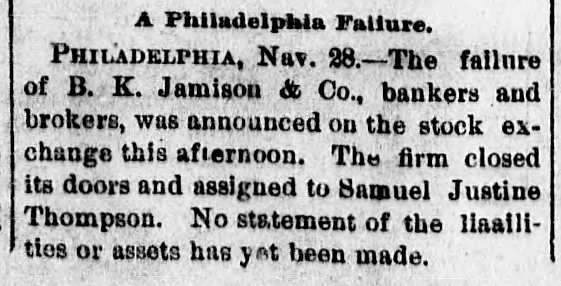
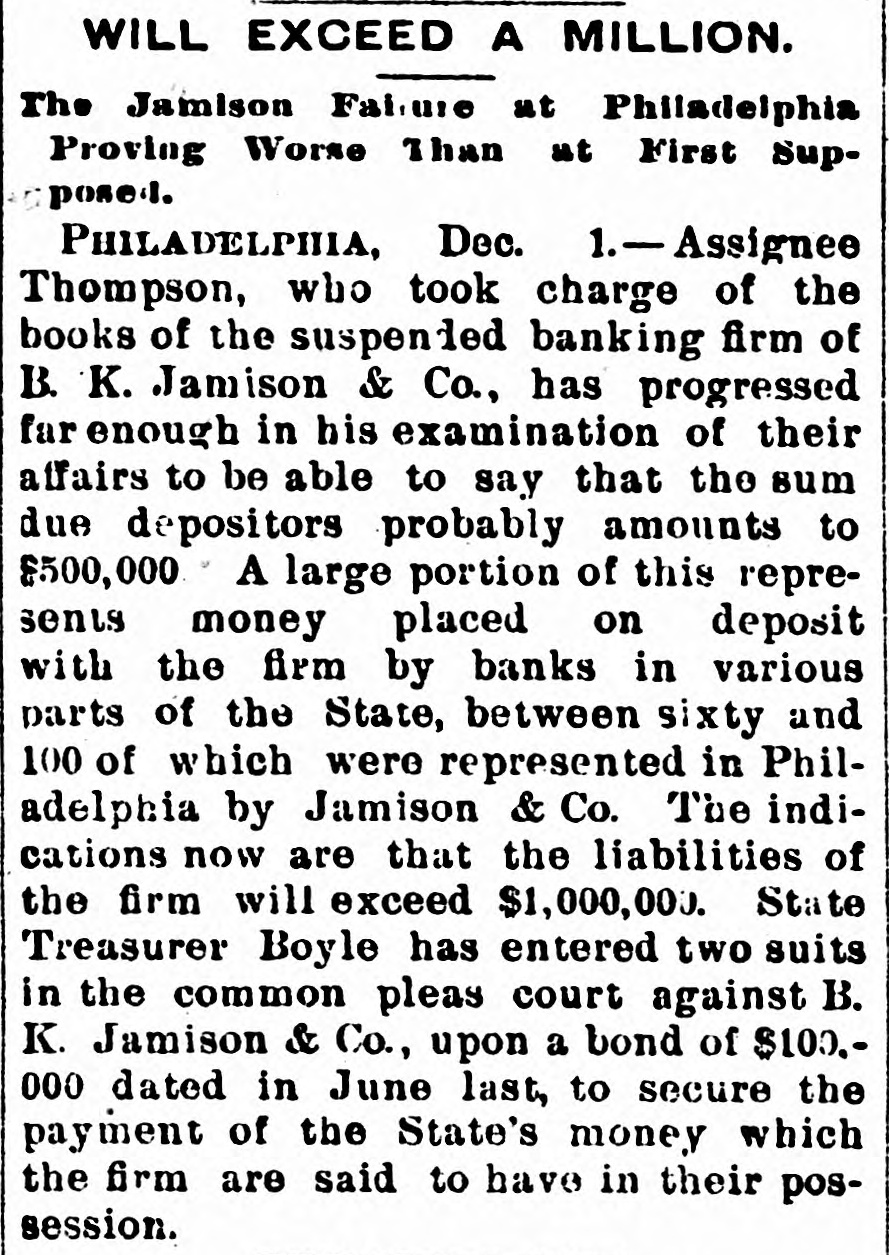
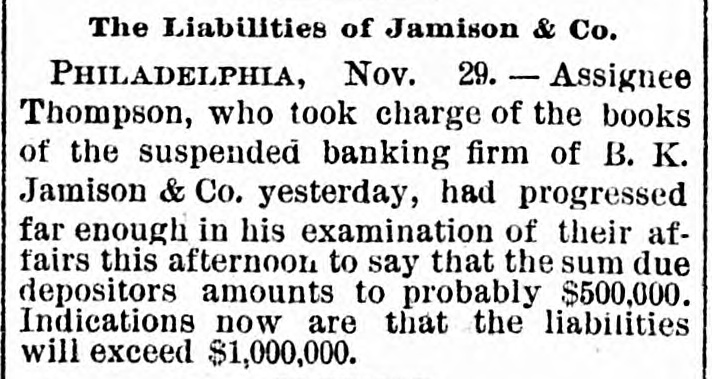
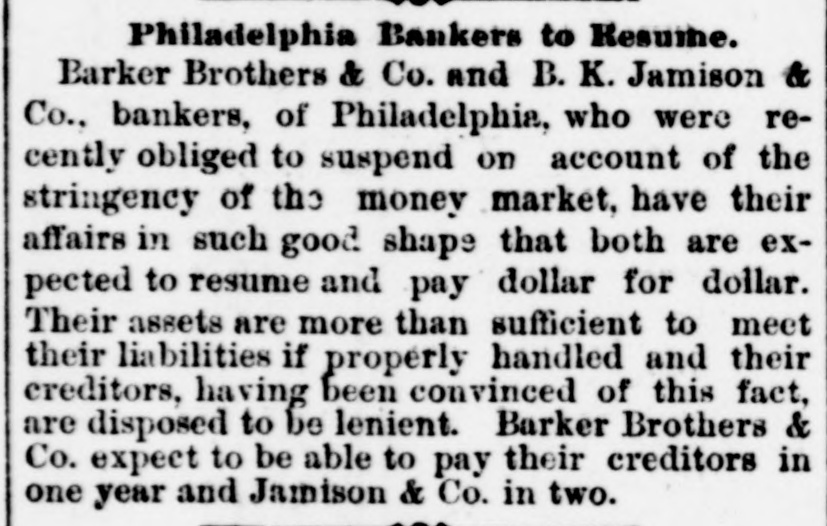
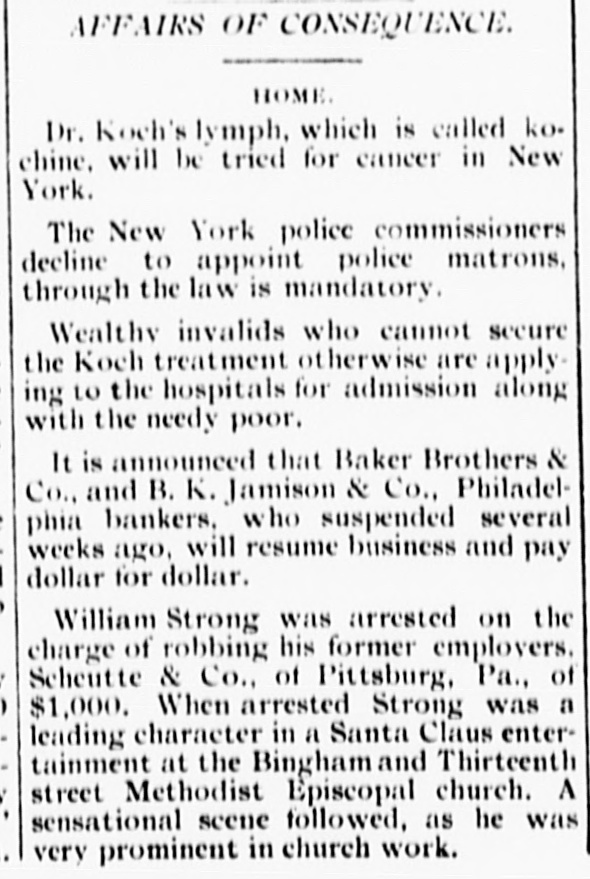
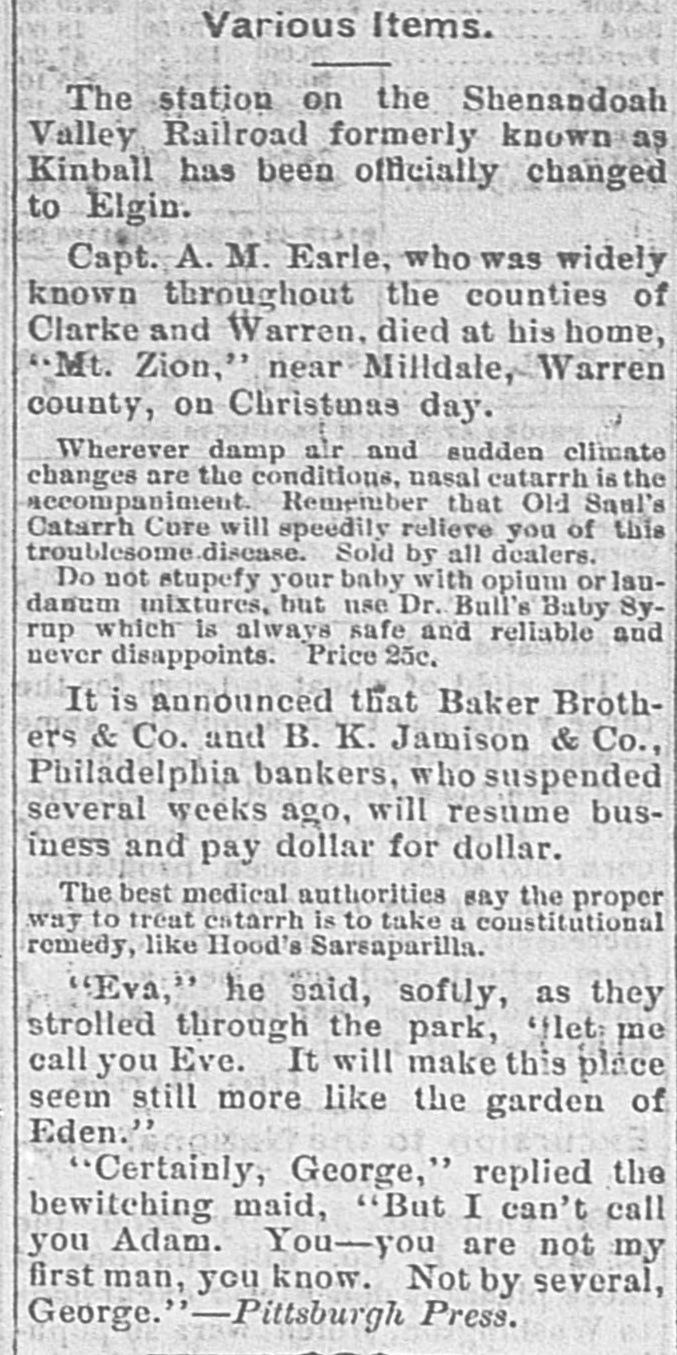
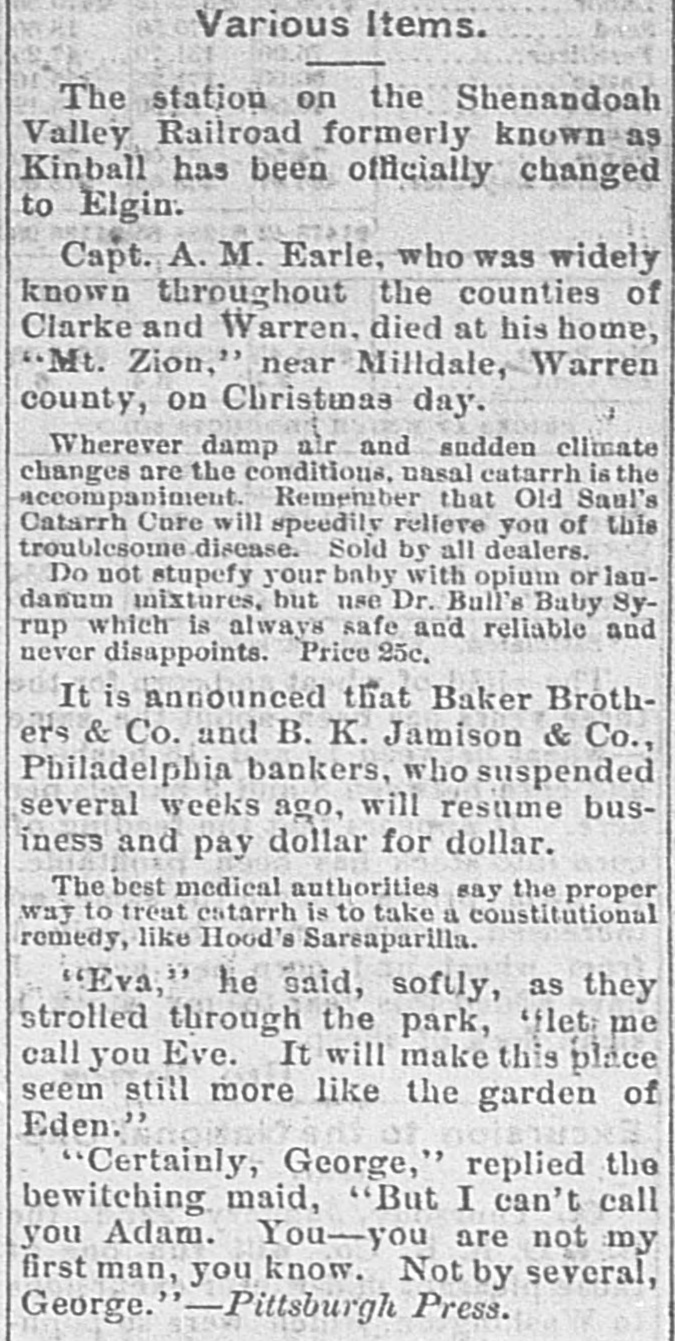
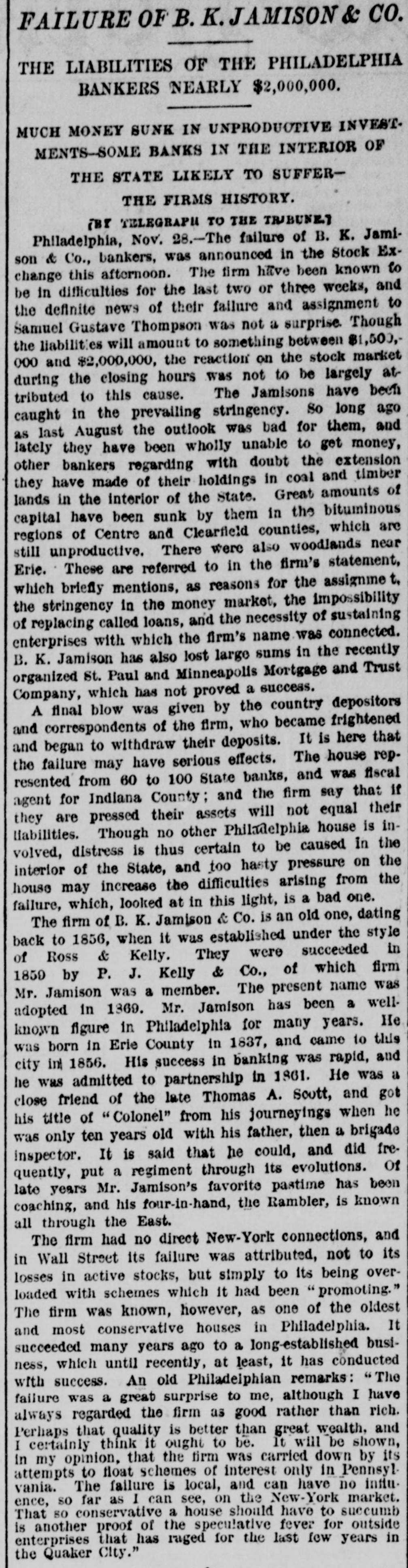
K. JAMISON & CO. THE LIABILITIES OF THE PHILADELPHIA BANKERS NEARLY $2,000,000. MUCH MONEY SUNK IN UNPRODUCTIVE INVESTMENTS-SOME BANKS IN THE INTERIOR OF THE STATE LIKELY TO SUFFERTHE FIRMS HISTORY. (BY TELEGRAPH TO THE TRIBUNE.) Philadelphia, Nov. 28.-The failure of B. K. Jamison & Co., bankers, was announced in the Stock Exchange this afternoon. The firm have been known to be in difficulties for the last two or three weeks, and the definite news of their failure and assignment to Samuel Gustave Thompson was not a surprise. Though the liabilities will amount to something between $1,500,000 and $2,000,000, the reaction on the stock market during the closing hours was not to be largely attributed to this cause. The Jamisons have been caught in the prevailing stringency. So long ago as last August the outlook was bad for them, and lately they have been wholly unable to get money, other bankers regarding with doubt the extension they have made of their holdings in coal and timber lands in the interior of the State. Great amounts of capital have been sunk by them in the bituminous regions of Centre and Clearfield counties, which are still unproductive. There were also woodlands near Erie. These are referred to in the firm's statement, which briefly mentions, as reasons for the assignme t. the stringency in the money market, the impossibility of replacing called loans, and the necessity of sustaining enterprises with which the firm's name was connected. B. K. Jamison has also lost large sums in the recently organized St. Paul and Minneapolis Mortgage and Trust Company, which has not proved a success. A final blow was given by the country depositors and correspondents of the firm, who became frightened and began to withdraw their deposits. It is here that the failure may have serious effects. The house represented from 60 to 100 State banks, and was fiscal agent for Indiana County and the firm say that if they are pressed their assets will not equal their liabilities. Though no other Philadelphia house is involved, distress is thus certain to be caused in the interior of the State, and too hasty pressure on the house may increase the difficulties arising from the failure, which, looked at in this light, is a bad one. The firm of B. K. Jamison & Co. is an old one, dating back to 1856, when it was established under the style of Ross & Kelly. They were succeeded in 1859 by P. J. Kelly & Co., of which firm Mr. Jamison was a member. The present name was adopted in 1369. Mr. Jamison has been a wellknown figure in Philadelphia for many years. He was born in Erie County in 1837, and came to this city in 1856. His success in banking was rapid, and he was admitted to partnership in 1861. He was a close friend of the late Thomas A. Scott, and got his title of "Colonel" from his journeyings when he was only ten years old with his father, then a brigade inspector. It is said that he could, and did frequently, put a regiment through its evolutions. Of late years Mr. Jamison's favorite pastime has been coaching, and his four-in-hand, the Rambler, is known all through the East. The firm had no direct New-York connections, and in Wall Street its failure was attributed, not to its losses in active stocks, but simply to its being overloaded with schemes which it had been promoting." The firm was known, however, as one of the oldest and most conservative houses in Philadelphia. It succeeded many years ago to a long-established business, which until recently, at least, it has conducted with success. An old Philadelphian remarks: The failure was a great surprise to me, although I have always regarded the firm as good rather than rich. Perhaps that quality is better than great wealth, and I certainly think it ought to be. It will be shown, in my opinion, that the firm was carried down by its attempts ence, That vania. so so The conservative to far float as failure I schemes can is a see, house local, of on interest should and the can New-York have only have to in no succumb Pennsyl. market. influis another proof of the speculative fever for outside enterprises that has raged for the last few years in the Quaker City."