Click image to open full size in new tab
Article Text
FROM NEW YORK
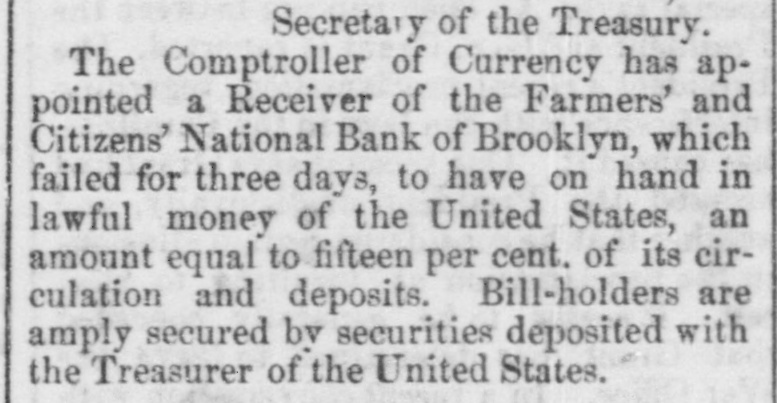
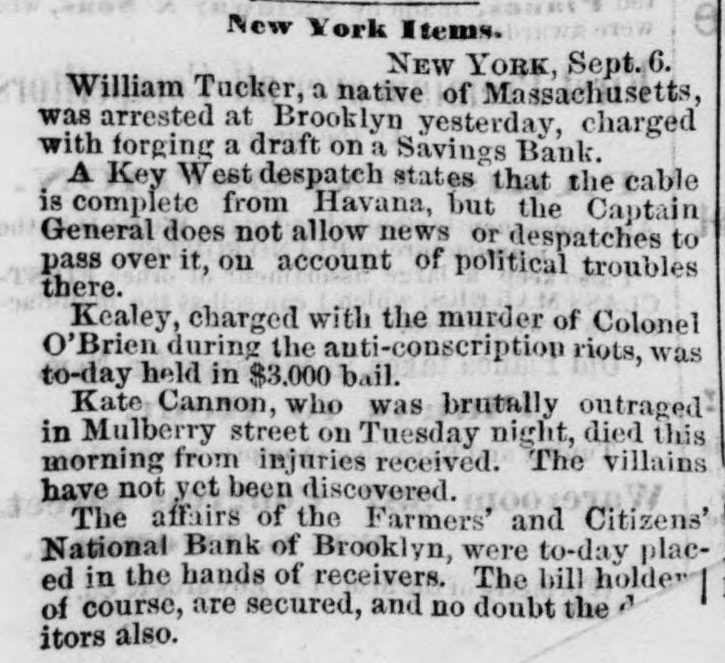
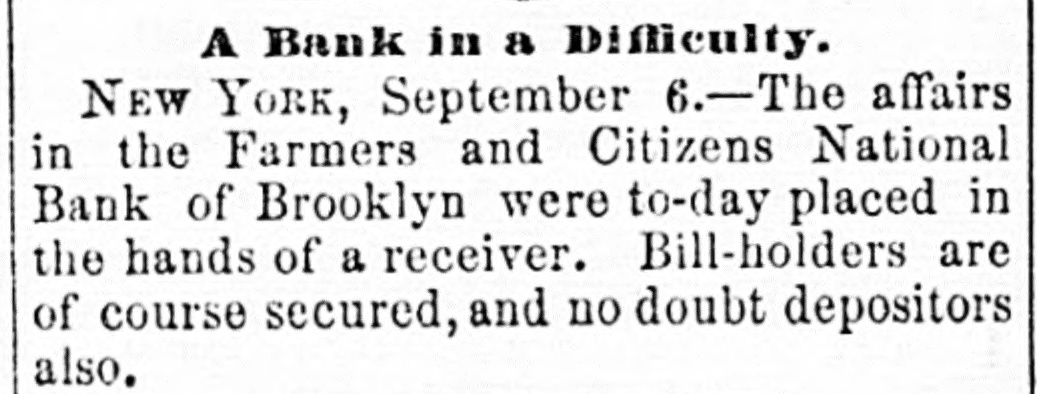
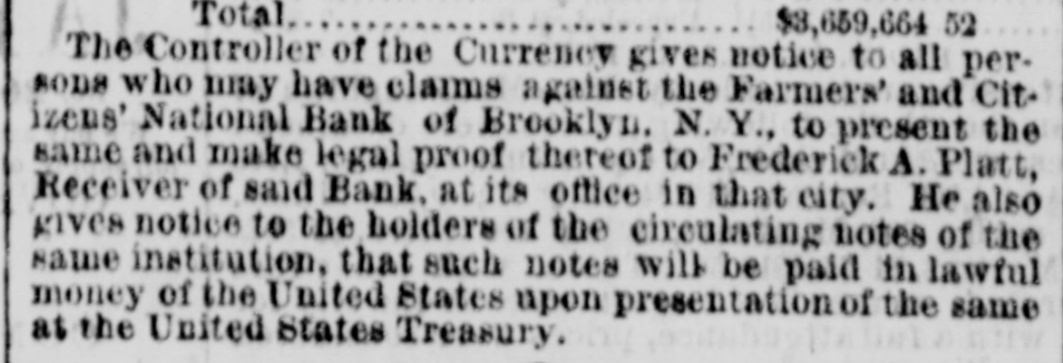
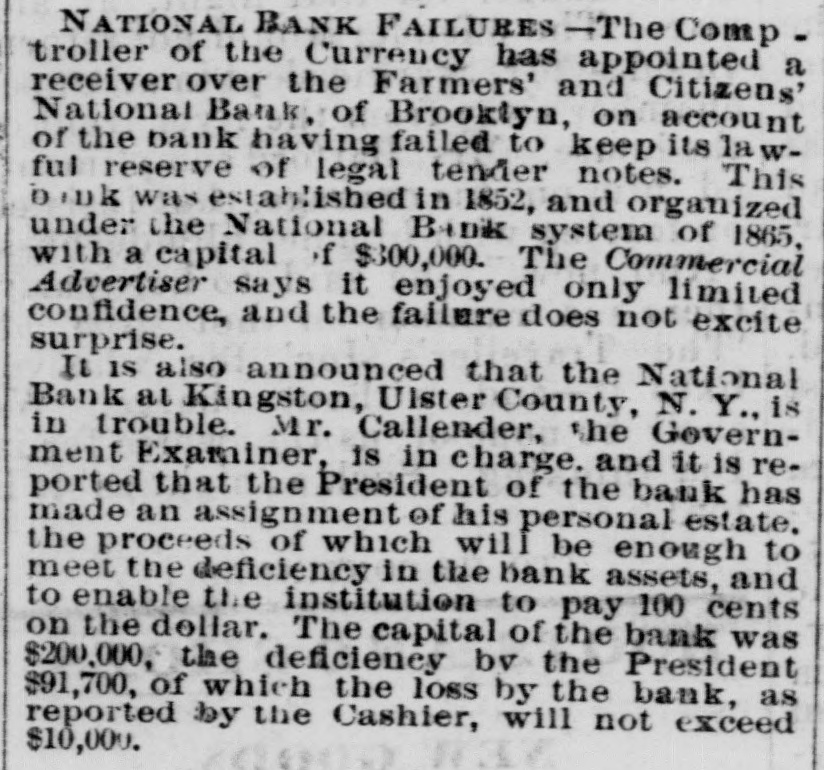
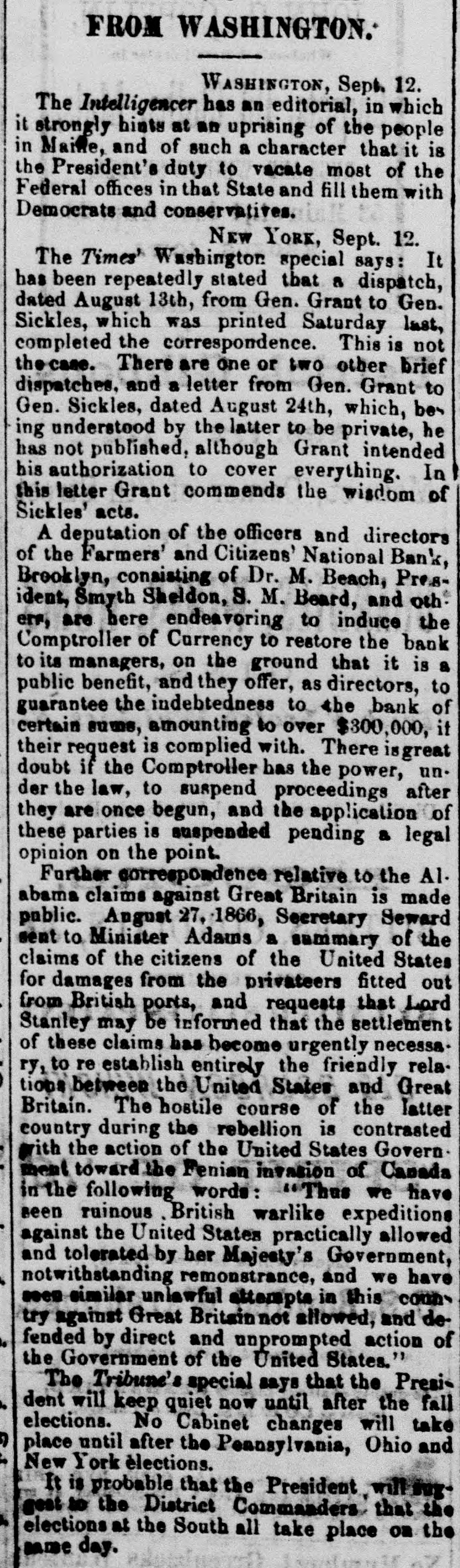
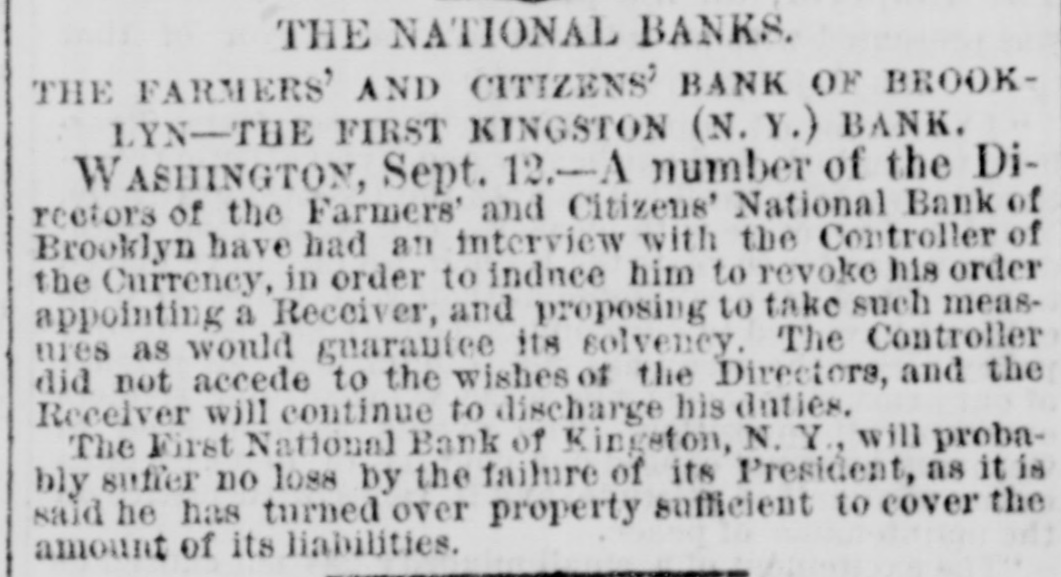
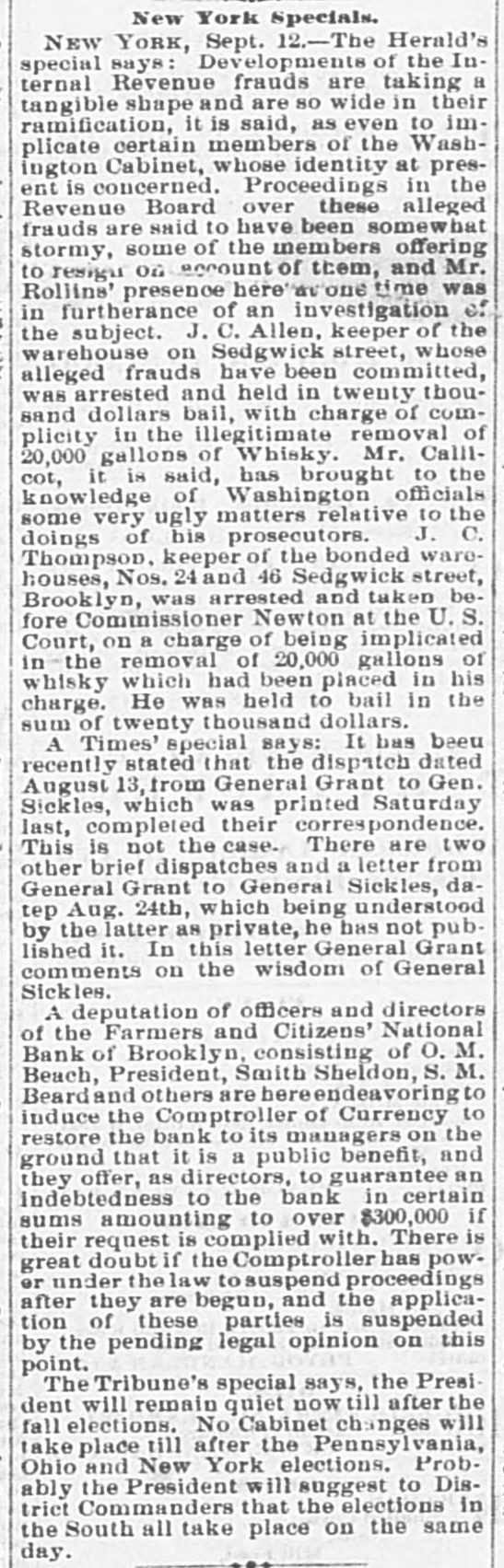
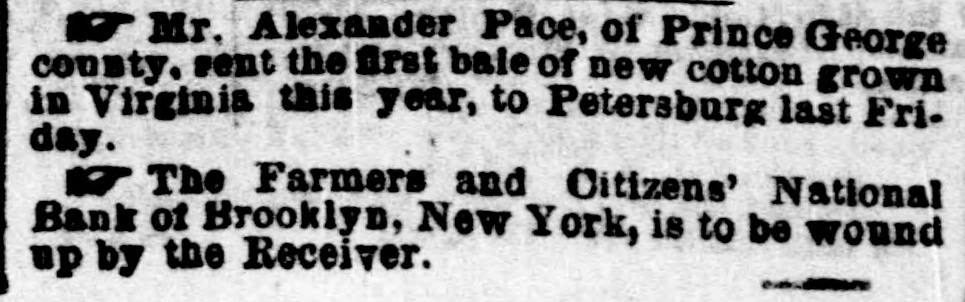
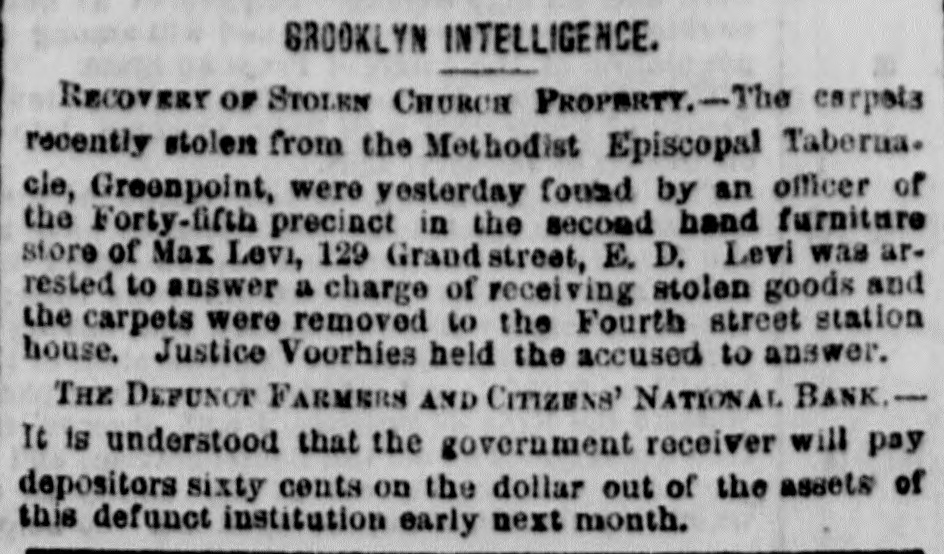
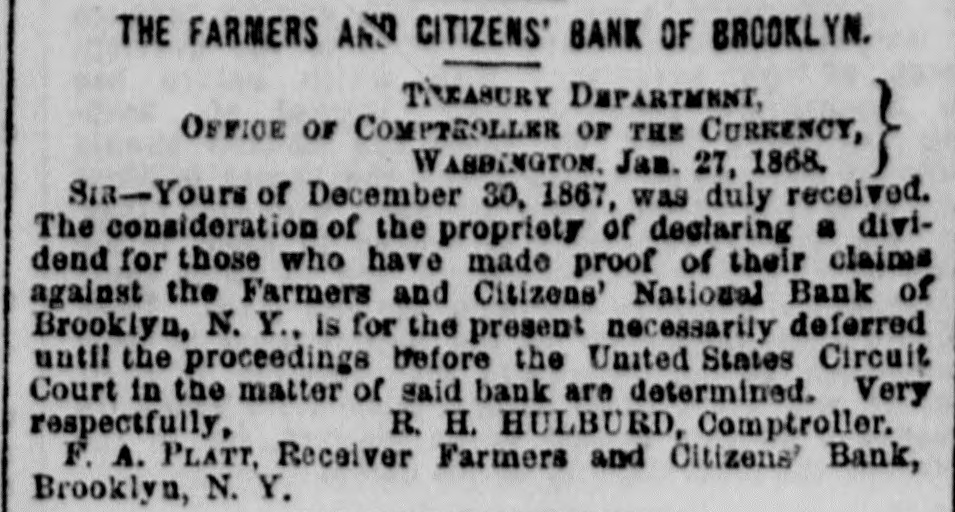
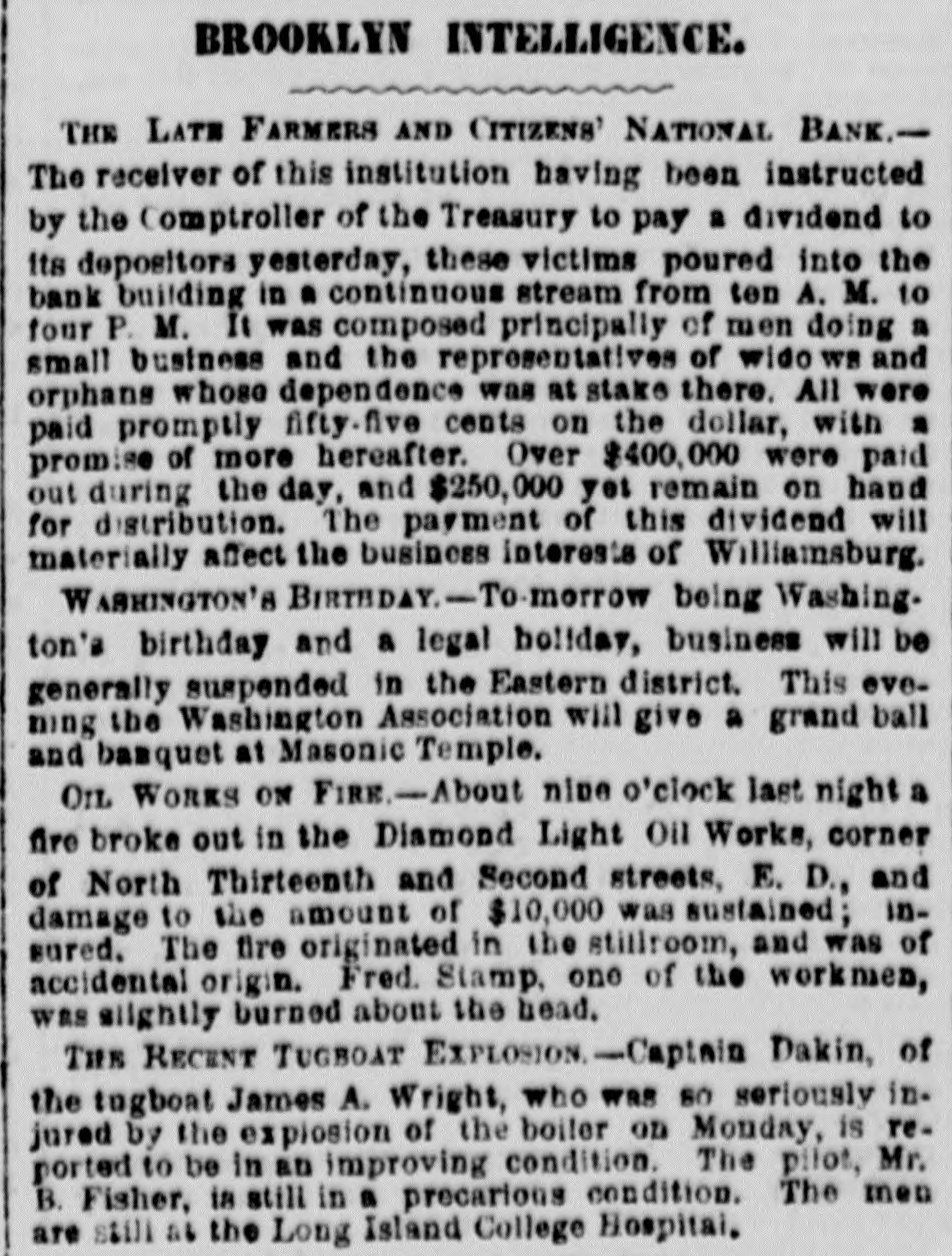
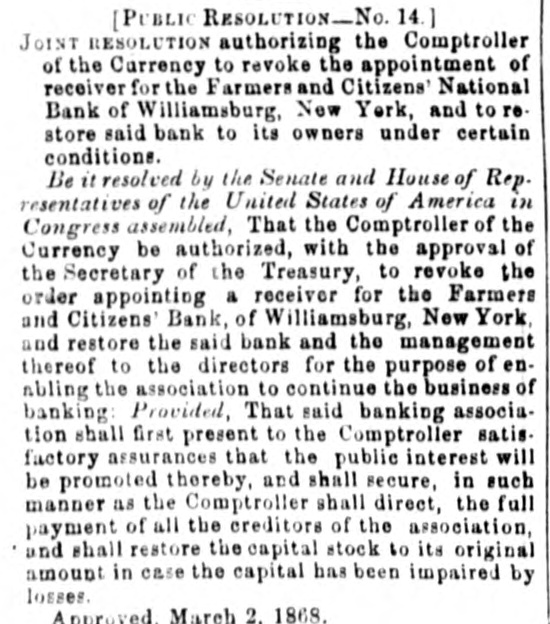
Indian Affairs. Internal Revenue Frands-Great and Sickles-Bank Affairs-Alabama Claims-Correspendence-The President. NEW YORK, September 12.-The Herald's Sioux City special says: The Indian Commissioner reached here at noon to-day. All well. Councils were held with all of the different bands of Indians as far as Fort Sully. The Indian reservations were selected on Big Cheyenne river, and at the mouth of the Nebraska. The Commissioner starts at once for Omaha, and from thence to Fort Laramie, to visit the hostile tribes. The Herald's Leavenworth special says: The Indians fired into a passen ger train six miles west of Fort Harker ties on the were of about track, to-day. the which locomotive, They had removed when placed by the thirty- pilot five rose a and a poured Indians volley into up from the cars, ravine without injuring any one. A band of Cheyennes murdered three men and one woman at Plumb Bottom, on a few a named same at since, served the and the Little boy Arkansas, way last Malone Saturday days was Cow Creek, nineteen miles west of Fort Hacker. The Herald's special says: Developments of the internal revenue frands in Brooklyn are taking a tangible shape, and are so wide in their ramifications, it is said, as even to implicate certain members at at The Board whose proceedings identity of the Cabinet in present the Revenue is Washington, concerned. over these alleged frauds is said to have been somewhat stormy. Some of the members are offeriug to on Rolresign presence account here of them, time and Mr. was lins at one in furtherance of an investigation of the subject. Allen, keeper of the warehouse on leged was'arrested Sedgwick frauds yesterday street, have by been and whom held committed, the in $20, al000 bail, with a charge of complicity in the removal of 20,000 gallons of whisky r.Callicott, it is said, has brought to the knowledge of the Washington officials some very ugly matters relative to the doings of his prosecutors. J. C. Thompson, keeper of the bonded warehouse Nos. 24 and 26, on Sedgwick street, Brooklyn, was arrested and taken before Commissioner Norton on charge of being implicated in the removal of 20,000 gallons of whisky which had been placed in his charge. He was held to bail in thesum of $20,000. The Times' special says: It has been recently stated that the dispatch dated August 13th, from General Grant to General Sickles, which was printed on Saturday last, completed the correspondence. This is not the case. There are one or two other brief despatches, and a letter from General Grant to General Sickles, dated August 24th, which, being understood by the latter to be private, he has not had it published. In this letter General Grant comments the wisdom of Sickles. A delegation of officers and directors of the Farmers' and Citizens' National Bank of Brookln, consisting of Owen M. Beach, President: Smith Sheldon, S. M. Beard and others, are here endeavoring to induce the comptroller of currency to restore the bank to its managers, on the ground that it is a public benefit, and they offer, as directors, to guarantee for the indebtedness of the sums to over was doubt if the $300,000, with. bank, certain There if their is request amounting complied to after are comptroller suspend proceedings, has power, great under the they law, once begun, and the application of these parties was suspended. pending legal opinion on this point. to the is made Further Alabama and Great correspondence claims between relative the United 27th, sent to lic. Seward States On August Minister Britain 1866, Adams Secretary a sum- pabmary of the from teers, out British United of fitted States the claims for damages from citizens ports, priva- of and requests that Lord Stanley may be informed that the settlement of these claims has been urgently necessary to there-establishment of entirely friendly relations between the United States and Great Britain. We have seen the ruinous British warlike expedition against the United States practically allowed and tolerated by Her Majesty's Government, notwithstanding our remonstrange, and We have seen similar unlawful !attempts in this country against Great Britain disallowed and defeated by the direct and unprompted action of the Government of the United States. The Tribune's special says: The President will keep quiet now till after the fall elections. No cabinet changes will take place till after the Pennsylvania, Ohio and New York elections. Probably the President will suggest to the district commanders that the elections at the South all take place on the same day.