Central National Bank (Boston, MA)

Episode Information

Episode UID
210301235
Episode Type
Run β†’ Suspension β†’ Closure
Bank Type
national
Bank ID
21030 national
Charter Number
2103
Start Date
November 13, 1902
Location
Boston, Massachusetts (42.358, -71.060)

Metadata

Model
gpt-5-mini (chosen from majority vote of a three-model LLM ensemble)
Short Digest
28a37af1cbb33e8d

Response Measures

Accommodated withdrawals, Full suspension, Books examined

Clearinghouse involved: Yes (loan, examination, or other measures)

Receivership Details

Depositor recovery rate
100.0%
Date receivership started
1902-11-13
Date receivership terminated
1906-10-20
OCC cause of failure
Excessive lending
Share of assets assessed as good
68.8%
Share of assets assessed as doubtful
24.6%
Share of assets assessed as worthless
6.6%

Events (5)

1. April 30, 1873 Chartered
Source
historical_nic
2. November 13, 1902 Receivership
Source
historical_nic
3. November 13, 1902 Run
Cause
Bank Specific Adverse Info
Cause Details
Large withdrawals followed rejection of a considerable portion of the bank's assets by Elliott (Eliot) National Bank and reports of impaired assets.
Measures
Many banks came to the relief of the Central's depositors; clearing house ultimately declined to aid.
Newspaper Excerpt
yesterday depositors withdrew something like $2,000,000.
Source
newspapers
4. November 14, 1902 Suspension
Cause
Government Action
Cause Details
Comptroller of the Currency ordered National Bank Examiner W. E. Neal to close the bank and act as temporary receiver due to impaired assets.
Newspaper Excerpt
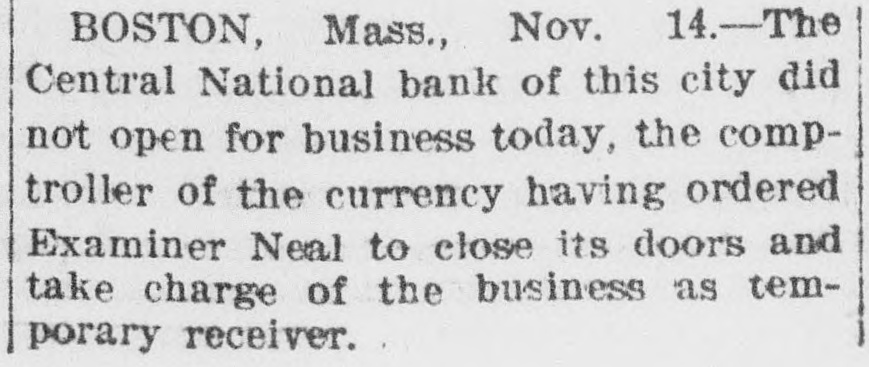
did not open for business today, the comptroller of the currency having ordered Examiner Neal to close its doors and take charge of the business as temporary receiver.
Source
newspapers
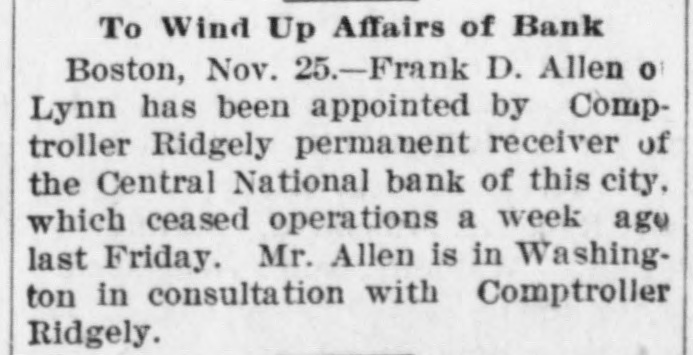
5. November 25, 1902 Receivership
Newspaper Excerpt
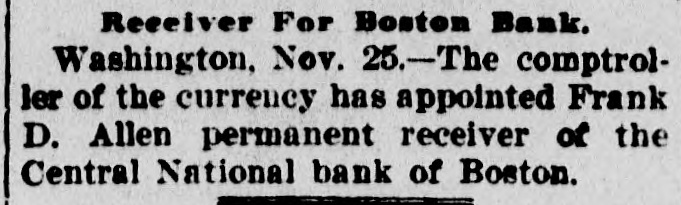
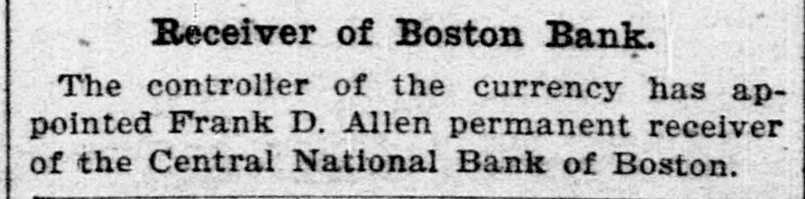
The comptroller of the currency has appointed Frank D. Allen permanent receiver of the Central National bank of Boston.
Source
newspapers

Newspaper Articles (24)

Article from The Tucson Citizen, November 14, 1902

Click image to open full size in new tab

Article Text

BOSTON, Mass., Nov. 14.-The Central National bank of this city did not open for business today, the comptroller of the currency having ordered Examiner Neal to close its doors and take charge of the business as temporary receiver.


Article from The Indianapolis Journal, November 15, 1902

Click image to open full size in new tab

Article Text

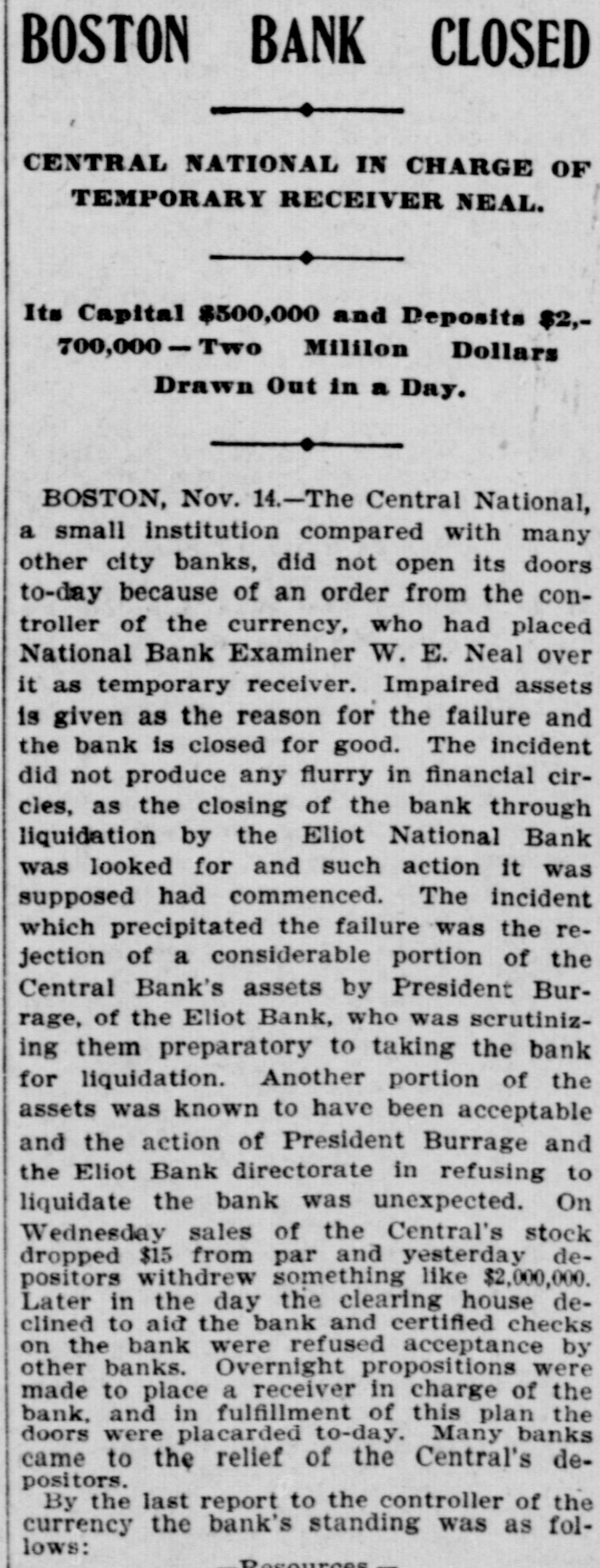
BOSTON BANK CLOSED CENTRAL NATIONAL IN CHARGE OF TEMPORARY RECEIVER NEAL. Its Capital $500,000 and Deposits $2,700,000-Two Mililon Dollars Drawn Out in a Day. BOSTON, Nov. 14.-The Central National, a small institution compared with many other city banks, did not open its doors to-day because of an order from the controller of the currency, who had placed National Bank Examiner W. E. Neal over it as temporary receiver. Impaired assets is given as the reason for the failure and the bank is closed for good. The incident did not produce any flurry in financial circles, as the closing of the bank through liquidation by the Eliot National Bank was looked for and such action it was supposed had commenced. The incident which precipitated the failure was the rejection of a considerable portion of the Central Bank's assets by President Burrage, of the Eliot Bank, who was scrutinizing them preparatory to taking the bank for liquidation. Another portion of the assets was known to have been acceptable and the action of President Burrage and the Eliot Bank directorate in refusing to liquidate the bank was unexpected. On Wednesday sales of the Central's stock dropped $15 from par and yesterday depositors withdrew something like $2,000,000. Later in the day the clearing house declined to aid the bank and certified checks on the bank were refused acceptance by other banks. Overnight propositions were made to place a receiver in charge of the bank, and in fulfillment of this plan the doors were placarded to-day. Many banks came to the relief of the Central's depositors. By the last report to the controller of the currency the bank's standing was as follows: Doonurons


Article from Arizona Republican, November 15, 1902

Click image to open full size in new tab

Article Text

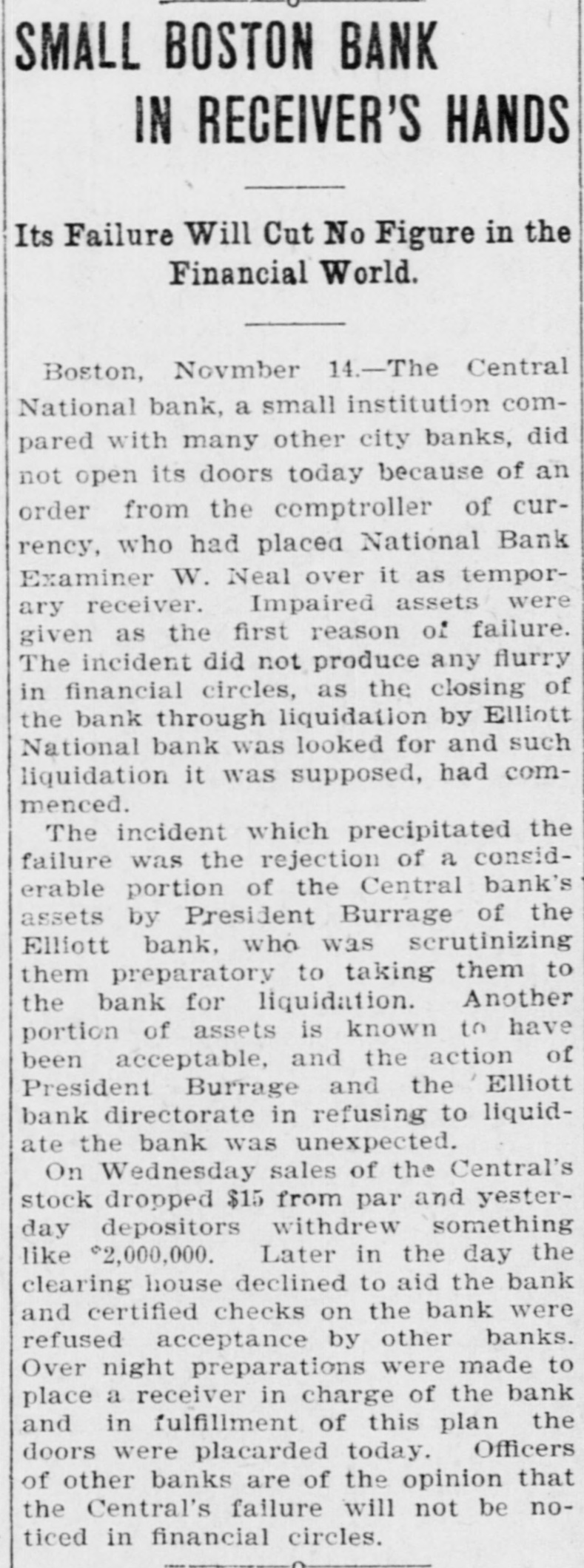
SMALL BOSTON BANK IN RECEIVER'S HANDS Its Failure Will Cut No Figure in the Financial World. Boston, Novmber 14.-The Central National bank, a small institution compared with many other city banks, did not open its doors today because of an order from the cemptroller of currency, who had placed National Bank Examiner W. Neal over it as temporary receiver. Impaired assets were given as the first reason of failure. The incident did not produce any flurry in financial circles, as the closing of the bank through liquidation by Elliott National bank was looked for and such liquidation it was supposed, had commenced. The incident which precipitated the failure was the rejection of a considerable portion of the Central bank's assets by President Burrage of the Elliott bank, who was scrutinizing them preparatory to taking them to the bank for liquidation. Another portion of assets is known to have been acceptable, and the action of President Burrage and the Elliott bank directorate in refusing to liquidate the bank was unexpected. On Wednesday sales of the Central's stock dropped $15 from par and yesterday depositors withdrew something like 2,000,000. Later in the day the clearing house declined to aid the bank and certified checks on the bank were refused acceptance by other banks. Over night preparations were made to place a receiver in charge of the bank and in fulfillment of this plan the doors were placarded today. Officers of other banks are of the opinion that the Central's failure will not be noticed in financial circles.


Article from The Montgomery Advertiser, November 15, 1902

Click image to open full size in new tab

Article Text

BOSTON BANK CLOSED. Impaired Assets the Reason Assigned for the Failure. Boston, Nov. 14.-The Central National, a small institution compared with many other city banks, did not open its doors today because of an order from the Comptroller of the Currency who had placed National Bank Examiner W. E. Neal over it, as temporary receiver. Imparied assets is given as the reason for the failure and the bank is closed for good. The incident did not produce any flurry in financial circles, as the closing of the bank through liquidation by the Elliot National Bank was looked for and such action, it was supposed, had commenced. The incident which precipitated the failure was the rejection of a considerable portion of the Central Bank's assets by President Burrage of the Illot bank. Wednesday sales of the Central's stock dropped $15 from par and yesterday depositors withdrew somethink like $2,000,000. Later in the day the clearing house declined aid, and certified checks on the bank were refused acceptance by other banks. Many banks came to the relief of the Central's depositors.


Article from The Birmingham Age-Herald, November 15, 1902

Click image to open full size in new tab

Article Text

A BOSTON BANK CLOSES ITS DOORS Impaired Assets Said to Be Cause of Failure-No Flurry in Financlal Circles. Boston, November 14.-The Central Na. tional, a small institution compared with many other city banks, did not open its doors today because of an order from the comptroller of the currency, who had placed National Bank Examiner W. E. Neal over it as temporary receiver. Impaired assets is given as the reason for the failure, and the bank Is closed for good. The incident did not produce any flurry in financial circles, as the closing of the bank through liquidation by the Elliott National bank was looked for, and such action It was supposed had commenced. The Incident which precipitated the failure was the rejection of a considerable portion of the Central bank's assets by President Burrage of the Elliott bank, who was scrutinizing them preparatory to taking the bank for liquidation. Wednesday's sales of the Central's stock dropped $15 from par and yesterday depositors withdrew something like $2,000,000. Later in the day the clearing house declined aid and certified checks on the bank were refused acceptance by other banks. Many banks came to the relief of the Central's depositors.


Article from Evening Journal, November 15, 1902

Click image to open full size in new tab

Article Text

Boston Bank Fails. Boston, Nov. 14.-The Central National Bank, a small institution compared with many other city banks, did not open its doors yesterday because of an order from the comptroller of the currency, who had placed National Bank Examiner W. E. Neal over it as temporary receiver. Impaired assets is given as the reason for the failure, and the bank is closed for good. Director Moses W. Richardson, of the bank, said that depositors probably would be paid in full, and, while the stockholders may be called upon for a quick assessment, in the end they will lose nothing.


Article from Waterbury Democrat, November 15, 1902

Click image to open full size in new tab

Article Text

BOSTON BANK CLOSED. Failure of Central National Causes Only Slight Flurry, BOSTON, Nov. 15.-The Central National, a small institution compared with many other city banks, has closed its doors by reason of an order from the comptroller of the currency, who has placed National Bank Examiner W. E. Neal over it as temporary receiver. Impaired assets is given as the reason for the failure, and the bank is closed for good. The incident did not produce any flurry in financial circles, as the closing of the bank through liquidation by the Eliot National bank was looked for, and such action it was supposed had commenced. The incident which precipitated the failure was the rejection of a considerable portion of the Central bank's assets by President Burrage of the Eliot bank, who was scrutinizing them preparatory to taking the bank for liquidation. Another portion of the assets was known to have been acceptable, and the action of President Burrage and the Eliot bank directorate in refusing to liquidate the bank was unexpected. Wednesday sales of the Central's stock dropped $15 from par, and Thursday depositors withdrew something like $2,000,000. Later the clearing house declined to aid the bank, and certified checks on the bank were refused acceptance by other banks. Preparations were at once made to place a receiver in charge of the bank. Many banks came to the relief of the Central's depositors, the National Shawmut offering to advance 50 per cent of their deposits. Director Moses W. Richardson of the bank says that depositors probably will be paid in full, and while the stockholders may be called upon for a quick assessment in the end they will lose nothing. Officers of other banks are of the opinion that the Central's failure will not be noticed in financial circles.


Article from The Weiser Signal, November 19, 1902

Click image to open full size in new tab

Article Text

The Central National Bank of Boston, did not open for business on the 14th inst. Several reasons for the failure were assigned, but the simple one was lack of funds. The capital stock was $500,000, and carried deposits of $2,700,000, it is stated as usual, that depositors will be paid in full. And this comes immediately after the late republican election! How passing strange? Why was not the reserve brought out, and sent to the rescue.


Article from The Lamar Register, November 19, 1902

Click image to open full size in new tab

Article Text

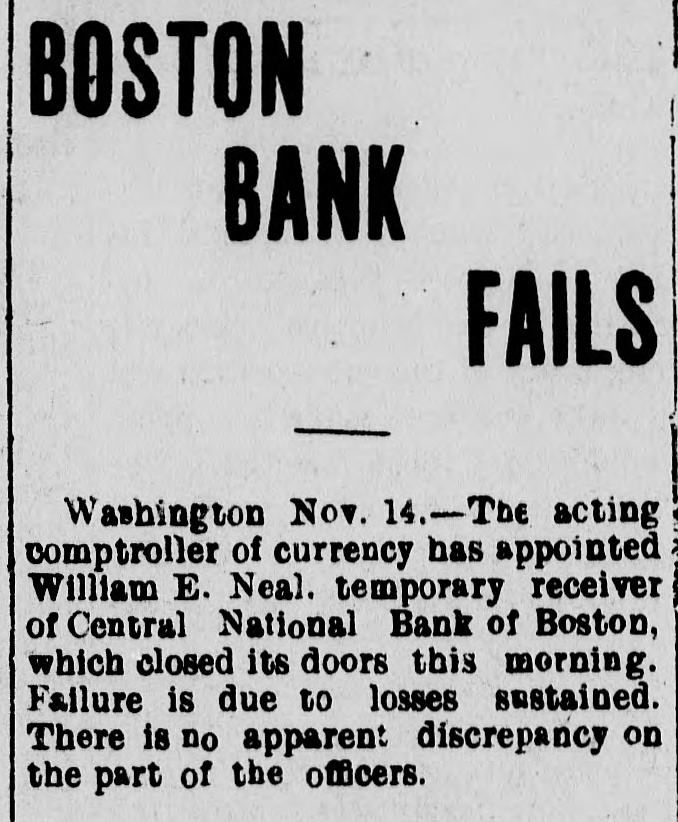
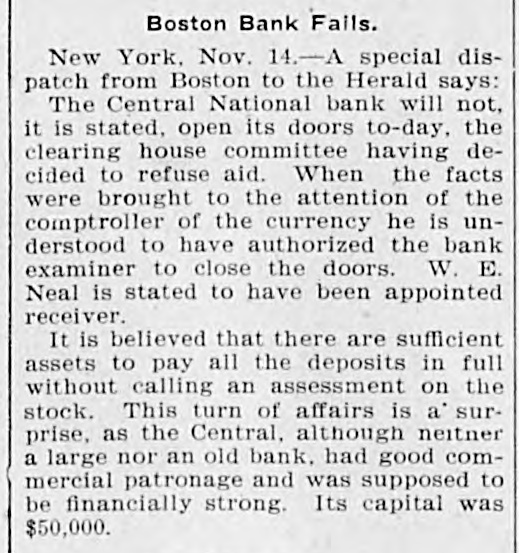
Boston Bank Fails. New York, Nov. 14.-A special dispatch from Boston to the Herald says: The Central National bank will not, it is stated. open its doors to-day. the clearing house committee having decided to refuse aid. When the facts were brought to the attention of the comptroller of the currency he is understood to have authorized the bank examiner to close the doors. W. E. Neal is stated to have been appointed receiver. It is believed that there are sufficient assets to pay all the deposits in full without calling an assessment on the stock. This turn of affairs is a surprise. as the Central. although neitner a large nor an old bank. had good commercial patronage and was supposed to be financially strong. Its capital was $50,000.


Article from The Hocking Sentinel, November 20, 1902

Click image to open full size in new tab

Article Text

Boston Bank Closes Its Doors. The Central National bank at 141 Devonshire street, Boston, Mass., did not open its doors Saturday morning. The clearing house committee which met to consider the case, felt compelled to refuse aid. When the facts were brought to the attention of the comptroller he authorized the bank examiner to close the doors and It can be stated that a receiver will be appointed. The bank has deposits aggregating about $3,500,000. Excessive losses and blow paper are given as causes leading to the failure.


Article from Herald and News, November 20, 1902

Click image to open full size in new tab

Article Text

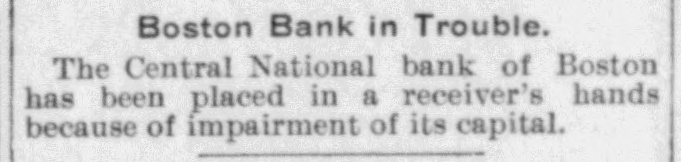
Boston Bank in Trouble. The Central National bank of Boston has been placed in a receiver's hands because of impairment of its capital.


Article from The Springfield Herald, November 21, 1902

Click image to open full size in new tab

Article Text

Boston Bank Fails. New York, Nov. 14.-A special dispatch from Boston to the Herald says: The Central National bank will not, it is stated, open its doors to-day. the clearing house committee having decided to refuse aid. When the facts were brought to the attention of the comptroller of the currency he is understood to have authorized the bank examiner to close the doors. W. E. Neal is stated to have been appointed receiver. It is believed that there are sufficient assets to pay all the deposits in full without calling an assessment on the stock. This turn of affairs is a' surprise, as the Central. although neitner a large nor an old bank. had good commercial patronage and was supposed to be financially strong. Its capital was $50,000.


Article from The L'anse Sentinel, November 22, 1902

Click image to open full size in new tab

Article Text

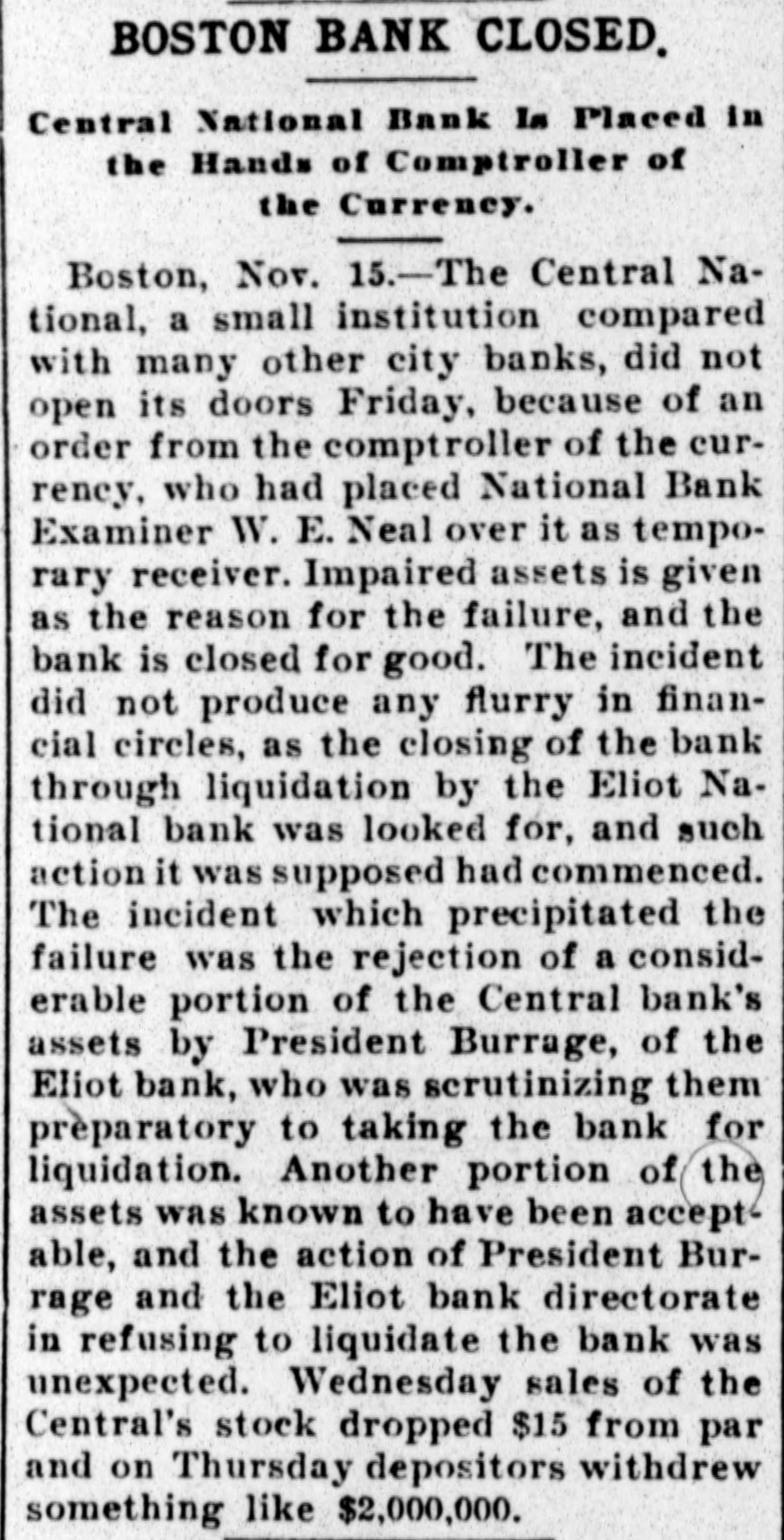
BOSTON BANK CLOSED. Central National Bank In Placed in the Hands of Comptroller of the Currency. Boston, Nov. 15.-The Central National, a small institution compared with many other city banks, did not open its doors Friday, because of an order from the comptroller of the curreney, who had placed National Bank Examiner W. E. Neal over it as temporary receiver. Impaired assets is given as the reason for the failure, and the bank is closed for good. The incident did not produce any flurry in financial circles, as the closing of the bank through liquidation by the Eliot National bank was looked for, and such action it was supposed had commenced. The incident which precipitated the failure was the rejection of a considerable portion of the Central bank's assets by President Burrage, of the Eliot bank, who was scrutinizing them prèparatory to taking the bank for liquidation. Another portion of the assets was known to have been acceptable, and the action of President Burrage and the Eliot bank directorate in refusing to liquidate the bank was unexpected. Wednesday sales of the Central's stock dropped $15 from par and on Thursday depositors withdrew something like $2,000,000.


Article from Barre Evening Telegram, November 25, 1902

Click image to open full size in new tab

Article Text

Receiver For Boston Bank. Washington, Nov. 25.-The comptrolJer of the currency has appointed Frank D. Allen permanent receiver of the Central National bank of Boston.


Article from Evening Star, November 25, 1902

Click image to open full size in new tab

Article Text

Receiver of Boston Bank. The controller of the currency has appointed Frank D. Allen permanent receiver of the Central National Bank of Boston.


Article from The Broad Ax, December 27, 1902

Click image to open full size in new tab

Article Text

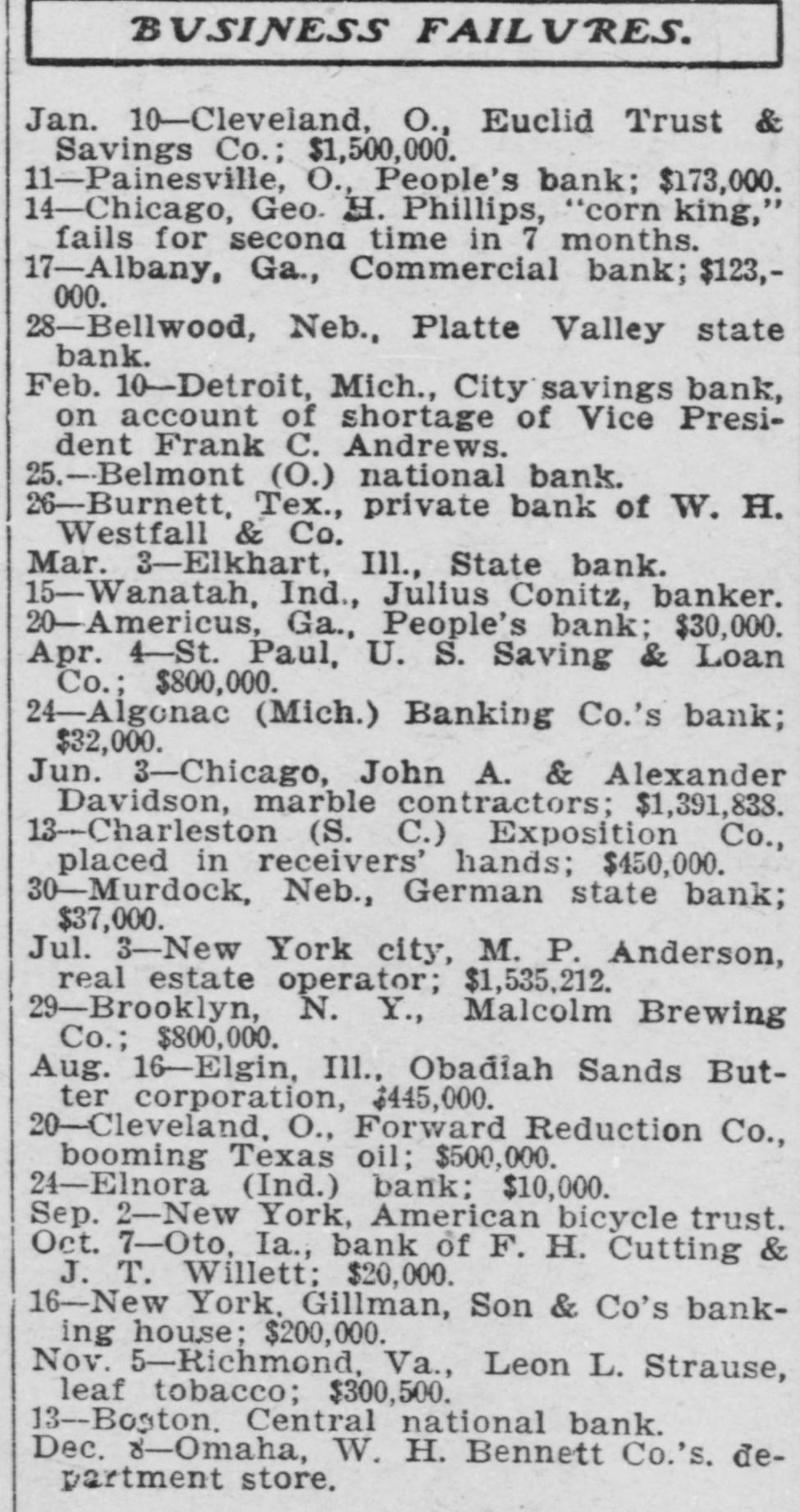
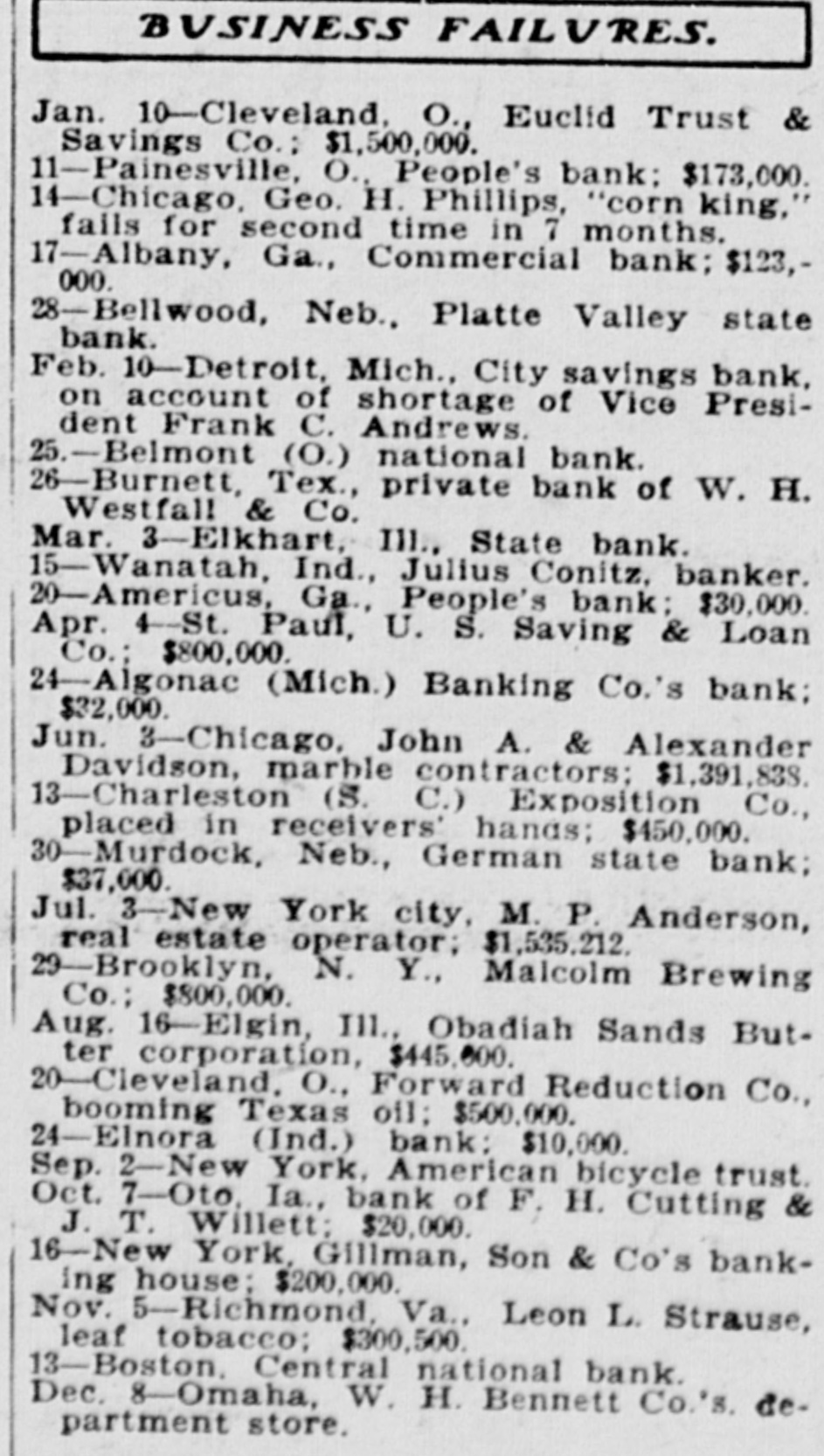
BUSINESS FAILVRES. Jan. 10-Cleveland, 0., Euclid Trust & Savings Co.; $1,500,000. 11-Painesville, 0., People's bank; $173,000. 14-Chicago, Geo. H. Phillips, "corn king," fails for second time in 7 months. 17-Albany, Ga., Commercial bank; $123,000. 28-Bellwood, Neb., Platte Valley state bank. Feb. 10-Detroit, Mich., City savings bank, on account of shortage of Vice President Frank C. Andrews. 25.-Belmont (0.) national bank. 26-Burnett, Tex., private bank of W. H. Westfall & Co. Mar. 3-Elkhart, III., State bank. 15-Wanatah, Ind., Julius Conitz, banker. 20-Americus, Ga., People's bank; $30,000. Apr. 4-St. Paul, U. S. Saving & Loan Co.; $800,000. 24-Algonac (Mich.) Banking Co.'s bank; $32,000. Jun. 3-Chicago, John A. & Alexander Davidson, marble contractors; $1,391,838. 13-Charleston (S. C.) Exposition Co., placed in receivers' hands; $450,000. 30-Murdock, Neb., German state bank; $37,000. Jul. 3-New York city, M. P. Anderson, real estate operator; $1,535,212. 29-Brooklyn, N. Y., Malcolm Brewing Co.; $800,000. Aug. 16-Elgin, Ill., Obadiah Sands Butter corporation, $445,000. 20-Cleveland, O., Forward Reduction Co., booming Texas oil; $500,000. 24-Elnora (Ind.) bank; $10,000. Sep. 2-New York, American bicycle trust. Oct. 7-Oto, Ia., bank of F. H. Cutting & J. T. Willett: $20,000. 16-New York, Gillman, Son & Co's banking house; $200,000. Nov. 5-Richmond, Va., Leon L. Strause, leaf tobacco; $300,500. 13-Boston. Central national bank. Dec. 8-Omaha, W. H. Bennett Co.'s. department store.


Article from Perrysburg Journal, January 2, 1903

Click image to open full size in new tab

Article Text

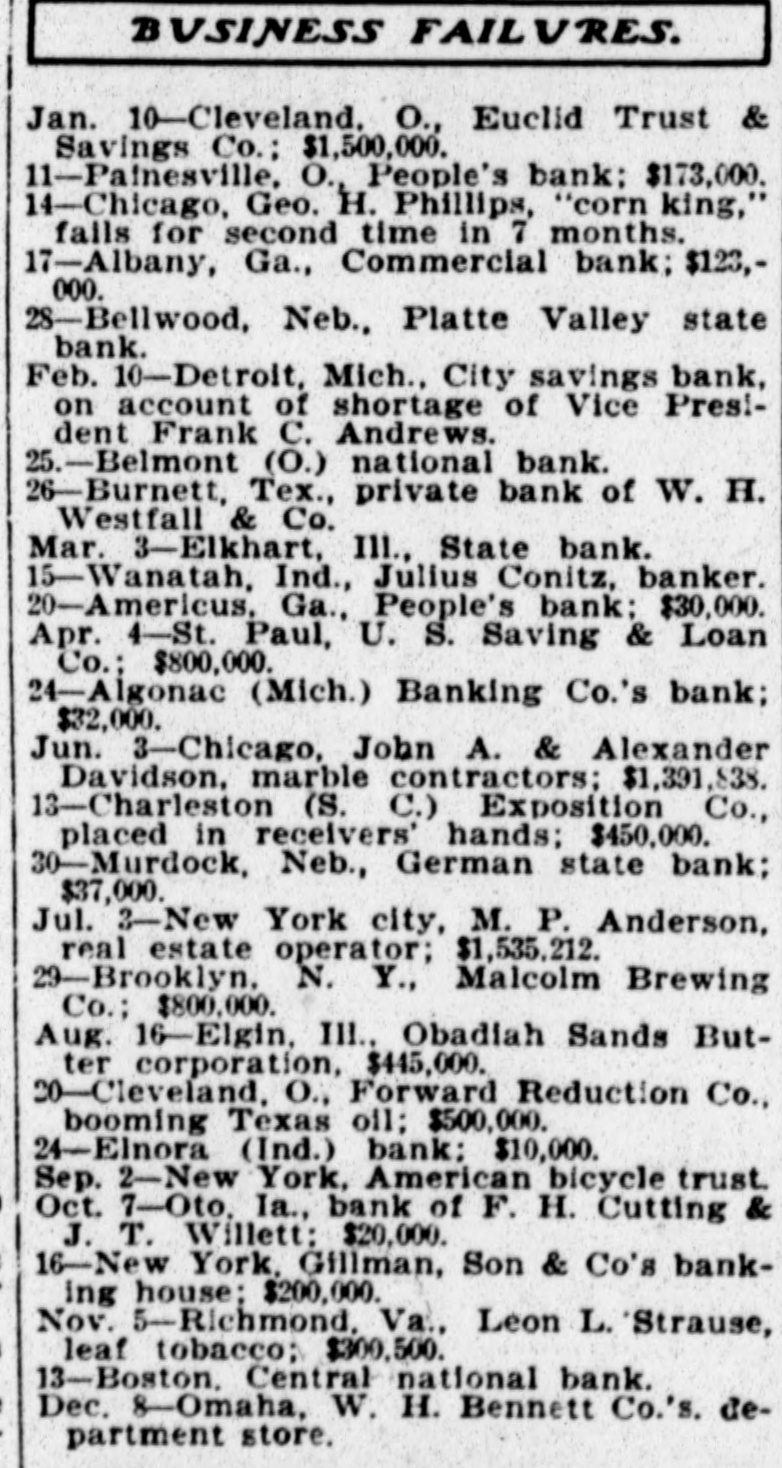
BUSINESS FAILURES. Jan. 10-Cleveland, O., Euclid Trust & Savings Co.: $1,500,000. 11-Painesville, O., People's bank: $173,000. 14-Chicago, Geo. H. Phillips, "corn king," fails for second time in 7 months. 17-Albany, Ga., Commercial bank; $123,000. 28-Bellwood, Neb., Platte Valley state bank. Feb. 10-Detroit, Mich., City savings bank, on account of shortage of Vice President Frank C. Andrews. 25.-Belmont (O.) national bank. 26-Burnett, Tex., private bank of W. H. Westfall & Co. Mar. 3-Elkhart, III., State bank. 15-Wanatah, Ind., Julius Conitz, banker. 20-Americus, Ga., People's bank: $30,000. Apr. 4-St. Paul, U. S. Saving & Loan Co.: $800,000. 24-Algonac (Mich.) Banking Co.'s bank; $32,000. Jun. 3-Chicago, John A. & Alexander Davidson, marble contractors; $1,391,838. 13-Charleston (S. C.) Exposition Co., placed in receivers' hands; $450,000. 30-Murdock, Neb., German state bank; $37,000. Jul. 3-New York city, M. P. Anderson, real estate operator; $1,535,212. 29-Brooklyn, N. Y., Malcolm Brewing Co.: $800,000. Aug. 16-Elgin, Ill., Obadiah Sands Butter corporation, $445,000. 20-Cleveland, O., Forward Reduction Co., booming Texas oil; $500,000. 24-Elnora (Ind.) bank: $10,000. Sep. 2-New York, American bicycle trust. Oct. 7-Oto, Ia., bank of F. H. Cutting & J. T. Willett: $20,000. 16-New York, Gillman, Son & Co's banking house: $200,000. Nov. 5-Richmond, Va., Leon L. Strause, leaf tobacco; $300,500. 13-Boston. Central national bank. Dec. 8--Omaha, W. H. Bennett Co.'s. department store.


Article from The L'anse Sentinel, January 3, 1903

Click image to open full size in new tab

Article Text

BUSINESS FAILVRES. Jan. 10-Cleveland. O., Euclid Trust & Savings Co.; $1,500,000. 11-Painesville, O., People's bank: $173,000. 14-Chicago, Geo. H. Phillips, "corn king," fails for second time in 7 months. 17-Albany, Ga., Commercial bank; $123,000. 28-Bellwood, Neb., Platte Valley state bank. Feb. 10-Detroit, Mich., City savings bank, on account of shortage of Vice President Frank C. Andrews. 25.-Belmont (O.) national bank. 26-Burnett, Tex., private bank of W. H. Westfall & Co. Mar. 3-Elkhart, III., State bank. 15-Wanatah, Ind., Julius Conitz, banker. 20-Americus, Ga., People's bank; $30,000. Apr. 4-St. Paul, U. S. Saving & Loan Co.; $800,000. 24-Algonac (Mich.) Banking Co.'s bank; $32,000. Jun. 3-Chicago, John A. & Alexander Davidson, marble contractors; $1,391,838. 13-Charleston (S. C.) Exposition Co., placed in receivers' hands; $450,000. 30-Murdock, Neb., German state bank; $37,000. Jul. 3-New York city, M. P. Anderson, real estate operator; $1,535,212. 29-Brooklyn. N. Y., Malcolm Brewing Co.; $800,000. Aug. 16-Elgin, III., Obadiah Sands Butter corporation, $445,000. 20-Cleveland, O., Forward Reduction Co., booming Texas oil; $500,000. 24-Elnora (Ind.) bank: $10,000. Sep. 2-New York, American bicycle trust. Oct. 7-Oto. Ia., bank of F. H. Cutting & J. T. Willett: $20,000. 16-New York, Gillman, Son & Co's banking house: $200,000. Nov. 5-Richmond, Va., Leon L. Strause, leaf tobacco; $300,500. 13-Boston, Central national bank. Dec. 8-Omaha, W. H. Bennett Co.'s. department store.


Article from Iron County Register, January 8, 1903

Click image to open full size in new tab

Article Text

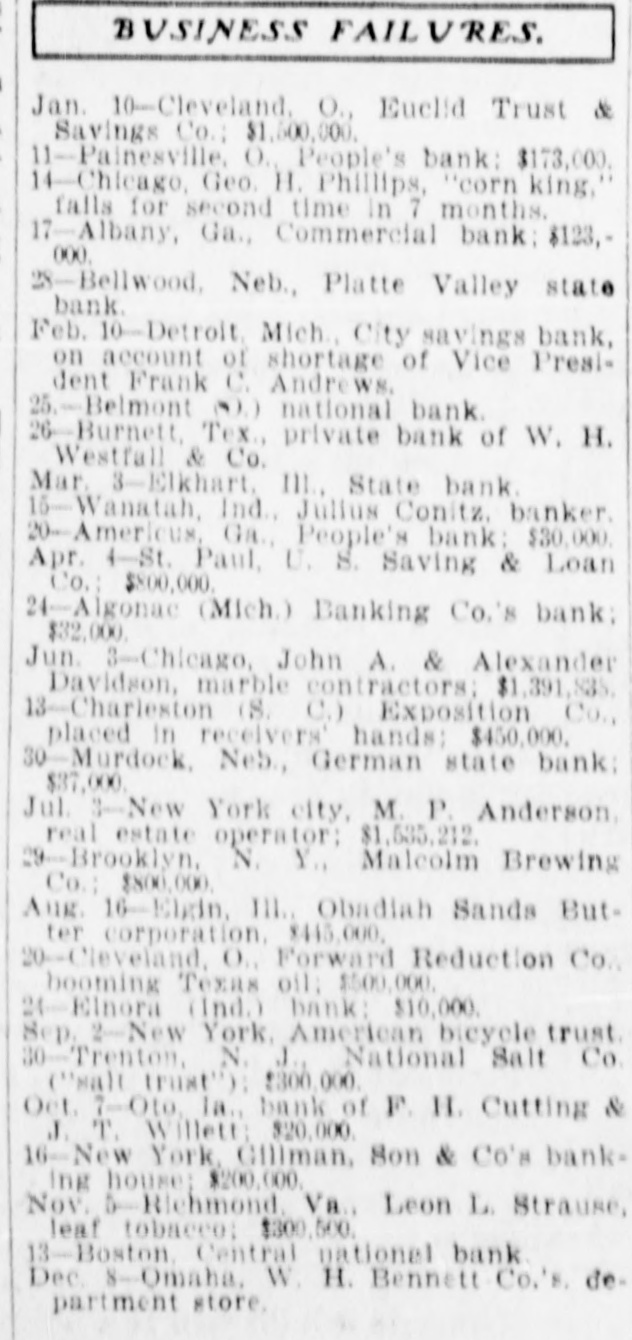
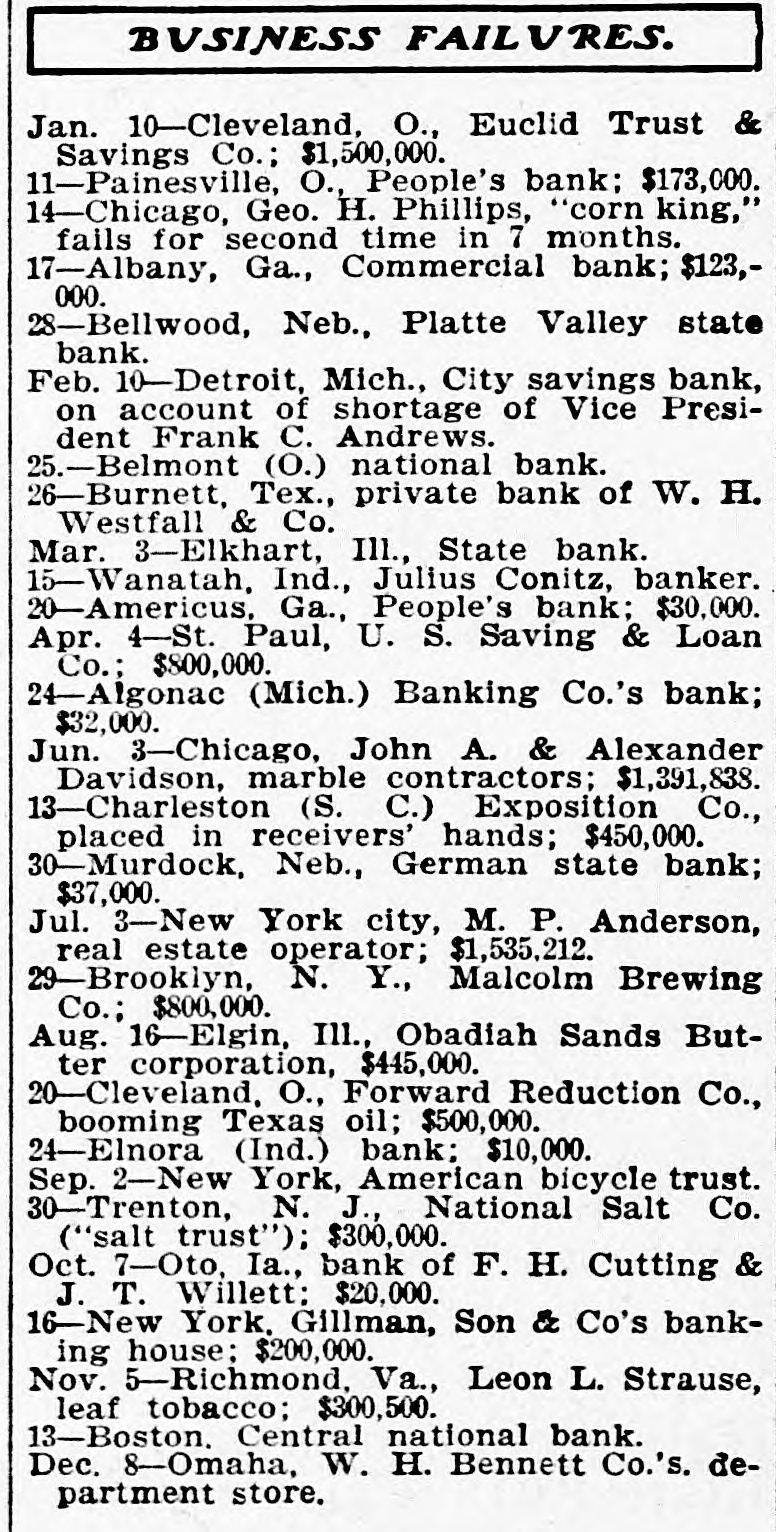
BUSINESS FAILVRES. Jan. 10-Cleveland. O., Euclid Trust & Savings Co.: $1,500,000. 11-Painesville, O., People's bank: $173,000. 14-Chicago, Geo. H. Phillips, "corn king," fails for second time in 7 months. 17-Albany, Ga., Commercial bank; $123,000. 28-Bellwood, Neb., Platte Valley state bank. Feb. 10-Detroit, Mich., City savings bank, on account of shortage of Vice President Frank C. Andrews. 25.-Belmont (O.) national bank. 26-Burnett, Tex., private bank of W. H. Westfall & Co. Mar. 3-Elkhart, Ill., State bank. 15-Wanatah, Ind., Julius Conitz. banker. 20-Americus. Ga., People's bank: $30,000. Apr. 4-St. Paul, U. S. Saving & Loan Co.: $800,000. 24-Algonac (Mich.) Banking Co.'s bank; $32,000. Jun. 3-Chicago, John A. & Alexander Davidson, marble contractors; $1,391,838. 13-Charleston (S. C.) Exposition Co., placed in receivers' hands; $450,000. 30-Murdock, Neb., German state bank; $37,000. Jul. 3-New York city, M. P. Anderson, real estate operator; $1,535,212. 29-Brooklyn, N. Y., Malcolm Brewing Co.; $800,000. Aug. 16-Elgin, Ill., Obadiah Sands Butter corporation, $445,000. 20-Cleveland, O., Forward Reduction Co., booming Texas oil; $500,000. 24-Elnora (Ind.) bank: $10,000. Sep. 2--New York, American bicycle trust. 30-Trenton, N. J., National Salt Co. ("salt trust"): $300,000. Oct. 7-Oto, Ia., bank of F. H. Cutting & J. T. Willett: $20,000. 16-New York, Gillman, Son & Co's banking house; $200,000. Nov. 5-Richmond, Va., Leon L. Strause, leaf tobacco; $300,500. 13-Boston. Central national bank. Dec. 8-Omaha, W. H. Bennett Co.'s. department store.


Article from The Jasper Weekly Courier, January 9, 1903

Click image to open full size in new tab

Article Text

BUSINESS FAILVRES. Jan. 10-Cleveland, O., Euclid Trust & Savings Co.; $1,500,000. 11-Painesville, O., People's bank: $173,000. 14-Chicago, Geo. H. Phillips, "corn king," fails for second time in 7 months. 17-Albany, Ga., Commercial bank; $123,000. 2S-Bellwood, Neb., Platte Valley state bank. Feb. 10-Detroit, Mich., City savings bank, on account of shortage of Vice President Frank C. Andrews. 25.-Belmont (O.) national bank. 26-Burnett, Tex., private bank of W. H. Westfall & Co. Mar. 3-Elkhart, III., State bank. 15-Wanatah, Ind., Julius Conitz, banker. 20-Americus, Ga., People's bank: $30,000. Apr. 4-St. Paul, U. S. Saving & Loan Co.: $800,000. 24-Algonac (Mich.) Banking Co.'s bank; $32.000. Jun. 3-Chicago, John A. & Alexander Davidson, marble contractors; $1,391,838. 13-Charleston (S. C.) Exposition Co., placed in receivers' hands; $450,000. 30-Murdock, Neb., German state bank; $37,000. Jul. 3-New York city, M. P. Anderson, real estate operator; $1,535,212. 29-Brooklyn, N. Y., Malcolm Brewing Co.; $800,000. Aug. 16-Elgin, III., Obadlah Sands Butter corporation. $445,000. 20-Cleveland, O., Forward Reduction Co., booming Texas oil; $500,000. 24-Elnora (Ind.) bank: $10,000. Sep. 2-New York. American bicycle trust. Oct. 7-Oto. 1a., bank of F. H. Cutting & J. T. Willett: $20,000. 16-New York, Gillman, Son & Co's bank. ing house: $200,000. Nov. 5-Richmond, Va., Leon L. Strause, leaf tobacco: $300,500. 13-Boston Central national bank. Dec. 8-Omaha, W. H. Bennett Co.'s. department store.


Article from The Kinsley Graphic, January 9, 1903

Click image to open full size in new tab

Article Text

BUSINESS FAILVRES. Jan. 10-Cleveland, O., Euclid Trust & Savings Co.; $1,500,000. 11-Painesville, 0., People's bank; $173,000. 14-Chicago, Geo. H. Phillips, "corn king," fails for second time in 7 months. 17-Albany, Ga., Commercial bank; $123,000. 28-Bellwood, Neb., Platte Valley state bank. Feb. 10-Detroit, Mich., City savings bank, on account of shortage of Vice President Frank C. Andrews. 25.-Belmont (0.) national bank. 26-Burnett, Tex., private bank of W. H. Westfall & Co. Mar. 3-Elkhart, III., State bank. 15-Wanatah, Ind., Julius Conitz, banker. 20-Americus, Ga., People's bank; $30.000. Apr. 4-St. Paul, U. S. Saving & Loan Co.; $800,000. 24-Algonac (Mich.) Banking Co.'s bank; $32,000. Jun. 3-Chicago, John A. & Alexander Davidson, marble contractors; $1,391,838. 13-Charleston (S. C.) Exposition Co., placed in receivers' hands; $450,000. 30-Murdock, Neb., German state bank; $37,000. Jul. 3-New York city, M. P. Anderson, real estate. operator; $1,535,212. 29-Brooklyn, N. Y., Malcolm Brewing Co.; $800,000. Aug. 16-Elgin, III., Obadiah Sands Butter corporation, $445,000. 20-Cleveland, O., Forward Reduction Co., booming Texas oil; $500,000. 24-Elnora (Ind.) bank; $10,000. Sep. 2-New York, American bicycle trust. Oct. 7-Oto, la., bank of F. H. Cutting & J. T. Willett: $20,000. 16-New York, Gillman, Son & Co's banking house; $200,000. Nov. 5-Richmond, Va., Leon L. Strause, leaf tobacco; $300,500. 13-Boston. Central national bank. Dec. 8-Omaha, W. H. Bennett Co.'s. department store.


Article from New-York Tribune, January 14, 1903

Click image to open full size in new tab

Article Text

BIG DIVIDEND FOR DEPOSITORS. Boston, Jan. 13.-Frank D. Allen, receiver of the Central National Bank. has recommended to the Controller of the Currency the payment of a first dividend of 65 per cent to the depositors. The bank was closed on November 14 last, its standing having become impaired. Never before in the history of banking here has such a large first dividend been suggested for the depositors of a bank that failed.


Article from Bryan Morning Eagle, April 19, 1906

Click image to open full size in new tab

Article Text

Depositors In Luck. Boston, April 18.-Depositors of the Central National bank of this city, which failed in 1892, will receive all their money with interest. Receiver Frank D. Allen announces that a final dividend of 10 per cent will be paid at once.


Article from Americus Times-Recorder, April 19, 1906

Click image to open full size in new tab

Article Text

WIII Pay Depositors. Boston, April 18.-Depositors of the Central National bank of this city, which failed in 1892, will receive all Receiver their money with interest. D. Allen announces that the final dividend of 10 per cent will be paid at once.