Click image to open full size in new tab
Article Text
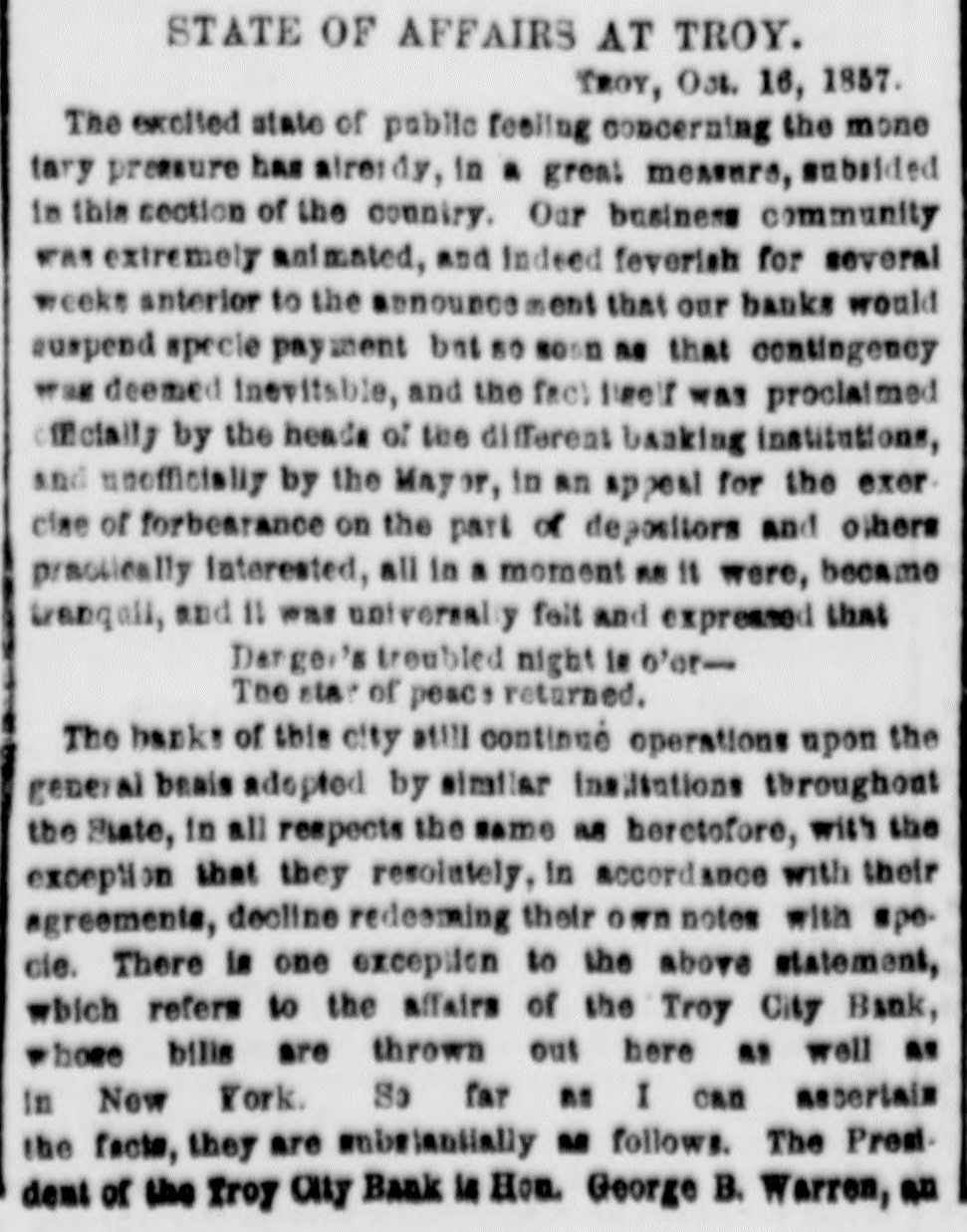
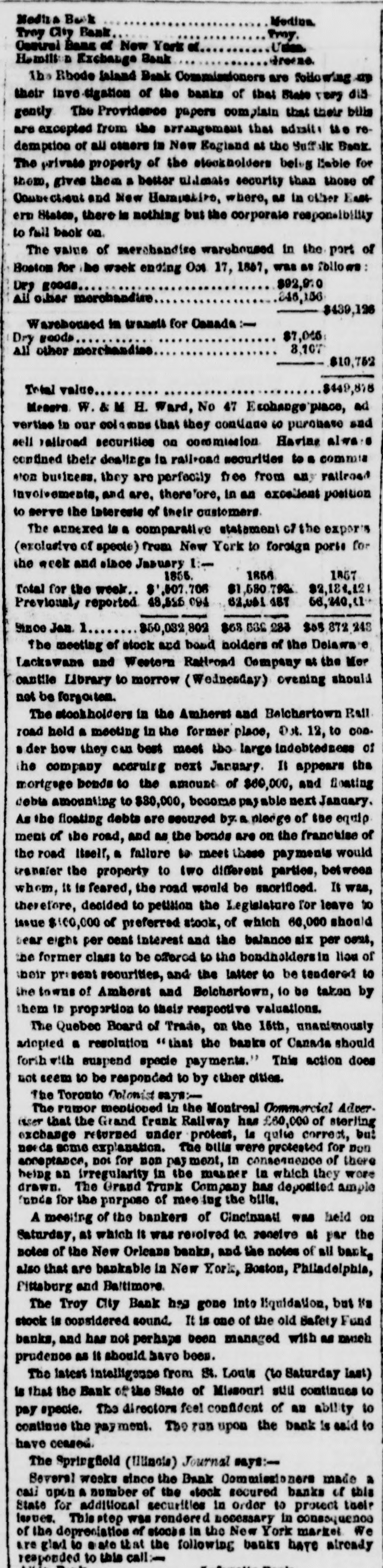
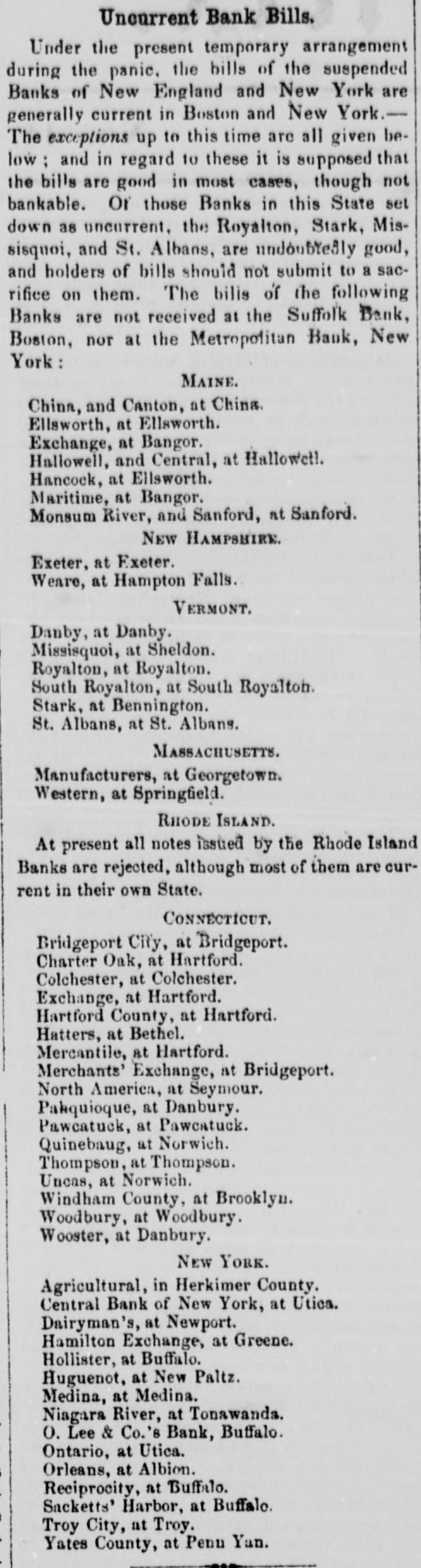
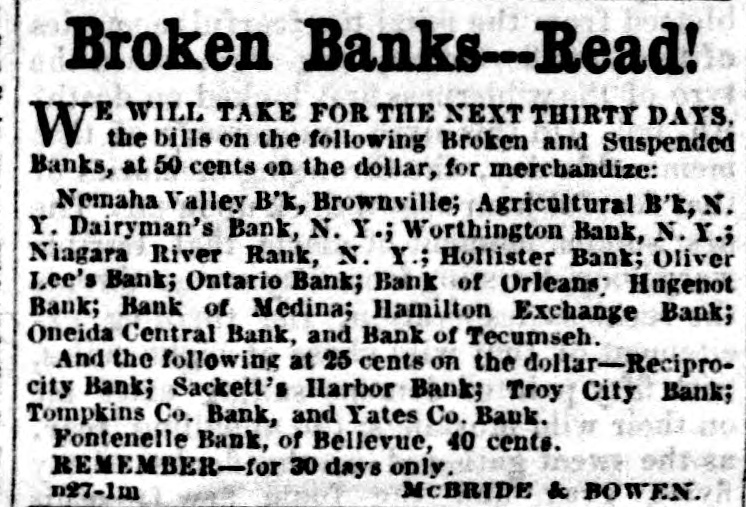
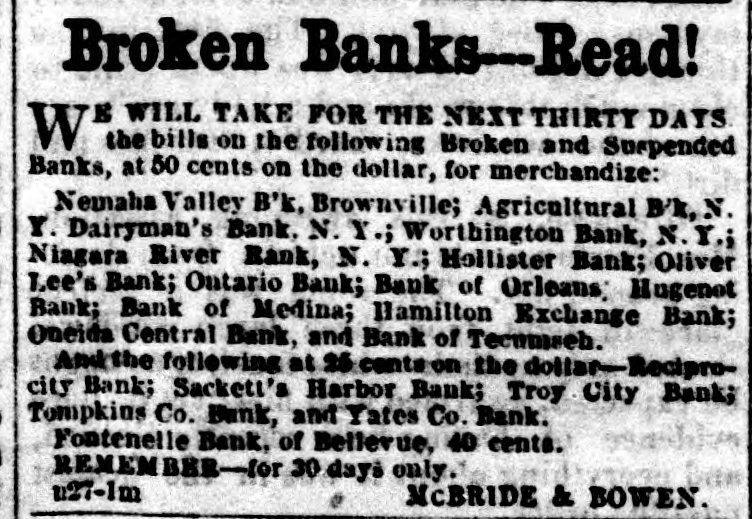
previous loss of 20,810, makes the loss this season, far, 58,182 tuns. The Commissioners of the Canal Fund are advertising for 8 loan of five hundred thousand dollars, to supply the deficiency in the Sinking Fund, at the rate of six per cent per annum, payable quarterly, and the principal reimbursable on the 1st of October, 1875. Proposals will be received for not less than five thousand dollars, at the Canal Department, Albany, until the 10th of November next at noon. The statement of John Farnum & Co, of Philadelphia, at the meeting of their creditors, was not 80 satisfactory as was expected Their debts are $2,200,000, their assets $2,900,000, in which are included $1,500,000 of suspended paper and over drafts. Of the debts, $250,000 are recured by collaterals that are included in the assets. Their assets also include $340,000 in goods. They propose to make up their accounts to the 1st of December, and to pay in ten installments of 9, 12, 15, 18, 21, 24, 30, 36, 42 and 48 months. is S. Lippincott & Co. offer 25 per cent in six months, and to surrender their print works to their creditors. David S. Brown & Co. have proposed to pay 5 per cent and renew the balance for six months. Thomas Allibone, esq., has resigned as President of the Bank of Pennsylvania, at Philadelphia on account of ill health. Joseph Jones has been elected President of the Commercial Bank of the same city, in place of Wm. Wainwright, resigned. The Boston Postsay Those who hold bank bills should not part with them at a dollar's discount. The holders not only have all the means of the bank to redeem them, but all the individual property of the stockholders. The act of March 13, 1849 provides that when any bank shall stop payment, the stockholders shall be individually liable for the payment and redemption of all its bills, in proportion to the stock they may respectively hold at the time. The bills of the Boston banks, under this provision, cannot fall under a depreciation which should require any discount in paying debta of buying goods. The Troy City Bank has gone into liquidation, but its stock is considered sound. It is one of the old Safety Fund Banks. The Albany Statesman says: "We understand that the process of surrendering circulation to the Banking Department by banks, and drawing out stocks, has ceased, and that yesterday $30,000 of stocks were returned and circulation taken out. Though this may not be carried to any great extent, yet it is evident that the tide has turned. The Providence Journal says: "Our market retains the quietness that followed the suspension in New York. The demand for money has greatly fallen off, but facility of negotiation has not much increased, and the rates are high. The banks renew a great deal of paper, and 80 much assistance has been rendered to parties abroad, that the exchanges are against this city, and men who require funds to place in New York or Boston are obliged to pay a premium, the renewals having absorbed the funds of the banks in those places and caused & scarcity. These renewals ought not longer to be needed, as the general suspension of the banks enables them to offer the same facilities in other places that are extended here, and should be followed by the same liberal relief to the merchants. We report no sales of printing cloths for the past week. and we have heard of but a single sale of cotton. There is no price for either. Some goods are printed ou manufacturers' account. Cotton has been shipped from here to New-York. We think that no orders have been given for the new crop. Every one looks for still lower prices, and people are talking of 7 or 8 cents. The Banks of New-Jersey are petitioning the Governor to call an extra session of the Legislature. The Charleston Mercury of the 15th says: "The local run on our specie-paying Banks has nearly ceased. The Bank of the State, the Railroad Bank, the People's Bank, and the Bank of South Carolina, have determined to receive on deposit and in payment the notes of all the city Banks, and to pay out only their own. "The Bank of the State, in addition to the notes of all the city Banks, receives on deposit and in payment of dues the notes of the Bank of Hamburg, and of the Exchange Bank of Columbia." The run on the New Orleans banks has also nearly ceased. The cash assets and liabilities on the 10th inst. were as follows: Deposits