Click image to open full size in new tab
Article Text
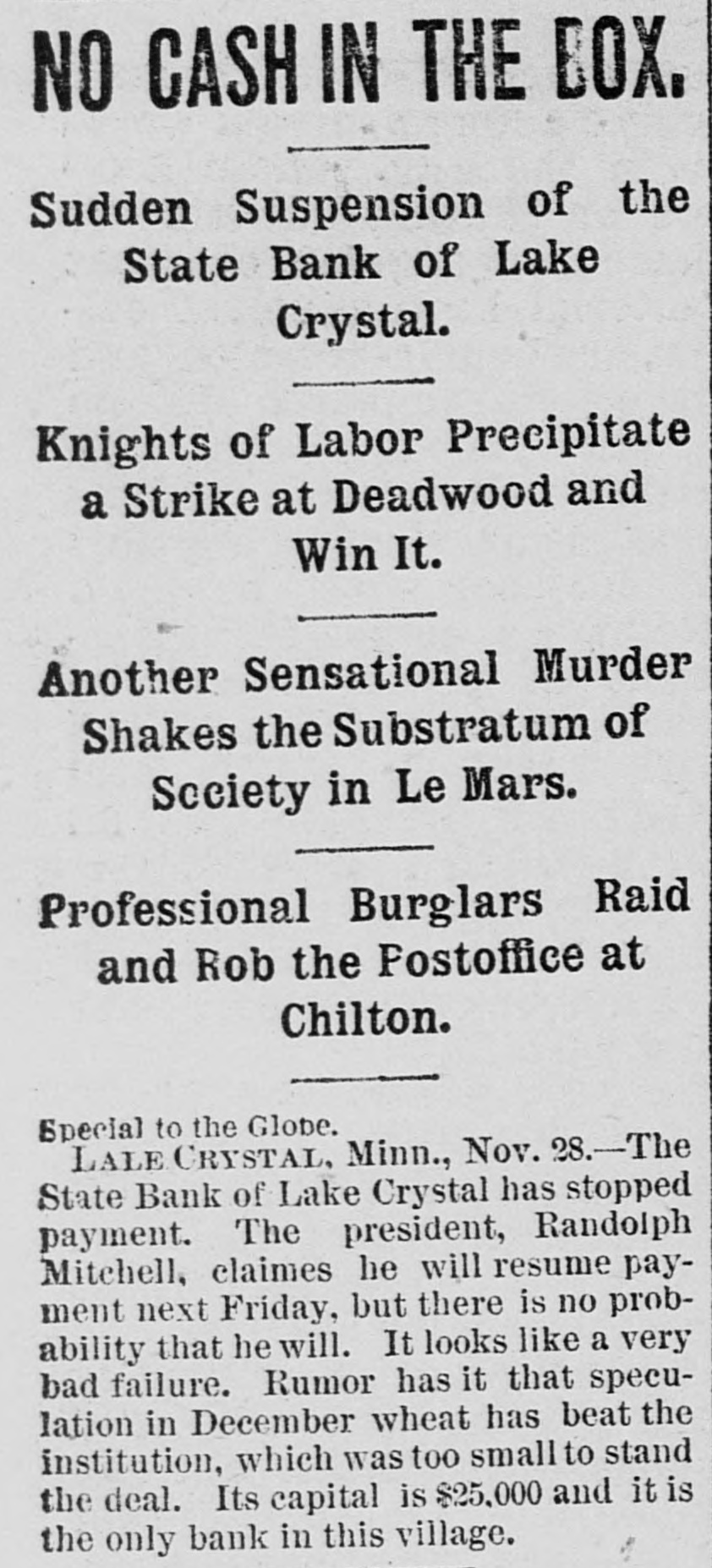
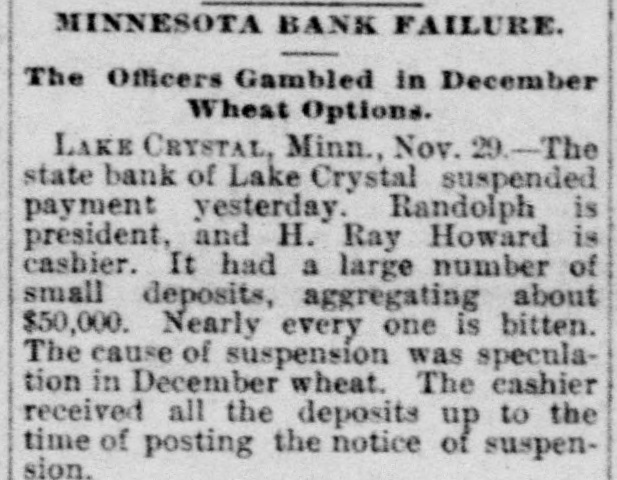
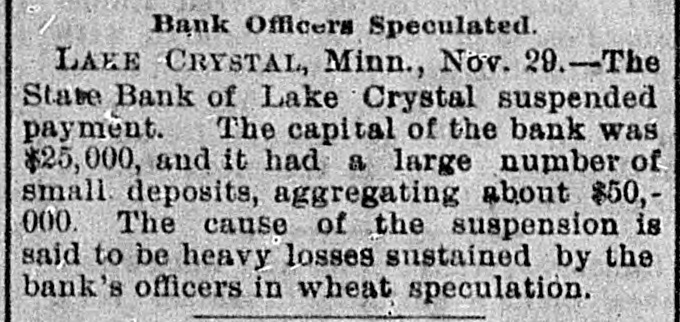
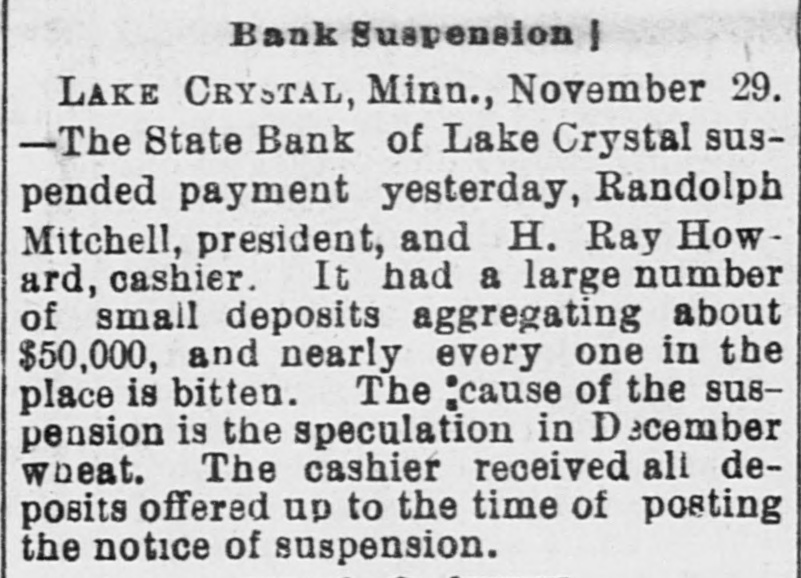
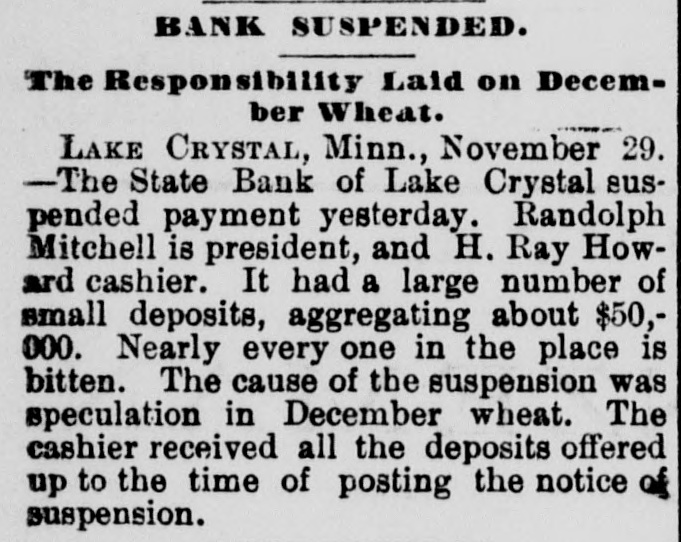
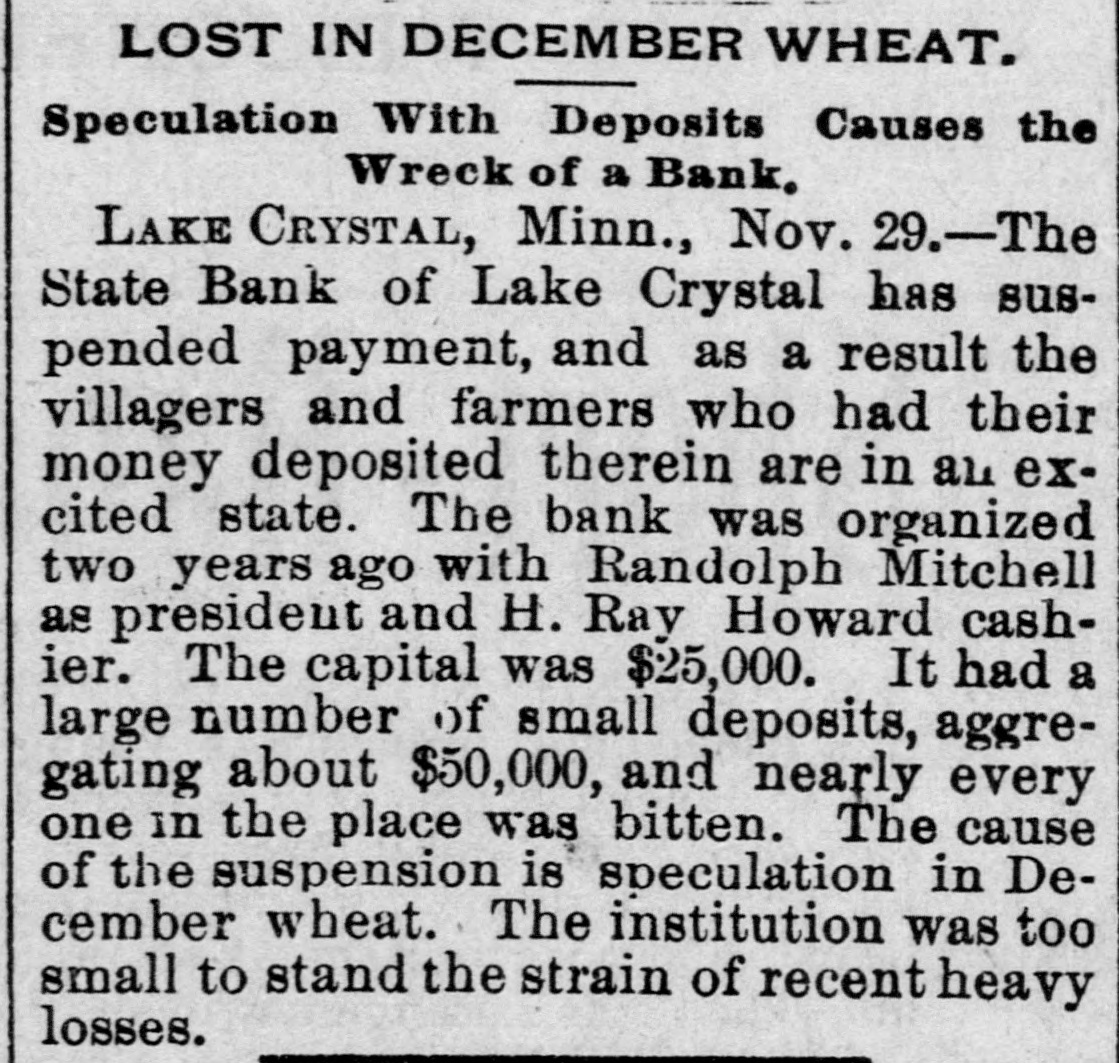
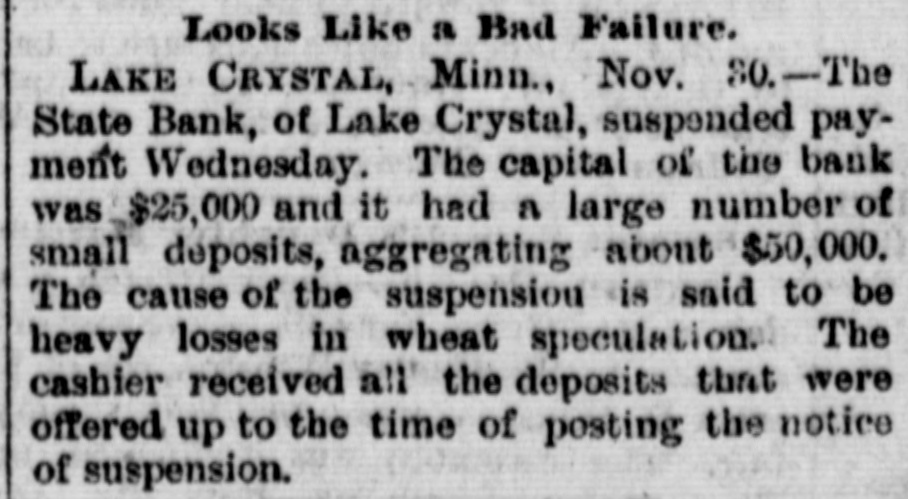
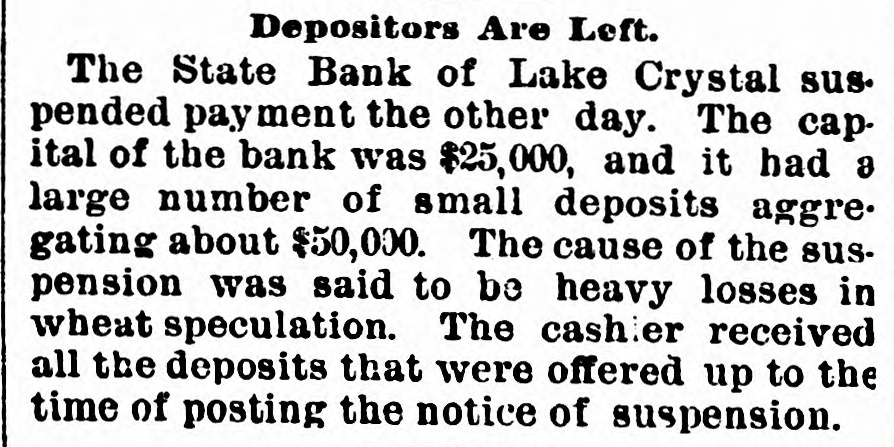
-Mr. O. O. Pitcher has qualified as receiver of the defunct State Bank of Lake Crystal. He has furnished a bond for $2,500, with P. W. Pitcher and G. F. Piper as sureties. The assets amount to between $1,000 and $1,500, mostly in real estate. Besides this the creditors hope to get hold of some property, including the bank building, which they say was fraudulently transferred. This will bring the assets up to from $3,000 to $3,500. The law allows four months in which to set aside a transfer when there is intent to evade the law. The liabilities amount to about $4,000, with more to be heard from. It is possible that the bank may appeal to the supreme court from Judge Severance's decision to appoint a receiver, on the point that banks cannot be placed in the hands of a receiver. The elevator company's business is also mixed up with the bank and will have to be investigated.
-The game bill was debated in the committee room of the State senate yesterday by several senators, who proved themselves thorough sportsmen by their excellent discourses on the merits of an August or September limit on shooting prairie chickens. Senator Edwards made an amendment to substitute Sept. 1 for Aug. 20 as the day to begin the slaughter of chickens, in order to make it to correspond with the day in Iowa and Dakota. If Aug. 20 was fixed upon the border counties would be overrun with sportsmen from other States, who would bag all the birds. Besides, he said, on August 20 most of the grain in the State was standing, and protested against giving young sportsmen license to tramp through the fields and destroy grain. Senator Goodrich opposed the amendment, on the ground that the chickens were old and tough on Sept. 1, and if the late date was sanctioned by the legislature the result would be that the law breakers would get all the sport. Senator Brown emphatically indorsed the remarks of Senator Edwards, and incidentally roasted the members of the rich gun clubs. The Edwards amendment prevailed, and the bill was recommended to pass in that form.
-A first-class contractor and carpenter said to-day, in speaking of the proposed contractors' and mechanics' union, that good contractors stand no show in bidding on anything any more. Those who know nothing about the business rush in and get the contracts by bidding so low that often the bondsmen are obliged to finish the contracts. It was the same way with the various mechanical industries, he said, especially with carpenters. Common laborers will engage as carpenters, though they have had no experience and do not possess any tools, and will work for a dollar and a half a day; whereas good carpenters, who have had years of experience and possessed several hundred dollars' worth of tools should do the work and receive regular mechanics' wages. He took no stock in the attempt to lay these wrongs at the doors of the rich, but said it was all owing to the inexperienced men cutting each others' throats in their bids. A man will build a house at a reasonable price as quickly as at a very low price, after he has made up his mind to build. The difference between the two prices should go to the labor in higher wages, and would, were it not for labor itself. He favored, as the only escape from the existing condition of affairs, a law requiring persons to serve apprenticeships before becoming mechanics or contractors. He did not believe in strikes and would not join any organization where they would be allowed. It was to try to meet the above stated complaints that the contractors' union had been talked of.