Click image to open full size in new tab
Article Text
WENDELL PHILLIPS.
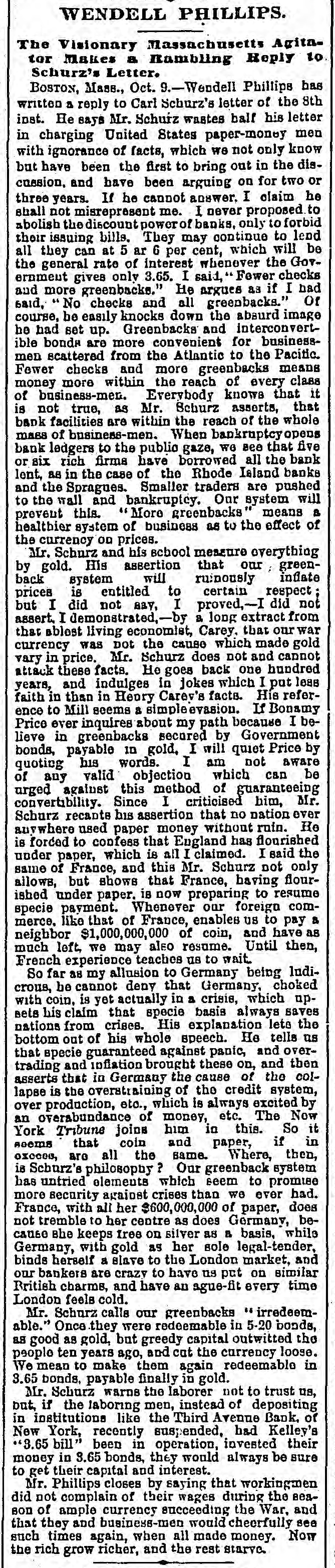
The Visionary Massachusetts Agitator Makes a Rambling Reply to Schurz's Letter. BOSTON, Mass., Oct. 9.-Wendell Phillips has written a reply to Carl Schurz's letter of the 8th inst. He says Mr. Schurz wastes half his letter in charging United States paper-money men with ignorance of facts, which we not only know but have been the first to bring out in the discussion, and have been arguing on for two or three years. If he cannot answer. I claim he shall not misrepresent me. I never proposed to abolish the discount power of banks, only to forbid their issuing bills. They may continue to lend all they can at 5 ar 6 per cent, which will be the general rate of interest whenever the Gov- ernment gives only 3.65. I said, "Fewer checks and more greenbacks." He argues as if I had said, "No checks and all greenbacks." Of course, he easily knocks down the absurd image he had set up. Greenbacks and interconvert- ible bonds are more convenient for business- men scattered from the Atlantic to the Pacific. Fewer checks and more greenbacks means money more within the reach of every class of business-men. Everybody knows that it is not true, as Mr. Schurz asserts, that bank facilities are within the reach of the whole mass of business-men. When bankruptcy opens bank ledgers to the public gaze, we see that five or six rich firms have borrowed all the bank lent, as in the case of the Rhode Island banks and the Spragues. Smaller traders are pushed to the wall and bankruptcy. Our system will prevent this. "More greenbacks" means a healthier system of business as to the effect of the currency on prices.
Mr. Schurz and his school measure overything by gold. His assertion that our green- back system will ruinously inflate prices is entitled to certain respect; but I did not say, I proved, I did not assert. I demonstrated, -by a long extract from that ablest living economist, Carey, that our war currency was not the cause which made gold vary in price. Mr. Schurz does not and cannot attack these facts. He goes back one hundred years, and indulges in jokes which I put less faith in than in Henry Carey's facts. His refer- ence to Mill seems a simple evasion. If Bonamy Price ever inquires about my path because I be- lieve in greenbacks secured by Government bonds, payable in gold, I will quiet Price by quoting his words. I am not aware of any valid objection which can be urged against this method of guaranteeing convertibility. Since I criticised him, Mr. Schurz recants his assertion that no nation ever anywhere used paper money without ruin. He is forced to confess that England has flourished under paper, which is all I claimed. I said the same of France, and this Mr. Schurz not only allows, but shows that France, having flour- ished under paper, is now preparing to resume specie payment. Whenever our foreign com- merce, like that of France, enables us to pay a neighbor $1,000,000,000 of coin, and have as much left, we may also resume. Until then, French experience teaches us to wait.
So far as my allusion to Germany being ludi- crous, be cannot deny that Germany, choked with coin, is yet actually in a crisis, which up- sets his claim that specie basis always saves nations from crises. His explanation lets the bottom out of his whole speech. He tells us that specie guaranteed against panic, and over- trading and inflation brought these on, and then asserts that in Germany the cause of the col- lapse is the overstraining of the credit system, over production, etc., which is always excited by an overabundance of money, etc. The Now York Tribune joins him in this. So it seems that coin and paper, if in excess, are all the same. Where, then, is Schurz's philosophy? Our greenback system has untried elements which seem to promise more security against crises than we ever had. France, with all her $600,000,000 of paper, does not tremble to her centre as does Germany, be- cause she keeps free on silver as a basis, while Germany, with gold as her sole legal-tender, binds herself a slave to the London market, and our bankers are crazy to have us put on similar British charms, and have an ague-fit every time London feels cold.
Mr. Schurz calls our greenbacks "irredeem- able." Once they were redeemable in 5-20 bonds, as good as gold, but greedy capital outwitted the people ten years ago, and cut the currency loose. We mean to make them again redeemable in 3.65 bonds, payable finally in gold.
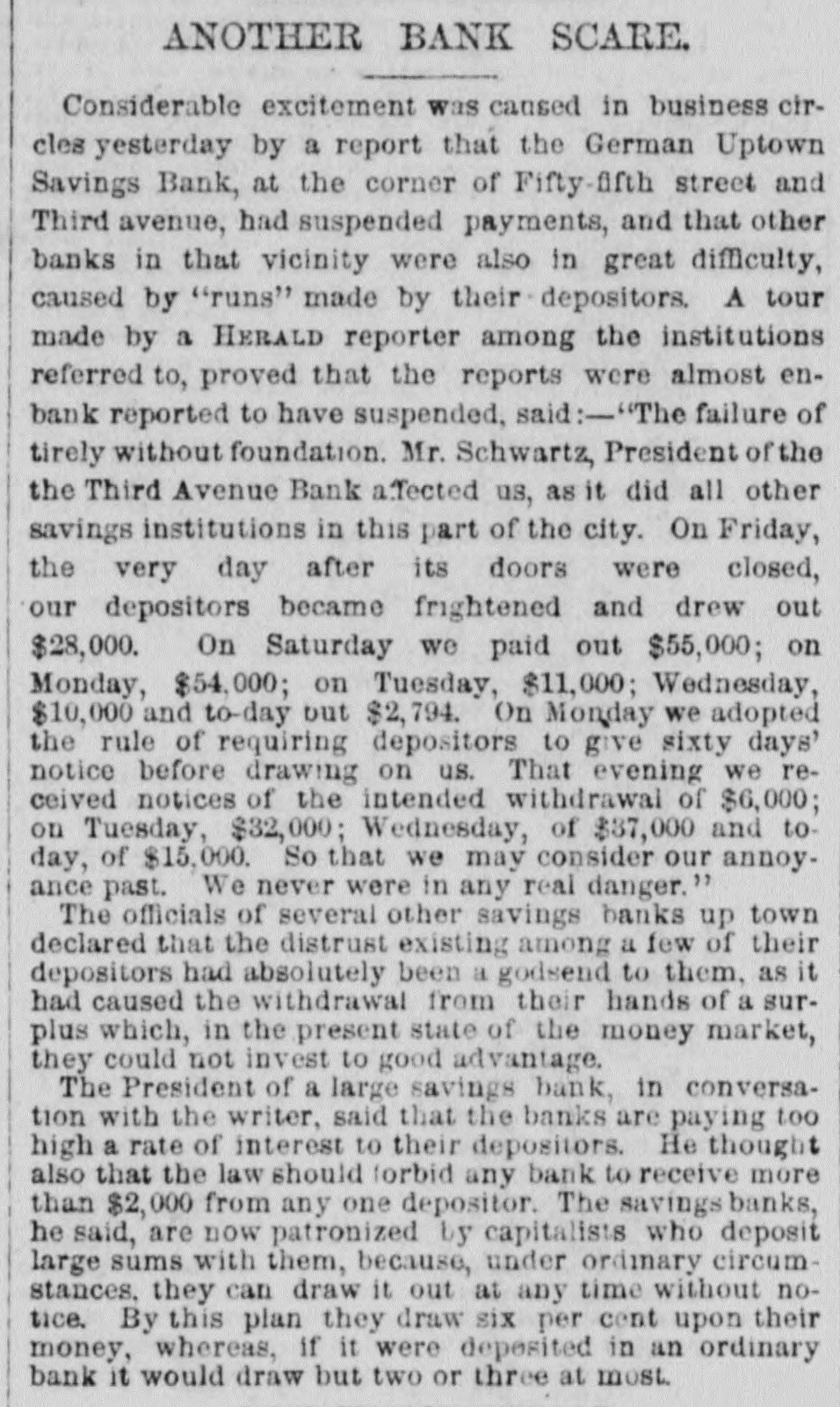
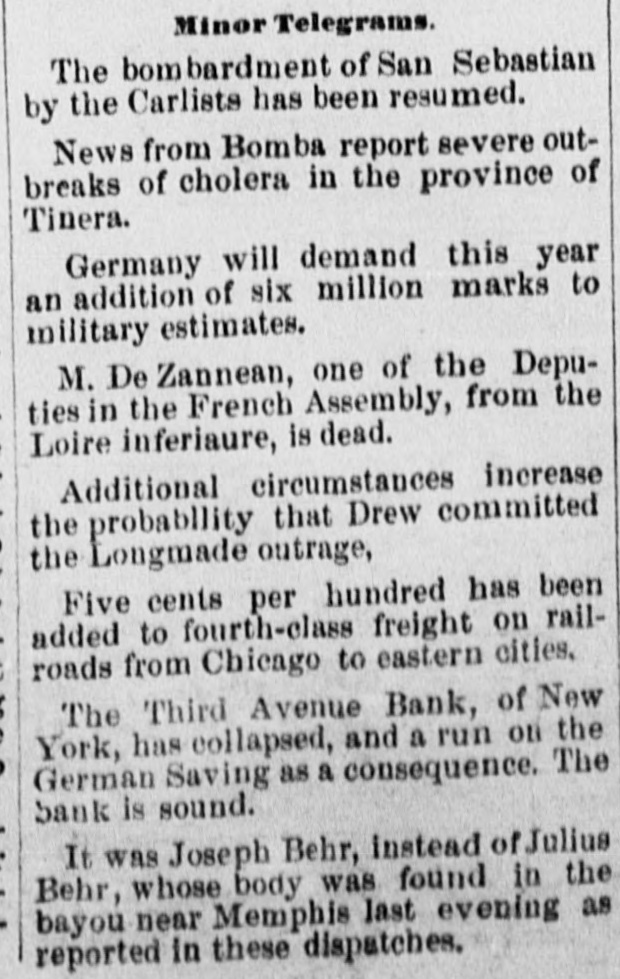
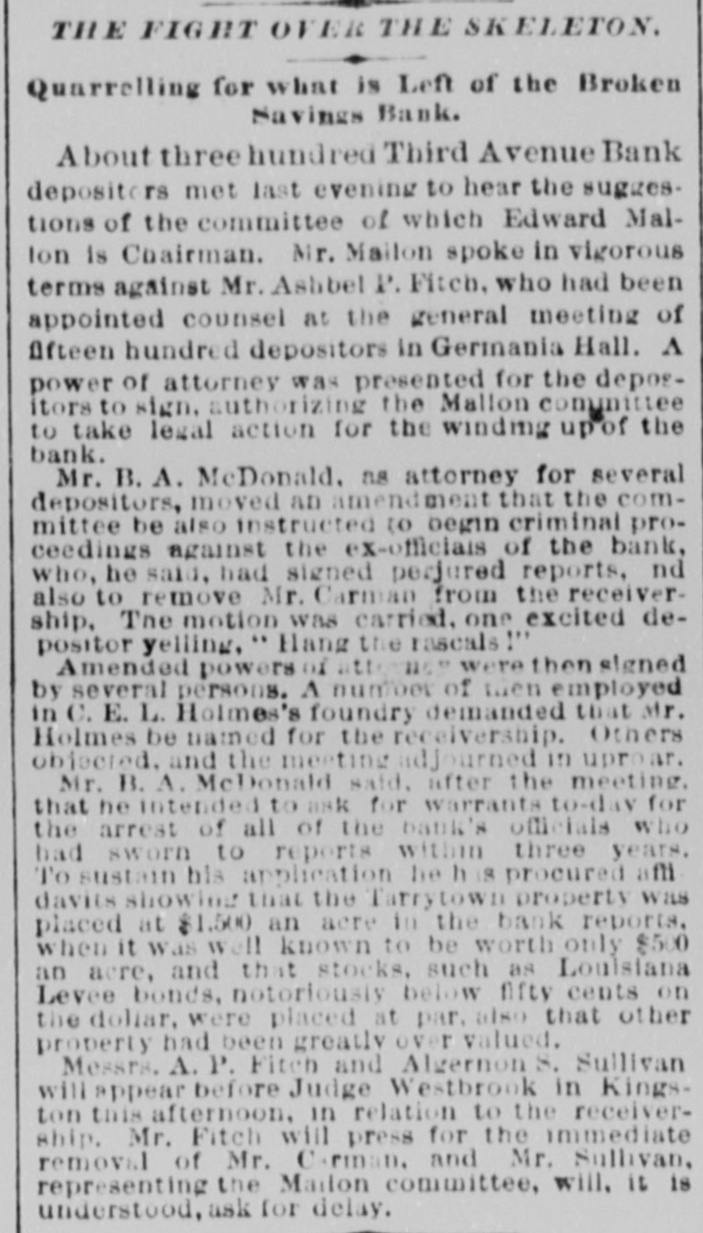
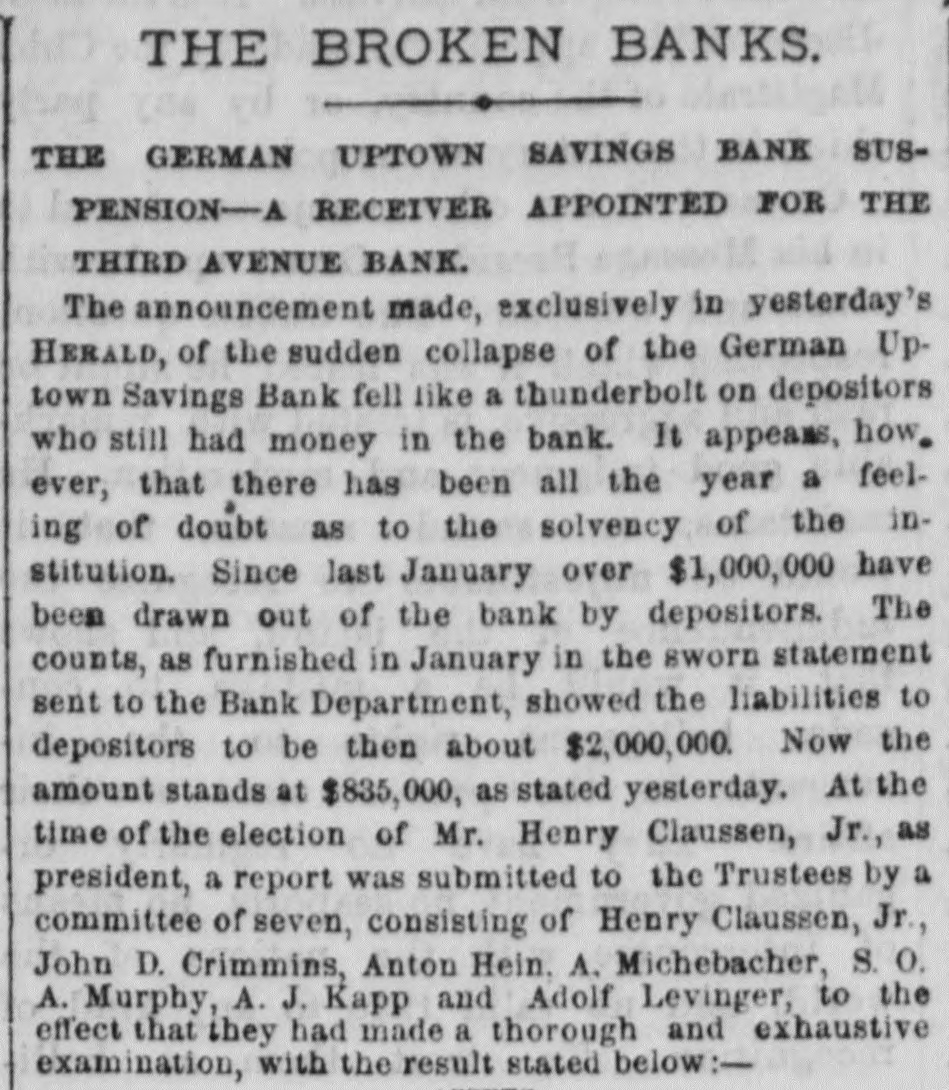
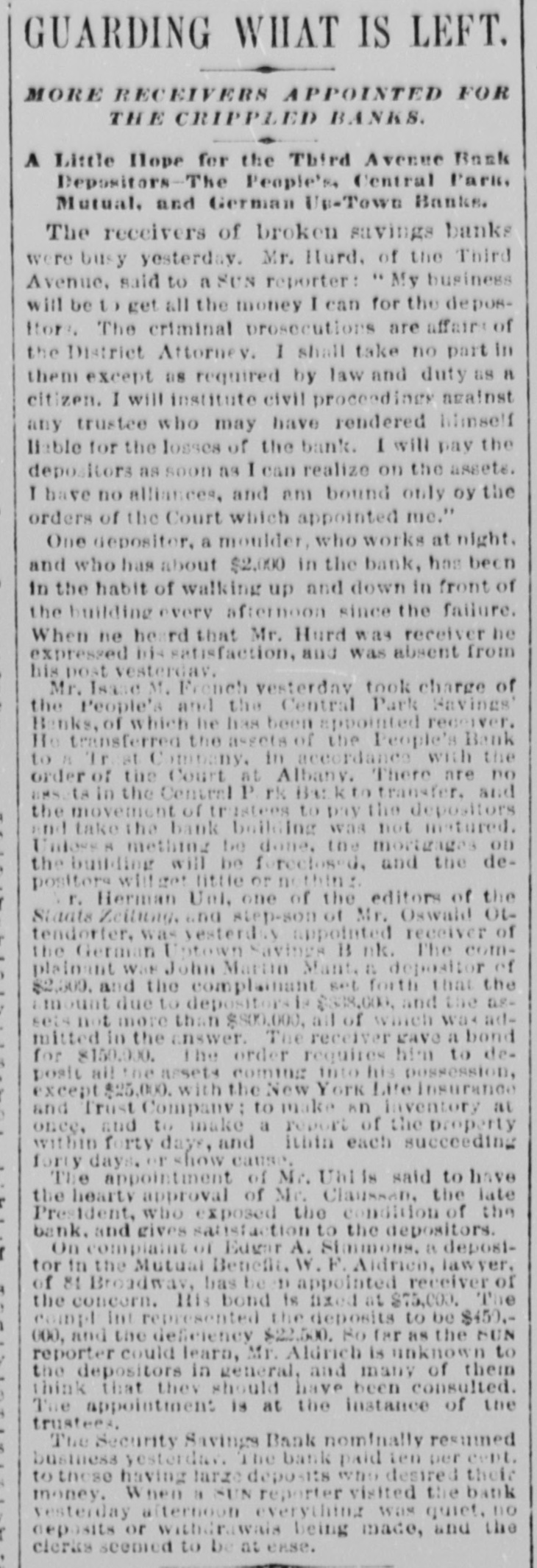
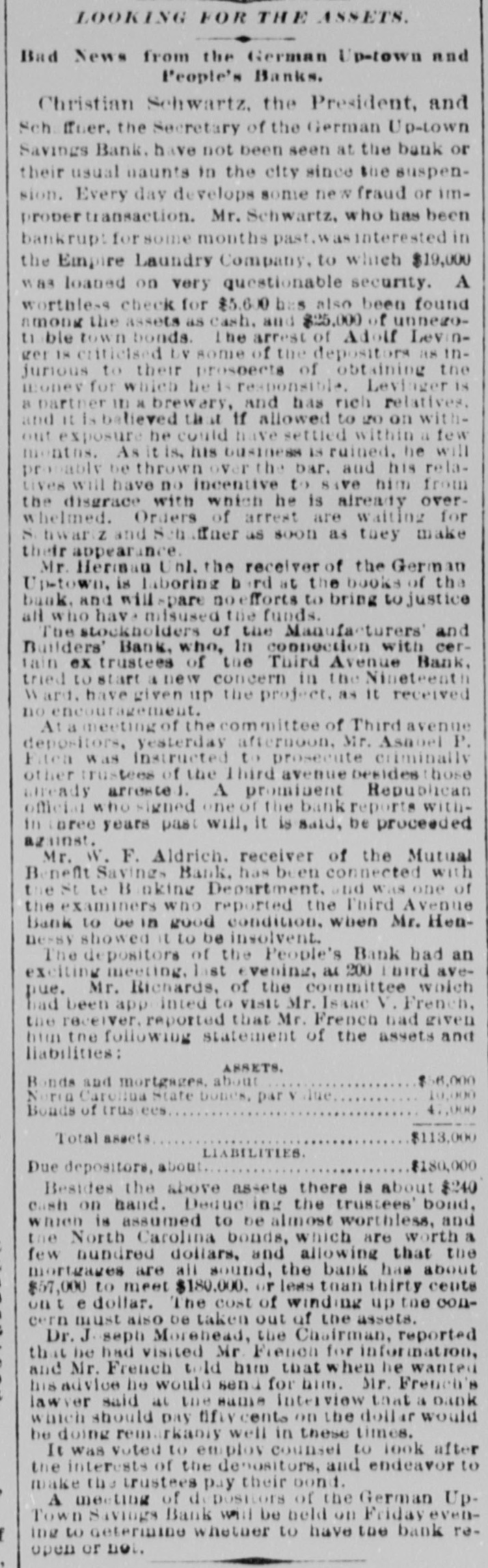
Mr. Schurz warns the laborer not to trust us, but, if the laboring men, instead of depositing in institutions like the Third Avenue Bank, of New York, recently suspended, had Kelley's "3.65 bill" been in operation, invested their money in 3.65 bonds, they would always be sure to get their capital and interest.
Mr. Phillips closes by saying that workingmen did not complain of their wages during the sea- son of ample currency succeeding the War, and that they and business-men would cheerfully see such times again, when all made money. Now the rich grow richer, and the rest starve.