Click image to open full size in new tab
Article Text
THE END OF IT NOT YET
All of Saturday Taken Up With Arguments in the Batchelor Case.
The Assistant District Attorney Finishes the Opening for the Prosecution.
Judge Strevelle Opens for the Defense and Makes an Eloquent Plea for His Client.
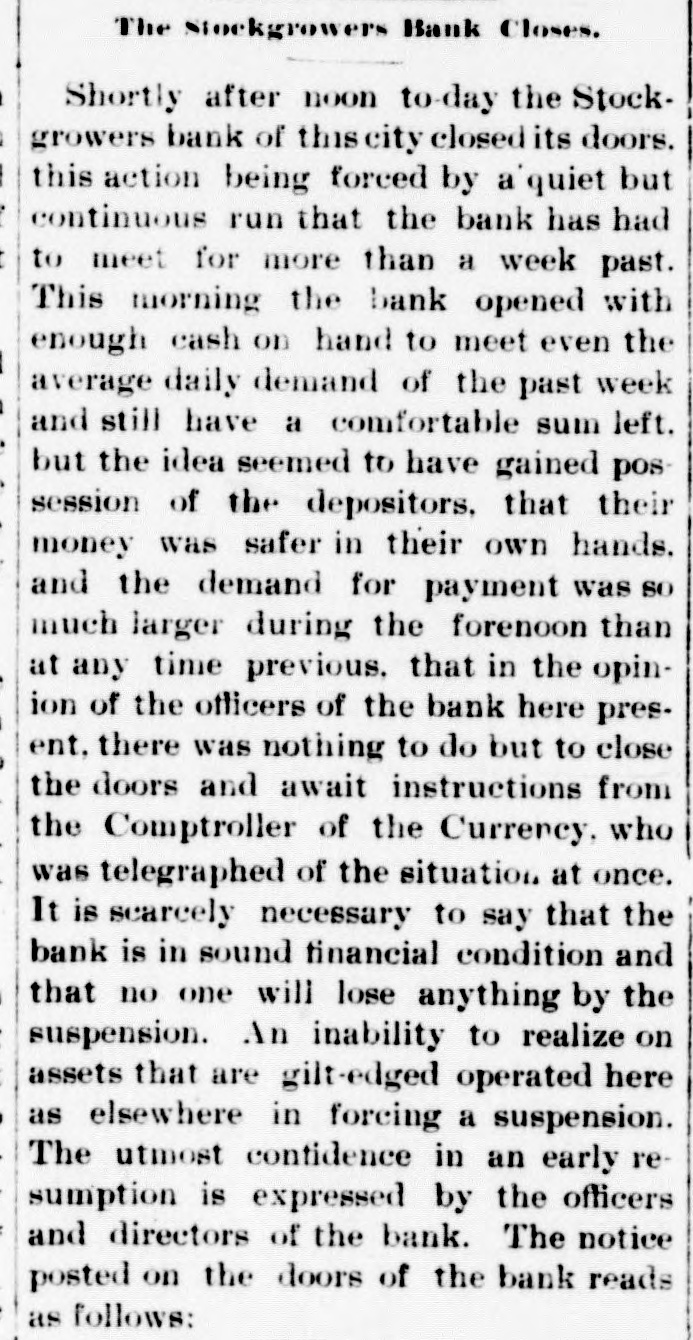
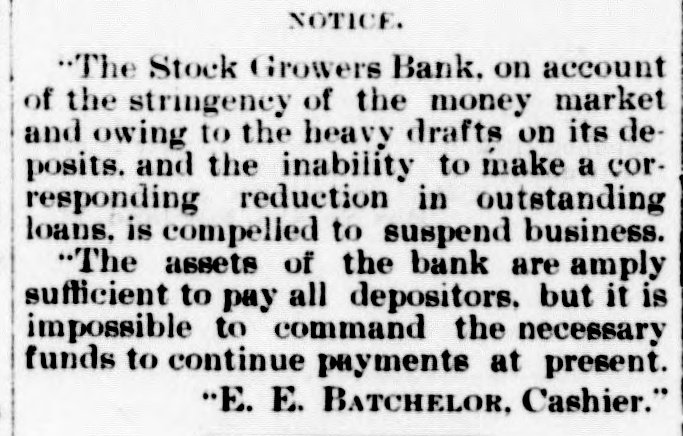
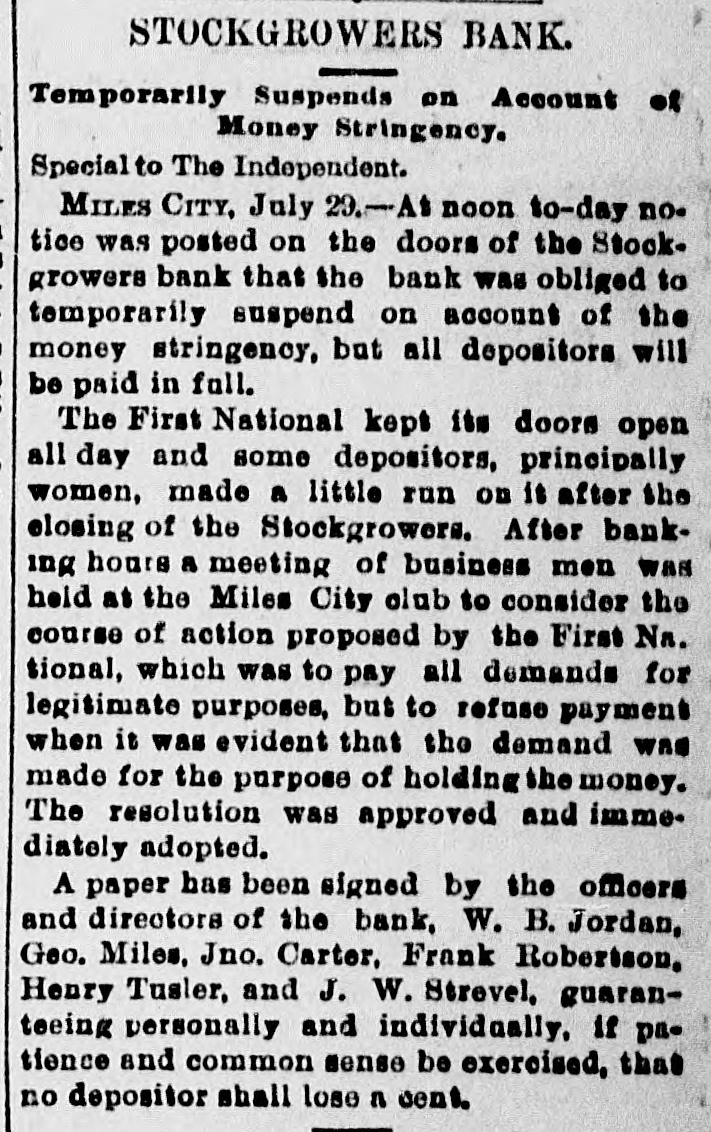
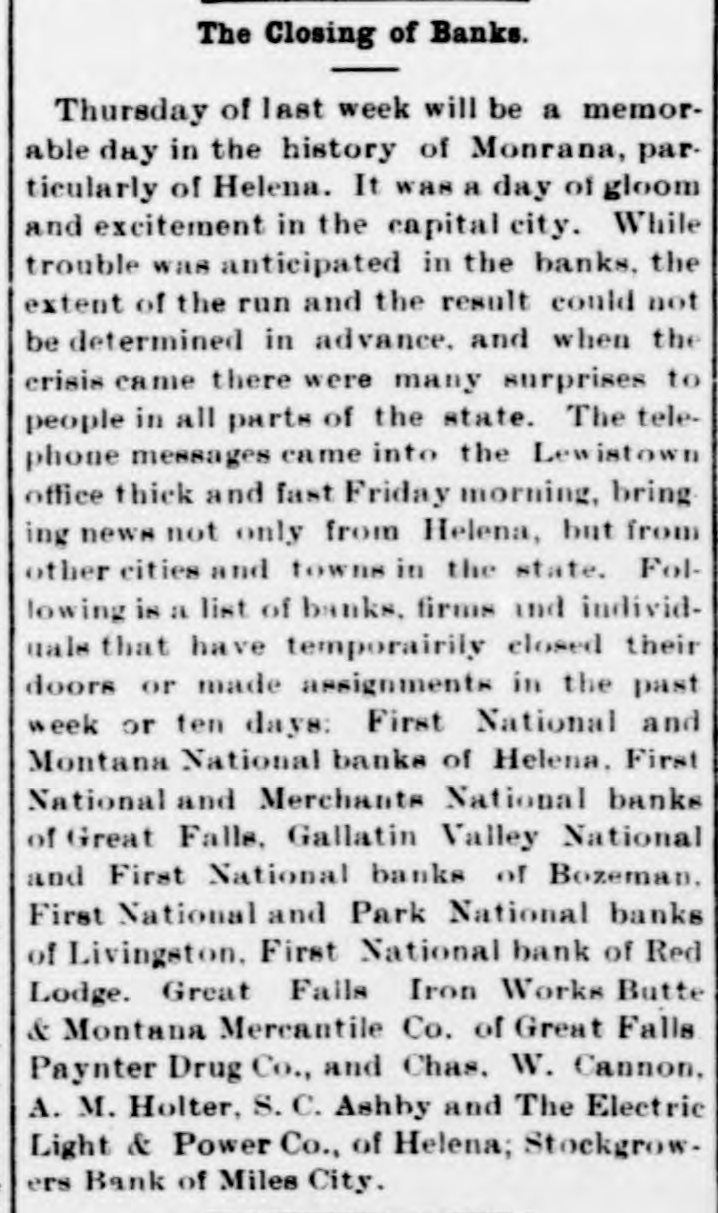
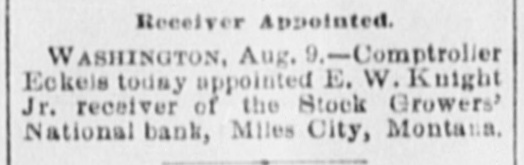
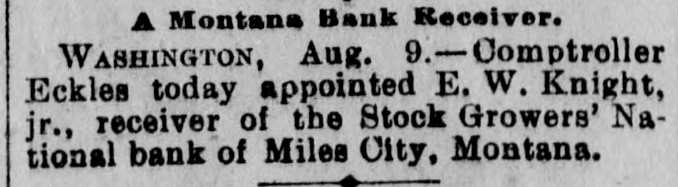
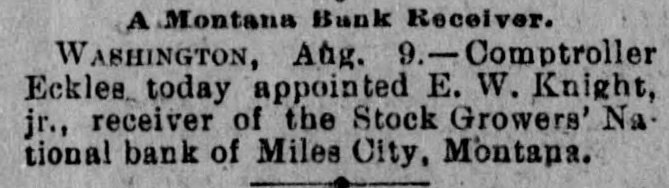
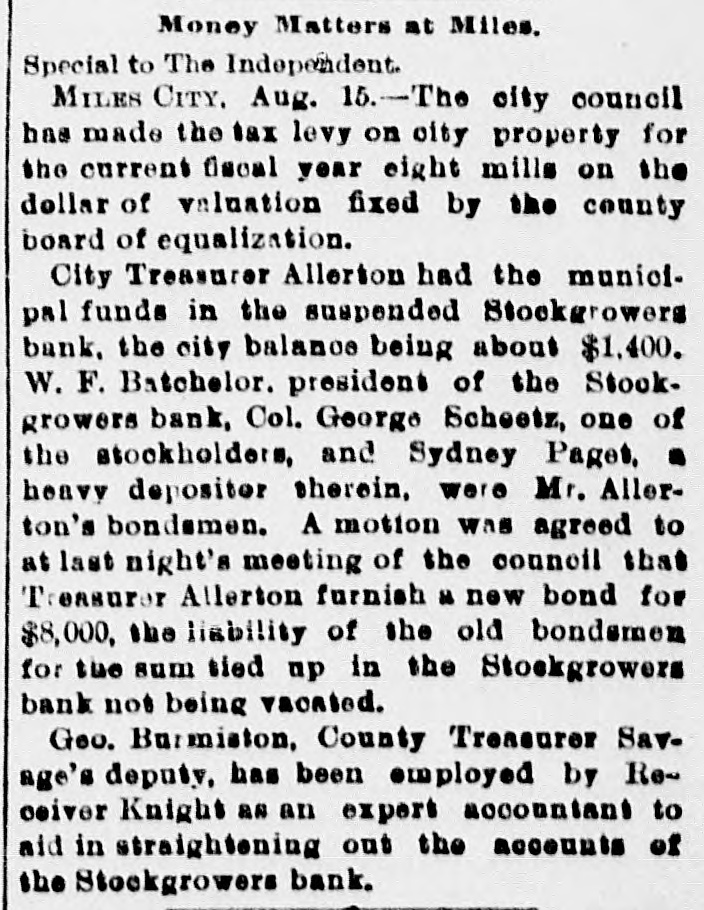
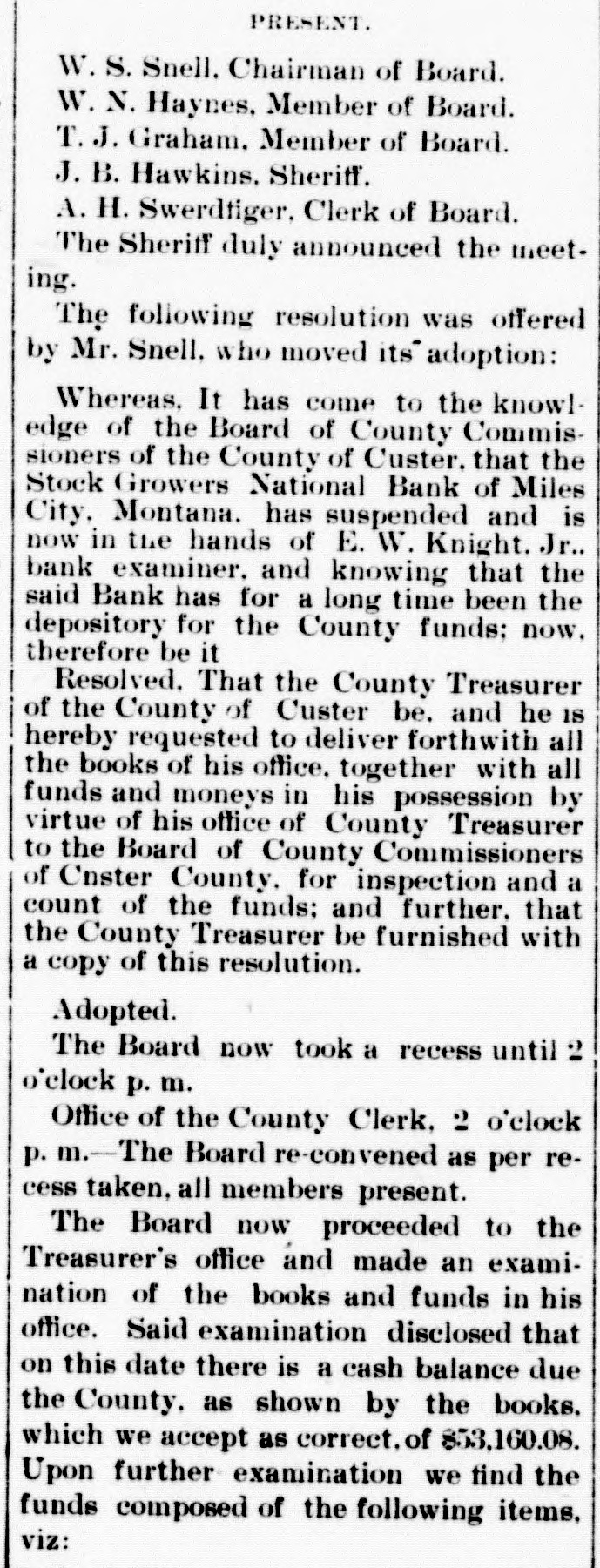
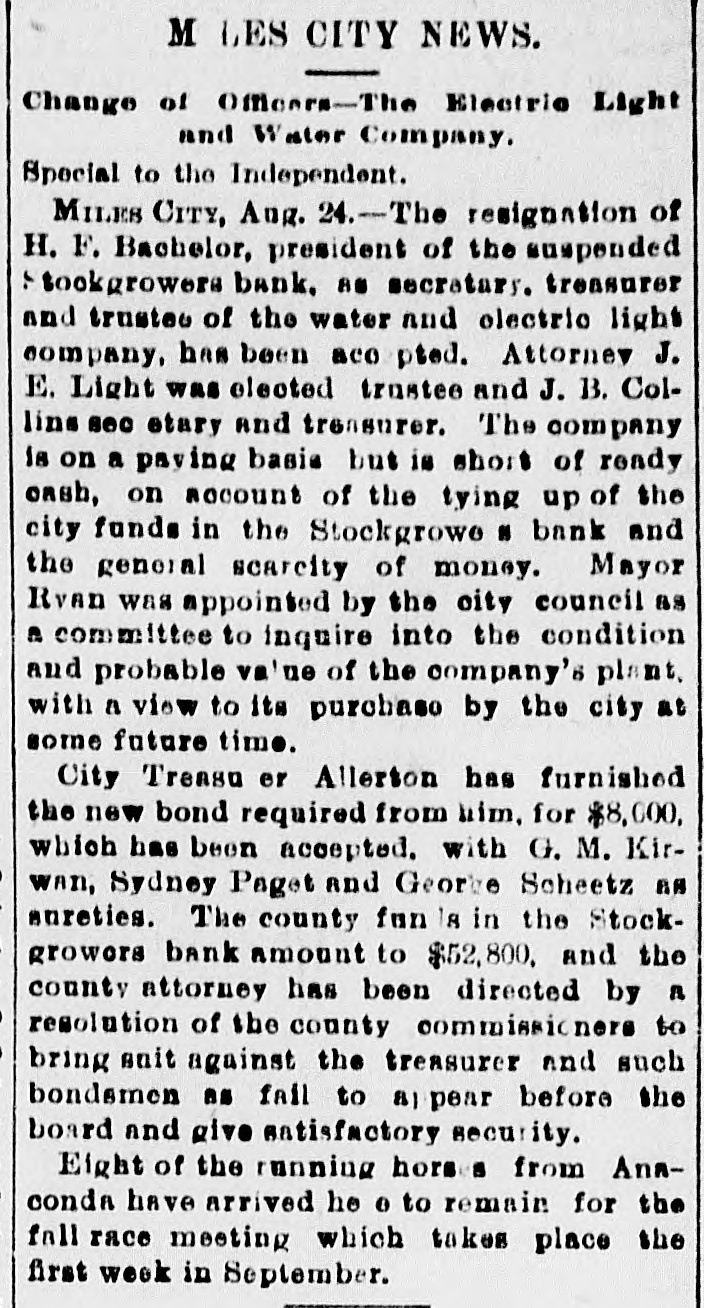
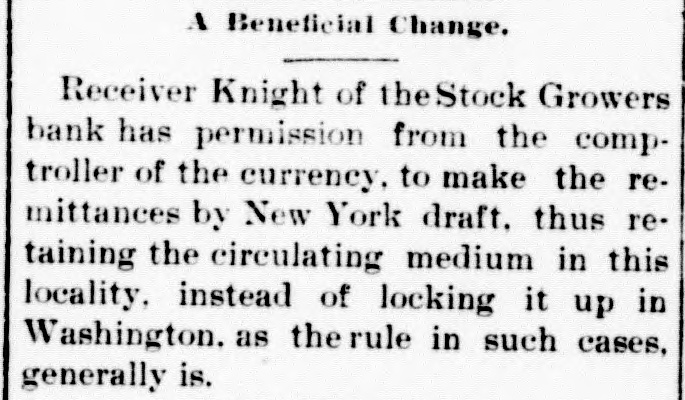
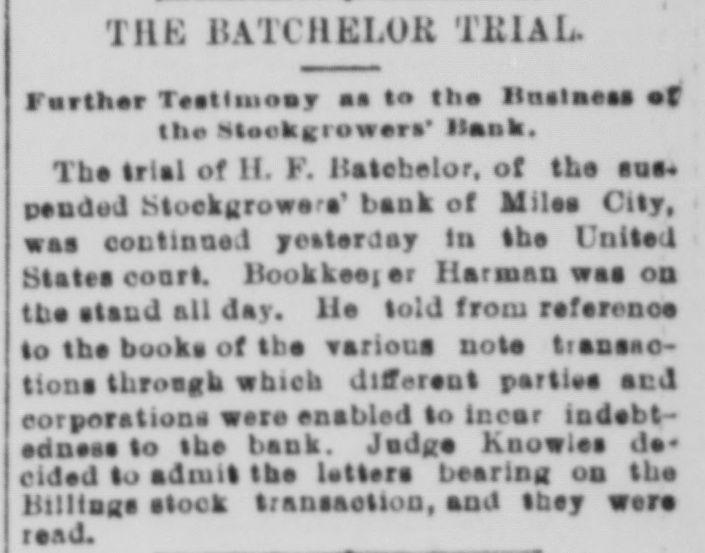
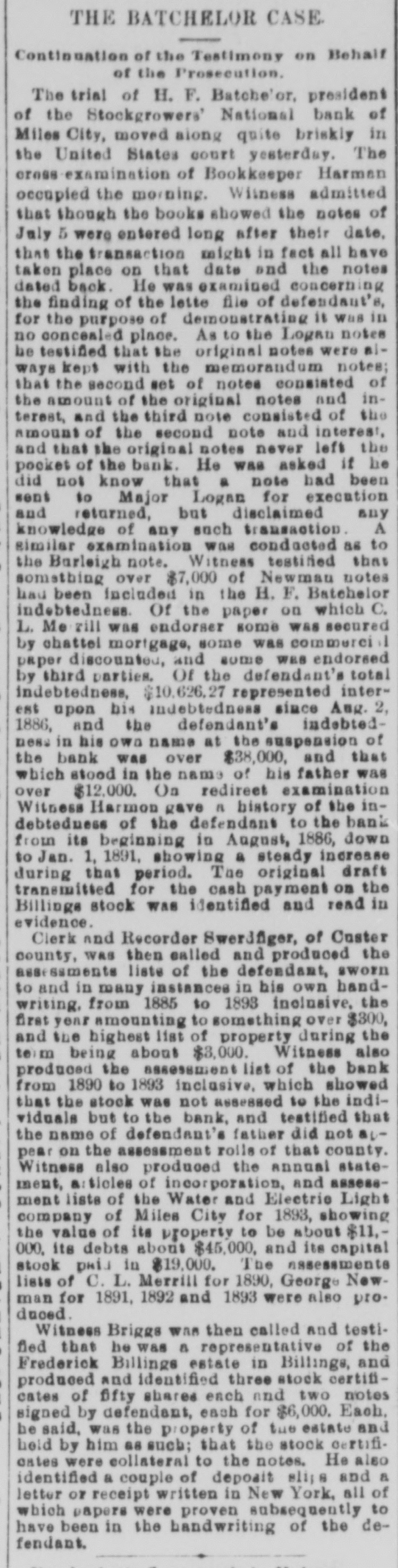
The entire session of the United States cout yesterday was taken up with the arguments in the case of H. F. Batchelor, of the Stockgrowers National bank of Miles City. The arguments were not concluded when court adjourned, but will probably end to-morrow, when the case will be given to the jury. Assistant District Attorney Wallece occupied the morning and part of the afternoon with his argument for the prosecution. He referred to the T. H. Logan notes as notes which never had any existence, and concerning which the books of the bank were made to state a lie. The entries in the books, he said, had been made with the expectation that Logan would sign the notes which had been given him. After the two notes had run their entire life, and there was no word from Logan, they were consolidated into one note, and an entry made in the bills receivable, as if Logan had made a new note. Yet Batchelor claimed there was no intent to deceive, because the paper itself would have shown that the entries were mere liss. No matter if any one was deceived, if the entry had a direct tendency to deceive it was a false entry and the person making it was criminally liable. The object of a bank examination was to show the world the exact condition of a bank. and the law in that res; oct was meant to prevent anyone making false entries which might tend to deceive those reading them. Batchelor claimed when he consolidated his own notes that it was to clear ne all his old paper. The reni motive, Mr. Wallace claimed, was to make it live paper, that it might appear as such in the report to the comptroller; to avoid the consequences of public reports and examinations; and that there might be no assessment of the capital stock to make up the deficiency. As to the election expense items there could be no verdict of guilty on thess counts, Mr. Wallace admitted, na, while there was reason to disguise their real meaning, there was no intention to deceive anybody connected with the bank. Clearer cases were nevor presented, Mr. Wallace contended, that the various note transactions. The opportunities for committing these wrongs were so many when one had charge of the books, that is was hard to prove them. But when proved guilty the punishment should be enforced to show that a trust must be faithfully guarded, and to warn others that banks cannot be wrecked at random. He had never heard of a case of embezzlement but that it had begun without intention of defrauding. Mr. Wallace found a motive in the purchases of the large blocks of stock. It was absolutely necessary, he said, that Batchelor should fortify himself against an investigation of the bank's affairs by securing control. He got the control and he would never have been exposed but for his continuous withdrawals of money and the hard times. If such a state of affairs as disclosed at the Stockgrowers bank was to be allowed to continue, all would have to admit that national baaks were not fit places to put money.
Judge J. W. Strenelle opanel the argument for the defense. He said the prosecution desired the defendant to stand is a scapegoat for all offenses committed under the national banking laws; to suffer for his own and every one else'a misdeeds. Tois happened to be the first case. Therefore they desired Batchelor made an example of. Only a few months ago there had passed over the world a financial panic such as the older mea among them had never seen befo e, and he hoved the younger men would never see again. Institutions to which empires ware anchored had been swept away as chaff before the wind. In that disaster the defendant and the institution with which he was connected had the misfortune to go down. Batchelor was now arraigned as though he was the vilest criminal known to the state of Montana. The prosecution chargel that Batchelor had started out with the idea of defrauding the bank. This was absointely false and not justified by the evidence in the case. "Say or do as von please," said Judge Streveile, "and believe as yon may, I believe this defend-and to have been honest and conscientions in his desire to serve the bank. It is easy to say he erred in judgment." No man should be dealt with severely for misfortunes. No one should be desirous of adding to the troubles of the defendant, or dragging him and his family down. "You may send him to the penitentiary if you will," continued Juige Strevelie. "But there is not a man, woman or child in Miles City but who will say Harry Batchetor intended to be honest. Not one of them has come here to say that Harry Batchelor had stolen their money. All know how much better is our hindaight than our foresight. You may send him to the penitentiary, but the misfortunes of man will go on and go on."
"The proseontion," Judge Strevelle said, "claimed there was no palliation for errors of judgment. A greater than any judge in this terrestial tribunal says that from the thoughts and the intents of his heart shall a maa be judged, so you are to consider whether the defendant went into the bank with the deliberate purpose of defrauding it, or whether you believe he made uniy anch errors as constituted errors of judgment. Under human and divine laws you -can judge only of the intent." Jadge Strevelle said he would not deny that Batchelor owed the bank about $53,000 at the time of the suspension, but he believed if the assete had been properly attended to since there would have been no reason why aman, woman or child should lose a cent. The receiver had left matters to take care of themselves, and the people had been kept out of their money, When it was docidad that it was best to get the Stebbins stock, defendant had said he would take it. Judge Streveile said he believed Batchelor in that had no other idea than to build up the bank. If ever a set of books showed an honest intent, those of the Stockgrowers bank did. If is was a crime to be in debt, many would be -in trouble. In conclusion Judge treveile dwelt on the fact that the directors had left to Batchelor the entire managemont of the bank. He made an eloquent appeal to the jury not to pat on a young man who had erred in judgment and not in intent the stigma that would follow a verdict of gulity.
Wholesale Agency, John B. Stetson & Co., Philadelphia.
Gordon & Ferguson, hate, straw goods and gloves, St. Paul, will be at The Hotel Helena Monday and Tuesday, April 23 and 24. Tributary trade invited in at my ex-