Article Text
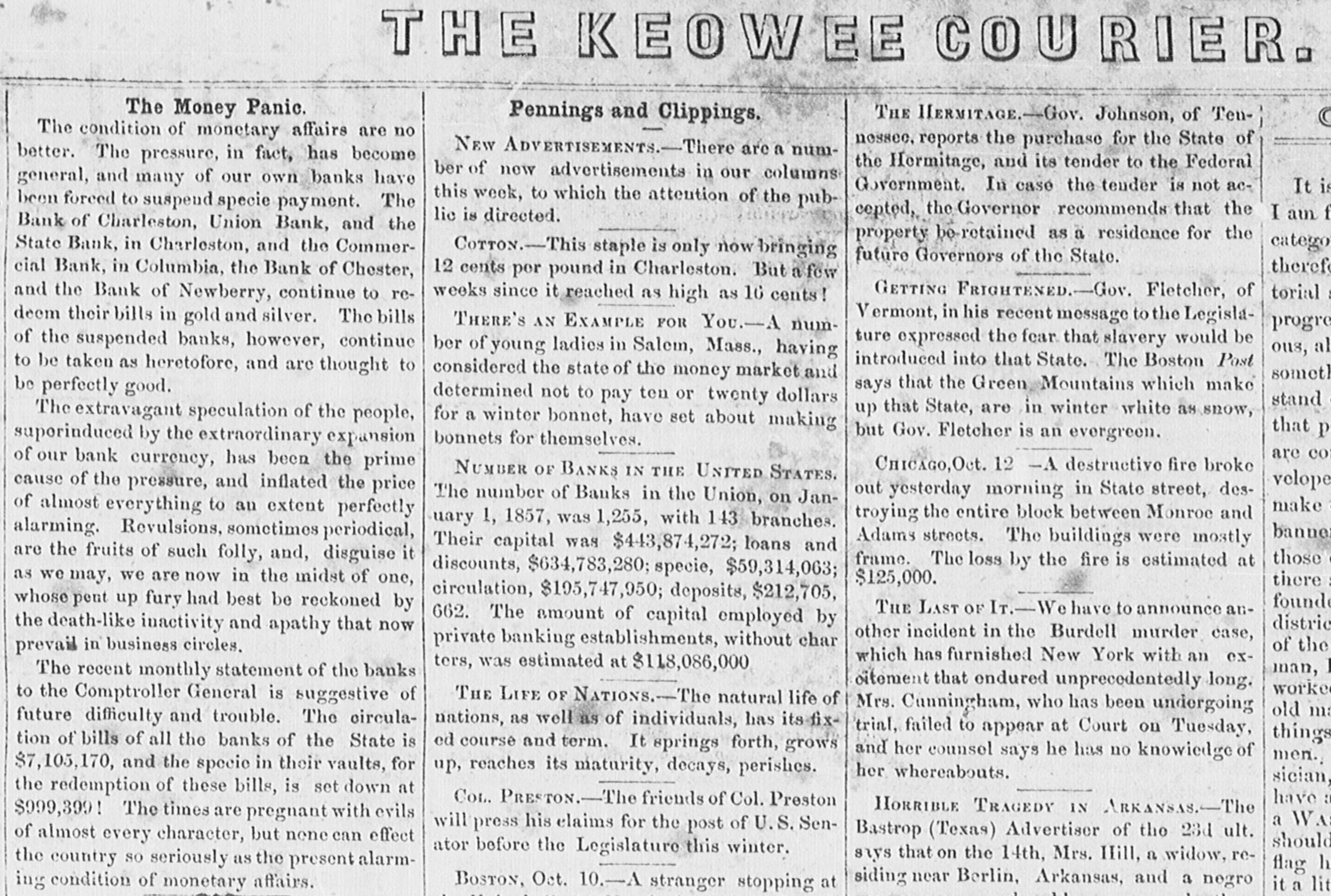
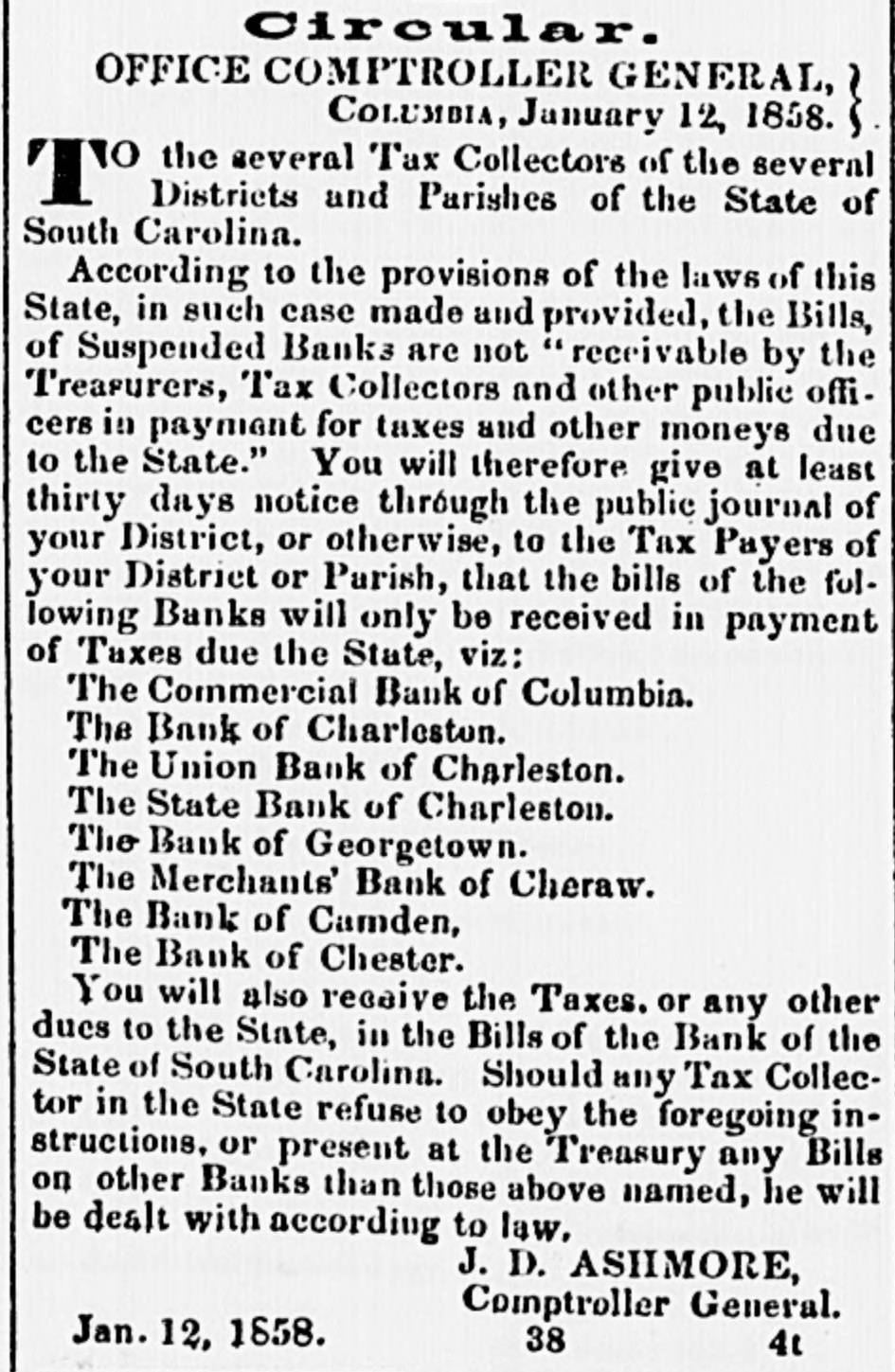
and although compelled to feel a money crisis, pervading the North, we believe that the only in convenience will be a momentary suspension of the sale of produce. If creditors will only use a reasonable indulgence until England can send us the specie for our cotton, trade will soon revive and cheerful contentment diffuse its genial influence throughout the country. We have not speculated on such n gigantic scale as our abolition brethren. It is no wonder they now feel the financial crisis, after spending 80 much in African Colonizationschemes, under-ground rail-roads, and other benevolent humbugs. On the comparative solvency of the two sections that able Southern Rights journal, the South, remarks: "We have learned from Philosopher Greely that the hay of the North was worth more than the cotton of the South, and that the introduction of flax, under a patent of manufacture in which he was interested, would soon supersede the use of cotton. We can now ask where are the boasted resources of the North? Why does she not ex port clocks and shoes and relieve herself? Why does she not send out a few cargoes of hay and replenish her coffers exhausted of specie. The present crisis will show that the slave labor staples of the South will furnish the means of extrication from commercial indebtedness. It will show the South compararively free from distress or embarressment-able to ride out the storm which the speculation of the North has caused How then can the North censure that labor to which she will owe her commercial existence How can she prate of her independence when, but for the aid of Southern resources, she would stand a branded bankrupt before the world This financial revulsion, filling her land with beggary and shame, will teach the North a lesson of commercial morality. It may cause her men of capital, and her disbanded laboring thousands, now contemplating an approaching winter with terror, to recoil from that chasm of disunion into which such advisers and such arguments as we have referred to would drive her, with indignation and horror. This cup of humiliation, bitter though it may be, will be thus made salutary. It will save the South from much persecution. It will prolongperhaps, rather, perpetuate-the duration of the Union, by awakening the dictates of common sense, if not the impulses of sectional gratitude. We wish, therefore, the lessons of this financial trial to be perfectly apparent, and will for that purpose endure our share of its evils until they correct themselves by the reaction of themational energies and the restoration of economy and prudence. But whilst we are ready to co-operate in any legitimate political or commercial measures which may alleviate the pressurein any part of the Republic, we must assure our Know Nothing friends that we never felt less inclined to surrender our Free Trade principles and convictions for the benefit of the Freesoil shoemakers of Massachusetts than at present." We can have no adequate idea of the recklessness of the Northern speculators. A New York paper relates the following instance of the dramatic rapidity, with which Fortune sometimes reverses her favors "A few months since the partner of a commercial house in that city was taken to a lunatic asylum, utterly deranged, as was said, by his unparalleled prosperity in business. During the year previous his firm had cleared $1,300,060. He died in the asylum, and his own estate was valued at $2,500,000, all invested in the concern of which he was a partner. The firm itself failed the other day, and is now said to be utterly insolvent. One item of the assets of the deceased's estate was a thousand shares of the Illinois Central Railroad stock, which was selling at the time of his decease nt $140 a share, and which was worth, after paying up the installments, $800,000. The same property sold, on Monday last, at public sale, at $50,000. All this occurred within eighteen months-the prosperity, the insanity, the decease and the insolvency." These sudden reversions are said to be the only luxuries in which the Miss FLORA McFLIMSIES can indulge. The piquant correspondent of the Charleston Courier very ungallantly talks in the following strain: "And, it is said the gentler sex are having their pleasures as well as their pains, during these trying times. Mrs. A., whose husband could not afford to sell his house in Eighth street, and builda palace on the Fifth Avenue, always felt despondingly jealous of Mrs. B. (when her name was mentioned) whose husband did advance from that pleasant locality, to the more fashionable one above mentioned. But now the husband of Mrs. B. has failed, he has "smashed" badly, and she has to "come down" both literally and figuratively. The little strifes, the sweet revenges of social and fashionable life, are just now the greatest luxuries in female circles. There is not a disaster now, the crash of a once prominent house, at whose fall there are not suppressed whispers of delight by the mothers and daughters of one side, rejoicing that the starch of SO and so's stiffness is now completely taken out at one avalanche. Such is one phase of human nature among the softer sex." While we are not forced to the wall with the same headlong velocity with which the money kings at the North are precipitated from their palatial splendor, it cannot be disguised that our own affairs are beginning to look decidedly "blue." Complicated and interwoven as our business is with the Northern cities, we must either await their extrication from their crushing difficulties, or find an out-let in a direct trade with Europe.If there is energy enough left in the South to make the exertion, the present is the most favorable season for inaugurating a direct trade with England. Our currency is not so disordered but that commerce would go on prosperously if there was an out-let beyond Charleston. Some of our Banks have not suspended. The Bank of Charleston pledges itself to continue specie payment. The bills of the suspended banks are as good as ever. The very moment commerce, under the pressure of an European demand, begins to revive, our banks will be on their feet again. The present crisis will prove a salutary lesson to them in the future. We have not the least doubt but that they have not restricted themselves to a legitimate banking business. On this point a writer in the South Carolinian meets our views: The system of banking, which really allows the corporators interest on their notes, and which may be issued to the amount of three times their capital, would seem to furnish a profit sufficient to satisfy reasonable men. Formerly, good honest men in Charleston were satisfied with semi-