Click image to open full size in new tab
Article Text
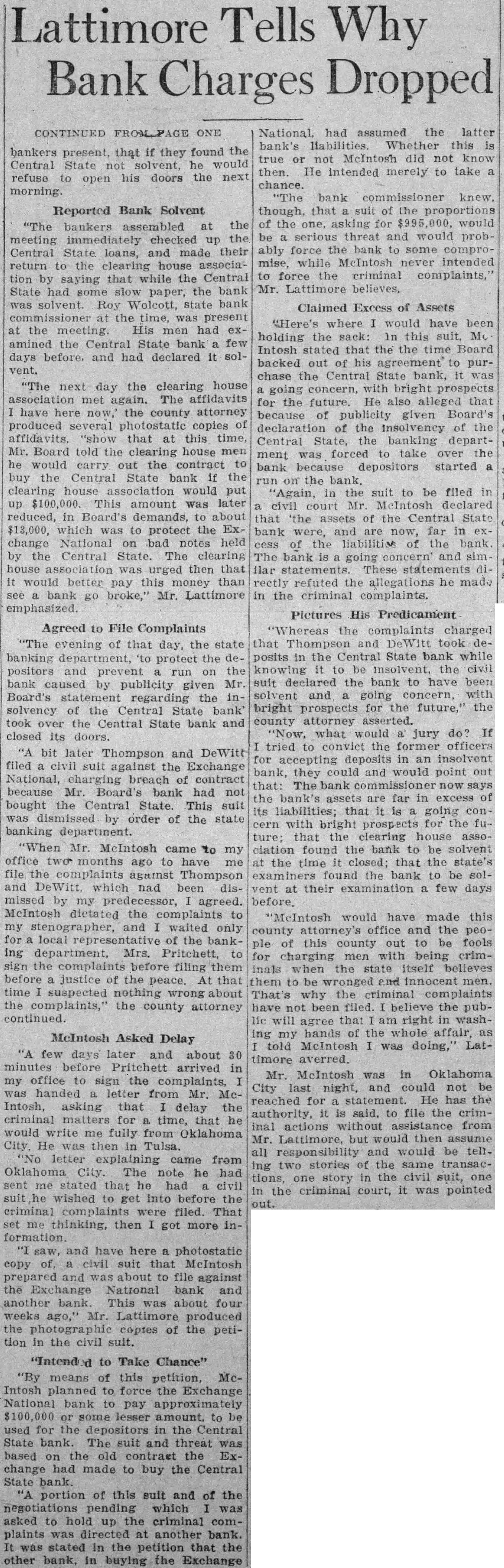
Lattimore Tells Why Bank Charges Dropped
CONTINUED ONE bankers present, that if they found the Central State he would refuse to open his doors the next morning.
Reported Bank Solvent
"The bankers assembled at the meeting checked up the Central State loans, made their return the clearing association by saying that while the Central State had some paper, the bank solvent. Roy Wolcott, bank the time, was at the meeting. His had amined the Central State bank few days before and had declared it solvent.
"The next day the clearing house association met again. The affidavits have here now, the county attorney produced several photostatic copies affidavits. "show that at this time, Mr. Board told the clearing house men he would earry the contract buy the Central State bank the clearing house association would put $100,000. amount was later reduced, in Board's demands, to about $13,000, which to protect the Exchange National on notes held the Central State. The clearing house was urged then that would better pay this money than see bank broke," Mr. Lattimore emphasized
Agreed to File Complaints evening that day, the state banking department, 'to protect the positors and prevent run bank caused by publicity given Board's statement regarding the solvency the Central State bank' took over the Central State bank and closed its doors. bit later Thompson and DeWitt filed suit against the Exchange National, breach contract because Mr Board's bank had not bought the Central State. This suit was dismissed by order of the state banking "When Mr. McIntosh came to my office months ago to have me file the complaints against Thompson and which nad been missed by my agreed. McIntosh dictated the complaints my stenographer, and waited only local of the banking department, Mrs. Pritchett, to sign the complaints before filing them before justice of the peace. that time suspected nothing wrong the complaints," the county attorney continued.
McIntosh Asked Delay few days later and about 30 minutes before Pritchett arrived my office to sign the complaints, handed letter from Mr. McIntosh, asking that delay the criminal time, that he would me fully from Oklahoma City. He was then Tulsa. letter explaining came from Oklahoma The note he had stated that he had civil he wished to get into before the criminal complaints filed. That set me thinking, then got more and have here photostatic copy of, civil that McIntosh prepared and about to file against the Exchange National bank and another bank This about four weeks Mr. Lattimore produced the coptes of the petition in the civil sult.
"Intend to Take Chance"
"By means of this petition, McIntosh planned to force the Exchange National bank to pay approximately some lesser amount. to be used for the depositors in the Central State bank. The suit threat based on the old contract the Exchange had made to buy the Central State bank. portion of this suit and of the negotiations pending which was asked to hold up the criminal plaints was directed at another bank. stated in the petition that the other bank, in buying the Exchange had assumed the latter bank's Whether this true or not McIntosh did not know then. He merely to take chance. bank commissioner though, that of the proportions of the one, asking for would be serious threat and would probably force the bank to some mise, while McIntosh never intended force the criminal complaints,' Mr. Lattimore believes,
Claimed Excess of Assets
"Here's where would have been holding the sack: In this Intosh stated that the the time Board backed out of his agreement to purchase the Central State bank, going concern, with bright prospects for the future. He also alleged that because of publicity given Board's declaration of Insolvency of the Central State, the banking department forced take over the bank because depositors started the "Again, in suit to be filed civil court McIntosh declared that 'the assets the Central State bank were, now, far in liabilities the bank bank going and These statements rectly refuted the allegations he made in the criminal complaints.
Pictures His Predicament
"Whereas the complaints charged that and DeWitt took posits in the State bank while knowing be the civil suit declared the bank to been and going with bright prospects for the future," the county attorney asserted. what would jury do? If tried to former officers for accepting deposits in insolvent bank, could and would point out The the bank's assets are far in excess its liabilities; that going cern with prospects for the ture: that clearing house assoclation found the bank to be solvent the time closed; that the state's examiners found the bank be solvent at their examination few days before.
"McIntosh would have made this county attorney's office and the people this county out be fools for charging men with being criminals when the state itself believes them to be wronged and innocent men. That's why the criminal complaints have not been filed. believe the public will agree that am right washing my hands of the whole affair, told McIntosh was doing," Lattimore averred. Mr. McIntosh was in Oklahoma City and could not reached for He has the authority, it said. to file the criminal actions without from Mr. Lattimore, would then assume all responsibility and would be telling two stories the same transactions, one story the civil suit, the criminal court, was pointed out.