Click image to open full size in new tab
Article Text
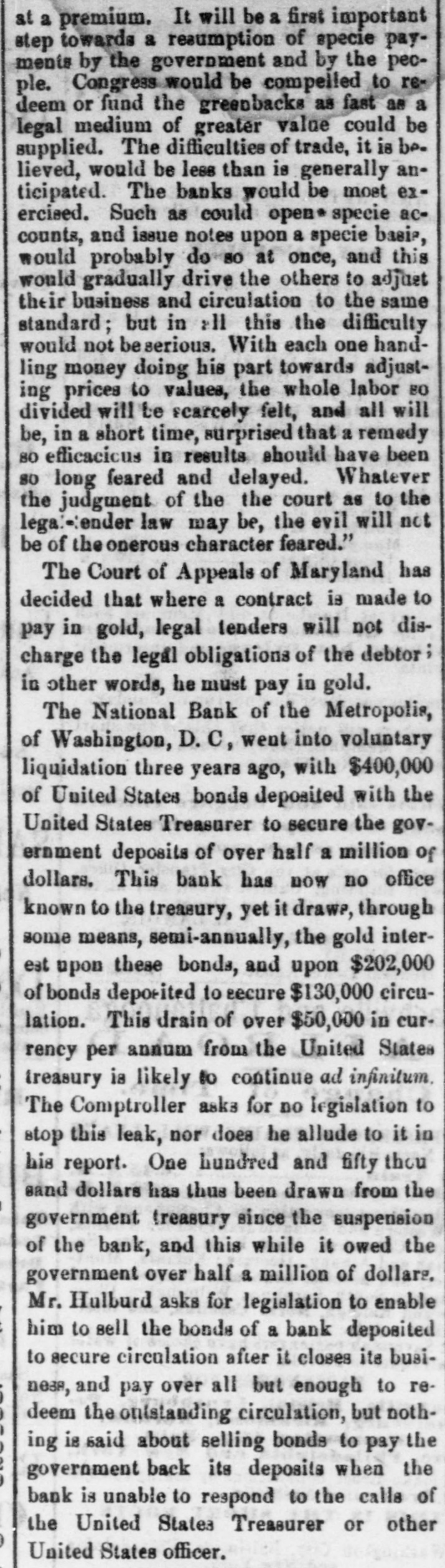
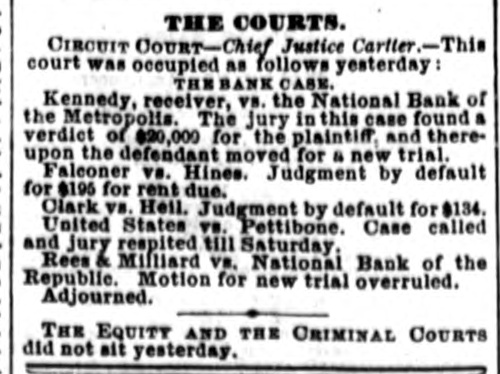
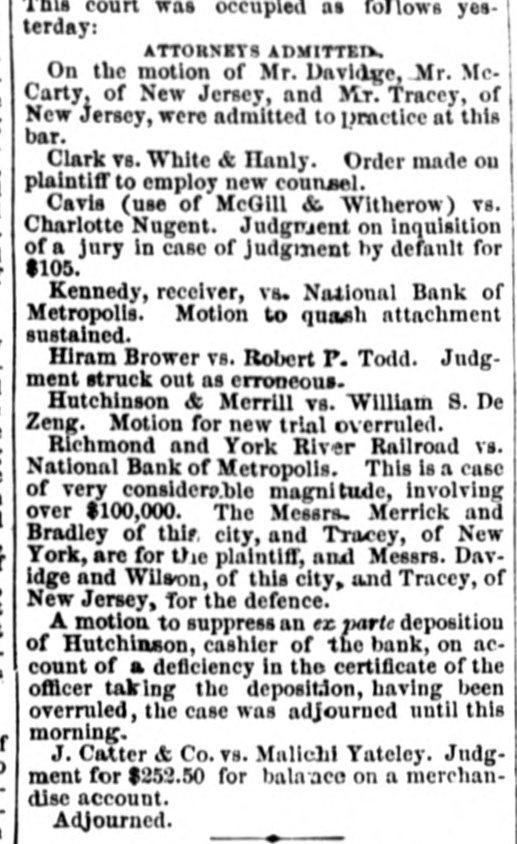
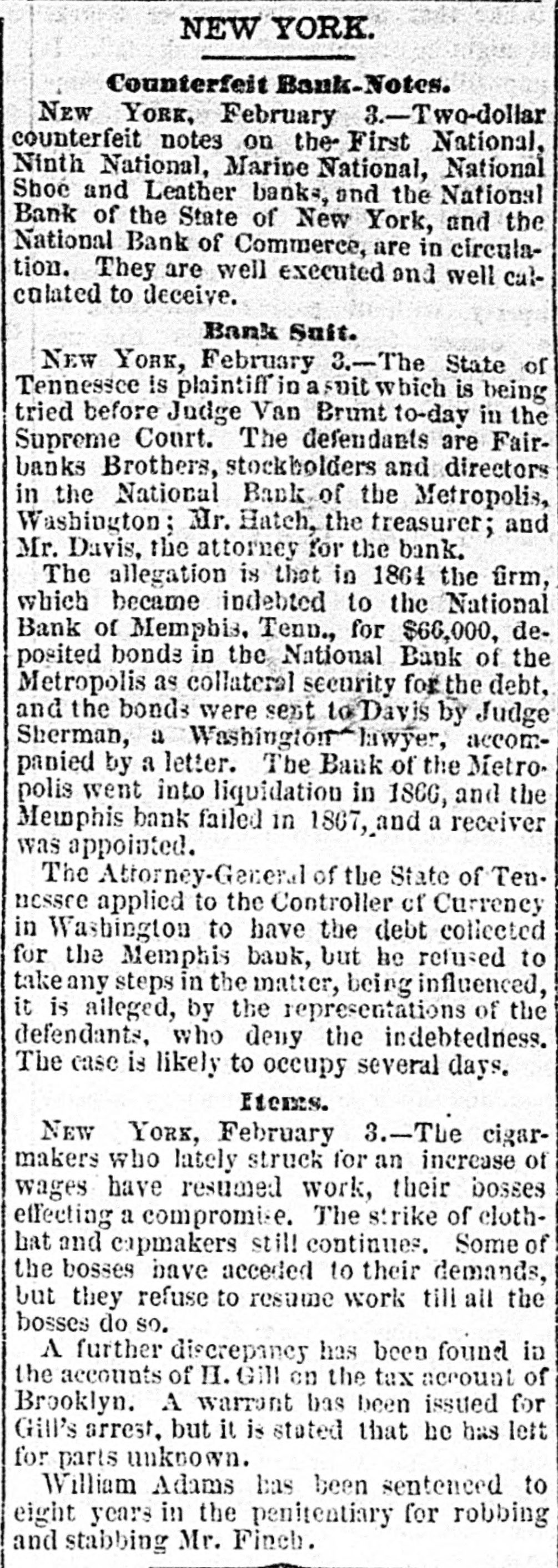
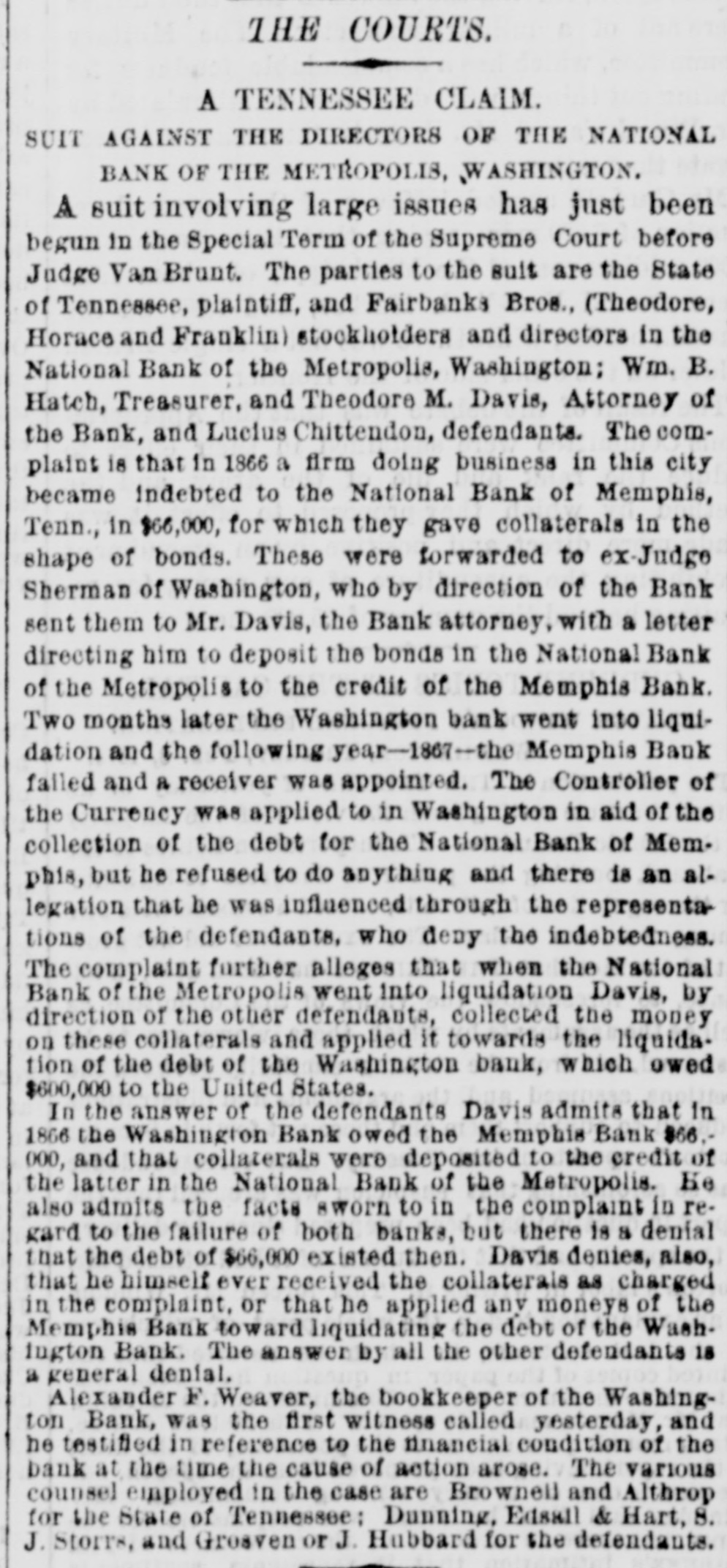
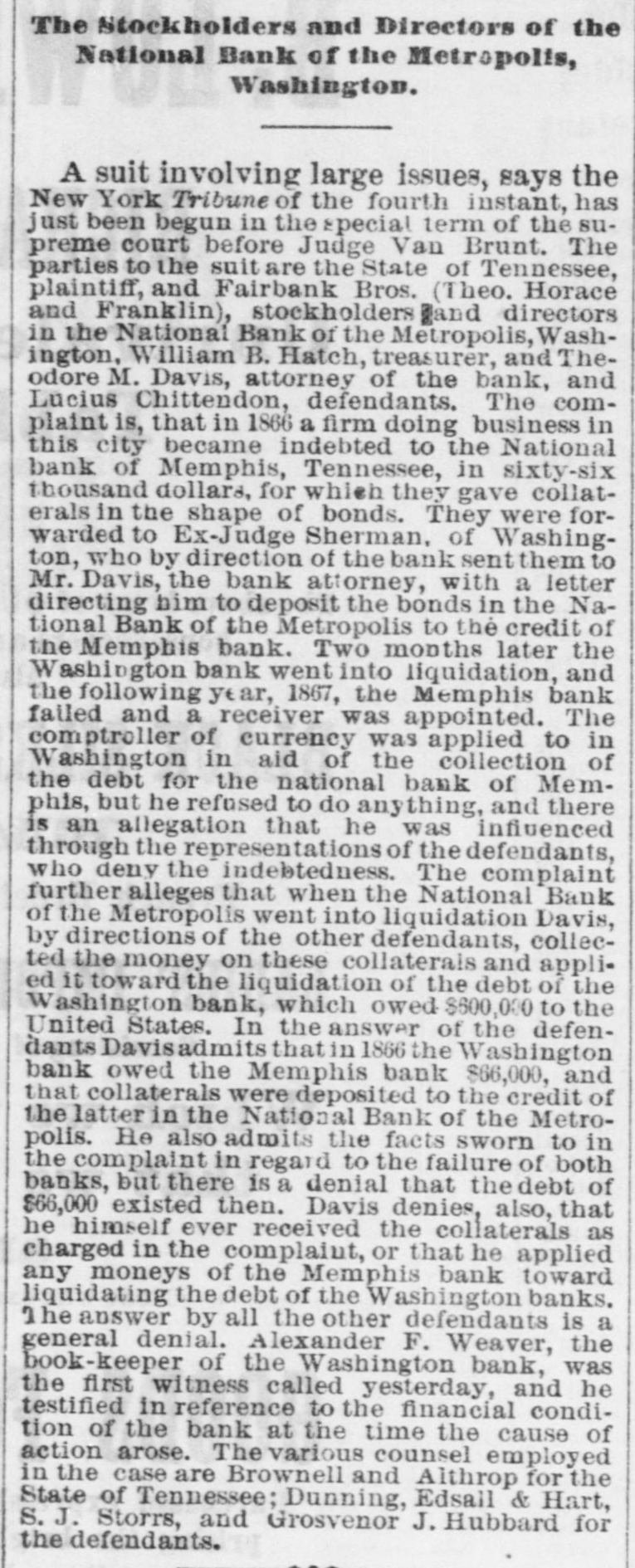
The Stockholders and Directors of the National Bank of the Metropolis, Washington. A suit involving large issues, says the New York Tribune of the fourth instant, has just been begun in the special term of the supreme court before Judge Van Brunt. The parties to the suit are the State of Tennessee, plaintiff, and Fairbank Bros. (Theo. Horace and Franklin), stockholders and directors in the National Bank of the Metropolis, Washington, William B. Hatch, treasurer, and Theodore M. Davis, attorney of the bank, and Lucius Chittendon, defendants. The complaint is, that in 1866 a firm doing business in this city became indebted to the National bank of Memphis, Tennessee, in sixty-six thousand dollars, for which they gave collaterals in the shape of bonds. They were forwarded to Ex-Judge Sherman, of Washington, who by direction of the bank sentthem to Mr. Davis, the bank attorney, with a letter directing him to deposit the bonds in the National Bank of the Metropolis to the credit of the Memphis bank. Two months later the Washington bank went into liquidation, and the following year, 1867, the Memphis bank failed and a receiver was appointed. The comptroller of currency was applied to in Washington in aid of the collection of the debt for the national bank of Memphis, but he refused to do anything, and there is an allegation that he was influenced through the representations of the defendants, who deny the indebtedness. The complaint further alleges that when the National Bank of the Metropolis went into liquidation Davis, by directions of the other defendants, collected the money on these collaterals and applied it toward the liquidation of the debt of the Washington bank, which owed $500,000 to the United States. In the answer of the defendants Davisadmits that in 1866 the Washington bank owed the Memphis bank $66,000, and that collaterals were deposited to the credit of the latter in the National Bank of the Metropolis. He also admits the facts sworn to in the complaint in regard to the failure of both banks, but there is a denial that the debt of $66,000 existed then. Davis denies, also, that he himself ever received the collaterals as charged in the complaint, or that he applied any moneys of the Memphis bank toward liquidating the debt of the Washington banks. 1 he answer by all the other defendants is a general denial. Alexander F. Weaver, the book-keeper of the Washington bank, was the first witness called yesterday, and he testified in reference to the financial condition of the bank at the time the cause of action arose. The various counsel employed in the case are Brownell and Althrop for the State of Tennessee; Dunning, Edsail & Hart, J. Storrs, and Grosvenor J. Hubbard for the defendants.