Click image to open full size in new tab
Article Text
Cashier Goes to State Penitentiary for Seven and One Half Years
PRESIDENT OF DEFUNCT BANK GETS OFF EASIER
Systematic System of Looting Institution Shown—Covered a Period of More Than Eight Years—Amounts Disappearing Grew in Each Year.
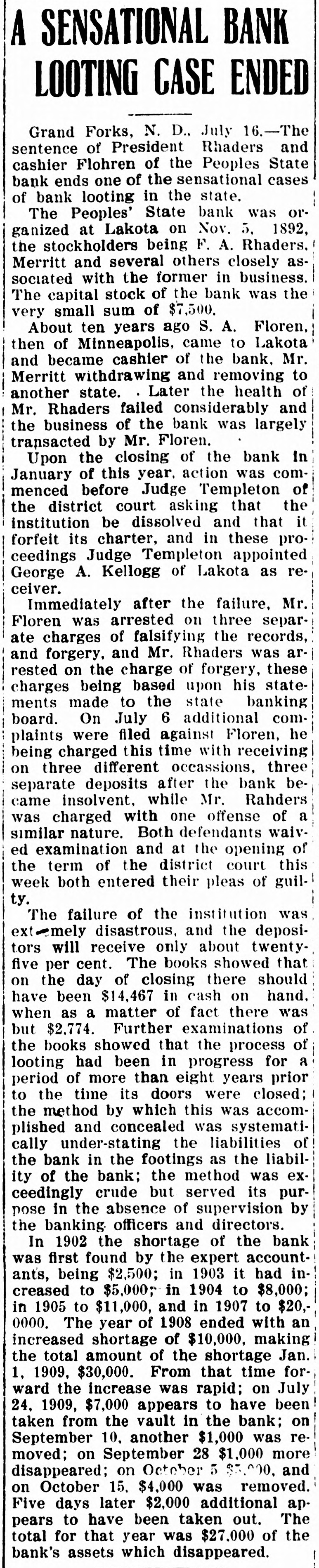
Lakota, N. D., July 15.—When President F. A. Rahders and Cashier S. A. Floren were this afternoon sentenced by Judge C. F. Templeton of the district court of Nelson county to a term of years each in the North Dakota state penitentiary, one of the most sensational, and at the same time one of the most disastrous bank failure cases that has ever been brought to the public attention in this state was closed so far as criminal prosecution of those directly responsible for the looting of the institution is concerned.
President Rahders was given a term of two and a half years while Cashier Floren was sentenced to seven and a half years. In behalf of the president, whose health has been very bad for the last two years, an application for a parole under the terms of the recent state legislation on that subject, was presented. It is opposed by the prosecution.
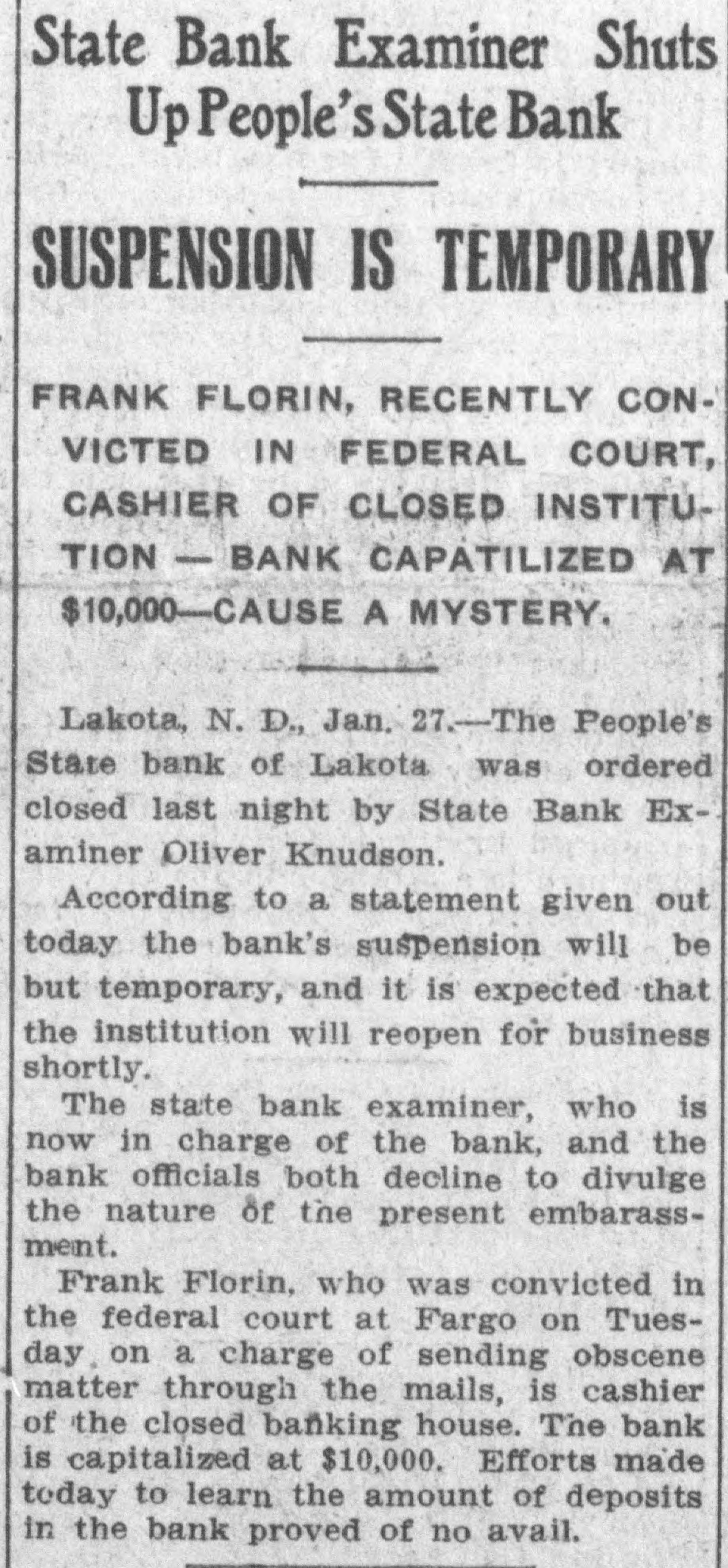
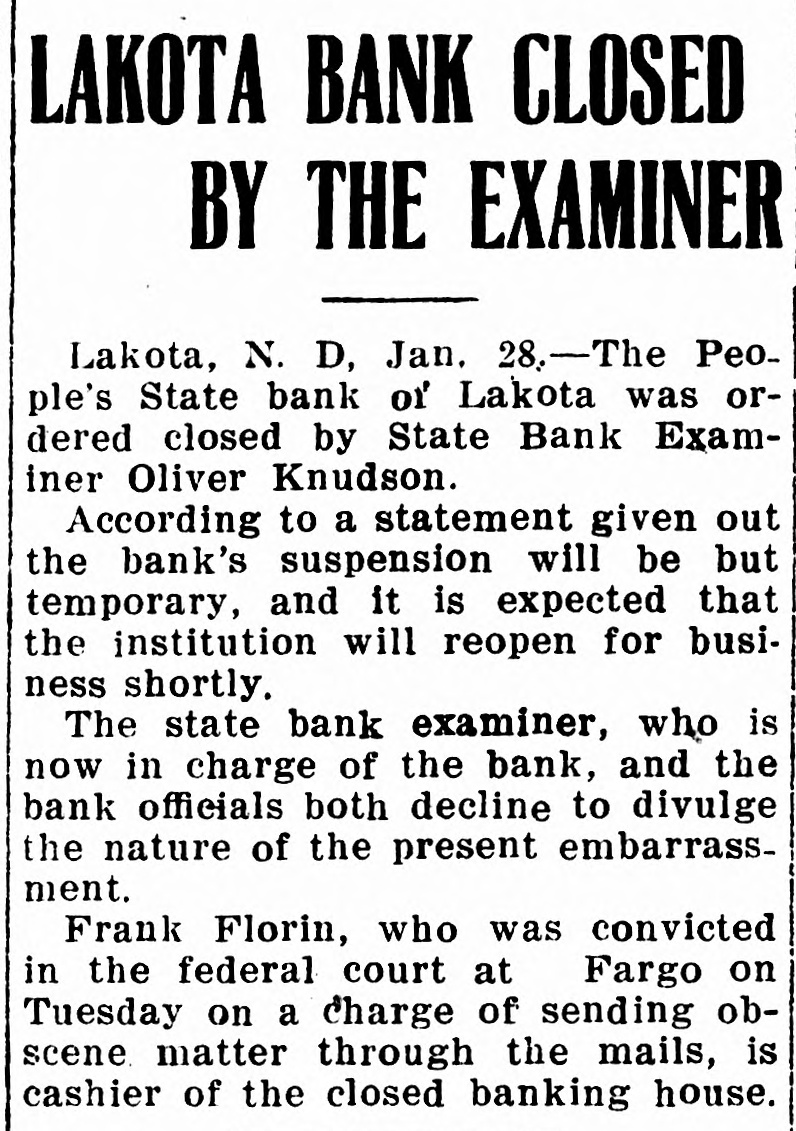
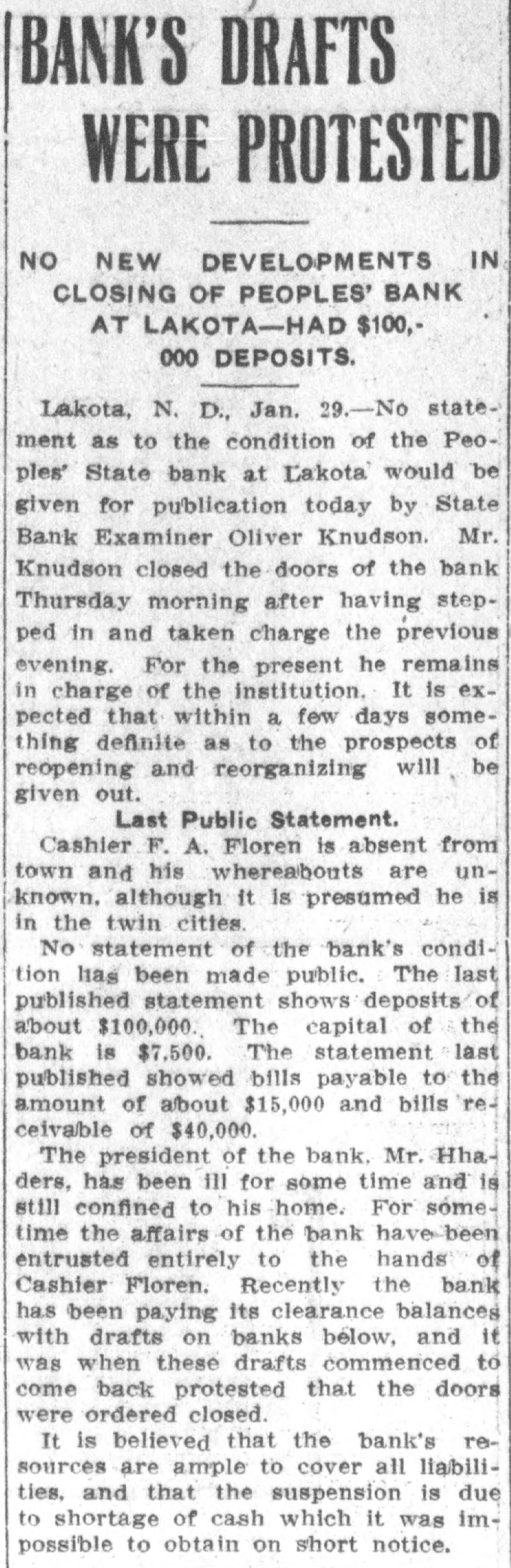
When the doors of the People's State bank of Lakota were closed by Bank Examiner Oliver Knudson on Jan. 26, this year, there was found in the bank an actual deficit or shortage of $82,138.11. On the date of the closing of the bank the liabilities of the institution aggregated $152,600.69, while the resources at their face value totaled $70,462.58.
Inner details of the looting of the bank have not been made public previous to this time, but when Rahders and Floren both entered their pleas of guilty this week, information as to the actual conditions became available.
The Peoples' State bank was organized at Lakota on Nov. 5, 1892, the stockholders being F. A. Rahders, Merritt and several others closely associated with the former in business. The capital stock of the bank was the very small sum of $7,500.
About ten years ago S. A. Floren, then of Minneapolis, came to Lakota and became cashier of the bank, Mr. Merritt withdrawing and removing to another state. Later the health of Mr. Rahders failed considerably and the business of the bank was largely transacted by Mr. Floren.
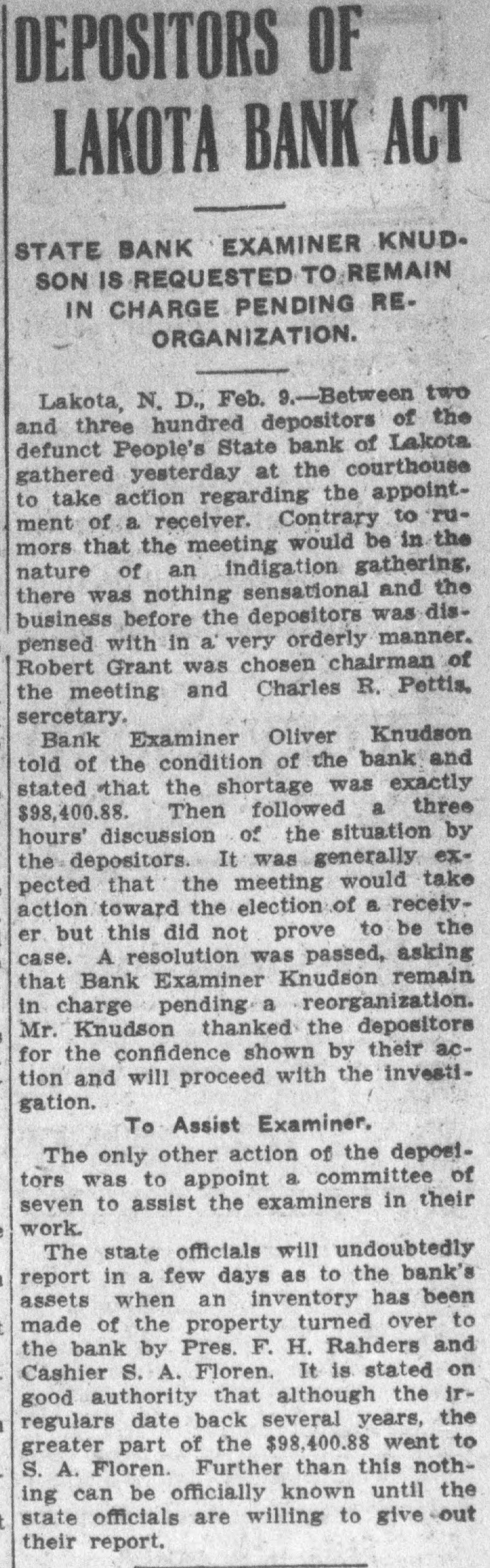
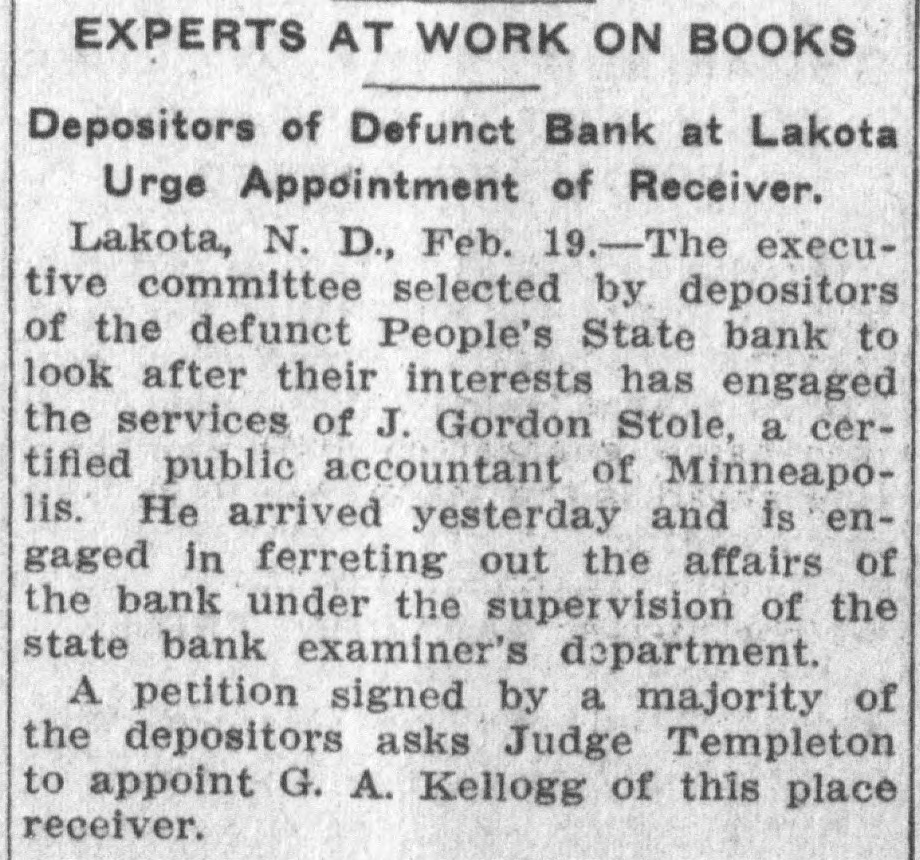
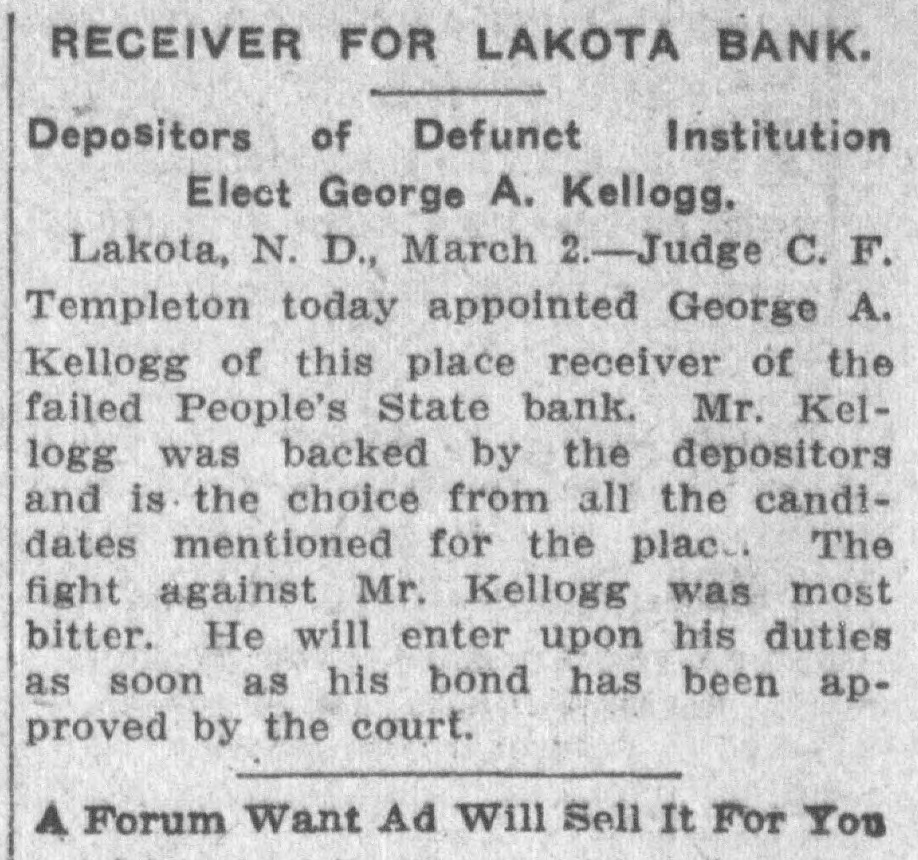
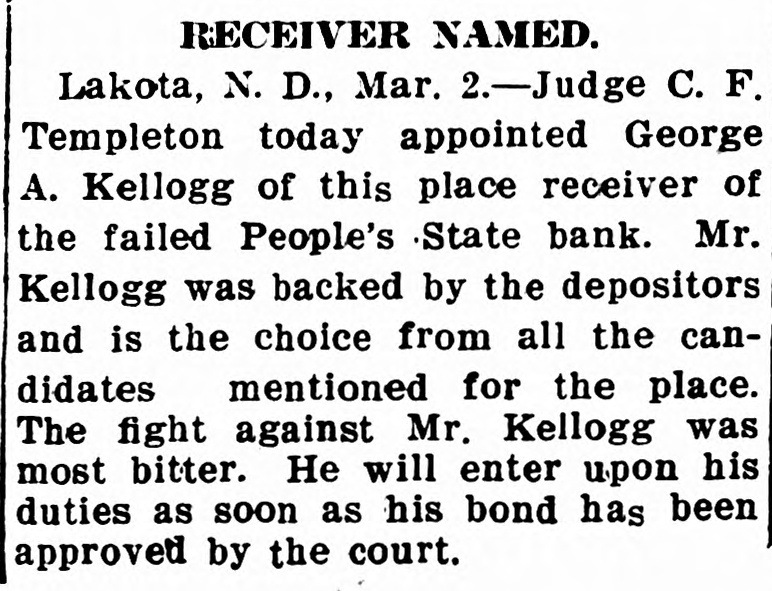
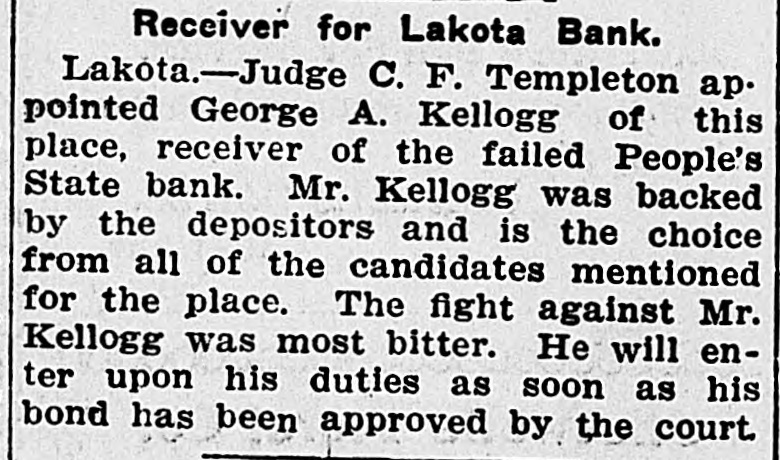
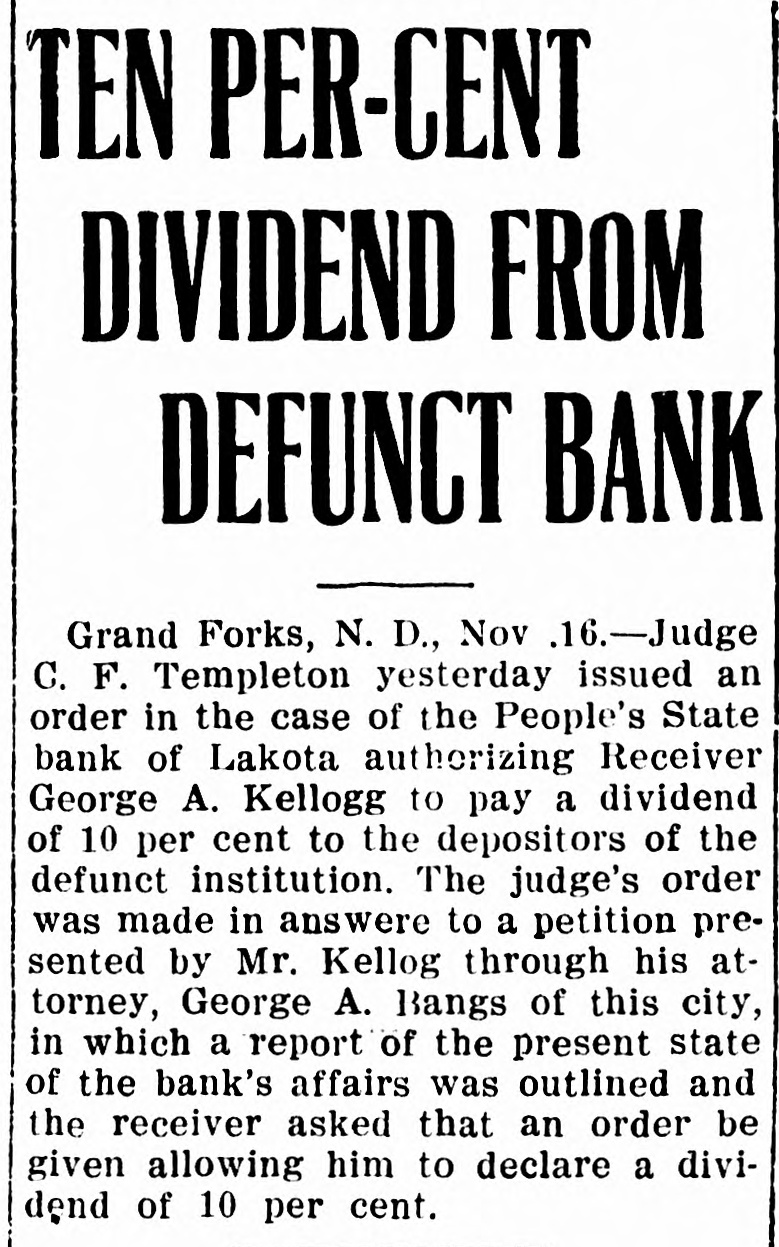
Upon the closing of the bank in January of this year, action was commenced before Judge Templeton of the district court asking that the institution be dissolved and that it forfeit its charter, and in these proceedings Judge Templeton appointed George A. Kellogg of Lakota as receiver.
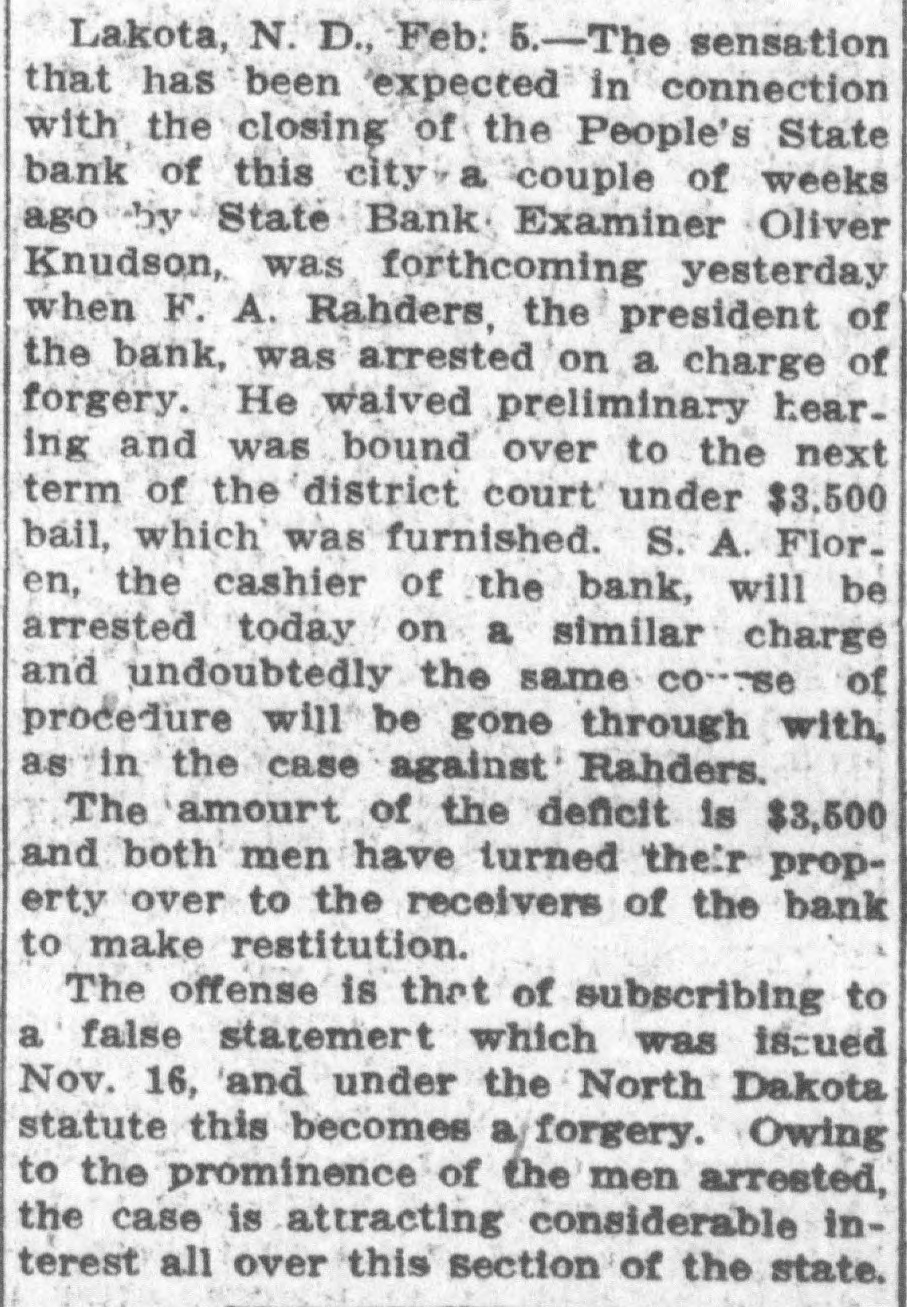
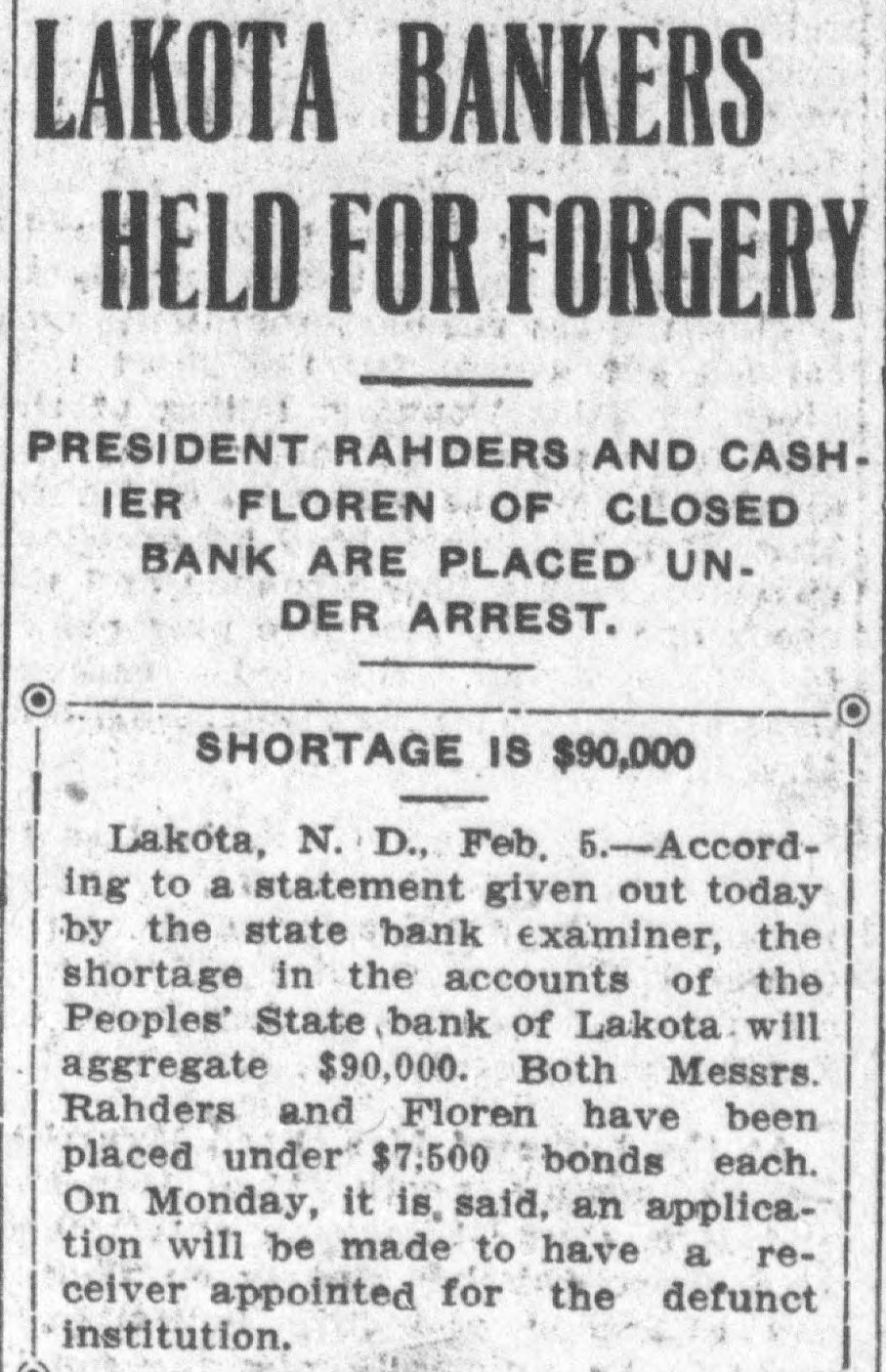
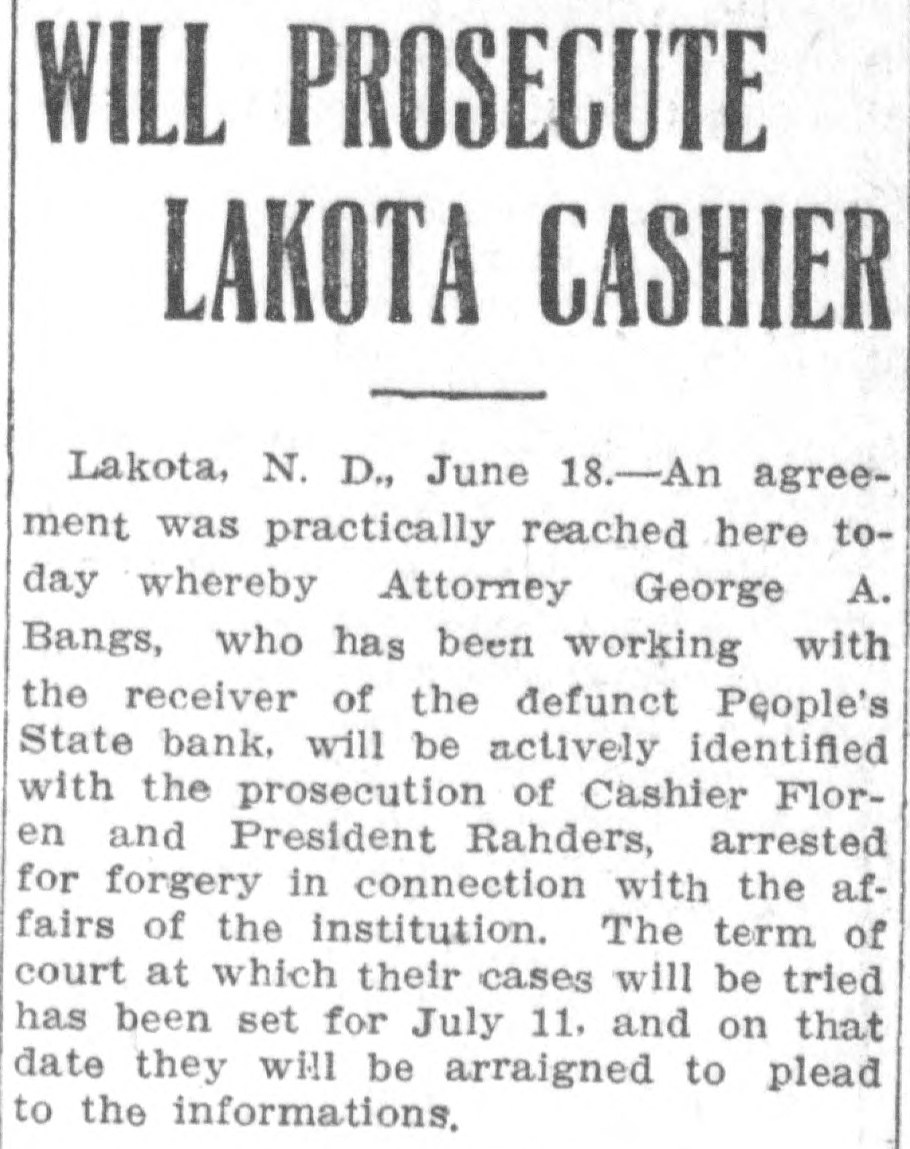
Immediately after the failure Mr. Floren was arrested on three separate charges of falsifying the records, and forgery, and Mr. Rahders was arrested on the charge of forgery, these charges being based upon his statements made to the state banking board. On July 6 additional complaints were filed against Cashier Floren, he being charged this time with receiving, on three different occasions, three separate deposits after the bank became insolvent, while Mr. Rahders was charged with one offense of a similar nature. Both defendants waived examination and at the opening of the term of the district court this week both entered their pleas of guilty.
The failure of the institution was extremely disastrous, and the depositors will receive only about twenty-five per cent. The books showed that on the day of closing there should have been $14,467 in cash on hand, when as a matter of fact there was but $2,774. Further examinations of the books showed that the process of looting had been in progress for a period of more than eight years prior to the time its doors were closed; the method by which this was accomplished and concealed was systematically under-stating the liabilities of the bank in the footings as the liability of the bank; the method was exceedingly crude but served its purpose in the absence of supervision by the banking officers and directors.
In 1902 the shortage of the bank was first found by the expert accountants, being $2,500; in 1903 it had increased to $5,000; in 1904 to $8,000; in 1905 to $11,000, and in 1907 to $20,000. The year of 1908 ended with an increased shortage of $10,000, making the total amount of the shortage, Jan. 1, 1909, $30,000. From that time forward the increase was rapid; on July 24, 1909, $7,000 appears to have been taken from the vault of the bank; on September 10