Click image to open full size in new tab
Article Text
SULLIVAN WAITS COURT HEARING ON ABBOTT $60,000 CLAIM AGAINST BANK
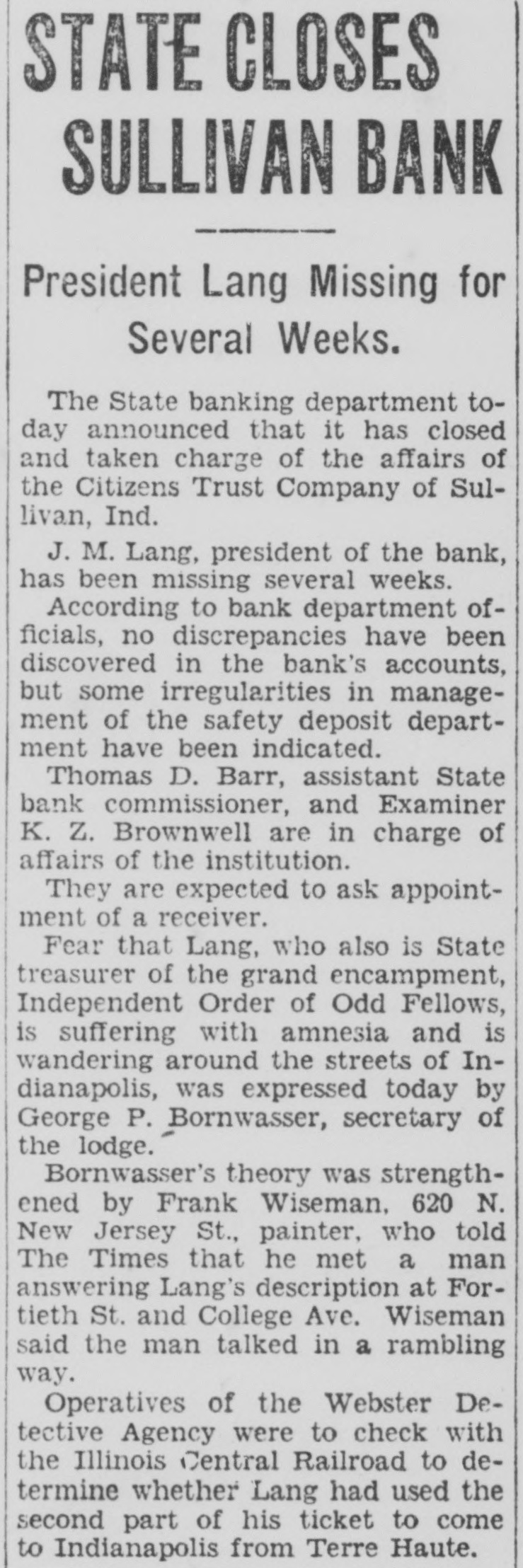
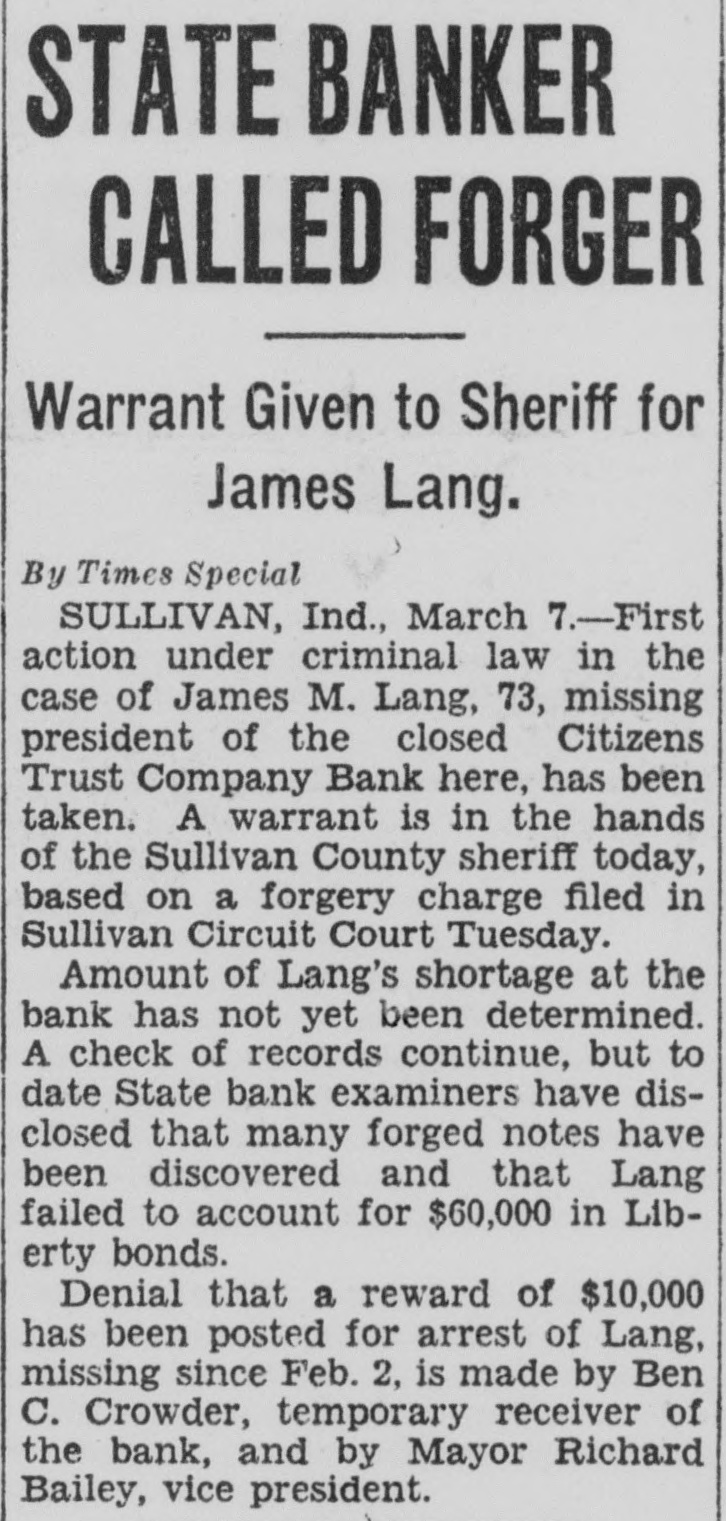
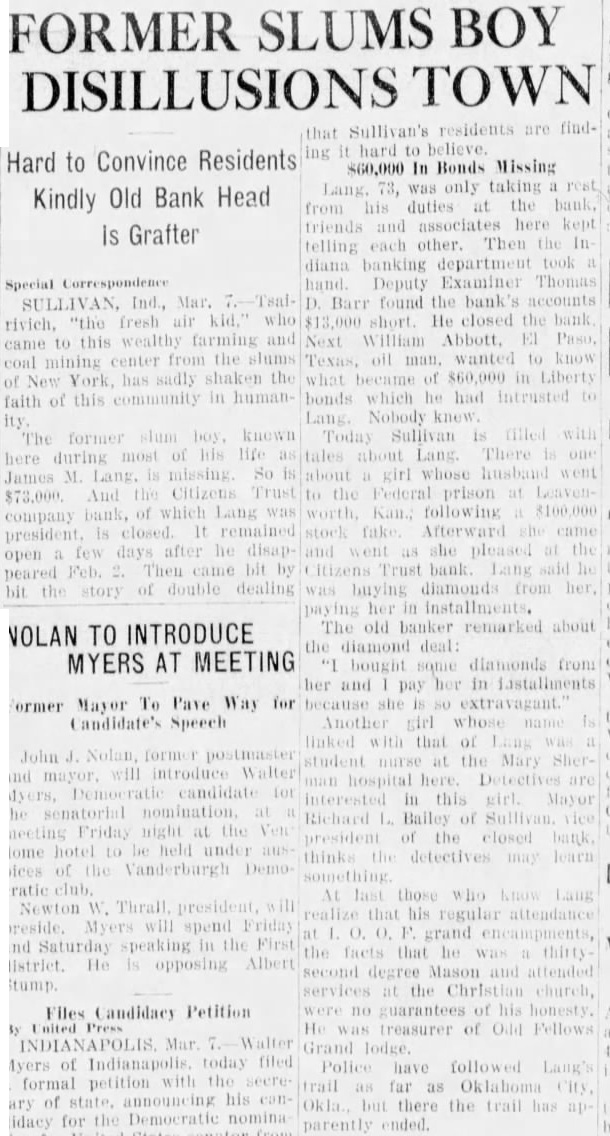
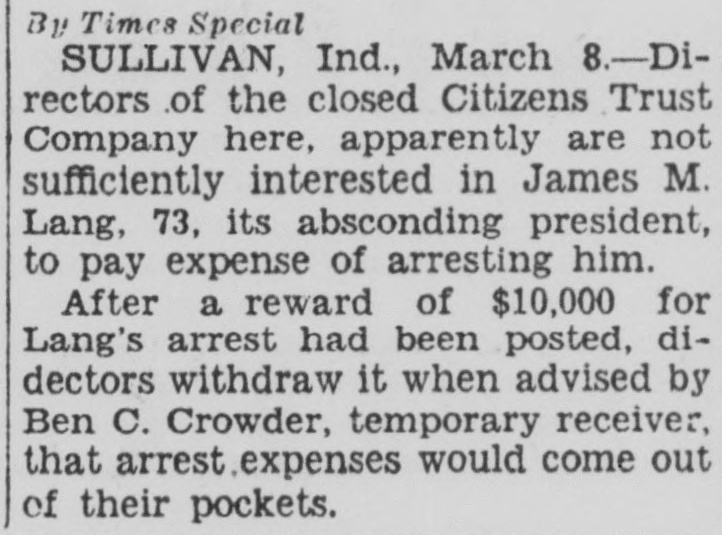
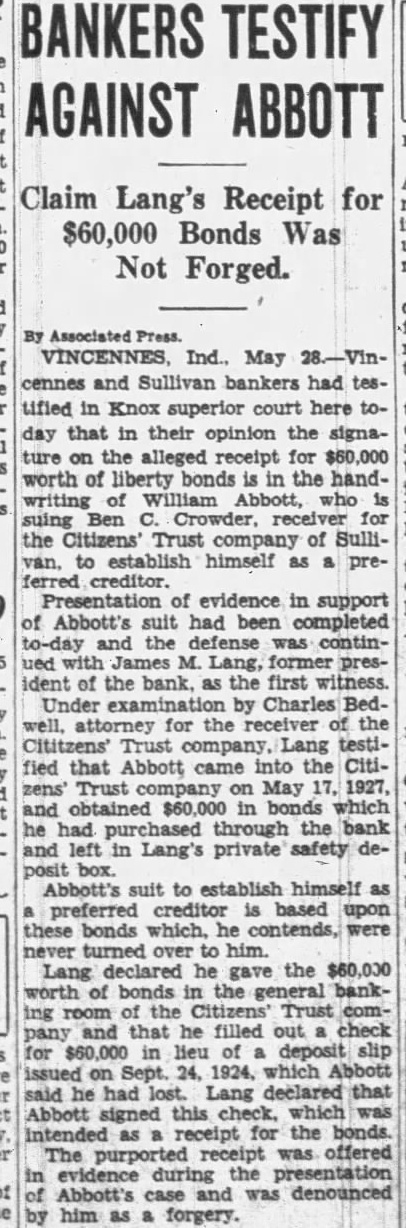
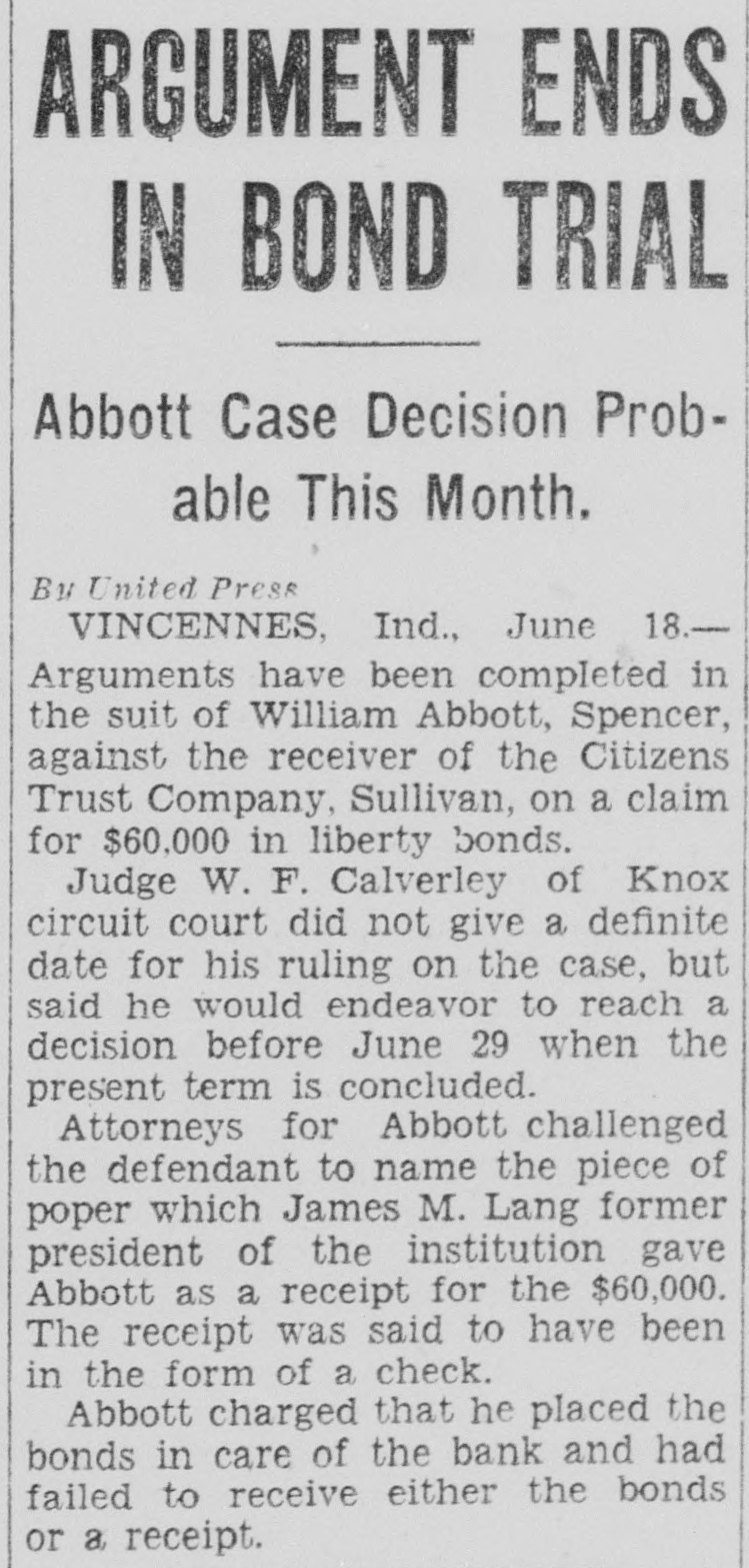
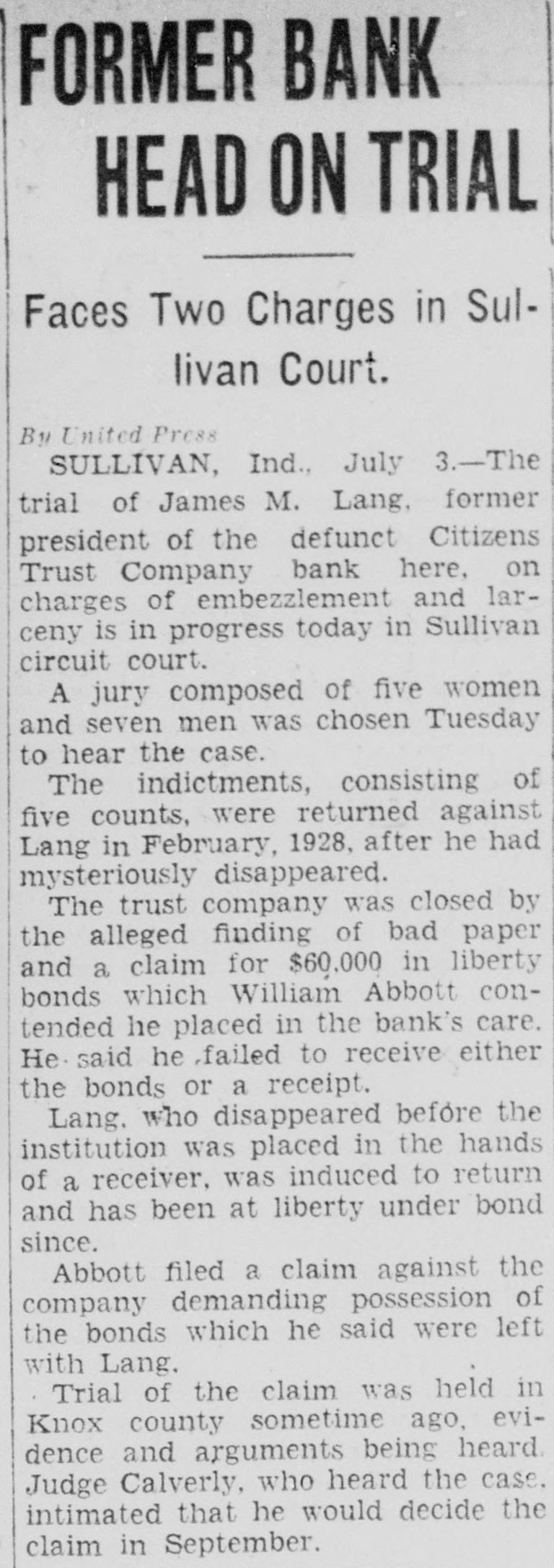
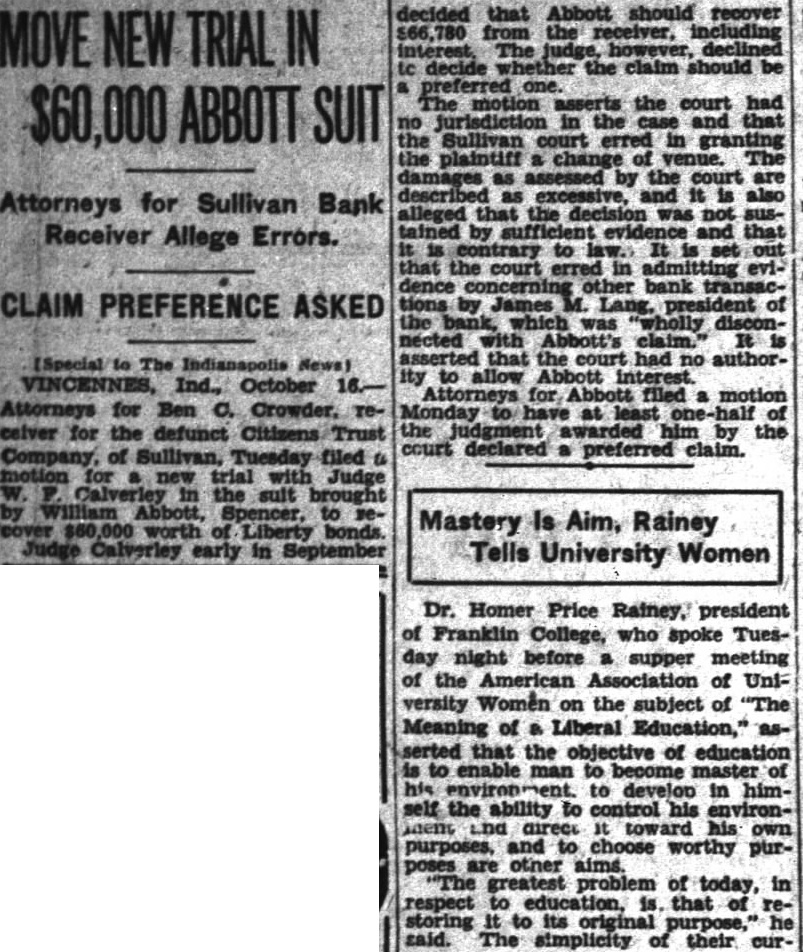
(By Staff Correspondent The IndianaSULLIVAN, Ind., May 17.-Almost the whole of the city of Sullivan is interested in the forthcoming struggle of William Abbott, of Spencer, to establish his claim against the Citizens Trust Company $60,000, which James Lang, of the defunct bank, says Abbott has already obtained. Abbott's petition to declare his claim scheduled for hearing in the circuit court Knox county May 22, and on that day citizens as find possible will go to Vincennes hear the evidence in this remarkable controversy. The claim of William Abbott to of the assets the Citizens Trust Company is predicated on transnumber of years in which he and Lang almost. to the of other attaches of the bank which was closed February 23, 1928. On the whole, the contentions of these two men do not vary to great extent. Abbott asserts that when the Citizens Bank was closed, following the flight of James Lang from Sulliowed him in fourth Liberty bonds which he had intrusted to its president for safekeeping. Lang, who returned voluntarily to Sullivan after spending more than as asserts that Abbott got his bonds long before Lang ran away. Second Check Pointed Out. In support of his claim for the issued by Lang for $60,000 of Liberty bonds. In denial, Lang points to was in the files the Citizens Trust Company, made by the bank to bearer, which that given lieu of duplicate deposit slip that was lost. Abbott this instrument as forgery and an part of the hearing at will be the controversy over the of the signature on check purports to be the signature of William Abbott. Abbott says he "trusted Lang with never even had and that merely called on Lang and checked up his balances on stubs in at various intervals, during which he deposited thousands of dollars with the trust company. Records bank show that were issued either Abbott count, that least $35,000 of bonds were bought Abbott's and that several thousand dollars passed through his checking None these is disputed by the of the it is fact that both parties the have freely exchanged information attempts to determine the truth as to Abbott's claim. A deal interest that the claim is pecuthe bank not owe Abbott the $60,000 he claims, then the creditors will pro rate money their losses the failure will be materially reduced If Abbott makes good his claim there will be little to rate among these
Leaders in The legal battle for this $60,000 is the direction of Charles Bedwell, former Speaker of the Indiana legislature, for the bank's receiver, and C. E. Henderson, of Indianapolis, for Abbott. are attorneys known integrity in the of the struggle both given of greater desire to to the truth of the conthan to win law of the between Lang and Abbott has been that Abbott bought of certificates of deof the Citizens Trust Lang has asserted that the held Abbott correct and valid claims against the bank. The certificates were issued to Abbott and bear his name. But, on the are shown as issued William H. Allison. James Abbott, John Ella AdJohn Lang asserts that changes were made on this register to assist Abbott in avoiding taxation on his money while Abbott asserts these edge for to On his return to Sullivan after his year of Lang statement in which he that Abbott's of him over to the for in with of Abbott's taxable property contributing cause to his flight from Sullivan Abbott he to conceal his that he threatened Lang any Abbott's bonds is that he instructed Lang to buy for him
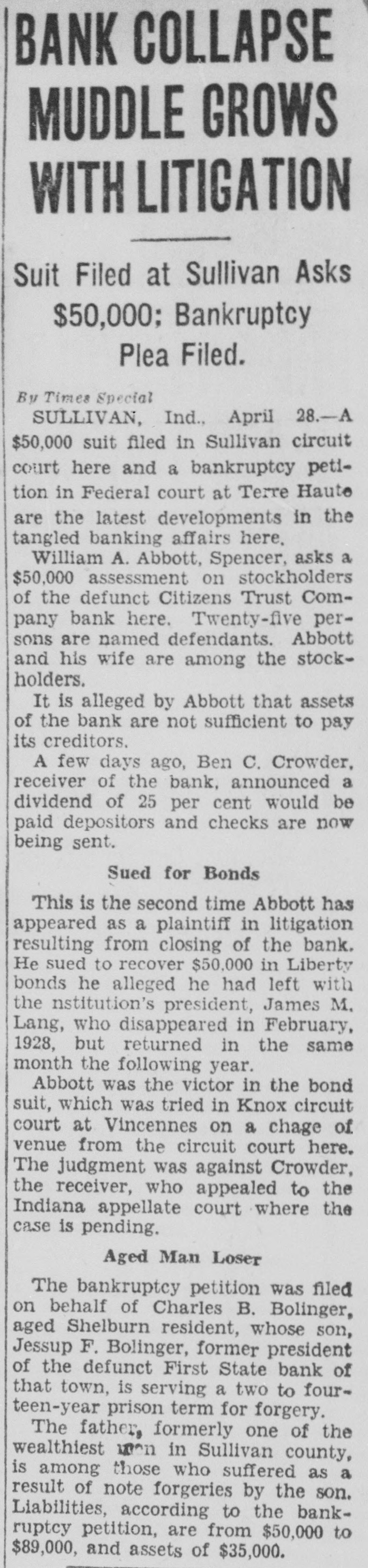
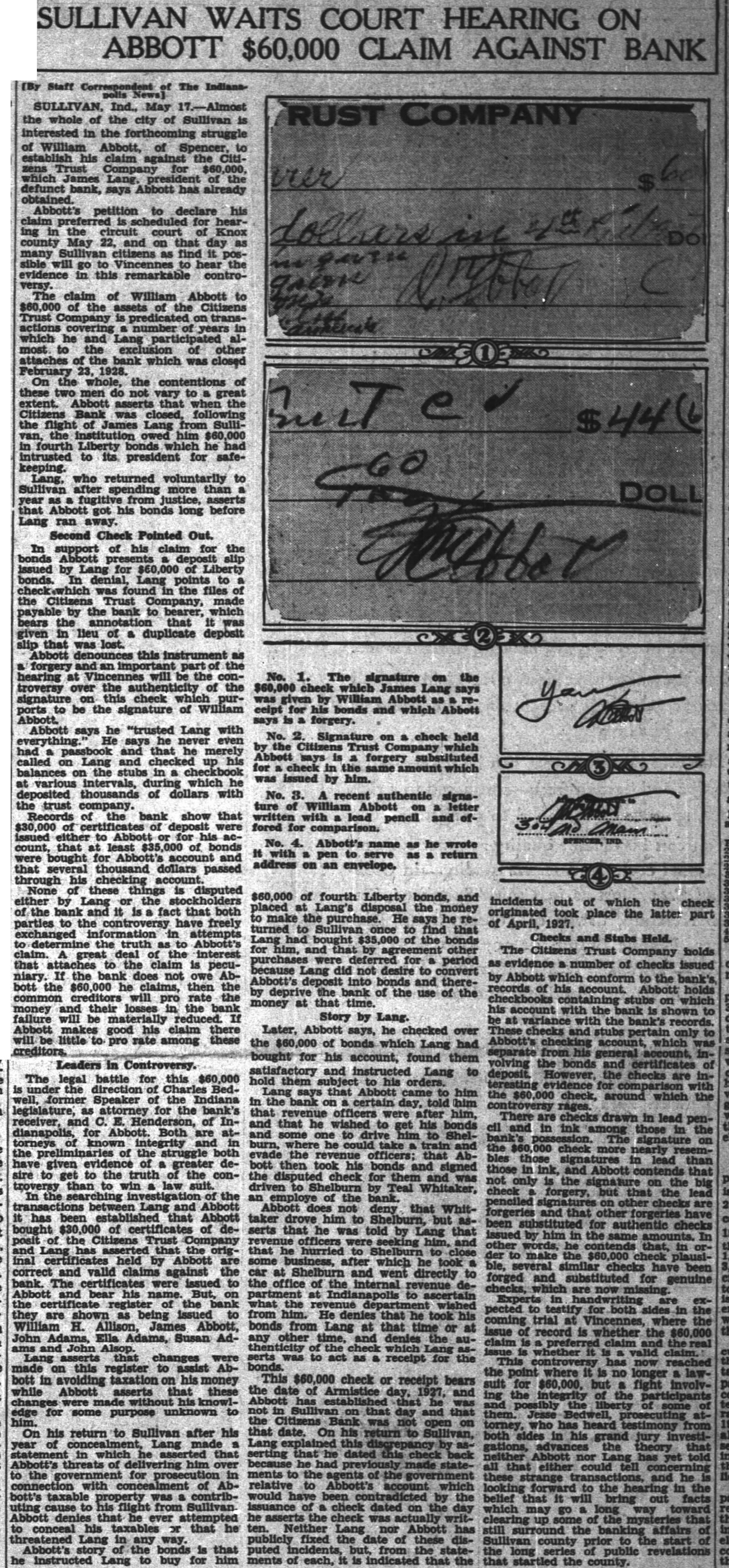
No. 1. The signature on the $60,000 James Lang says was given by William Abbott ceipt for bonds which Abbott says forgery. No. Signature on a check held by the Citizens Trust which says forgery substituted for check the same amount which was issued by him.
No. 3. recent authentic signature of William Abbott on letter written with lead pencil and offored for No. Abbott's name as he wrote It with pen serve return address on an
$60,000 of fourth Liberty bonds, and placed at Lang's disposal the money to make the purchase. He says he turned to Sullivan once to of the bonds for him, and other for period because Lang did not desire to convert Abbott's deposit into bonds and thereby deprive the bank of the use money at that time. Story by Lang. Later, Abbott says, he checked over the $60,000 of bonds which Lang had bought for his account, found them satisfactory and instructed Lang to hold them subject to his orders. Lang says that Abbott him in the bank on certain day, told him that revenue officers were after him, and that he wished to get his bonds to Shelburn, where he could take evade officers; that Abbott then took his bonds and signed the check for and was to by Whitaker, an employe of Abbott that Whittaker drove to serts that he was told by Lang that officers that hurried some which car at Shelburn went directly to the office of the internal partment at to what from him. He denies he his bonds from Lang at or any the thenticity the serts was to act as receipt for the This $60,000 check or receipt bears the of Armistice established in on Citizens open that date. On his return to Lang serting that dated relative to Abbott's which would have been by the issuance dated on the day he asserts the was ten. Abbott fixed these puted from statements of each, it is indicated that the incidents out of which the check originated place the latter part of April, 1927. Checks and Stubs Held. The Citizens Trust Company holds as number of checks issued by Abbott which conform to the bank's records of his account. holds on his account with the bank is shown to at variance with the bank's records These checks and stubs pertain only to Abbott's account, which separate his general account. involving the bonds and certificates of deposit. However, the checks are inevidence for the check, around which the rages. There are checks drawn in lead penand in ink those the The the $60 check nearly bles those signatures than in those in ink. and Abbott that not the on the forgery, but that is and that been for issued by him the that, $60,000 forged for Experts pected to for both coming trial at Vincennes, where record is whether the $60,000 the claim whether the the point no longer suit for but ing the integrity of the Jesse has heard both sides in grand jury sel yet in all and he belief bring toward still the in county the start long of that startled the county. the