Article Text
1ST NATIONAL BANK CLOSED SATURDAY
Demand For County Funds Causes Cessation Of Business
BOND WITHDRAWAL IS BLAMED
Similar Action By Bonding Company Closes Other Banks
The First National Bank here closed its doors Saturday afternoon at 2:50 o'clock.
The immediate cause of its closing was the presentation of a check for $30,000.00 by County Treasurer W. J. Berry.
The reason the county treasurer presented a check for such a large amount was because the surety company which was on the bank's bond for the safety of the county funds deposited therein had given him notice that it would withdraw from the bank's bond at noon on December 31.
The First National Bank was not alone in having its bond cancelled, but most of the banks throughout the state of New Mexico are being likewise treated by the surety companies in this wholesale cancellation of bonds.
According to the conditions of the National Bank Act, the moment a bank is unable to cash a check when it is presented for payment it must close its doors, suspend all business and notify by wire the National Bank officials at Washington. This is what happened in the case of the First National Bank here.
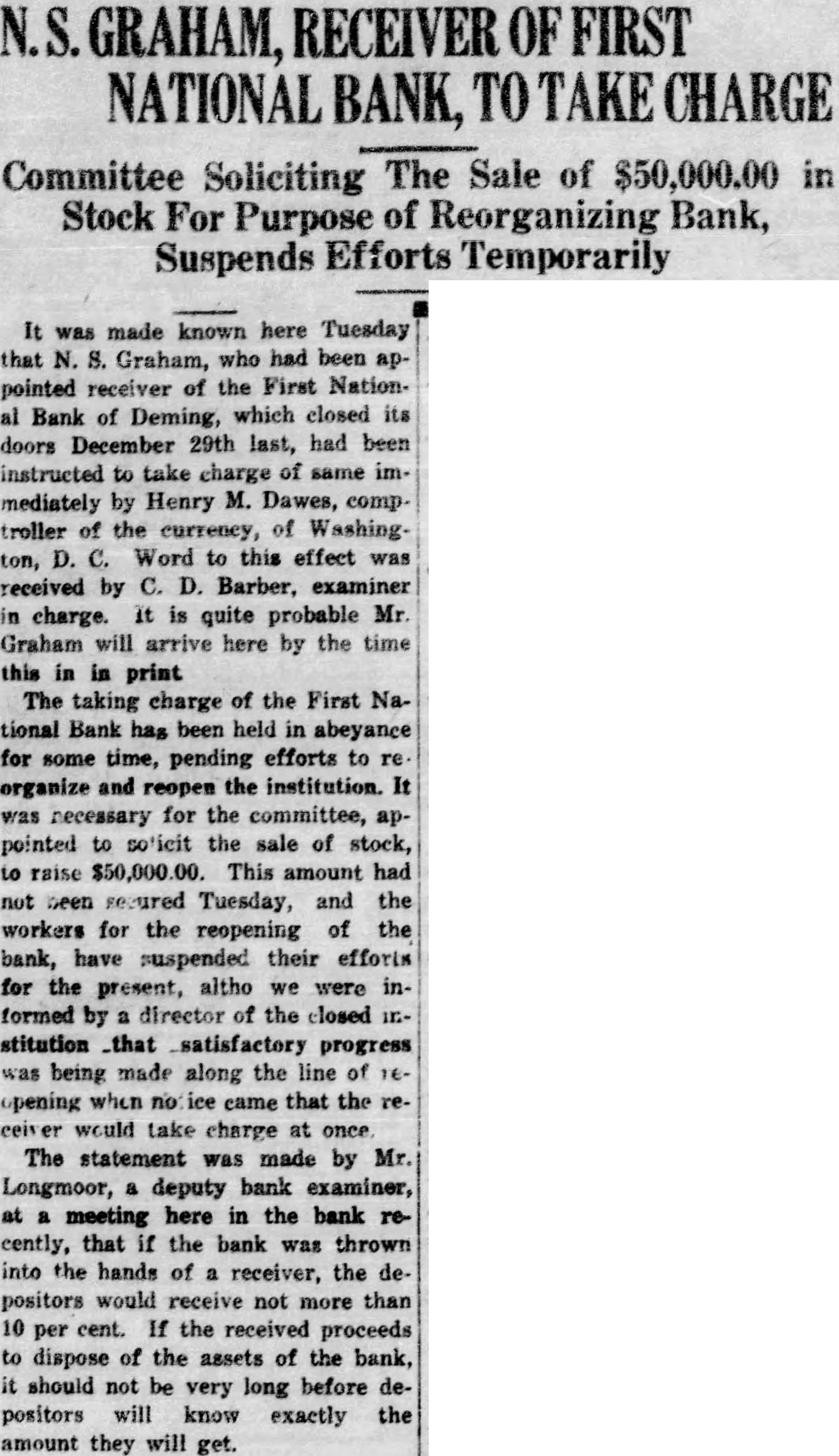
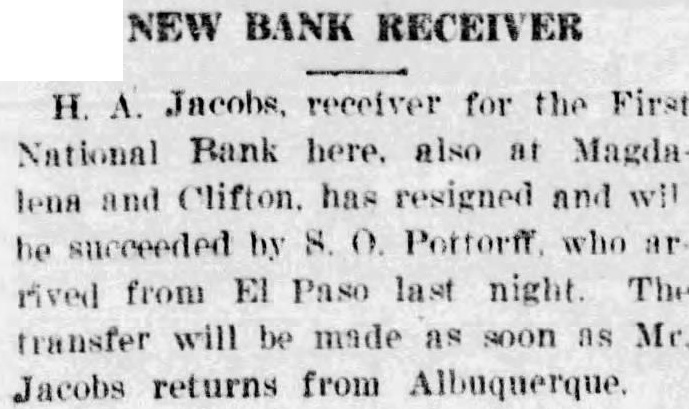
The bank examiner is due to arrive here Wednesday, January 2, at which time the books and affairs of the bank will be carefully examined, and if everything is found as it should be, the indications are that plans for the reorganization of the bank will be perfected. It is possible that this may be accomplished inside of the next thirty days.
The First National Bank was organized in October, 1903, just a little over 20 years ago. It has 30 stockholders who are able to make payment equal to double the amount of their stock if called on to do so, but the present indications are that such action will be unnecessary.
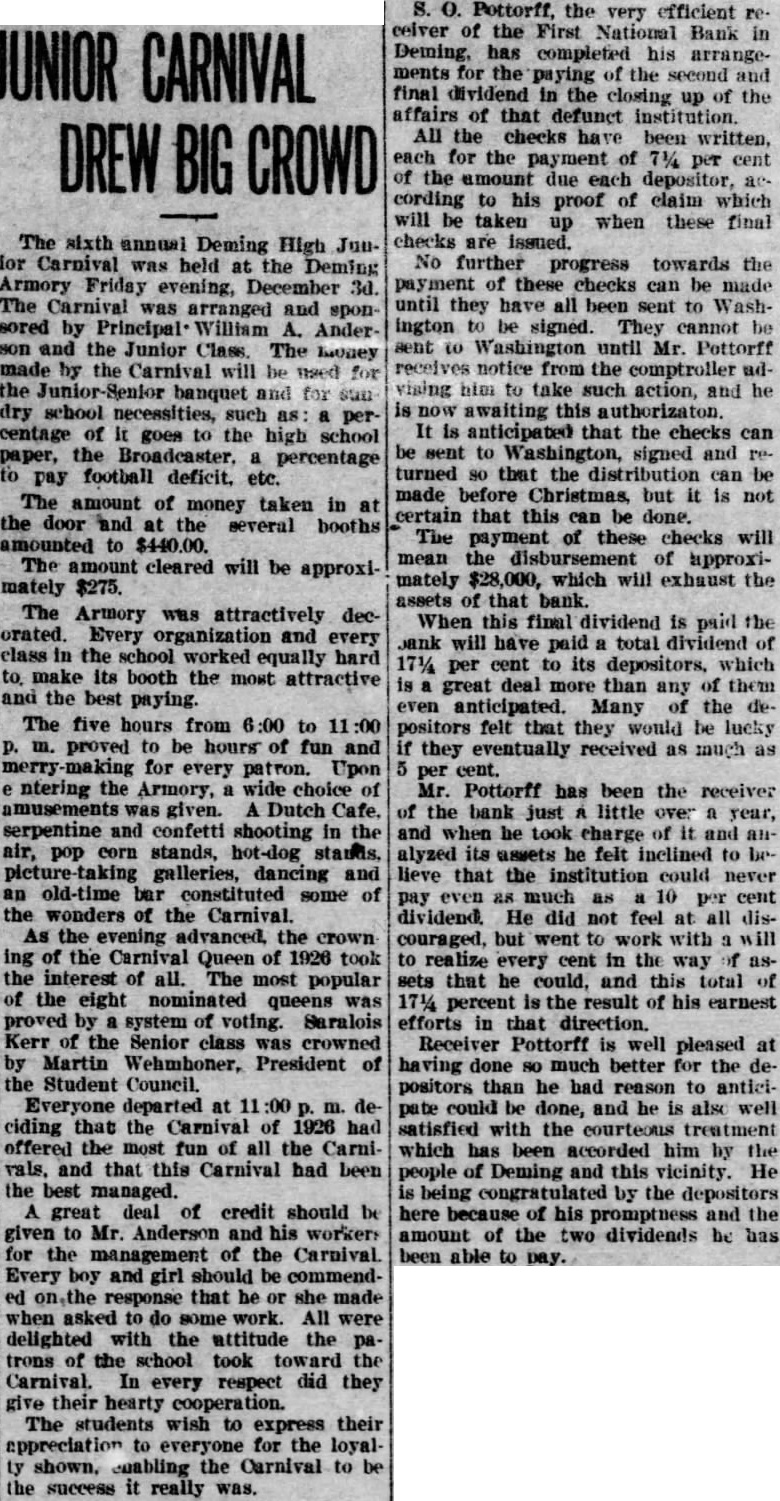
The capital stock of the bank is $40,000, and it has a surplus of an additional $40,000. Its resources are placed in excess of $500,000.00, and it has deposits in the neighborhood of $350,000.00.
Ordinarily the bank has been paying annual dividends at the rate of 20 per cent.
Since the bank closed its doors, many of its largest depositors have called personally on the vice-president and cashier and expressed their confidence in them and in their management of the bank's affairs; that they believed the conditions which caused it to close were due to circumstances over which they had no control.
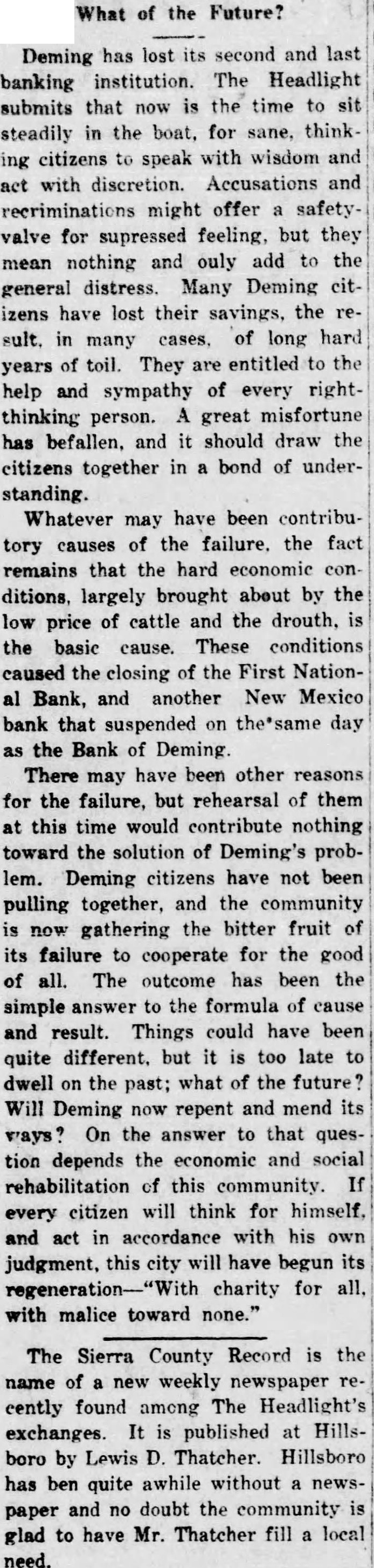
Evidently there is nothing radically wrong with the bank or the manner in which it has been managed. It simply did not have enough money on hand to cash a check for $30,000 on short notice, and its assets are so scattered and diversified that they cannot be realized on quickly in such an emergency. So what appears to be only a temporary closing of the bank may not be such a catastrophe as it might be. People generally seem to consider the circumstances in this light, and most of them are looking forward to the bank reopening at an early date.
The sudden closing of the bank created some surprise, but it failed to cause a run on the other bank, which is the Bank of Deming, where the deposits during Monday were fully twenty times as much as the withdrawals. This bank is in a condition where it can easily stand any run likely to be made on it, but every indication is that no run will be made.