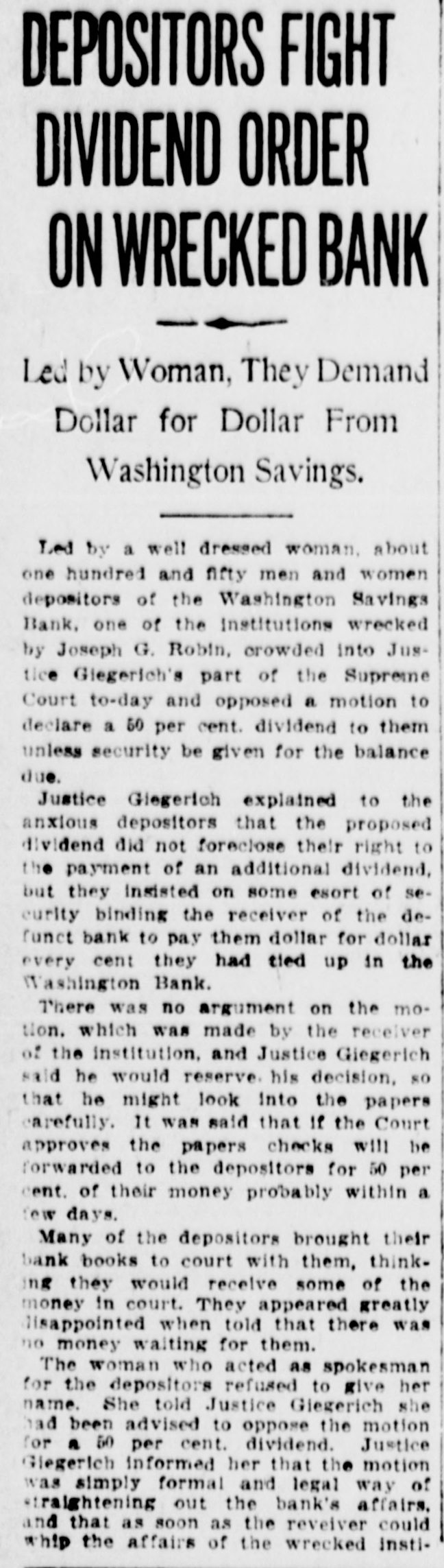
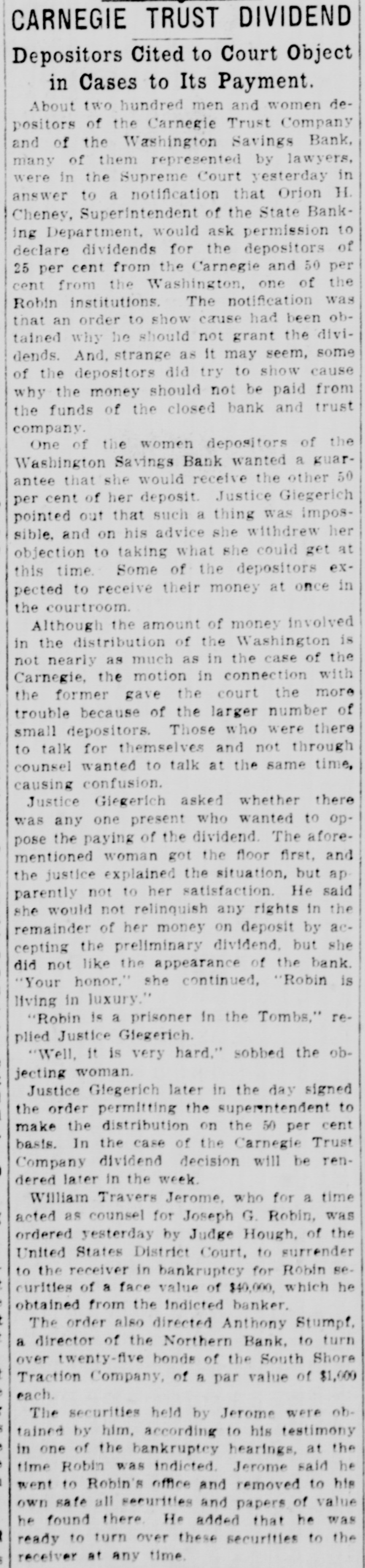
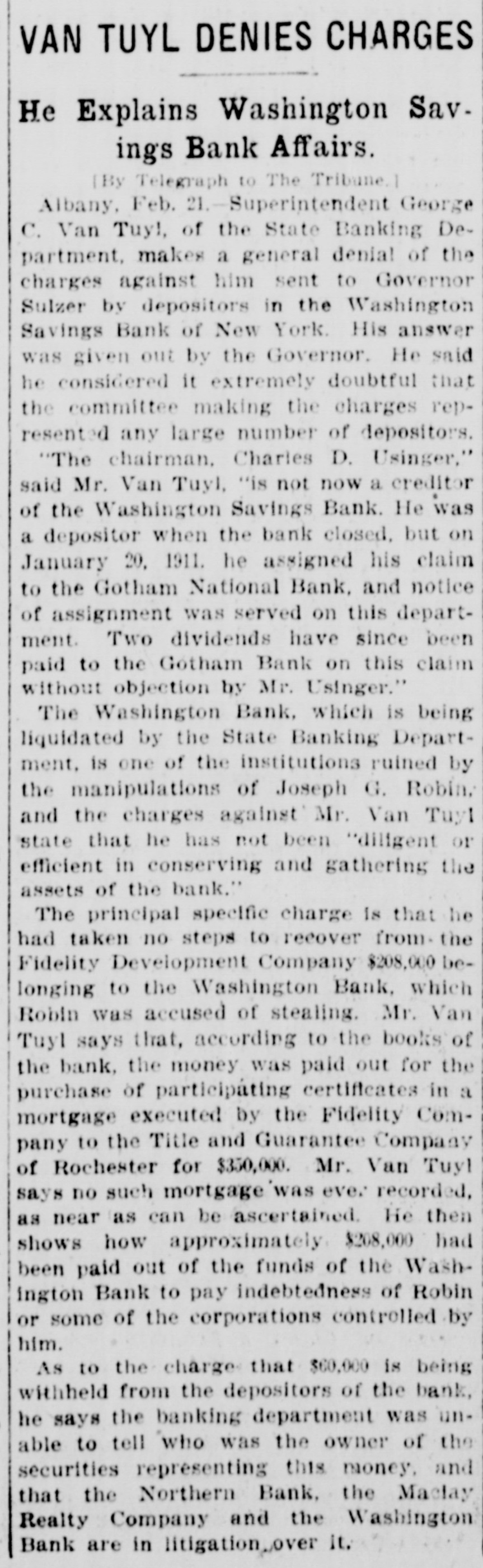
Click image to open full size in new tab
Article Text
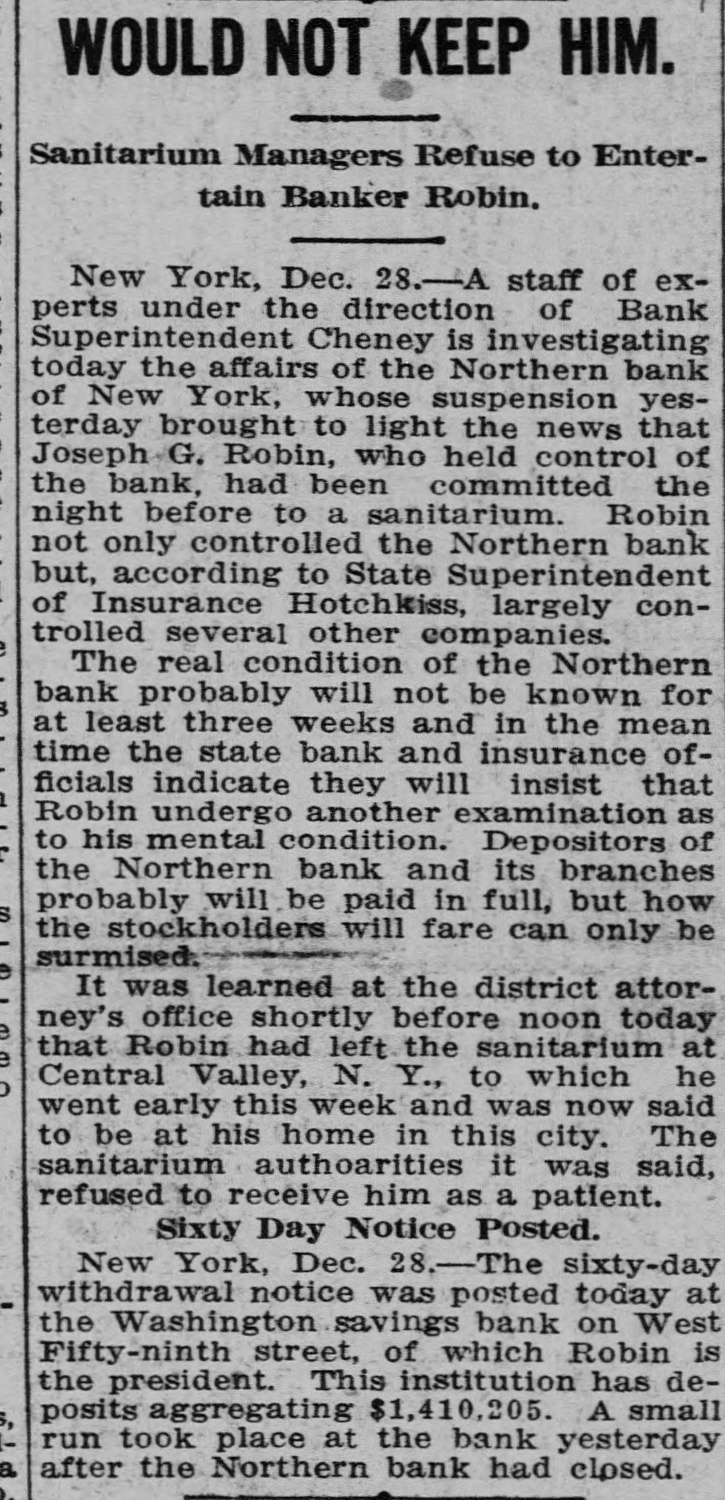
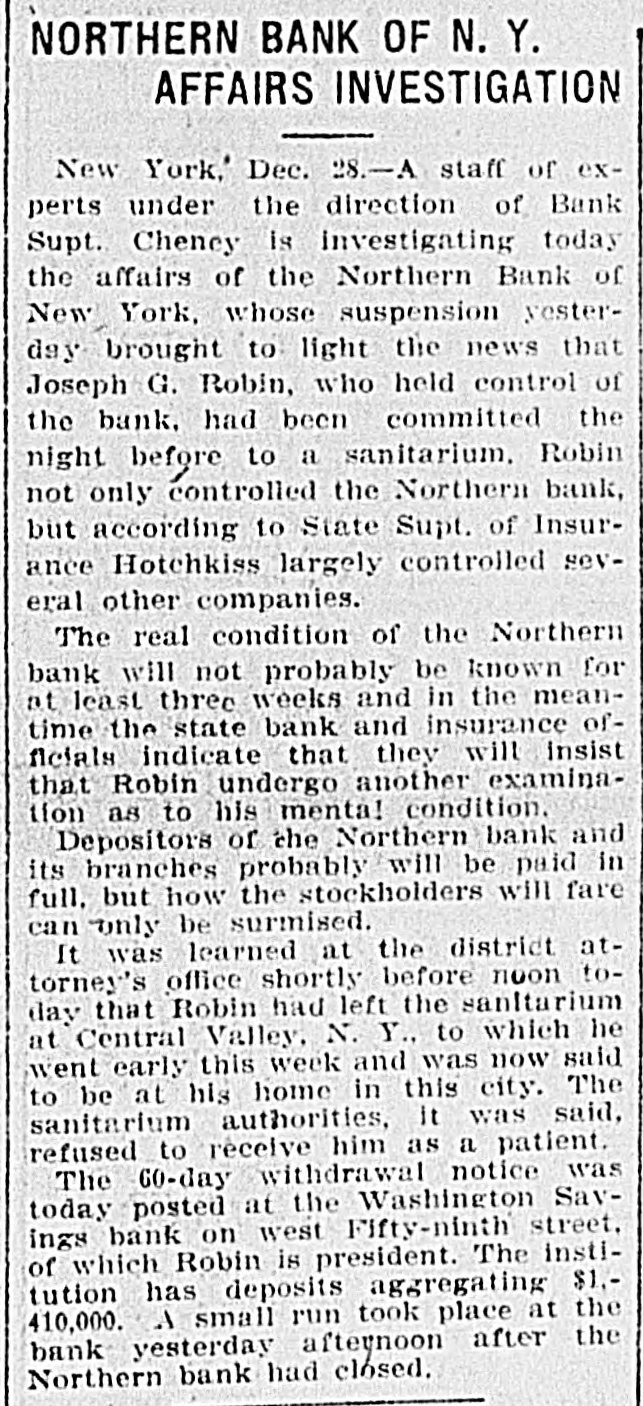
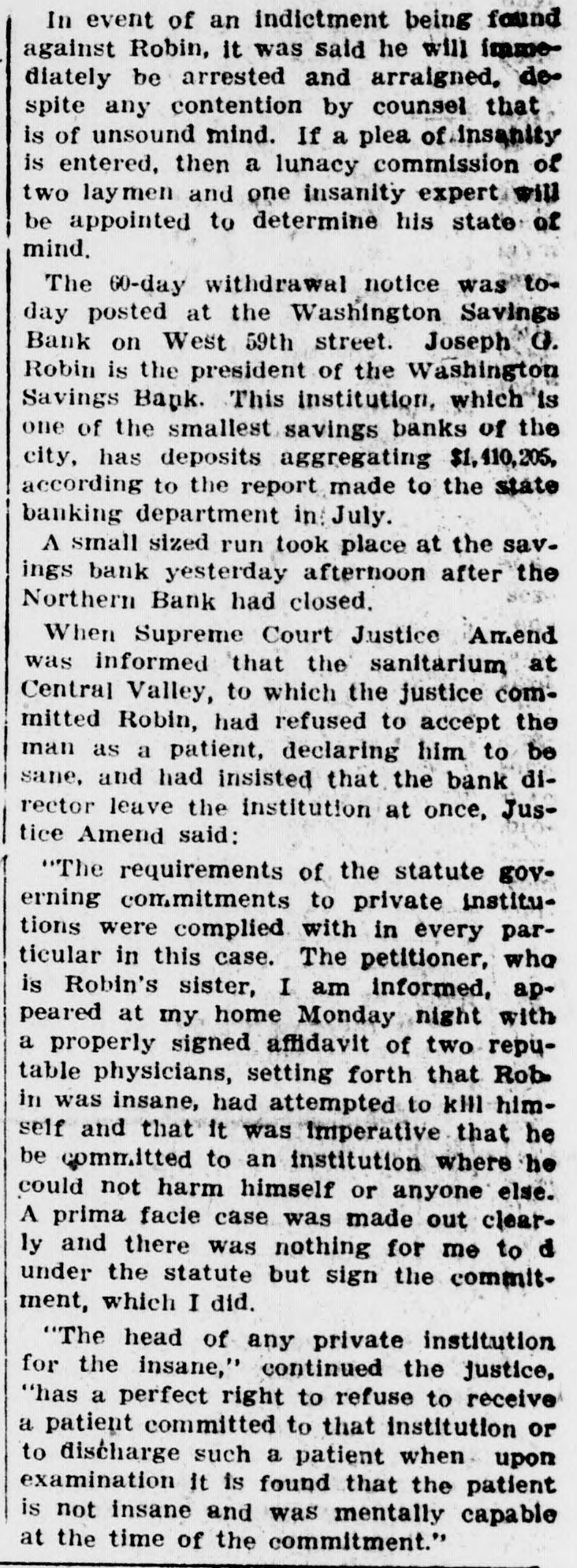
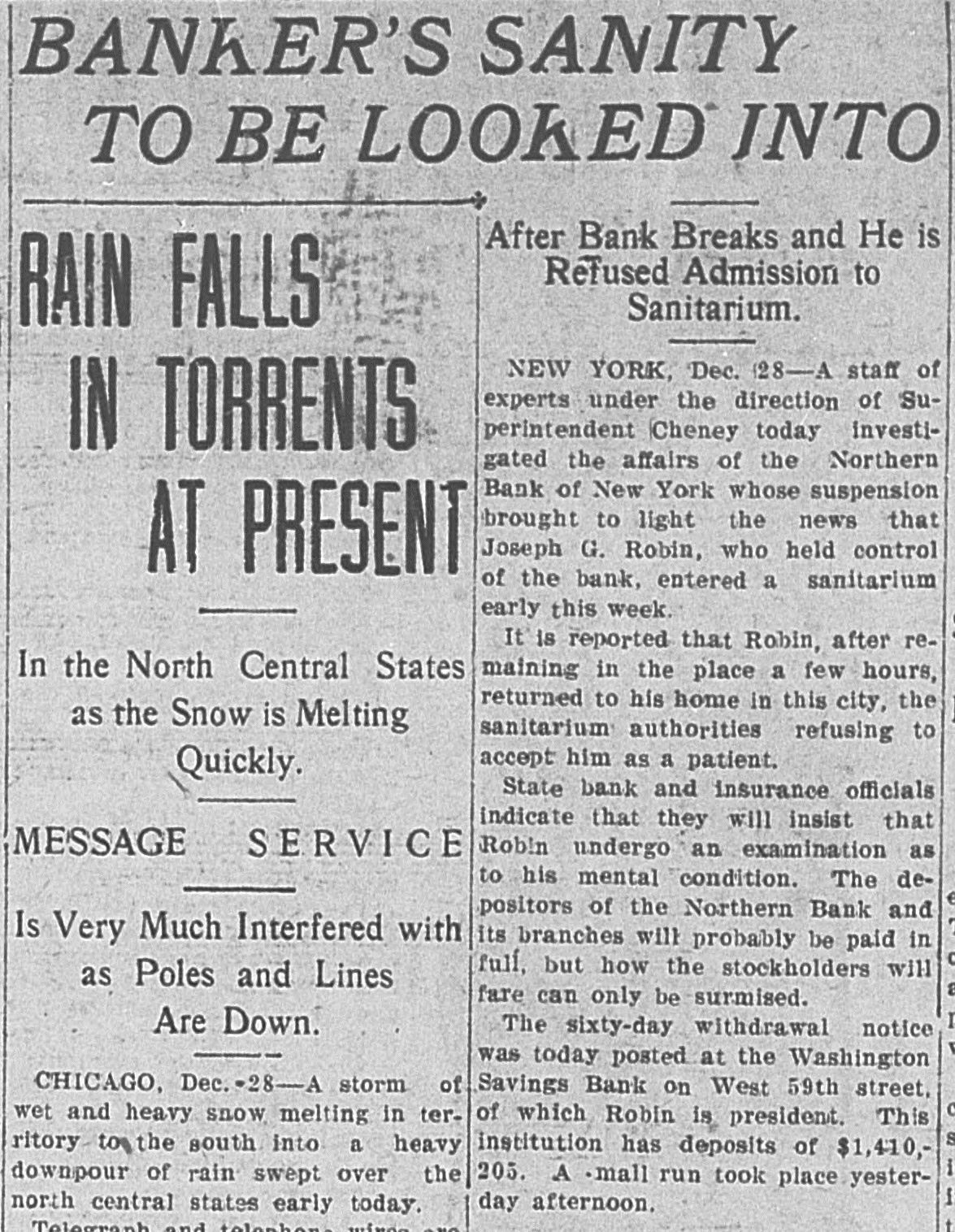
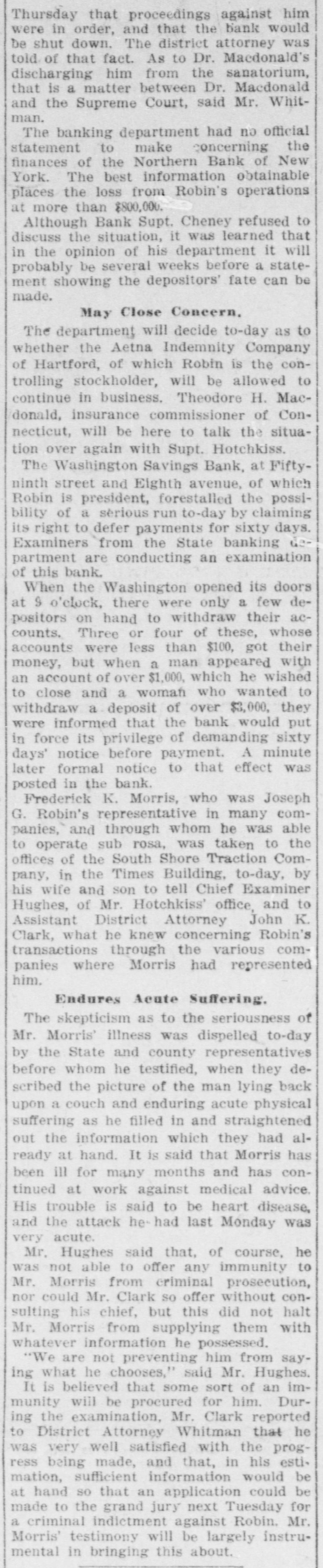
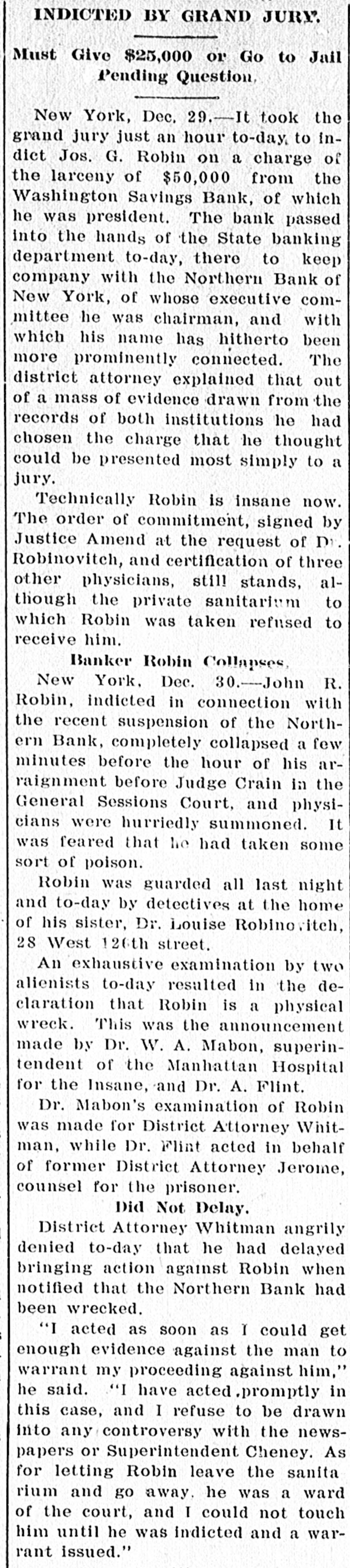
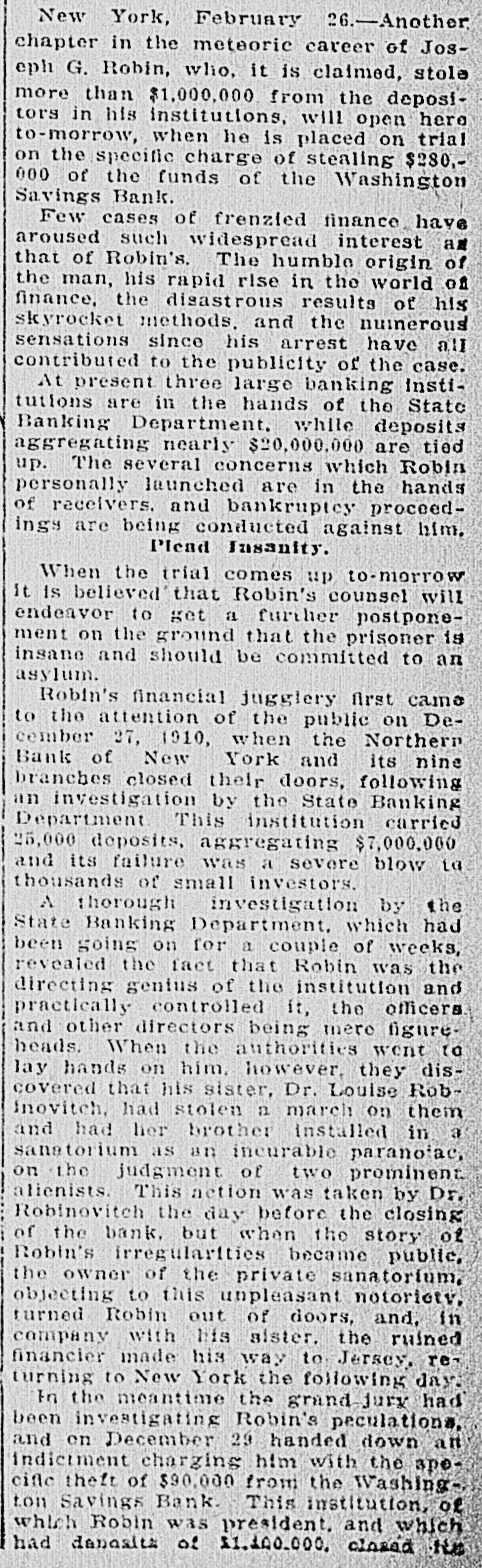
enterprises, giving return except worthless collateral. The grand jury investigation showed that he had obtained thousands of dollars from his banks without depositing any collateral. Sensations in the Robin case, however, did not end with the arrest of financier. Makes Suicide Efforts. On December 30 he was taken to court to plead to the indictment which charged him with the theft of $90,000, and while in the courtroom, attempted suicide by swallowing poison. The dose however, was not sufficient to kill, and after a few days in the hospital he was taken to the Tombs prison, no worse for the attempt. It became evident at this time that his defence would be based on an insanity plea, and whether his attempt to take his life was the part of a clever ruse to bolster up this plea, or the act of a desperate man, is a question which is a difference of opinion. Denies His Parents. Another interesting incident in the Robin case, and one which increased the public resentment against the wrecked banker, occurred a few days later when be and his sister, Dr. Louise Rabinovitch, denied their parents. This pathetic scene occurred in the office of the district attorney, where Mr. and Mrs Herman Rabinovitch, aged couple, who lived in Brooklyn, presented evidence showing that they were the parents of the banker Robin, while admitting that they had brought him from the old country, said that they were no relation to him, and that his parents were in Siberia. The following days seven more indictments were returned against Robin charging him with the theft of $207,000 from the Washington Savings bank. In the meantime Robin's sister had requested the supreme court to appoint a commission to look after her brother's estate, stating that she was the only living relative. This request was denied on January 7, and three days later Dr. Rabinovitch was indicted on the charge of perjury. In making her application she claimed to be Robin's only relative, but the district attorney presented the testimony of the aged Brooklyn couple and an indictment followed. Her trial has not as yet come up. As an indirect result of Robin's methods the Carnegie Trust company closed its doors on January 7, and at present is in the hands of the state banking department. Arraigned, Refuses to Plead. Robin was arraigned on January 10 and as he would not enter any plea to the indictment, the court ordered that one of not guilty be presented. This caused another interesting fight. Former district attorney Jerome, counsel for Robin, had contended all along that his client was isane, and and should not be compelled to stand trial. On January 25, upon motion of district attorney Whittiman, judge Swaun appointed Dr. Charles L. Dana and Dr. Pearce Bailey as a commission to determine the prisoner's mental condition. The case came up on February 1 before a jury and evidence was presented by five noted alienists to the effect that Robin was insane and unable to confer rationally with his counsel. Tells Rambling Story. Robin was also placed on the stand and told a rambling story to the ef fect that he was the victim of the Standard Oil company and J. P. Morgan, and that someone was attempting to poison him in the Tombs. Despite this evidence, however, the jury returned a verdict to the effect that Robin was sane and should stand trial. Judge Swann complimented them on their verdict and as a result was severely criticised by Mr Jerome and the alienists who had figured in the trial. The jurors all said that they were of the opinion that Robin was feigning insanity and judge Swann backed them up. All of Robin's concerns are in the hands of receivers and bankruptcy proceedings against Robin are at present being conducted before a commissioner appointed by the United States commission court. As the result of Robin's thefts Dr. Harry James, Charles K. Lexell, William P. Youngs and Thomas F. Murphy, trustees of the Washington Savings bank, are under indictment on the charge of perjury, while William L. Browls, the vice president of the Northern bank, is also under indictment on the same charge, and Frank L. Grant, the former president of that institution, has been indicted for a misdemeanor. Summary of Robin Case. December 27, 1910-Northern Bank of New York closes its doors. revealing the daring financial methods of Joseph G. Robin, who is clapped into a private sanitarium before the crash comes. December 28, 1910-Robin is turned out of sanitarium. and, in company with his sister, Dr. Louise Ra oinovitch, goes to Jersey. December 29. 1910-Robin is indict ed on the charge of the theft of $90,000 from the Washington Savings bank. and is placed under arrest at his sister's home in New York. Washington Savings bank closes its doors December 30, 1910-Robin takes poison in the courtroom. as he is about to be arraigned, but the dose does not prove fatal. January 5, 1911-Robin and his sister deny aged parents. January 6, 1911-Seven more indictments returned against Robin, charging him with a theft of $207,000 from the Washington Savings bank. January 7, 1911-Sister's request for lunacy commission denied by New York supreme court. January 7-Carnegie Trust company closes as an indirect result of Robin's financial methods. January 10.-Dr. Louise Rabinovitch, Robin's sister, indicted on charge of perjury. A plea of not guilty to the grand larceny charge is entered for Robin. January 14-Several trustees of Washington Savings bank indicted on