Click image to open full size in new tab
Article Text
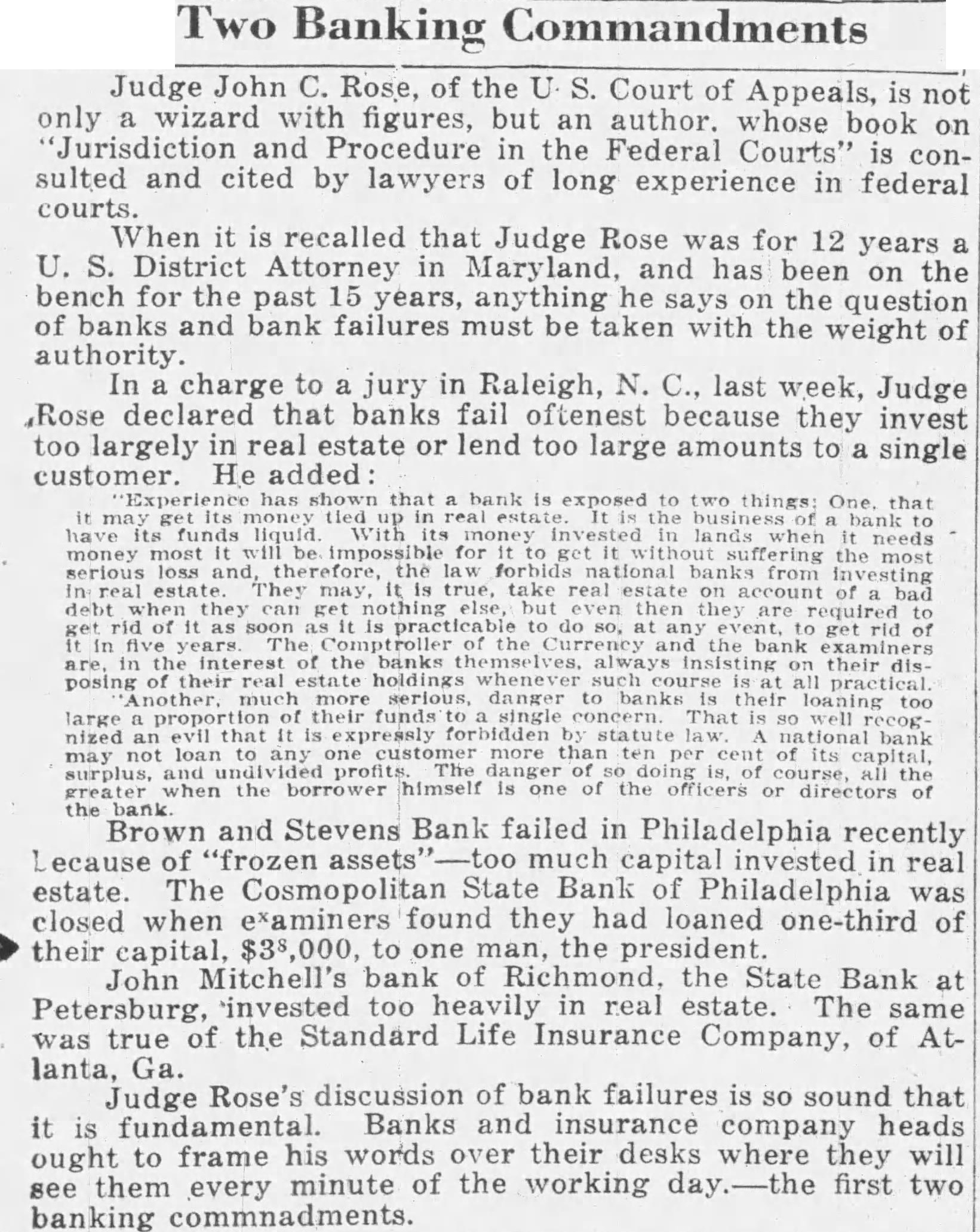
Judge John C. Rose, of the U. S. Court of Appeals, is not only a wizard with figures, but an author, whose book on "Jurisdiction and Procedure in the Federal Courts" is consulted and cited by lawyers of long experience in federal courts.
When it is recalled that Judge Rose was for 12 years a U. S. District Attorney in Maryland, and has been on the bench for the past 15 years, anything he says on the question of banks and bank failures must be taken with the weight of authority.
In a charge to a jury in Raleigh, N. C., last week, Judge Rose declared that banks fail oftenest because they invest too largely in real estate or lend too large amounts to a single customer. He added:
"Experience has shown that a bank is exposed to two things: One, that it may get its money tied up in real estate. It is the business of a bank to have its funds liquid. With its money invested in lands when it needs money most it will be impossible for it to get it without suffering the most serious loss and, therefore, the law forbids national banks from investing in real estate. They may, it is true, take real estate on account of a bad debt when they can get nothing else, but even then they are required to get rid of it as soon as it is practicable to do so, at any event, to get rid of it in five years. The Comptroller of the Currency and the bank examiners are, in the interest of the banks themselves, always insisting on their disposing of their real estate holdings whenever such course is at all practical.
"Another, much more serious, danger to banks is their loaning too large a proportion of their funds to a single concern. That is so well recognized an evil that it is expressly forbidden by statute law. A national bank may not loan to any one customer more than ten per cent of its capital, surplus, and undivided profits. The danger of so doing is, of course, all the greater when the borrower himself is one of the officers or directors of the bank."
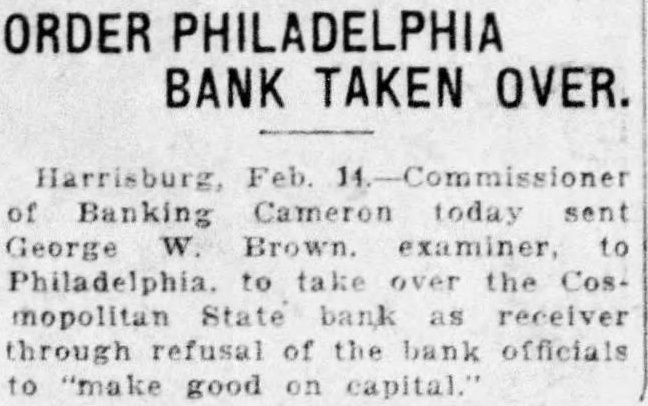
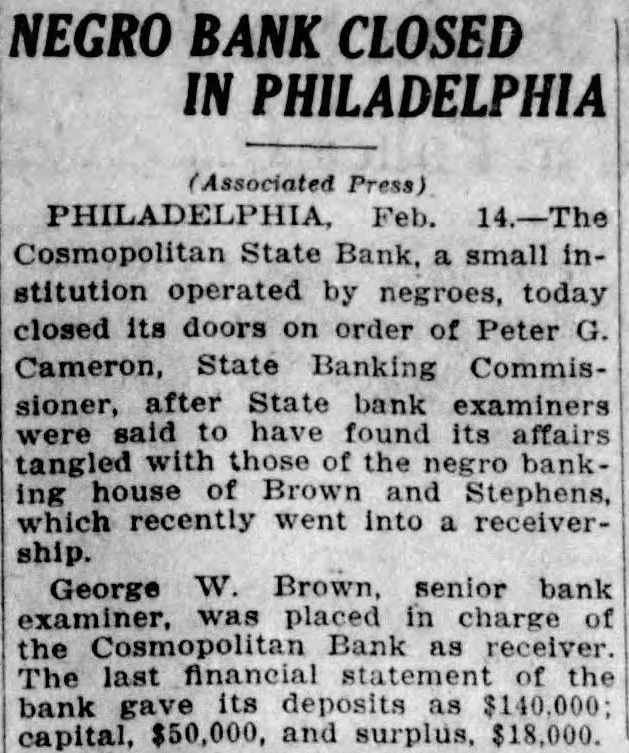
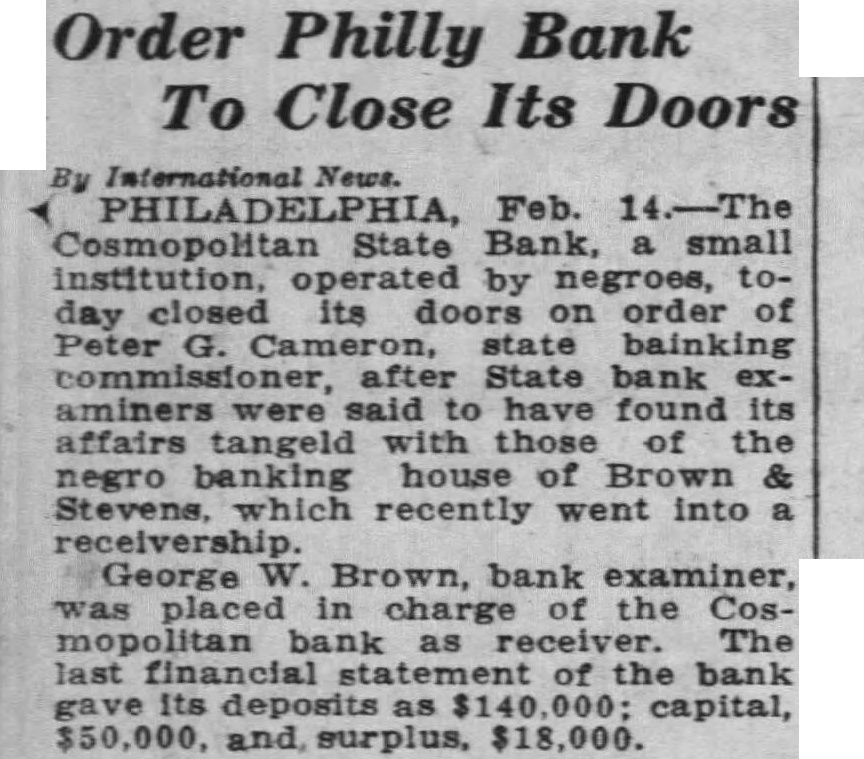
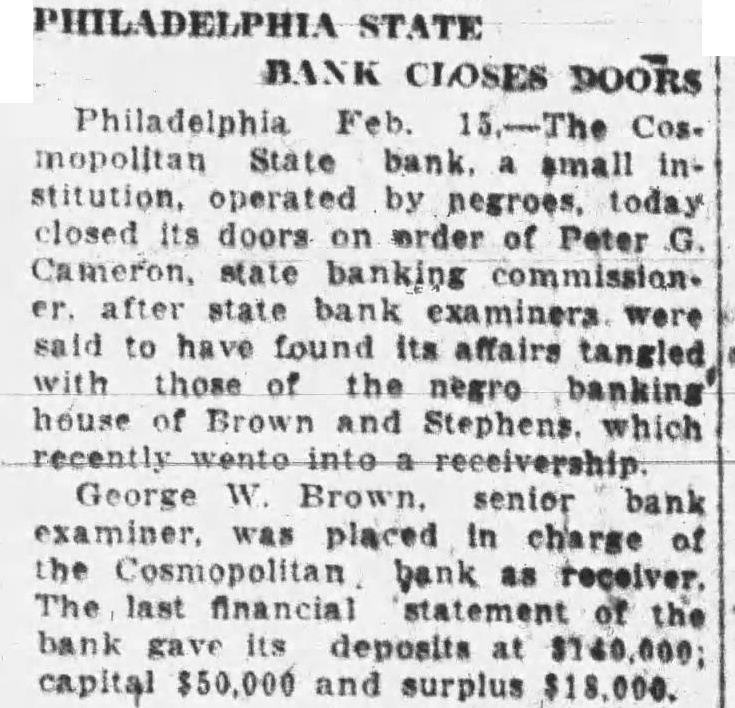
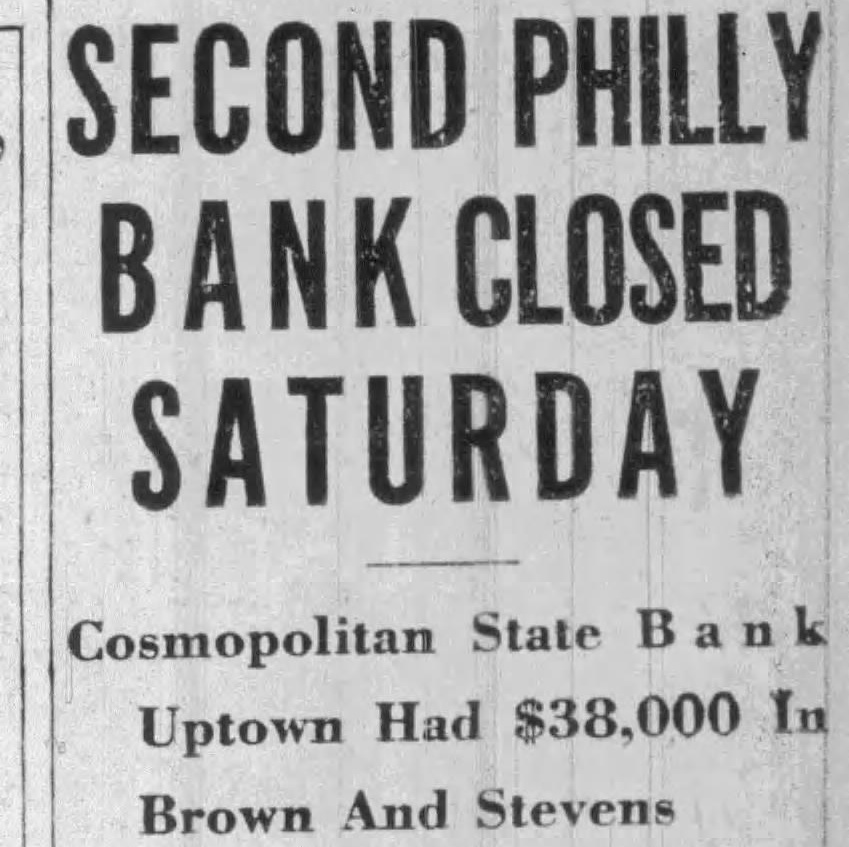
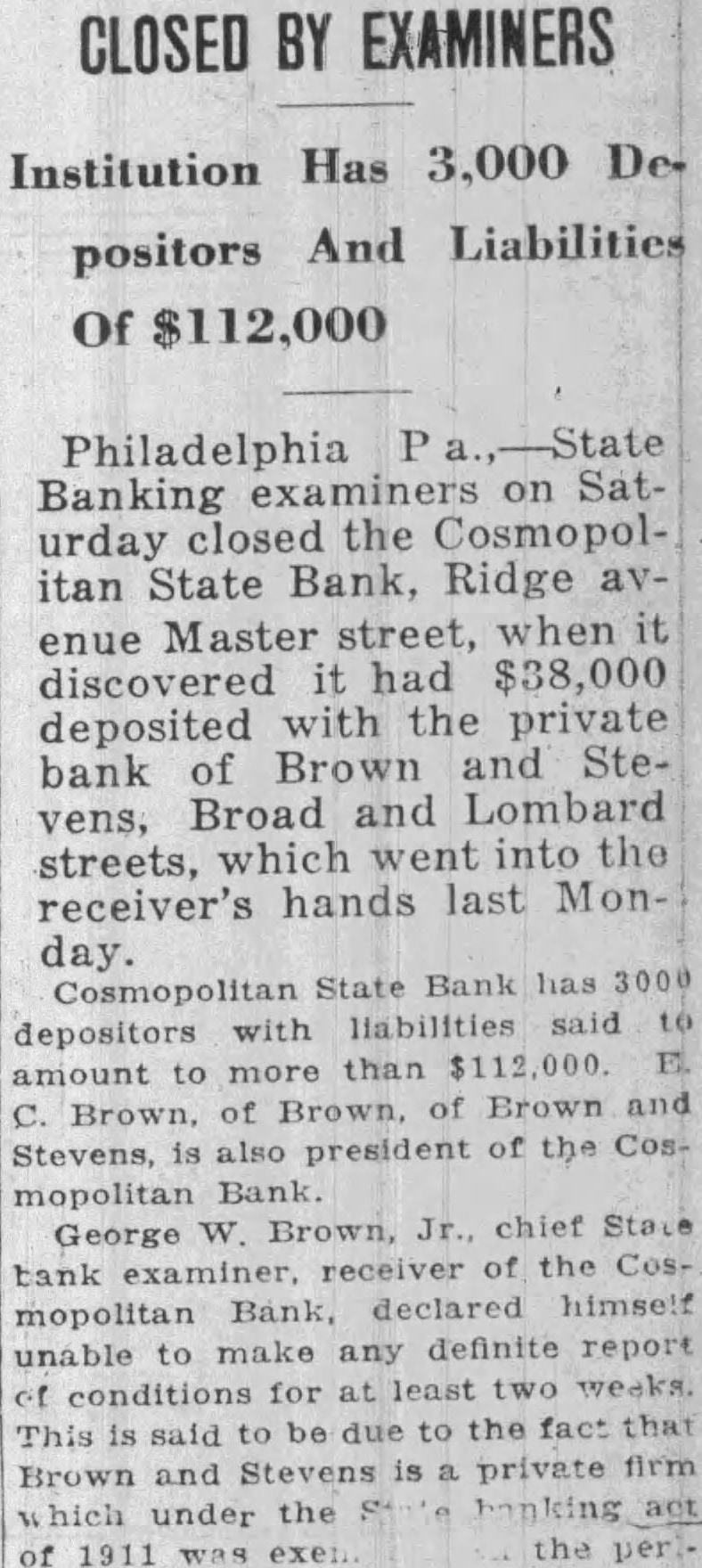
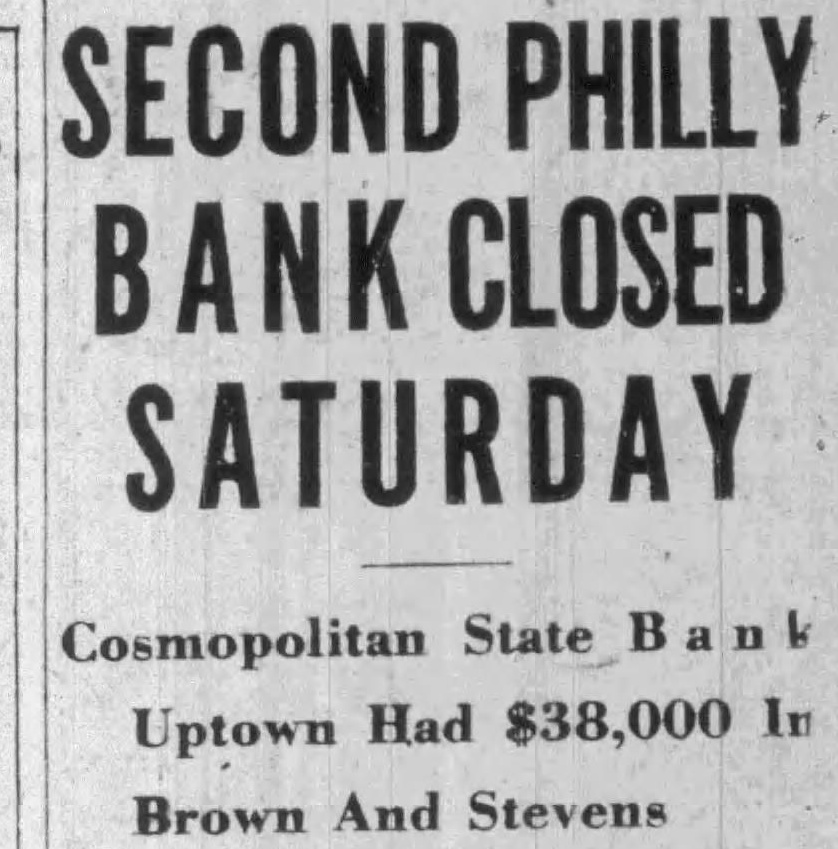
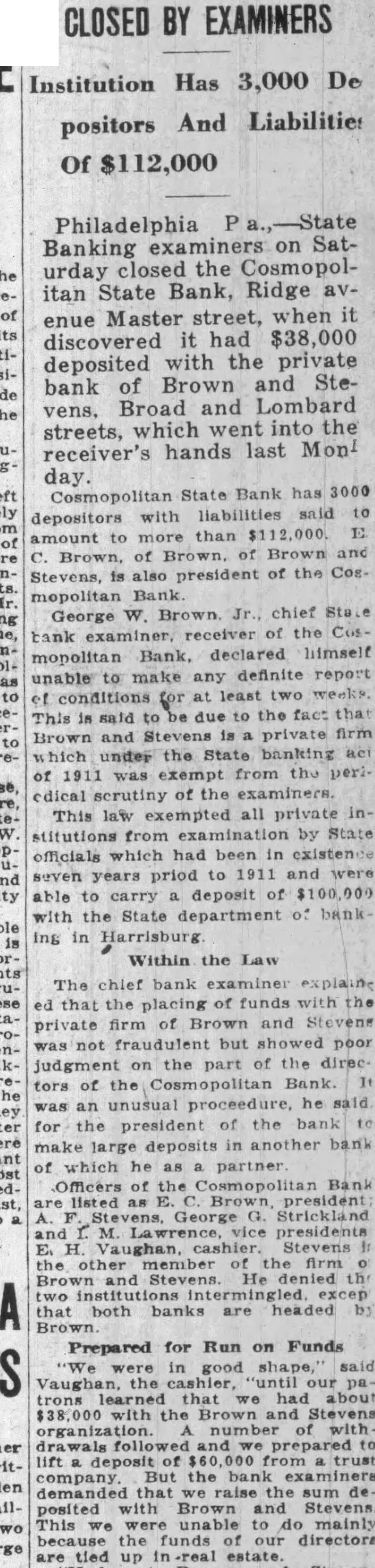
Brown and Stevens Bank failed in Philadelphia recently because of "frozen assets"—too much capital invested in real estate. The Cosmopolitan State Bank of Philadelphia was closed when examiners found they had loaned one-third of their capital, $38,000, to one man, the president.
John Mitchell's bank of Richmond, the State Bank at Petersburg, invested too heavily in real estate. The same was true of the Standard Life Insurance Company, of Atlanta, Ga.
Judge Rose's discussion of bank failures is so sound that it is fundamental. Banks and insurance company heads ought to frame his words over their desks where they will see them every minute of the working day.—the first two banking commandments.