Article Text
COURT REVEALS $875,000 BONDS DAVIS SOLD LEA
Testimony Shows Sale Made by Long-Distance Call.
PROSECUTION, DEFENSE CONTINUE SQUABBLING
State Busy Tying Together Loose Ends of Transactions Described in Testimony Given Earlier in Trial.
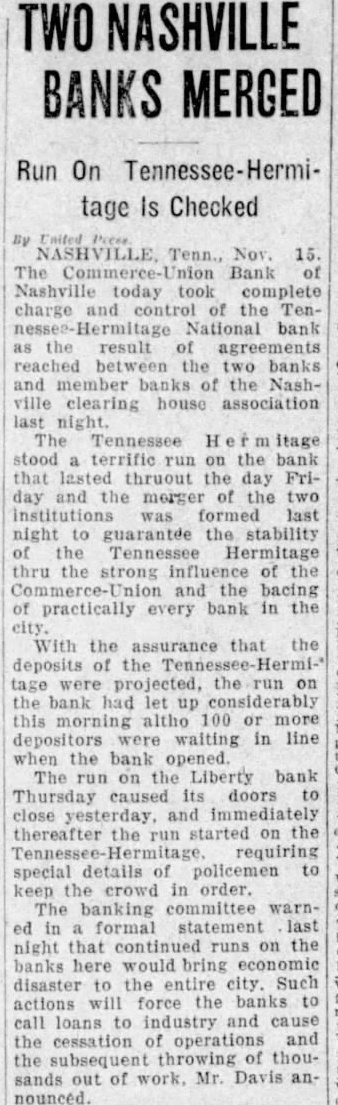
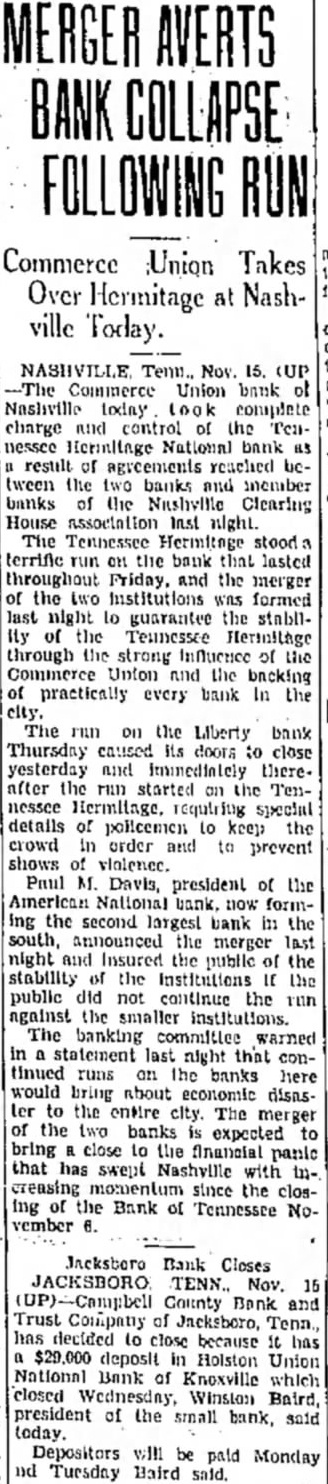
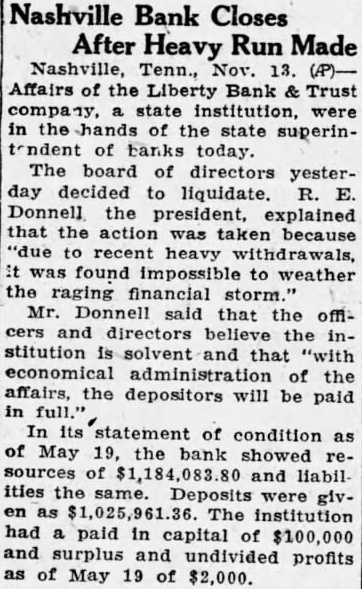
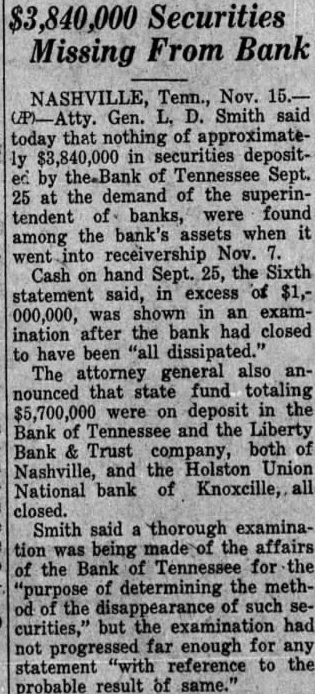
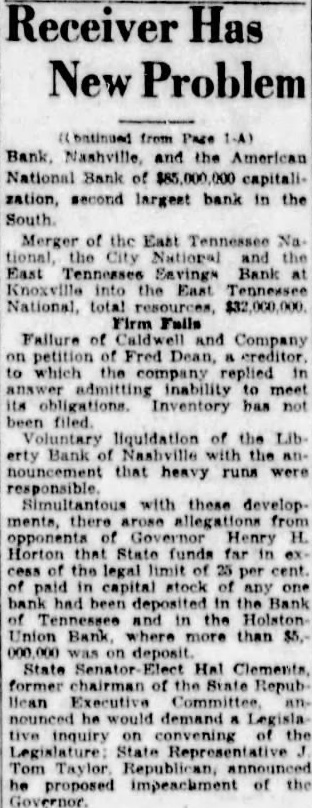
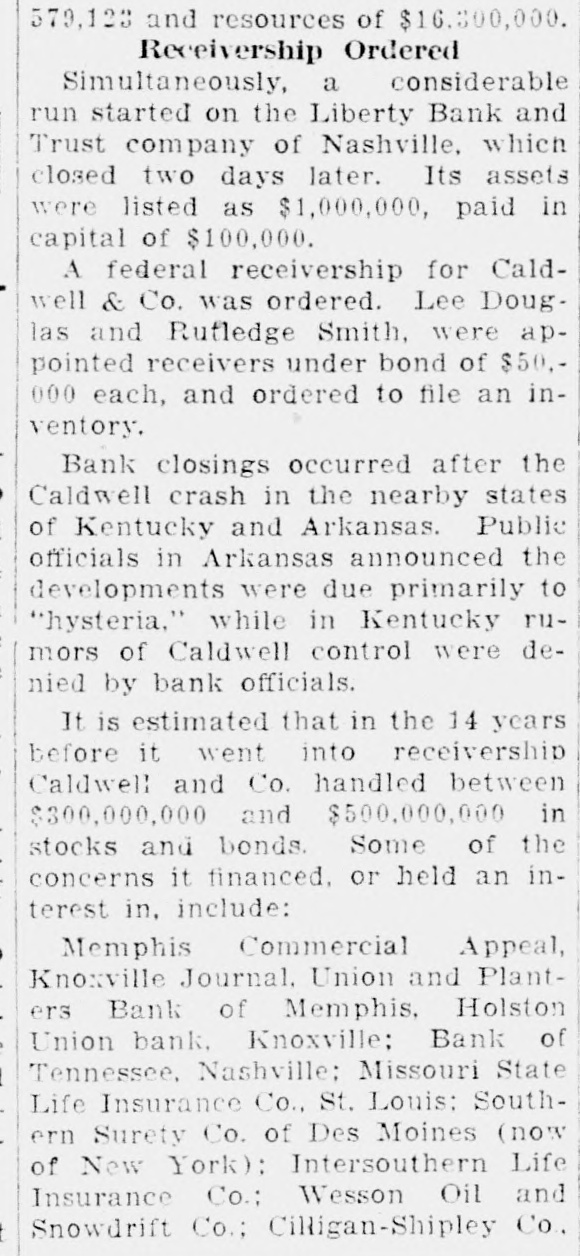
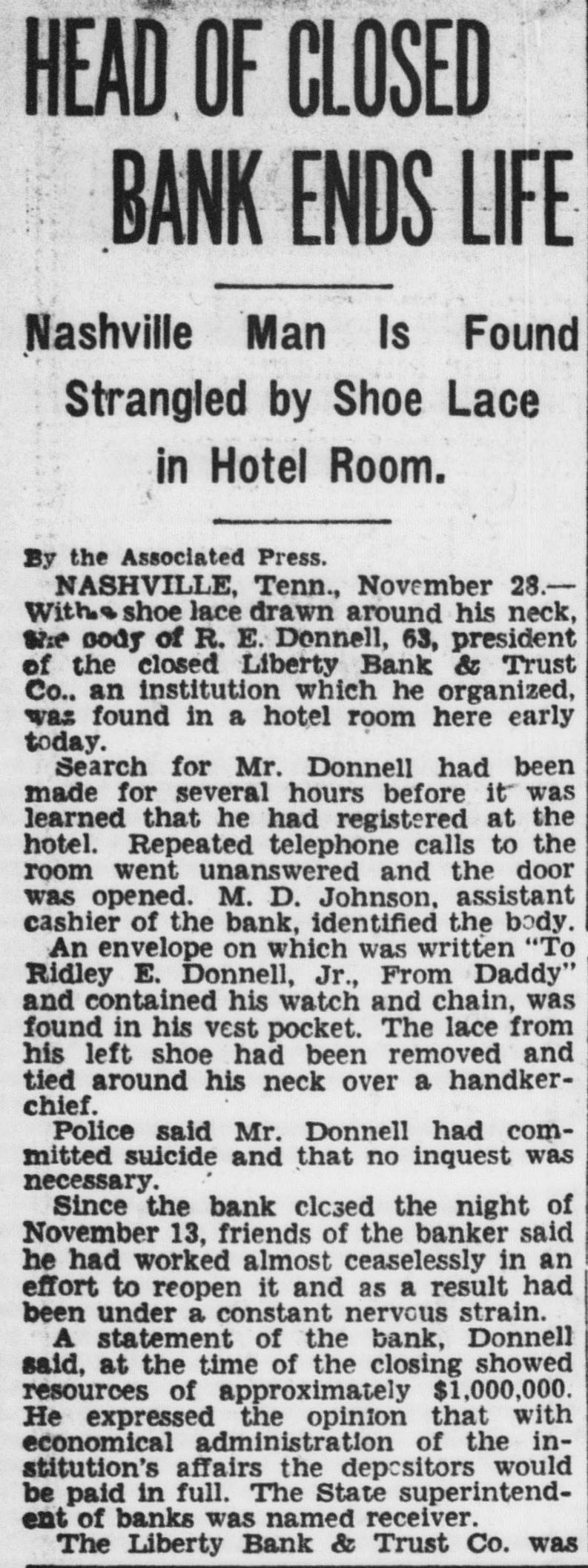
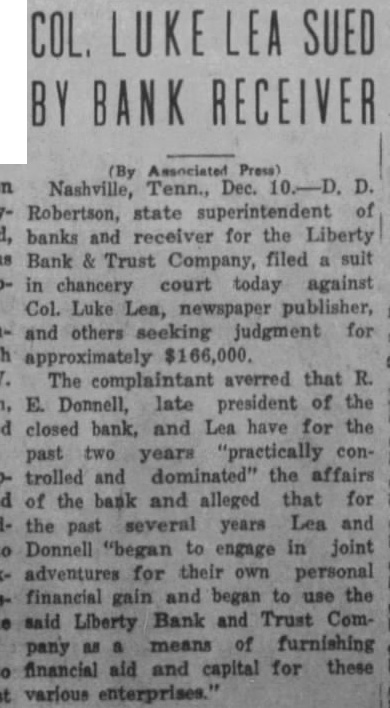
Chattanooge Times Special. ASHEVILLE, N. C., Aug. State counsel in the trial of Col. Luke Les and three other defendants in superior court of Buncombe county on charges of conspiracy to and misappropriate funds of the Central Bank and Trust company, of Asheville, set about trying together the loose ends of transactions between Asheville and Nashville during today's session. Joined with Col. Lea in this case are Luke Lea, Jr., his son; E. P. Charlet. one of his trusted employes, and Wallace B. Davis, former president of the Asheville bank, which did not reopen its doors after the close of business Nov. 19, 1930. First. the state put on the stand, M. D. Johnson, former assistant cashier of Liberty Bank and Trust company, of Nashville, bank that closed up after a heavy run of depositors Nov 13, 1930, the suicide of R. E. Donnell who had been president of the institution, following on Thanksgiving night. The testimony of Johnson and of witnesses appearing heretofore, was that Col. Lea and his aides and associates transacted considerable business through the Liberty bank. When court recessed today the state had begun to dig into the matter of two large transactions between Asheville and Nashville involving 'Southern Publishers, Inc., and, or Col. Luke Lea," in which the sale of $400,000 Universal Mortgage company bonds and $475,000 Central Securities Company of Asheville, Inc., was testified to by William D. Harris, manager of the bond department of the Central Bank and Trust company and vice-president and treasurer of the Securities concern. which was subsidiary of the bank. The Universal Mortgage company in turn was subsidiary of the securities company. Harris, with Davis. is under indictment in federal here on charges of misuse mails with the trial scheduled for Aug. 31. Harris. when the adjournment came, was unfolding the manner in which a transaction was handled whereby these bonds sold to Col. Lea under structions from Davis, over long-distance telephone in New Defense counsel. by continuous objection. succeeded in holding Johnson's testimony to items coming within his personal knowledge. Several transactions were held out of the record when Judge M. V. Barnhill sustained objections that the witness was not testifying from Actual knowledge He was shut out from testifying as to the ownership of any interest by Col. Lea in the Liberty bank. He was held to testimony concerning an $80. 000 deposit to the Nashville publisher's account Liberty bank and to the statement that so far as he knew. all deposits made in the Asheville institution for the account of the Liberty bank were made by Col. Lea. Johnson testified that on or about Sept. 22. 1930, block of certificates of deposit of the Central Bank and Trust company totaling $80,000 were secured in Nashville. discounted by the Liberty bank and placed to the account of Col. Lea. These certificates. testimony showed. were issued and charged by the Central Bank and Trust company to the account of Col. Lea in the North Carolina institution. In the Asheville bank, at the close of business Sept. 22. Col. Lea's checking account was overdrawn $29.900, increasing on the following day to $49,900 and on Sept. 24 to $59,900 and continuing until Sept. 27. when deposit for $90,000 gave him a credit balance. When the $80,000 came into the Liberty bank. Johnson testified, it was applied immediately to pay off a group of notes totaling $80,284.28 which were signed by Col. Lea, Clarence Saunders, Central Properties company (an acceptance) West End Utility company, National Investment Trust. Inc., Luke Lea. Jr., and Tennessee Public company It was shown that the Liberty Bank and Trust company had gotten credit in the Asheville bank on May 16. 1930, for check of Belle Meade Land company on the North Carolina institution for $50,000. The Belle Meade company was one of the Lea companies Attorney Giles Evans, of Nashville, and Carlyle Littleton, of counsel for Lea. were holding the state counsel's "feet to the fire' in the series of objections against testimony that were not on direct knowledge of the witness. R. R. Williams. for Davis. was brusque in his assertion that Solicitor Zeb V. Nettles was asking question which he knew Judge Barnhill would overrule. Nettles was seeking to circumvent the close limitation which the court was sustaining by proving that certain documents were records of the bank and that they were in his charge. Johnson was qualified to testify as to their correctness. H. G. Owens, former exchange and collection teller of the Central Bank and Trust company. resuming the stand this morning. said that he removed some correspondence on the case from the bank's files early in the present Owens, questioned by Attorney Evans, of Lea counsel, said he had no knowledge of the deal whereby bonds of Central Securities company and revenue anticipation notes of the city Asheville were sold to Caldwell & Co. Johnson. over testified that stock in the bank was bought by Col. Lea, but none stood in his name. Solicitor Nettles asked him if the stock of E. B. Chappel was not sold to Col. Lea and objection was sustained. Judge Barnhill told the jury that there had been mp evidence introduced to show that any of the defendants owned any stock in the Liberty Bank and Trust company. Johnson produced the individual ledger sheets of the Central bank, which he identified as showing the account of Col. Lea. "Do you know who R. B. Moseley is where he is employed he was "He is an employe of the Nashville Tennessean.' Johnson said. Johnson said $80,000 of Central bank certificates payable to Moseley and indorsed by him were discounted and the proceeds credited to Col. Les on Oct. 23. He said the were given by the late R. E. Donnell to be credited. The despoit ticket was introduced in evidence. He said the money was paid