Article Text
Mr. Bell's Theory of Currency.
Mr. BELL, in his great anti-Administration speech, delivered and prepared for circulation on the eve of the adjournment of the last Congress, in taking issue with the Democratic doctrine on the subject of Currency, with his accustomed modesty declares, that-
There are some important truths or doctrines connected with the subjects of trade and currency, of which the President and those who sustain his views would seem to be ignorant, or behind the age. From the time of Adam Smith, it has been admitted by writers upon political economy, that bank notes, or a paper circulation founded upon such securities as insure their convertibility into gold and silver on demand, are of equal value, in all respects, to gold and silver. A not less important fact, which appears to be ignored by the President, is the superior advantages and convenience, in some respects, of a paper currency, or circulation convertible into gold or silver. A sound paper circulation has not only the advantage of cheapness and convenience, as a medium of exchange; but, to the extent that it takes the place of the gold and silver that would otherwise be required to be kept in circulation in any community or country as a medium of exchange, it adds to the floating or unfixed capital of the country. The gold and silver dollar released or expelled from circulation by a paper dollar, being no longer required as a medium of exchange, in which employment it could not increase, but, on the contrary, daily loses by abrasion, becomes a part of the active and productive capital of the country, and adds its due proportion of increase to its wealth.
If, therefore, the President, and those who support his policy, should succeed in putting down all banks of issue, and provide no other paper circulation of equal value, it can be demonstated that $100,000,000, at least, would be withdrawn from the present productive capital of the country, without any equivalent benefit.
As this speech has been extensively distributed over the State, and embodies, doubtless, the leading ideas that will be urged in the next canvass by the party of which he is the recognised head, such a declaration as the foregoing is worthy of special note, as illustrating the Federal egotism of the author, the singular fallacy that characterises all bank logic, and the dangerous tendency of such a policy in this respect, as gentlemen of Mr. BELL'S School would force upon the country.
The propositions of the foregoing extract are set forth with a self-importance and an arrogance of style peculiarly the author's own; and yet, from the first letter of the opening sentence to the last letter of the concluding sentence, it is one tissue of bungling, ridiculous assumption, untrue in fact and untrue in theory.
For instance, we are first told that the President and those who sustain his views on the subjects of trade and currency, "seem ignorant or behind the age," and this remark is based upon that portion of the President's message which declares "it is apparent that our existing misfortunes have proceeded solely from our extravagant and vicious system of paper currency and bank credits, exciting the people to wild speculations and gambling in stocks" Where was the ignorance displayed in such a declaration? Did not the statistics of the country show an unusually inflated condition of the currency? Did not the fact of the inability of the Banks in nearly every locality, to meet the legitimate demands against them, the suspension of all and the utter failure of many, clearly attest to the world the truth of the declaration the President had made? For, that such a period of devastation should occur at a time when the nation was at peace, when there was no reason for extraordinary expenditures, public or private, when every branch of productive industry was in a state of wholesome activity, and California furnishing her annual harvest of gold, can only be explained by referring it to the evils of their, the Bank's, own creation. Facts so apparent and conclusions so inevitable, leave the charge of ignorance or wilful recklessness at Mr. BELL'S own door.
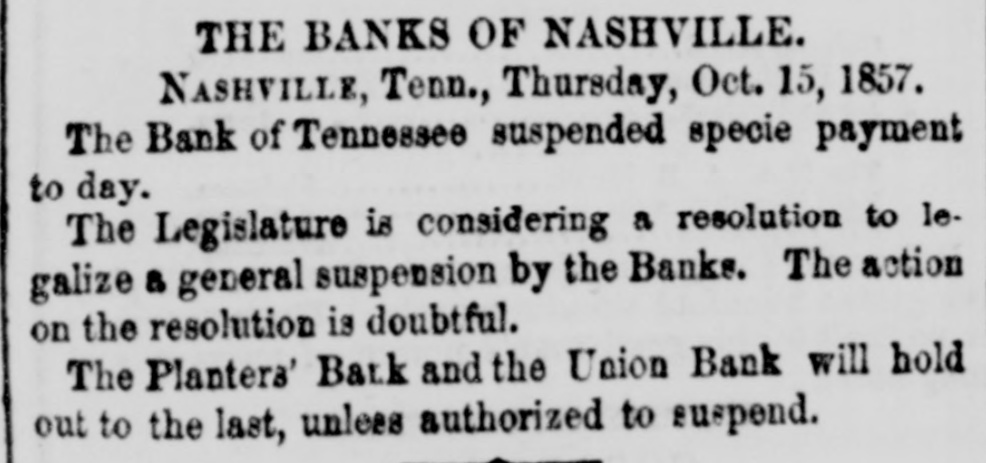
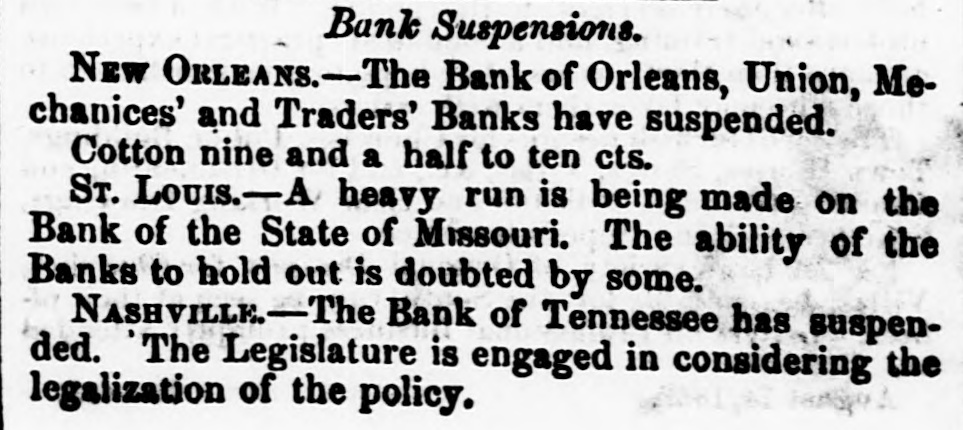
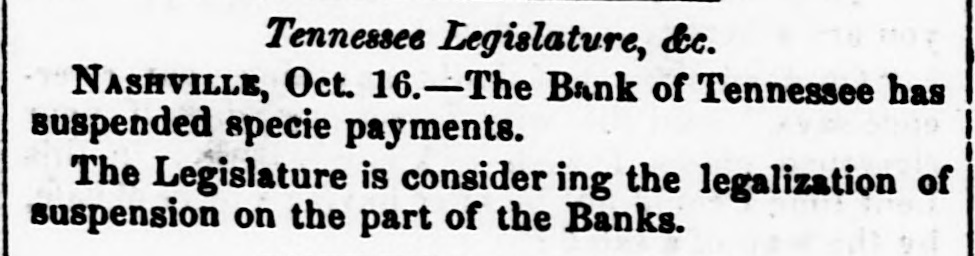
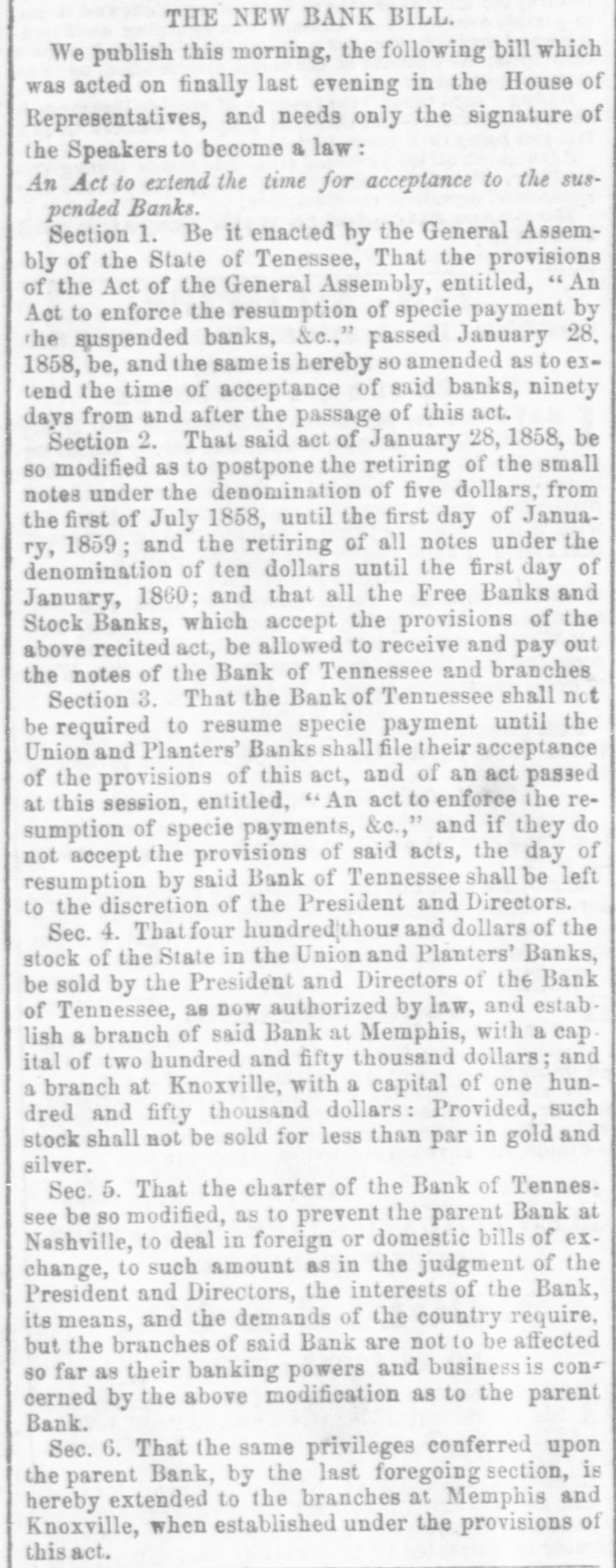
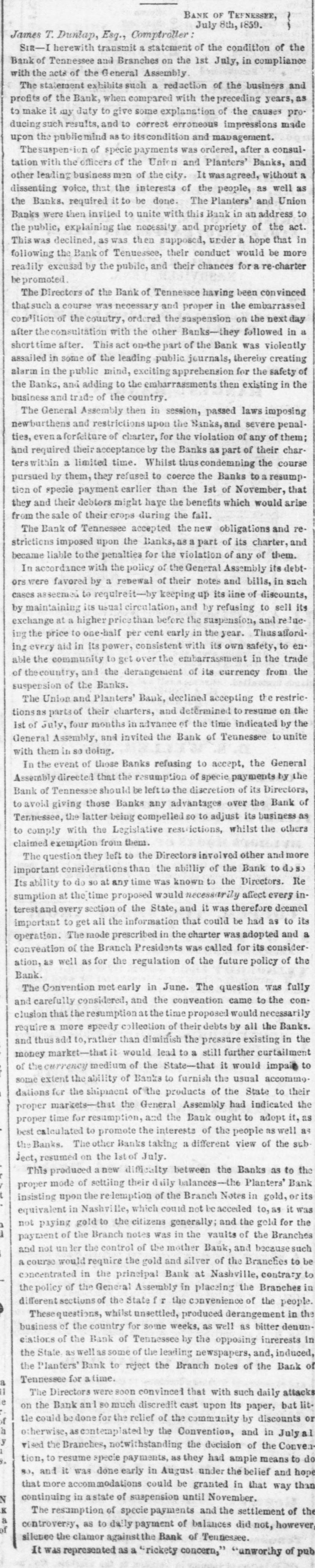
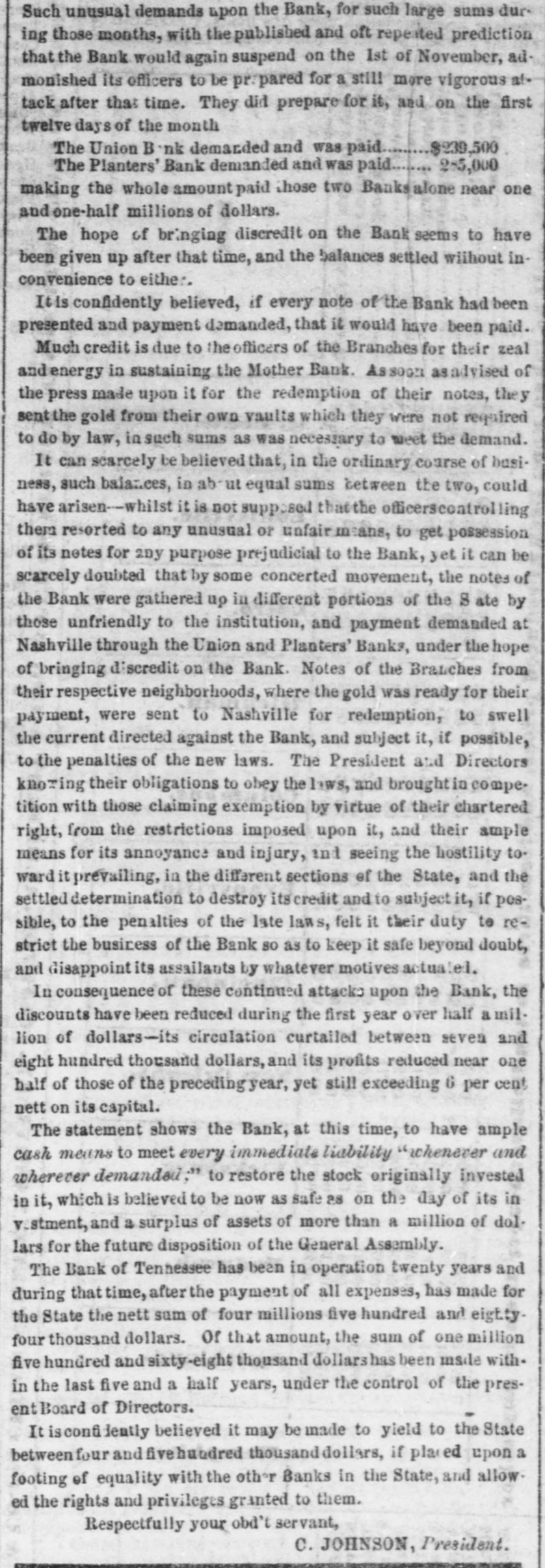
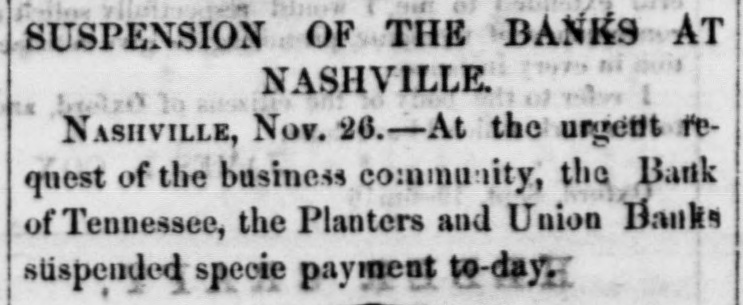
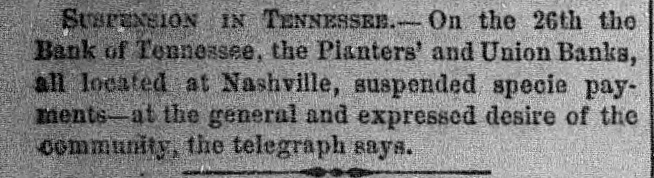
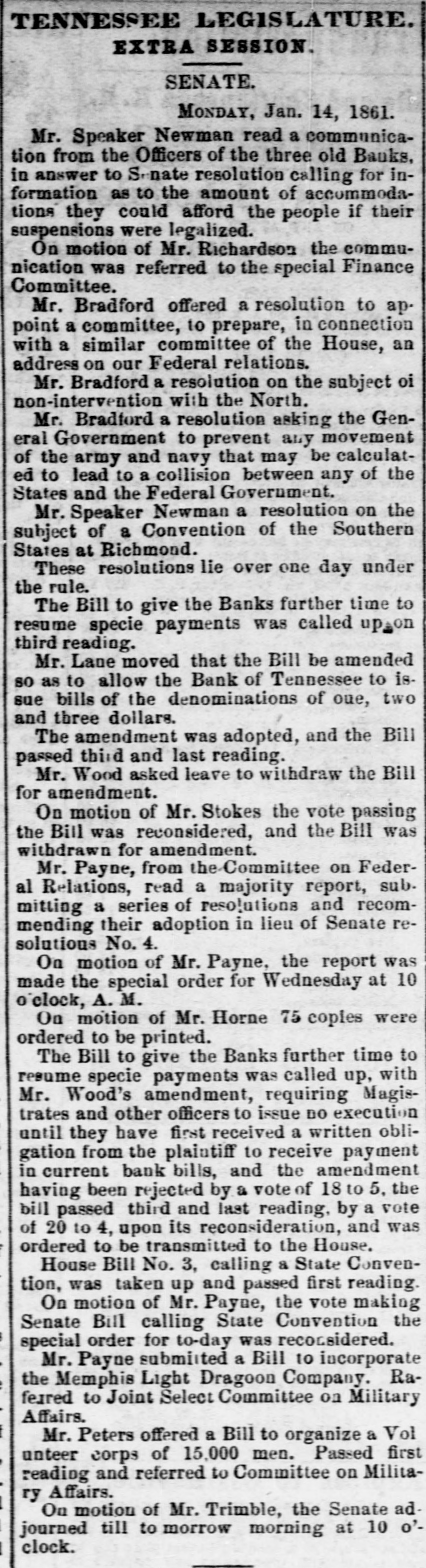
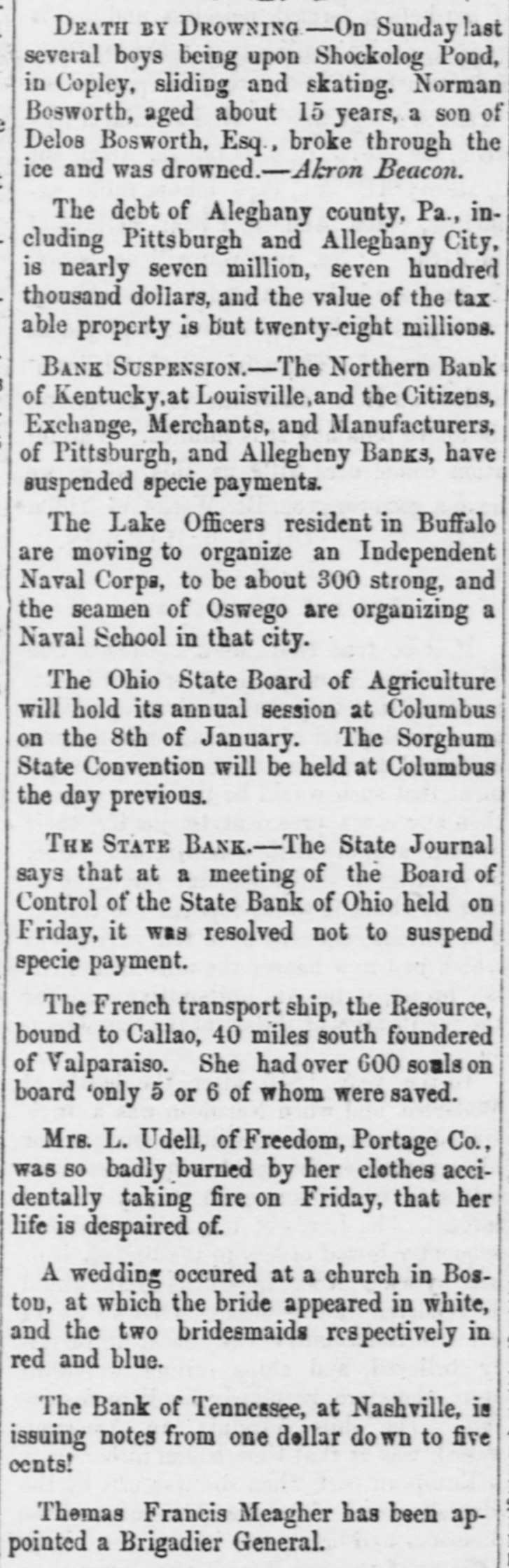
Mr. BELL sets out by assuming a fact at the basis of his argument, which, unfortunately for his conclusions, never existed-that is, that "a paper circulation, founded upon such securities as insure their convertibility into gold and silver on demand, are of equal value in all respects to gold and silver." Without stopping to debate the proposition, we deny the fact that there ever was in the history of banking a "paper currency" founded upon any such securities; and to bear us out, we have only to refer to the history of banks of issue from their inception to the present time. Of the thousands of banks which such statesmen as Mr. BELL have imposed upon the country, how many of them in their time have failed or suspended, leaving a rotten and depreciated currency in the hands of the people, which, if convertible at all, was only convertible at their pleasure? Will Mr. BELL or his friends point them out? Have not their very "best banks" as they are sometimes termed, (the Bank of Tennessee, for instance,) been the first to suspend and the last to resume? Why did not Mr. BELL, by way of strengthening his argument, point to an instance of a paper circulation "founded upon such securities as insured its convertibility into gold and silver," at all times?
But these are minor points in Mr. BELL's theory on currency, in comparison with his next master stroke, in which the grand discovery is made-of which he may well suppose the President and those who sustain his views were ignorant-that "to the extent paper money takes the place of the gold and silver, that would otherwise be required to be kept in circulation in any community or country as a medium of exchange, it adds to the floating or unfixed capital of the country. The gold and silver dollar released or expelled from circulation by a paper dollar, being no longer required as a medium of exchange, becomes a part of the active and productive capital of the country, and adds its due proportion of increase to its wealth." Stupenduous argument, indeed! Wonderful discovery! Let us simplify it for more easy comprehension, as follows: Real money, that is, gold and silver, is a thing of value, as much so as corn, wheat, or any other commodity, and constitutes part of the actual wealth of the country. Being most useful as a medium of exchange it is generally used in that way. Paper is a thing of comparatively no value, and the labor required to produce one gold dollar would produce ten thousand paper ones. Now, says Mr. BELL, to substitute the paper for the gold and silver, and let that occupy some other relation in the channels of trade, would be adding just that much more to the pro-ductive capital of the country and to the increase of its wealth. If this be so, it is a sad waste of the precious capital and wealth of a country to coin gold or use any thing as a medium of exchange more valuable than paper. It was a foolish blunder in the framers of our constitution to declare that nothing should be made a legal tender but gold and silver. But Mr. Bell's theory is too fallacious to admit of serious argument. The simplest mind can see that ten thousand dollars of real money is withdrawn from circulation to day, and that much paper money printed and thrown out in its stead, thus the real wealth of the community has not been increased, the paper or sham money being valueless, except so far as it is sustained, dollar for dollar, by the real money withdrawn; and that just to the extent the real money is applied to another purpose and ceases to be the basis of the sham money, the latter becomes a spurious circulation, a fraud upon the public. Mr. BELL's theory upon currency has been very fully and effectually tested in Tennessee of late, and need we state the result? Every man has a practical