Article Text
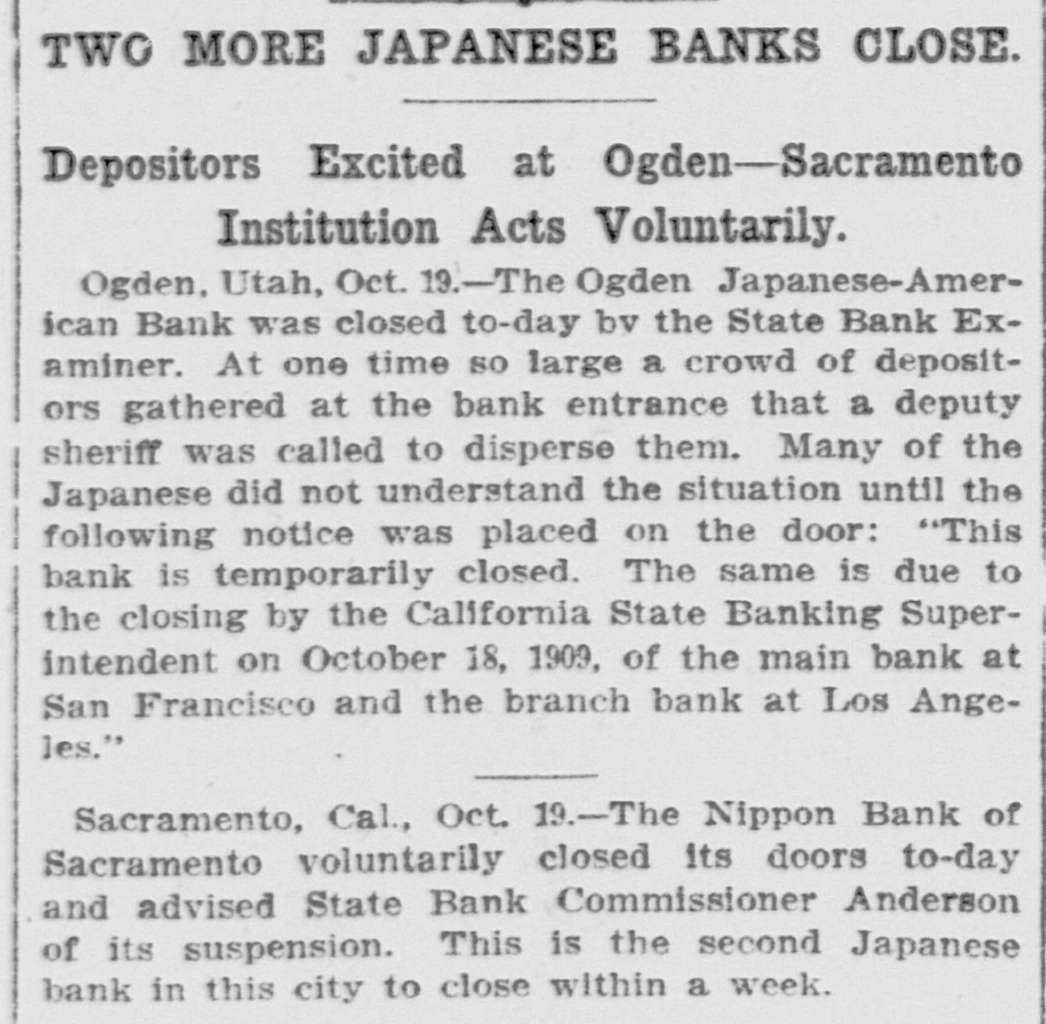
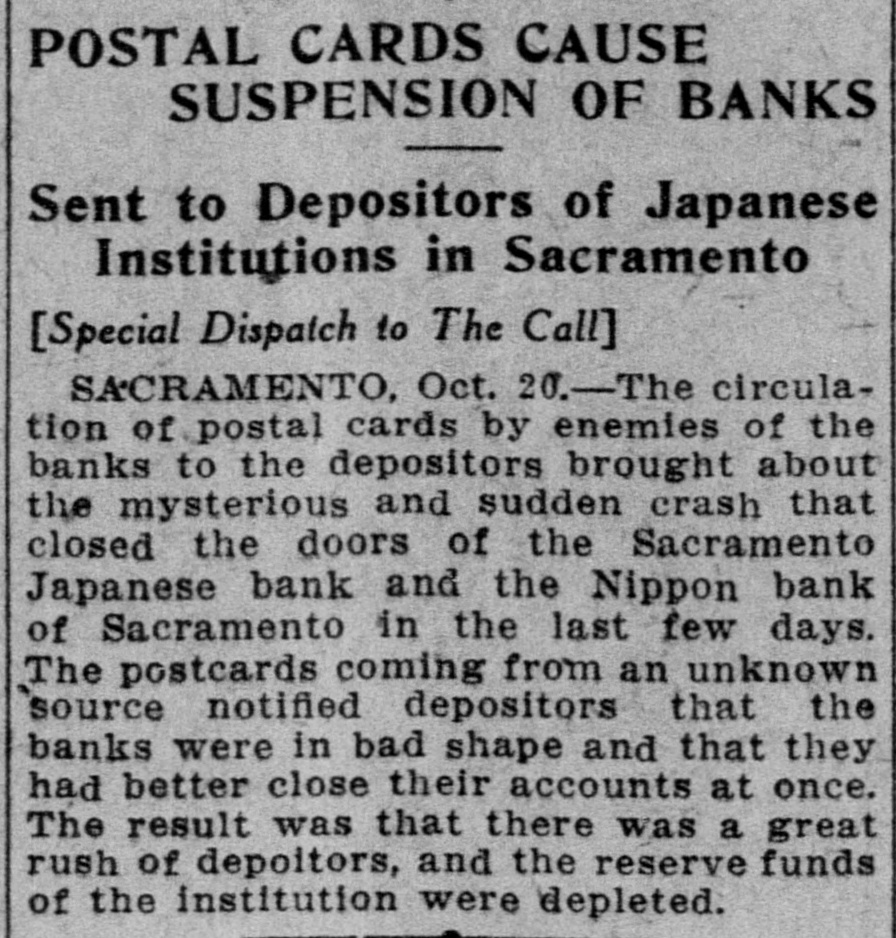
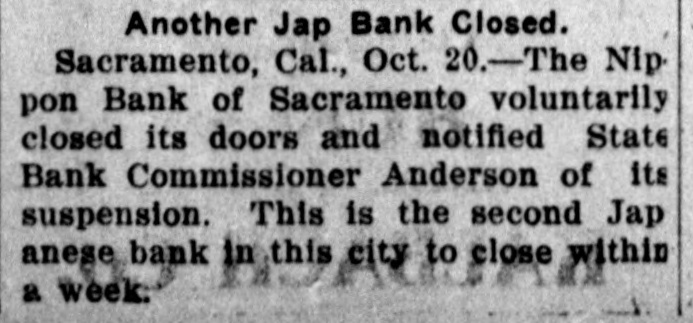
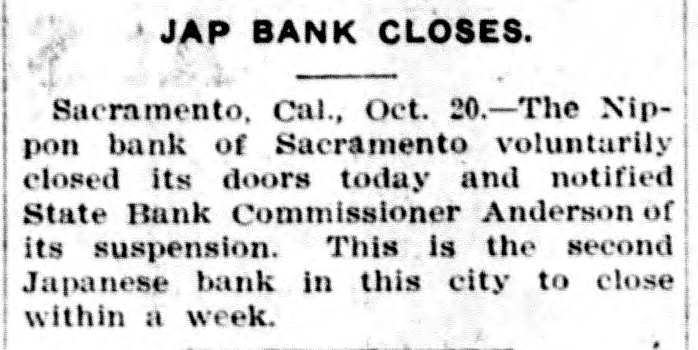
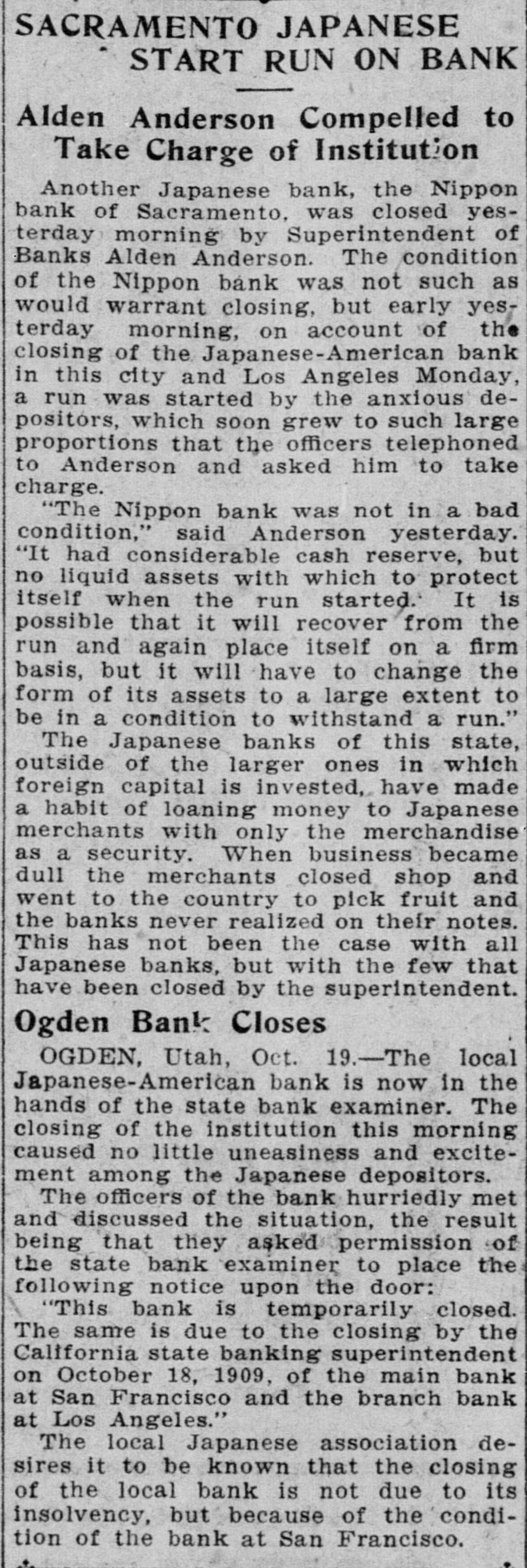
SACRAMENTO JAPANESE START RUN ON BANK Alden Anderson Compelled to Take Charge of Institution Another Japanese bank, the Nippon bank of Sacramento, was closed yesterday morning by Superintendent of Banks Alden Anderson. The condition of the Nippon bank was not such as would warrant closing, but early yesterday morning, on account of the closing of the Japanese-American bank in this city and Los Angeles Monday, a run was started by the anxious depositors, which soon grew to such large proportions that the officers telephoned to Anderson and asked him to take charge. "The Nippon bank was not in a bad condition," said Anderson yesterday. "It had considerable cash reserve, but no liquid assets with which to protect itself when the run started. It is possible that it will recover from the run and again place itself on a firm basis, but it will have to change the form of its assets to a large extent to be in a condition to withstand a run." The Japanese banks of this state, outside of the larger ones in which foreign capital is invested, have made a habit of loaning money to Japanese merchants with only the merchandise as a security. When business became dull the merchants closed shop and went to the country to pick fruit and the banks never realized on their notes. This has not been the case with all Japanese banks, but with the few that have been closed by the superintendent. Ogden Bank Closes OGDEN, Utah, Oct. 19.-The local Japanese-American bank is now in the hands of the state bank examiner. The closing of the institution this morning caused no little uneasiness and excitement among the Japanese depositors. The officers of the bank hurriedly met and discussed the situation, the result being that they asked permission of the state bank examiner to place the following notice upon the door: "This bank is temporarily closed. The same is due to the closing by the California state banking superintendent on October 18, 1909, of the main bank at San Francisco and the branch bank at Los Angeles." The local Japanese association desires it to be known that the closing of the local bank is not due to its insolvency, but because of the condition of the bank at San Francisco.