Click image to open full size in new tab
Article Text
"Old Lady of Threadneedle" Selling Gold
LONDON, Oct. 6.—The Bank of England sold today 1,566,000 pounds gold for export. This makes 2,421,000 pounds exported since the bank rate was reduced on October 1, and leaves the net amount import-since April 1 at 2,166,000 pounds. Many critics cite these exports as proof of the unwisdom of lowering the bank rate last week.
It must be noted, however, that gold shipments from Africa are being delayed by the shipping strike, otherwise such large withdrawals from the Bank of England would probably be unnecessary. It is assumed that the gold is going to New York. Anyway, the movement is seasonal and not wholly unexpected.
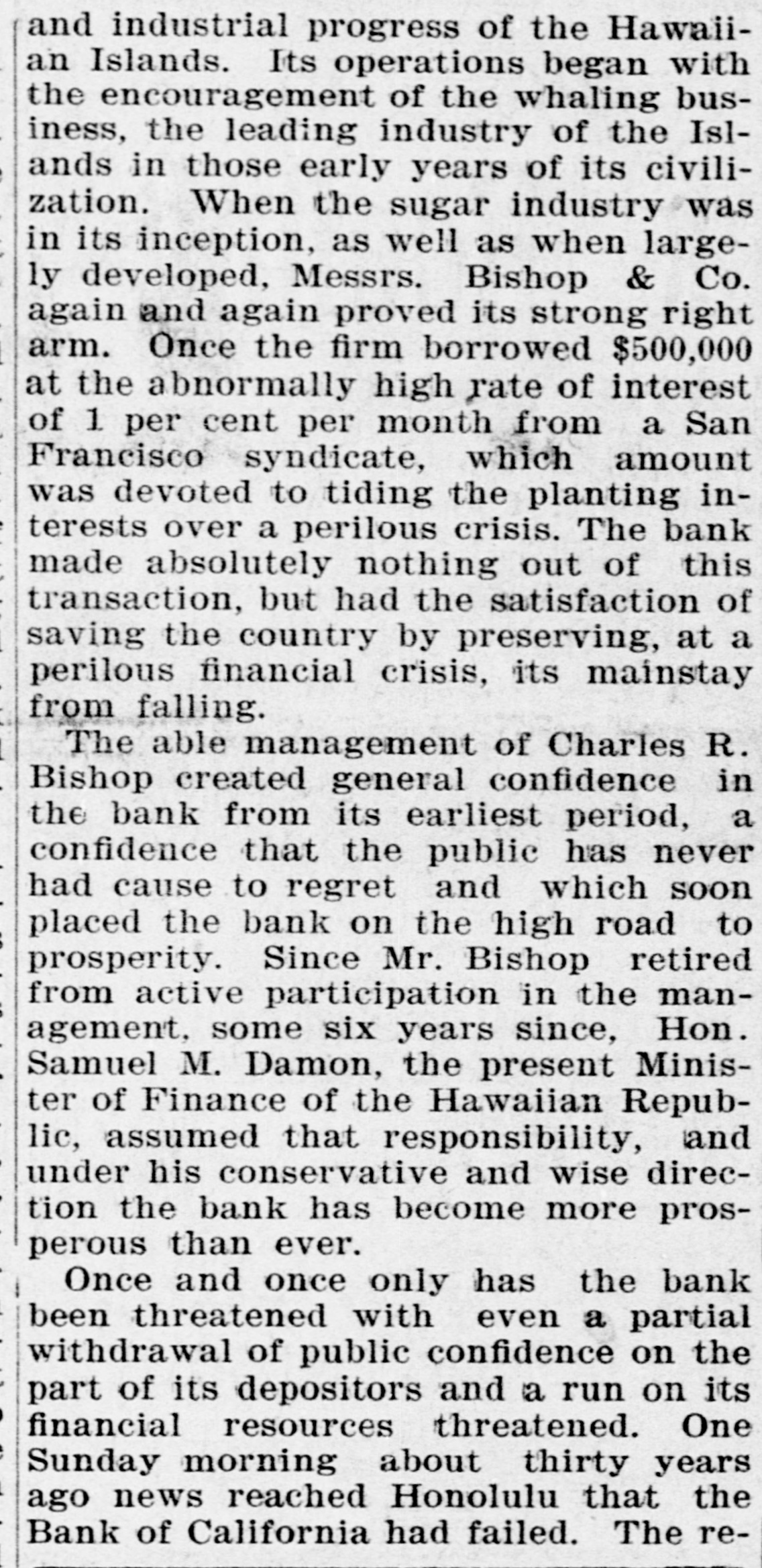
middle 90's, Samuel M. Damon, then the Minister of Finance of the Republic of Hawaii, assumed that responsibility, and under his conservative and wise direction the bank became more prosperous than ever. Only when Mr. Damon's health began to fail a few years ago did he yield the direction of the institution's affairs to others in the bank, and then remained in semi-retirement until his death early this year.
That Mr. Damon attained to high position and confidence in the esteem of Mr. Bishop was due both to the fact that he was an efficient banker and because he was the protege of Mrs. Bishop, who at her death in 1884 bequeathed to Mr. Damon the ahupuaa of Moanalua, a vast estate which covered the Moanalua district from the sea to the mountain tops, and which Mr. Damon developed into a sort of semi-public garden for the benefit of the people, and where he maintained his country home.
NO RUNS ON BANK
Once and once only has the bank been threatened with even a partial withdrawal of public confidence on the part of its depositors and a run on its financial resources threatened. One Sunday morning about 55 years ago news reached Honolulu that the Bank of California had failed. The relations of Bishop & Co., with that bank were well known and had it been any other day than Sunday there would probably have been a run on the bank which might have severely taxed its resources. As it was, a small crowd of depositors with equally small accounts gathered in front of the bank, and led by a sea-lawyer, employed in a local industrial concern, commenced clamoring for their money. Word was sent to Mr. Bishop, who had that morning returned from Maui and he went to the bank at once. Quickly grasping the situation, he ordered the doors thrown open—Sunday morning though it was—and posted a notice on the bank that any depositor wishing his money would be paid forthwith. Calling the leader of the crowd into the bank, Mr. Bishop insisted on paying him the amount of his deposit then and there, although when the money was being counted out to him, he begged to be allowed to leave it in the bank. No one else called for deposits, but all that day Mr. Damon remained at his post prepared to pay any and all comers. Monday morning came but there was no run.
Public confidence was restored, if it had ever been really shaken, and business went on as usual, the close of the day's business showing a large excess of deposits over its