Click image to open full size in new tab
Article Text
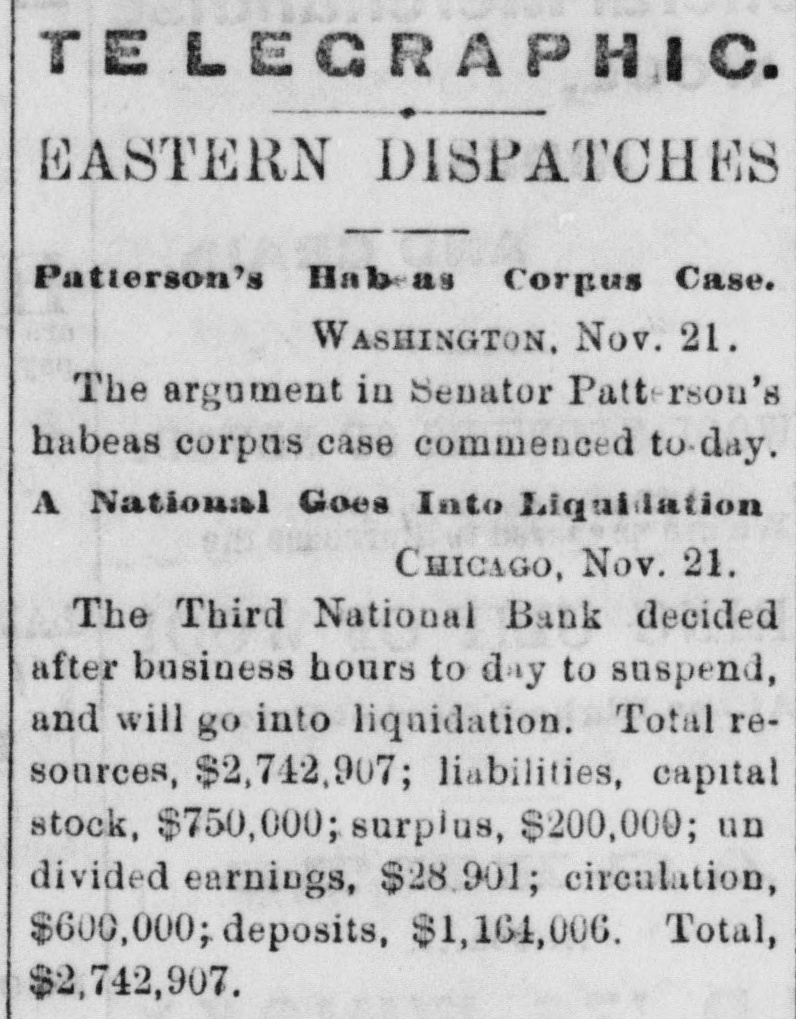
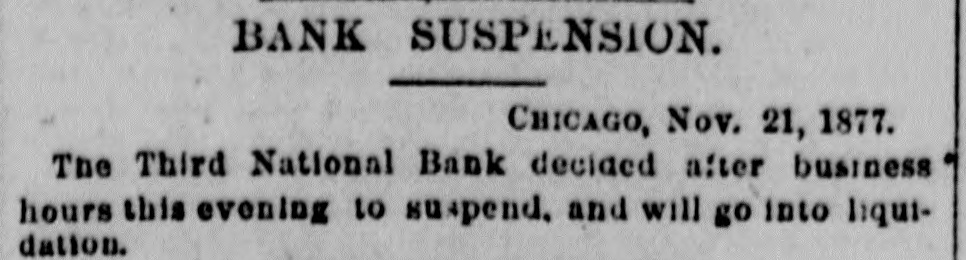
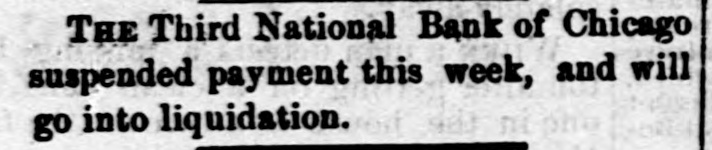
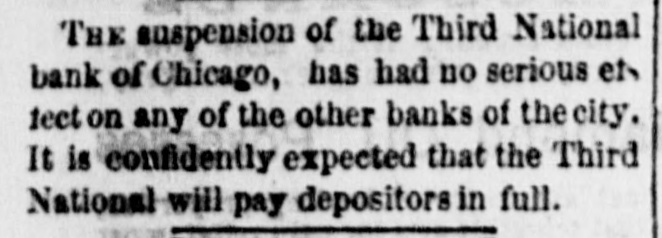
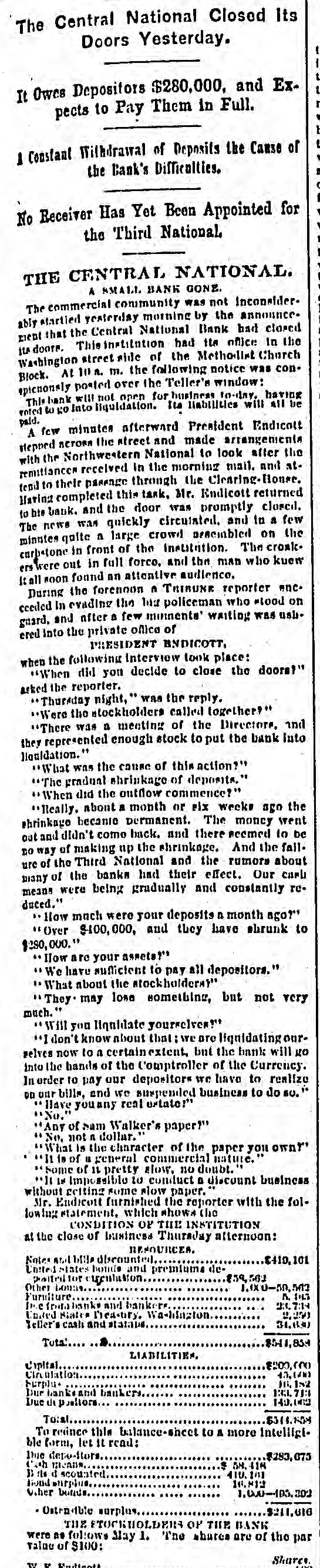
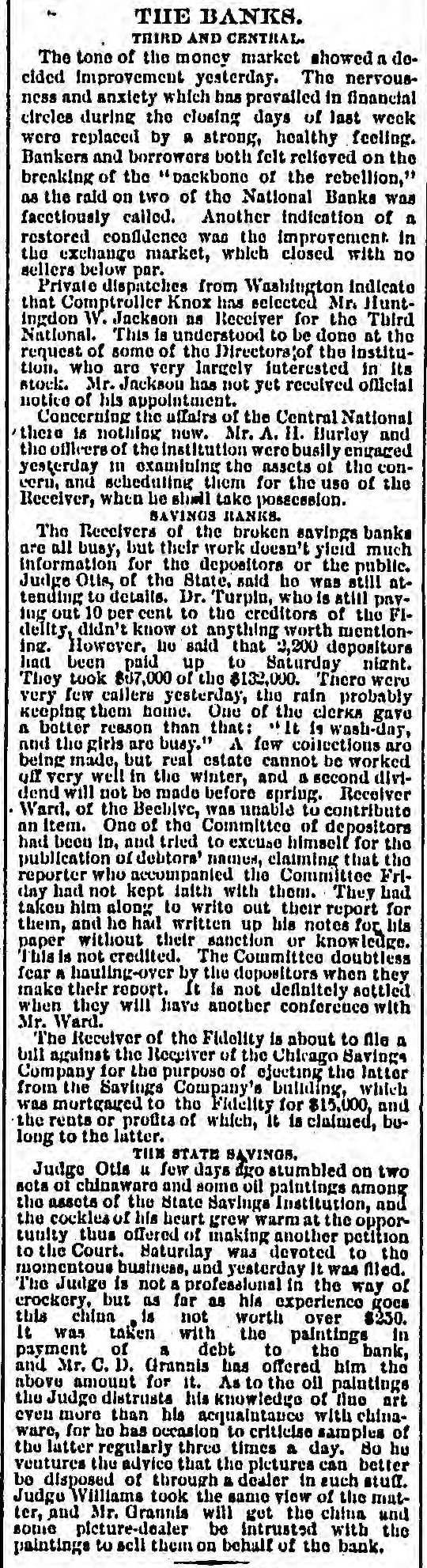
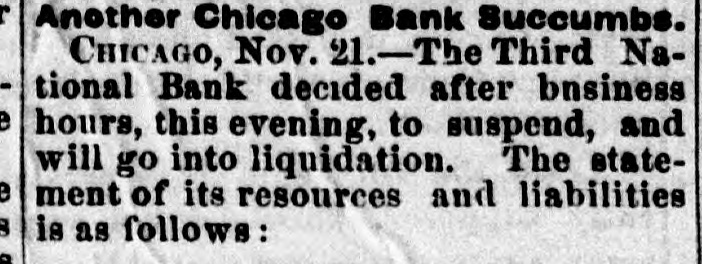
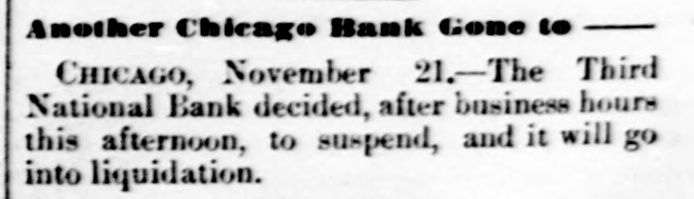
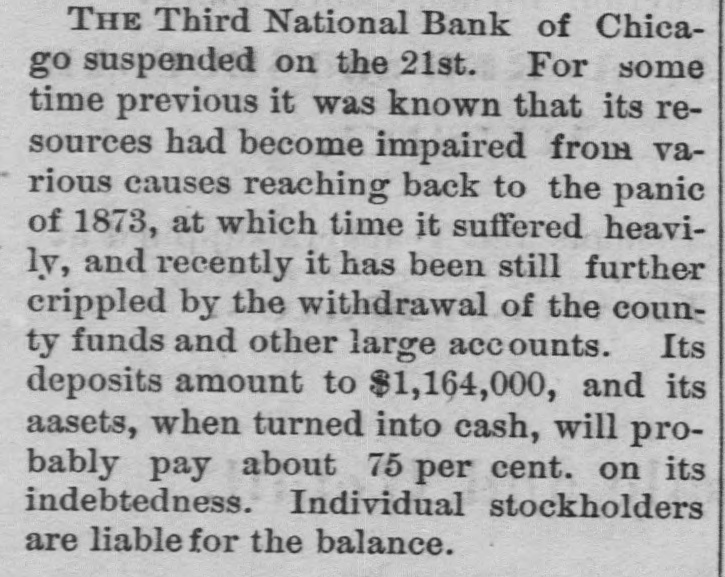
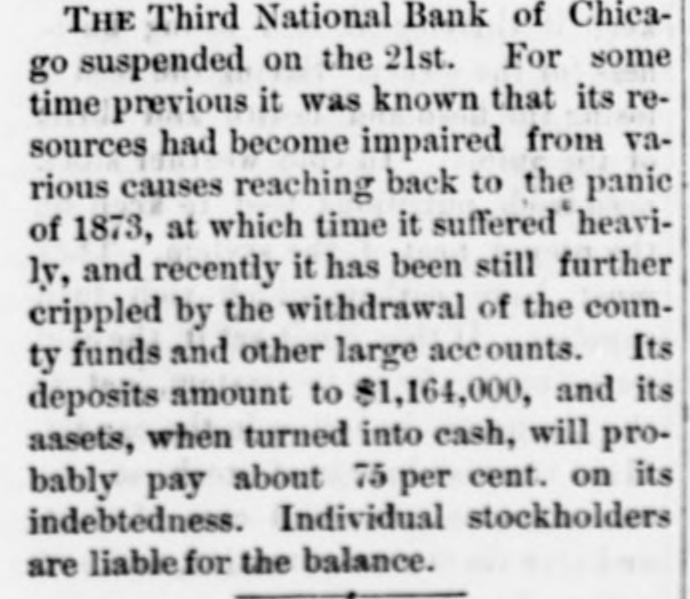
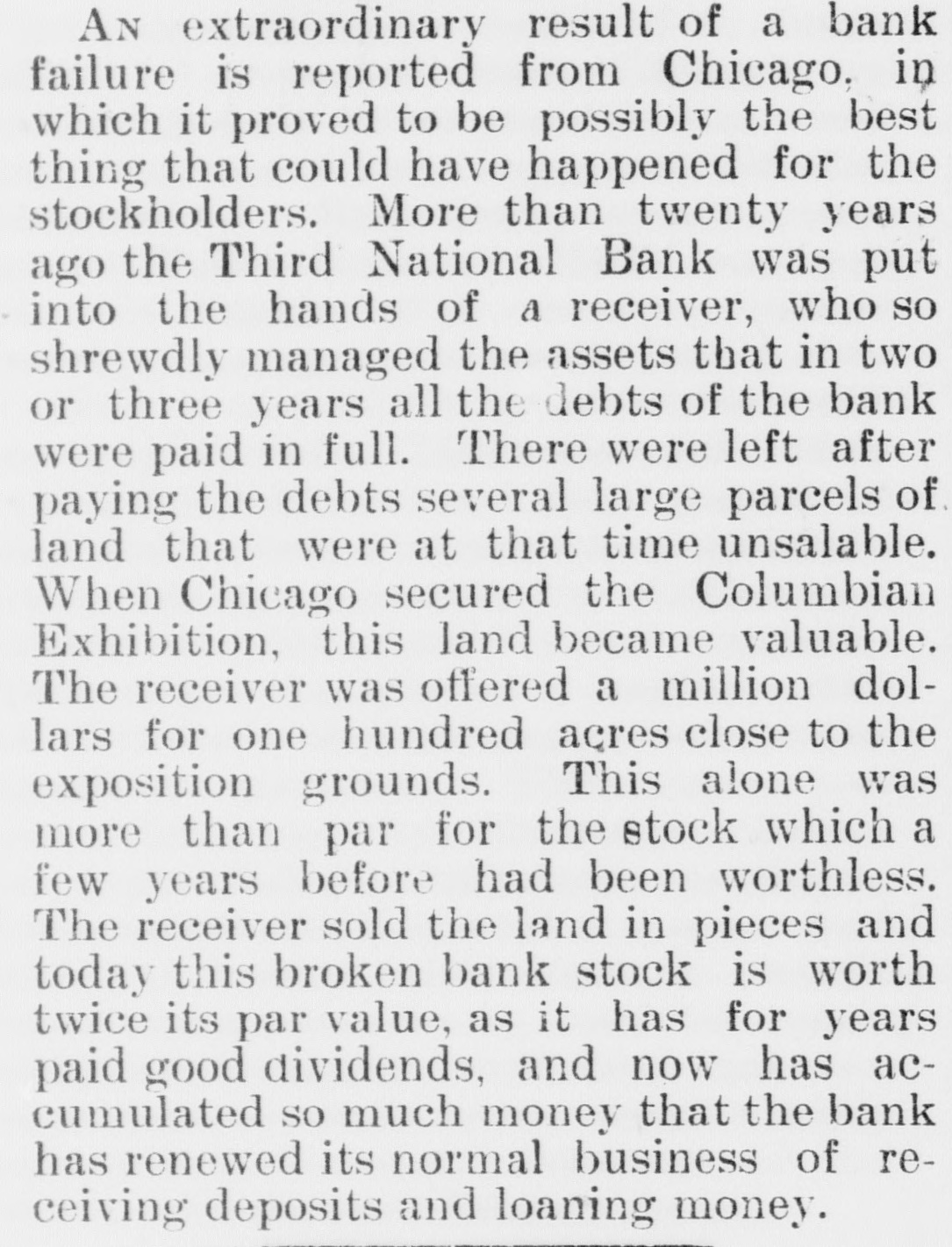
ROMANCE OF A BANK A Chicago Institution Which Has Had a Curious History. IN THE HANDS OF RECEIVER A Pays Dividends on Stock Worth More Than Face Value. SPLENDID FINANCIERING Written for The Evening Star by Ray Stannard Baker. More than twenty years ago the Third National Bank of Chicago formally closed its doors and a receiver was appointed to satisfy the clamoring depositors. Some of the stockholders feared an immediate assessment for the payment of Habilities, and offered to give their stock to any one who would assume its obligations. Today this stock is held at nearly double its par value; and it is regarded as "gilt-edged" security. Within five years, although the bank has received no deposits, made no loans, issued no currency, sold no drafts, it has paid two substantial dividends to its stockholders and promises many more. The very name of the bank has been forgotten except by a few gray-headed men who are personally interested in its affairs, but It is even yet an important financial institution with its regular stockholders' meetings, its taxes, its law suits, its reports and its bookkeeping. Moreover, It is unique in being a corporation having large assets and no liabilities-beyond the obligation to its stockholders. All of the entries, except driblets of expense, appear on the credit side of the ledger. The circumstances which led up to these peculiar, even unprecedented conditions, make a story probably without parallel in the annals of national banking. Prior to the panic of 1873 the Third National Bank ranked as one of the stanchest financial institutions in the west. It had a capital of $750,000 and its directory included some of the most prominent names in Chicago-such men as George M. Pullman, J. Irving Pearce. Joseph Medill, C. H. Curtis, C. M. Henderson, C. R. Steele, John H. Thompson, William T. Allen and S. S. Benjamin. Only one bank in its home city exceeded It in the extent and importance of its business. A Fall From Grace. When the financial crisis of 1873 was at its height the Third National Bank suspended payment for a single week as a precaution against a threatened run. Then it opened again and prepared to resume its old place in the business world. But a bank is like a man. It is trusted implicitly until it reveals some inherent weakness. After that its business friends watch it keenly and approve its methods with an "if" and its business enemies await the strain which again shall test its strength. The Third National Bank had the finest offices in Chicage, the largest force of clerks, the longest list of country correspondents, but it also had the single slip from the path of financial rectitude to live away. Some of its officers, knowing the need of unusual efforts to maintain its business supremacy, signed the bonds of the treasurer of Cook county, thereby receiving large deposits of the public money to swell the quarterly reports. The bank also appeared as the main depository of a board of park commissioners of which its president had become the treasurer. Other bankers, looking on, saw the signs and understood them. In 1873 the deposits exceeded $4,000,000. but in spite of all the bank could do they kept creeping down and down until late in 1877 they were only $1,164,000. During most of this time the bank officers were firmly optimistic; they believed in the solidity and business worth of their bank. Felt the Shock. In September, 1877, an extensive hotel property owned by President Pearce and one of the other directors was destroyed by fire. It had no connection with the bank and yet the bank felt the shock. A few weeks later President Pearce called on the New York correspondent of his bank and asked for a temporary loan to be used in case the heavy deposits of public money should be withdrawn suddenly. The New York bank hesitated and hedged. If it were not for the large demands now being made as an incident to the hard times, and the uncertainty of the money market-and other circumstances that assist a bank president who does not wish to loan money -they might possibly spare a few hundred thousands. On President Pearce's return to Chicago he found that some of the directors of the bank had been touched with the growing distrust. They were losing confidence in the ability of their own bank to meet the demands which might be made upon it. They had kept the feeling to themselves, and yet, after the manner of such things, it was all down the street in a single day, traveling by such secret ways as only an evil rumor knows. In spite of the loss of confidence there was no regular run on the bank. Its business was conducted by the usual number of clerks and its mall had not diminished. It was buoyed up and supported by the reputation of substantial prosperity and dignity which it had known in the past, and yet it was suffering from a wasting disease known to financiers as a "vest pocket run." Depositors came smilingly and drew out their money. and it was not replaced. A St. Louis paper printed a brief telegram hinting at the condition of the bank, and the country correspondents, always ready with their suspicions, began to fear of their balances, and every mail brought drafts that helped to drain the bank's reserve. A Quiet Run. A bank can fortify itself against the excitement of a regular run and fall, struggling, with some of the honors of war, but it has no protection against the creeping misery of these quiet, friendly withdrawals, continuing day after day for weeks, and each of them an insidious thrust at the bank's stability. One day the county treasurer gave notice that he would want a half million dollars.