Click image to open full size in new tab
Article Text
Abbeville Bank Is In Hands Of Receiver
The following news item dealing with the condition of the First National Bank, of Abbeville, is taken from this week's issue of the Abbeville Herald:
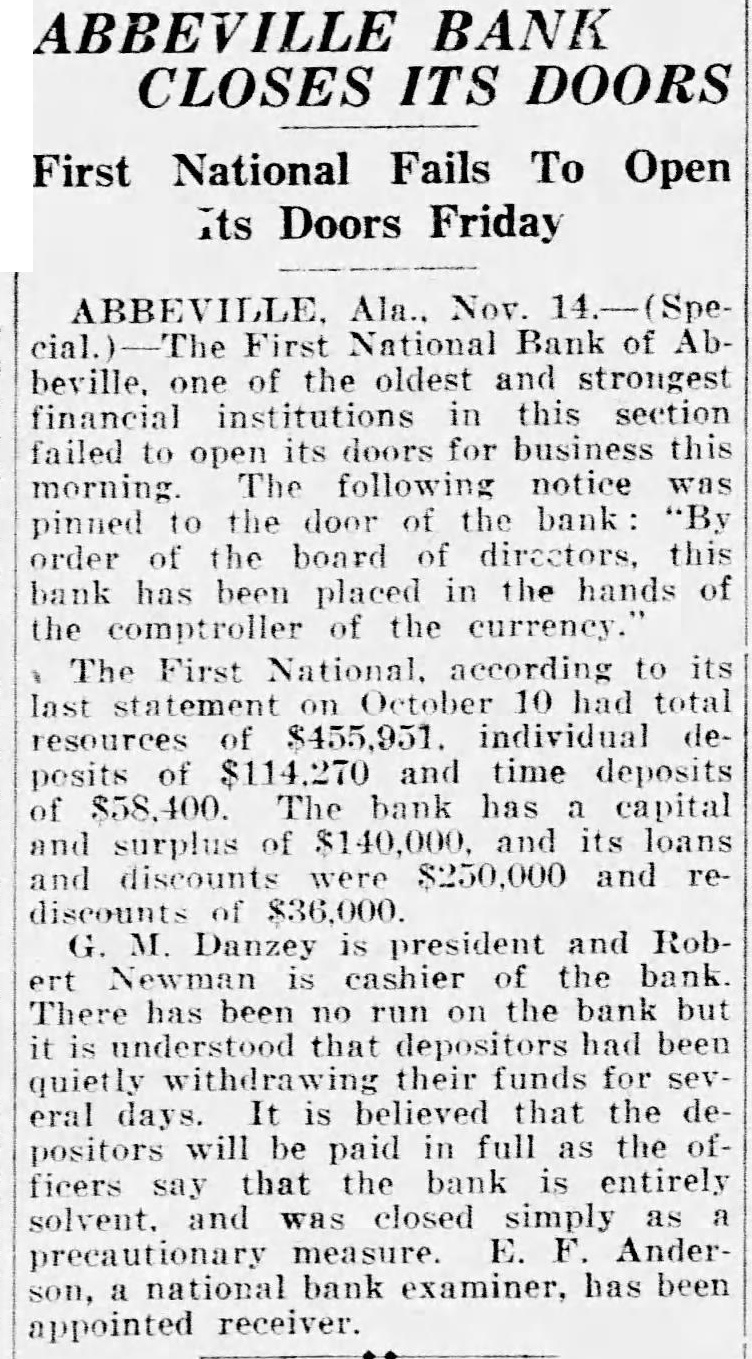
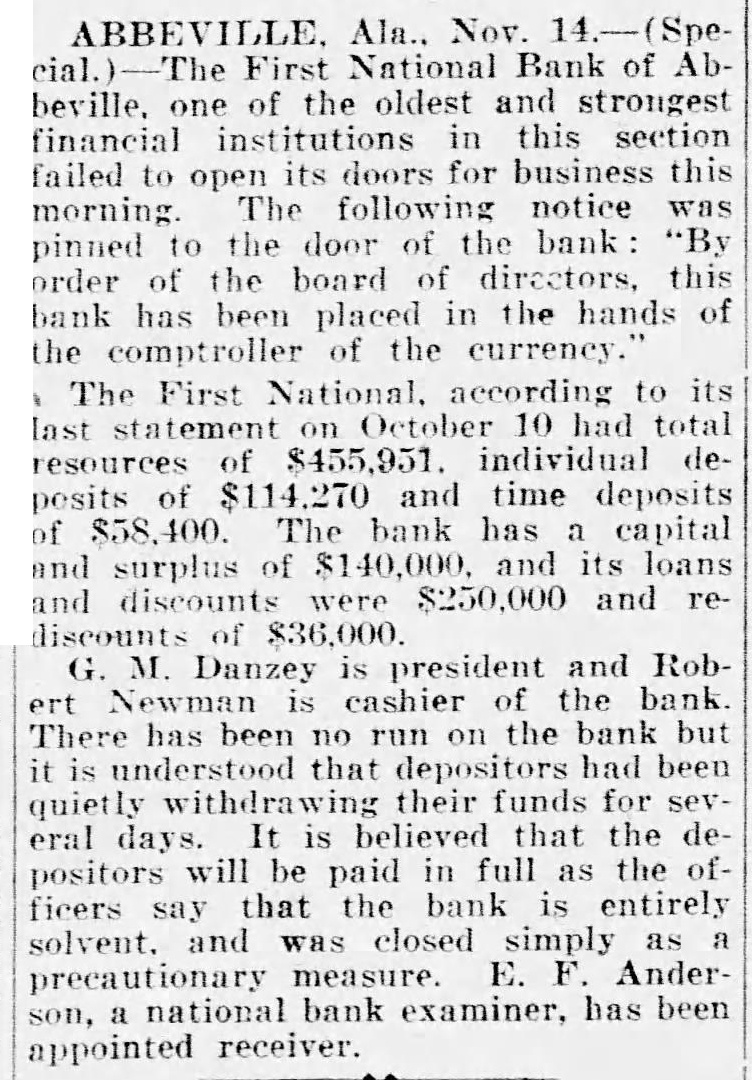
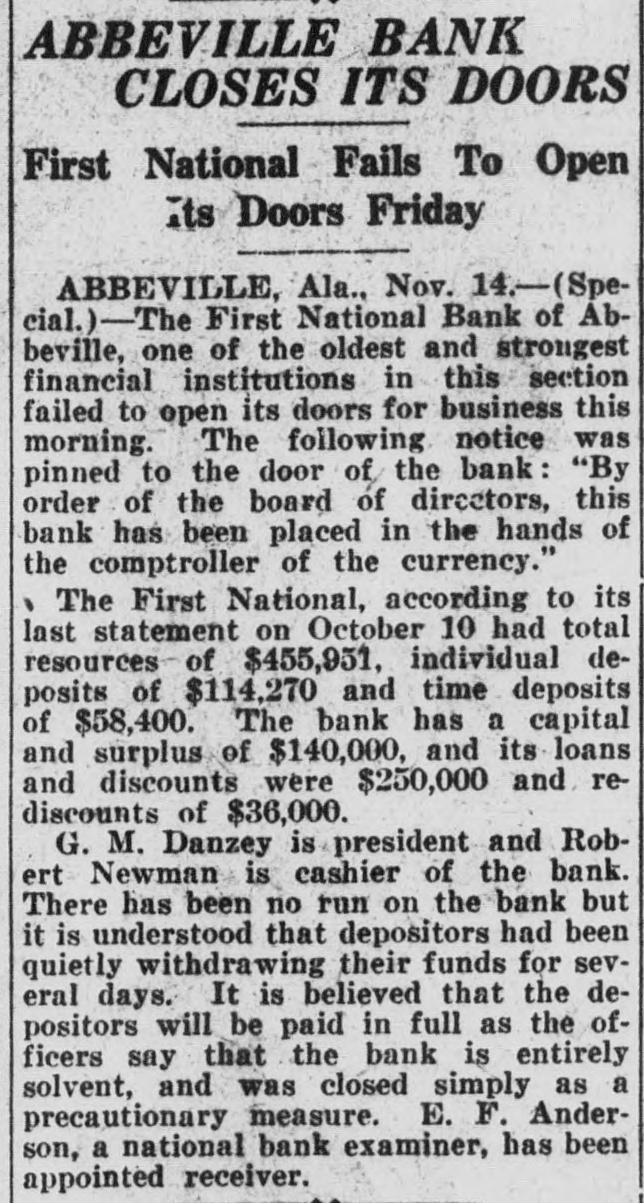
The First National Bank of Abbeville, one of the oldest and largest financial institutions in this section, failed to open its doors for business last Friday morning, and a notice on the door announced that by order of the board of directors the bank had been placed in the hands of the Comptroller of the Currency.
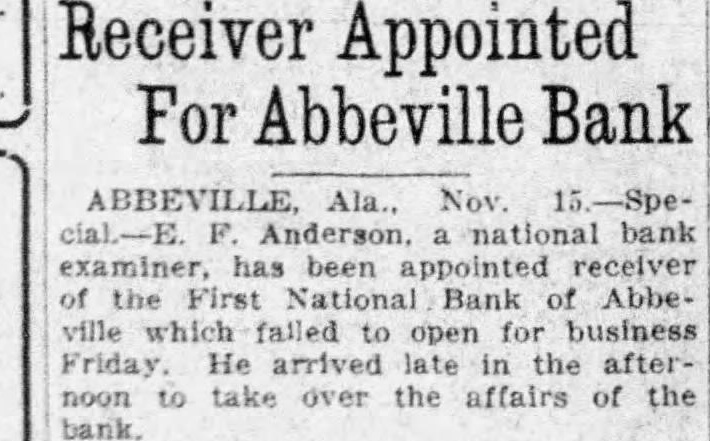
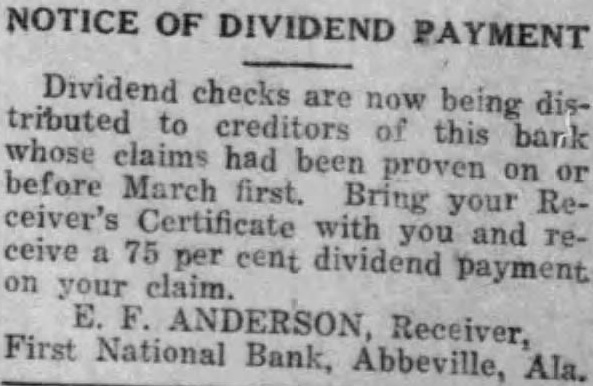
Mr. E. F. Anderson, a national bank examiner, has been appointed receiver, and he arrived here late Friday afternoon and took charge of the bank. The bank will be liquidated, we understand.
The First National Bank, according to its last statement published in this paper on November 6, and giving the condition of the bank as of October 10, 1924, showed total resources of $455,951.21. At that time the individual deposits were $119,127.18; time deposits, $58,400.79; rediscounts, $36,863.11; capital and surplus, 140,000.00. Its loans and discounts were shown to be $250,030.94; overdrafts, 3,217.19; stocks and bonds, $14,650.00; banking house, furniture and fixtures, $7,639.41; real estate, $26,025.10; reserve with Federal Reserve Banks, $16,636.07; cash on hand and due from banks, $19,671.21; redemption fund with U. S. Treasurer, $5,000.00; other assets, $13,063.44. Beside the assets shown above we understand that the bank can realize a premium of about $4,000.00 from the sale of $100,000 of government bonds which they have up to secure their circulation.
The closing of the bank came as a distinct shock to most of our people. There was no run made on the bank by its depositors, but following the publication of their statement on November 6, we are informed that many large depositors began quickly to withdraw their funds.
It is believed that the bank will pay its depositors dollar for dollar. Those in position to know say that the bank was closed simply as a precautionary measure.
The First National's troubles began, we are told, back in 1920 when the period of deflation hit its customers a severe blow and necessitated the carrying of much paper that would have been paid had 1920 been a normal year. This fact, coupled with the illness of the active head of the institution which prevented his giving his full time to the business of the bank, are said to be the two main causes of the failure.
The First National for years back has been a tower of strength in this section. Many are the people of this and surrounding counties who have been saved from serious financial loss by timely aid extended by this institution in the years that have gone, and our people generally keenly regret that it has been forced to close its doors.
Abbeville's other bank, The Henry National, is not affected by the closing of its sister institution. They are doing business as usual, and their statement published in this issue shows its healthy and flourishing condition.