Article Text
COURTHOUSE DOINGS
County Commissioners
Tuesday's session of the county board was attended by all three commissioners and drew presence of a number of citizens of the county on matters of business and a group of oil and lumber salesmen. No bills were passed, that matter being reserved for the first Tuesday meetings.
Regarded by the commissioners as the business of chief importance was notice received by the board from its auditor, Charles Story, that two telephone systems of the county had not been collected from on their 1927 tax accounts. The systems at Pawnee City, under independent ownership, and the Table Rock plant, owned by the Lincoln Telephone & Telegraph company, were the systems involved. The total tax for the two plants was over $800 and interest charges figured to date made the present assessment against the two companies a total of $1,207.96.
The uncovering of this amount due the county will more than pay for cost of the audit.
Tax charges against telephone and telegraph companies, Pullman companies and others are carried in the back of the treasurer's tax books, it was reported at the treasurer's office, and apparently an overlooking of these accounts by that year's treasurer caused the two unpaid bills to escape issuance of tax warrants.
Among other appearances before the board were requests from a West Branch precinct landowner for improvement of a bridge in that locality, and a request from Lou Hoffman of Steinauer for remonstrance by commissioners to the village of Steinauer against the latter's dumping rubbish along a road near Hoffman's land.
Another matter of interest that held the board at attention through the heat of the afternoon was its consideration of a protest filed by D. W. Osborn, guardian for Frank Tannyhill, against the county's trying to tax lot 1 in block 32 in North Pawnee City, belonging to Tannyhill.
The county had assessed Tannyhill a tax of $16.90 on this property. Osborn, through his attorneys, Dort & Witte, sought to have the tax declared illegal and unlawful. Grounds for the argument, following payment of the tax under protest, were that Tannyhill is a ward of the government's and that his property is tax free.
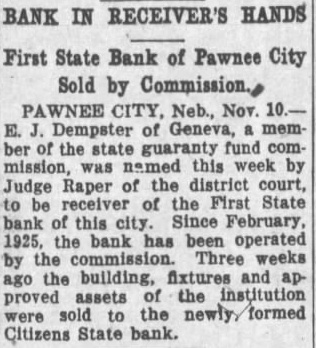
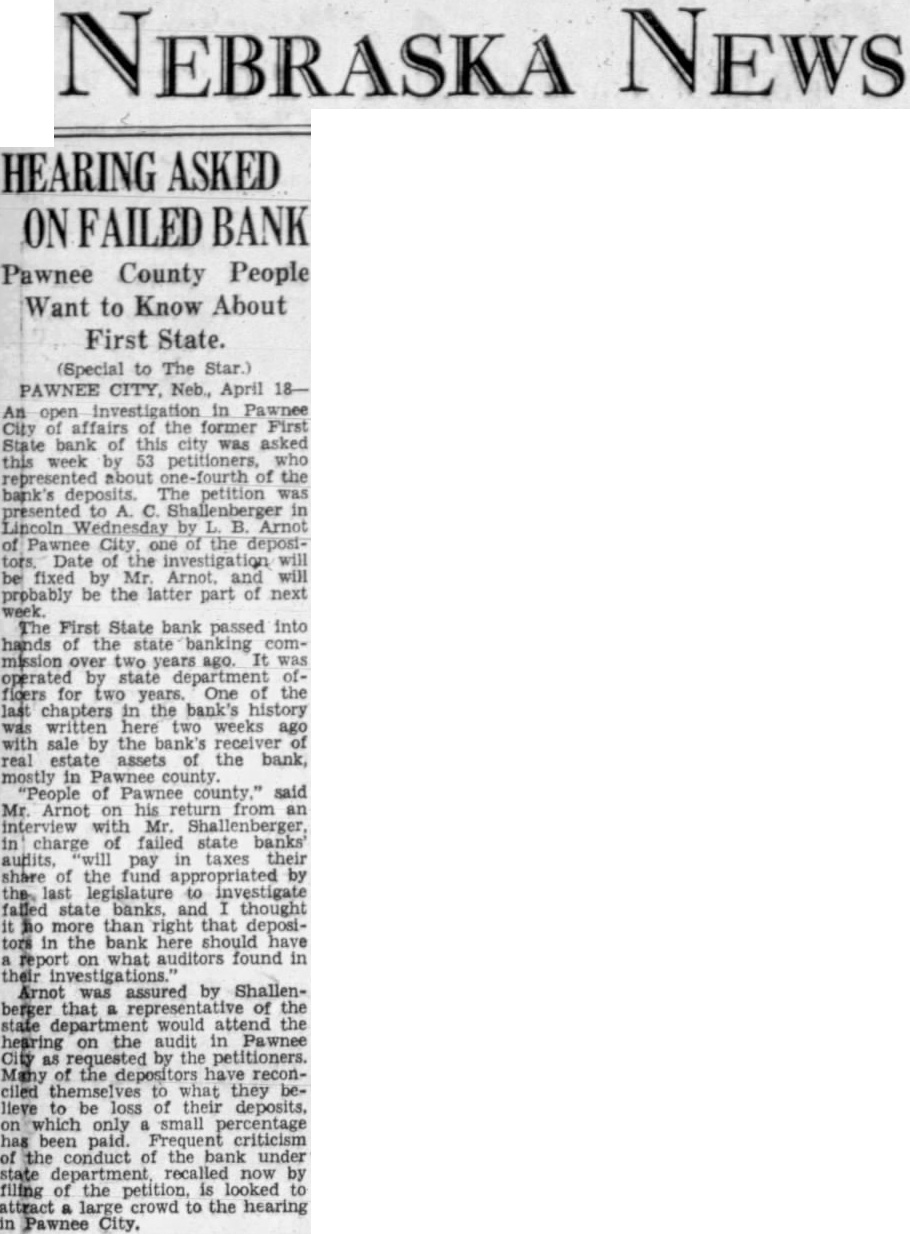
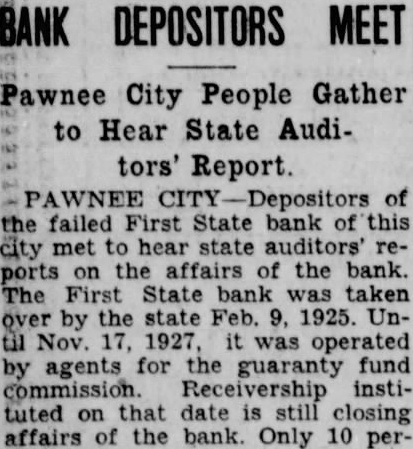
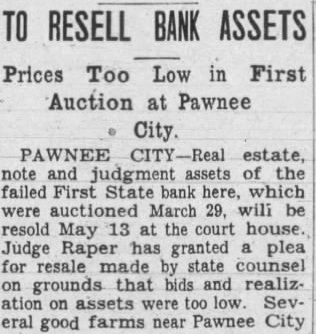
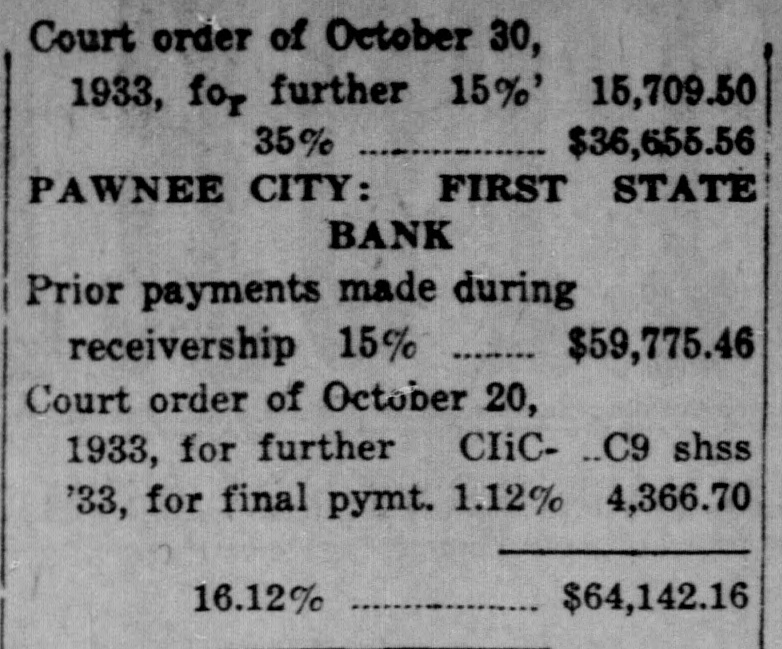
It will be recalled that funds of Tannyhill, deposited by Osborn in the former First State bank, were recovered from the guaranty fund commission through the bank's receiver following an opinion of the supreme court that classed the Tannyhill money as a preferred claim, entitled to preference over deposits of other of the bank's clients. The district court here, before appeal to the supreme court, had ruled the money was not a preferred claim. Following adjudication of the money as a preferred claim, suit was also filed by Osborn's attorneys for collection of interest on the money under classification also as a preferred claim.
The commissioners also heard representations of the county attorney, C. T. Barton, who argued that Tannyhill should pay taxes the same as any other citizen.
The board found the real estate, in the "name of Osborn, guardian for Tannyhill, lot 1 in block 32, North Pawnee City, was subject to taxation for 1931 and that taxes so levied were legal and lawful and should be paid, and that tax so paid under protest by D. W. Osborn, guardian, should not be refunded by said county of Pawnee."
The board also fixed appeal bond from this decision at $250.
Tuesday the county had 18 men, 14 horses, a caterpillar tractor and heavy grader at work on the Kohn gravel pit project. About 13 men were working Monday. The gang is uncovering gravel, building a road from the gravel deposit to the section line, and building a hopper for the loading of trucks.
It will be a week or more before graveling of the Mission Creek road will start with gravel from the Kohn pit. Monday a load of the surfacing was hauled from the deposit to the school yard here by L. E. Matthews as a sample for approval or disapproval by the school board. The latter wishes to gravel the west half of the new school building's grounds so that mud will not be carried into the new building.
When the pit is fully developed, the large hopper, that dumps gravel into trucks driven beneath, will be filled by wheel barrows of gravel wheeled from the pit. Location of the hopper permits such an arrangement without involving much of an incline up to the hopper for the wheelers.
Wednesday the board was invited to meet with the state board of equalization in Lincoln. County Clerk A. M. Davis and Commissioner D. B. Madden planned to go and Commissioner J. S. Vrtiska indicated he would try to be in Lincoln. Commissioner Barr thought it unlikely he would be able to make the trip.