Article Text
pabneation of the report, proves that the public find its affairs in more promising shape than was anticipated. The loan made by Messrs. Brown, it is understood, has been nearly all reimbursed. There will probably be, within fifteen or twenty days, proposals issued for a new mortgage loan, with a sinking fund, on such terms as will attract the attention of capitalists-the proceeds to be used in the payment of the floating debt and of the income bonds and interest.
The statement of the affairs of the Dauphin and Susquehanna Coal Company shows that e expenditures have been $2,969,754, of which $563,905 have been raised from 43,807 shares stock, $1,529,930 from $2,960,000 of bonds, $333,091 from railroad receipts, sales of coal &c., and $541,992 from loans not funded. The debt is $3,501,992, for which only $2,071,992 has been realized.
The Bondholders of the Dauphin and Susquehanna Coal Company, held a meeting last evening at the St. Nicholas Hotel. Mr. Marvin, President of the Brokers' Board was chosen Chairman, and Mr. Elias Smith, Secretary.
The first question that came up was as to what manner the Bondholders could protect their intereste in the Bonds? A number of propositions were presented for the consideration of the meeting, on which there was considerable discussion, and an adjournment finally took place without coming to any definite conclusion.
The steamer to-morrow has about $600,000 in goli engaged, to which will be added probably 200,000 Mexican dollars received to-day by the Cahawba in transitu from Vera Cruz to London. The Cahawba has altogether 258,000 dollars.
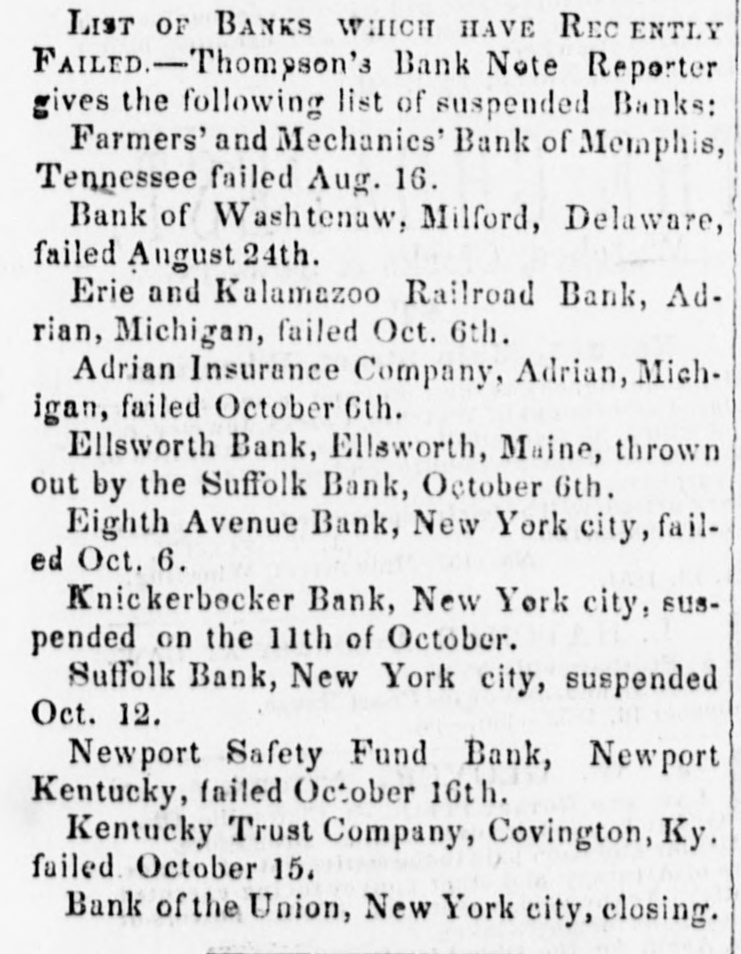
There is no renewal of the bank excitement and the Clearing-House settlements are made with unusual promptitude. The late troubles will no doubt have a beneficial effect upon the smaller banks, teaching them caution and an avoidance of any dangerous expansion.
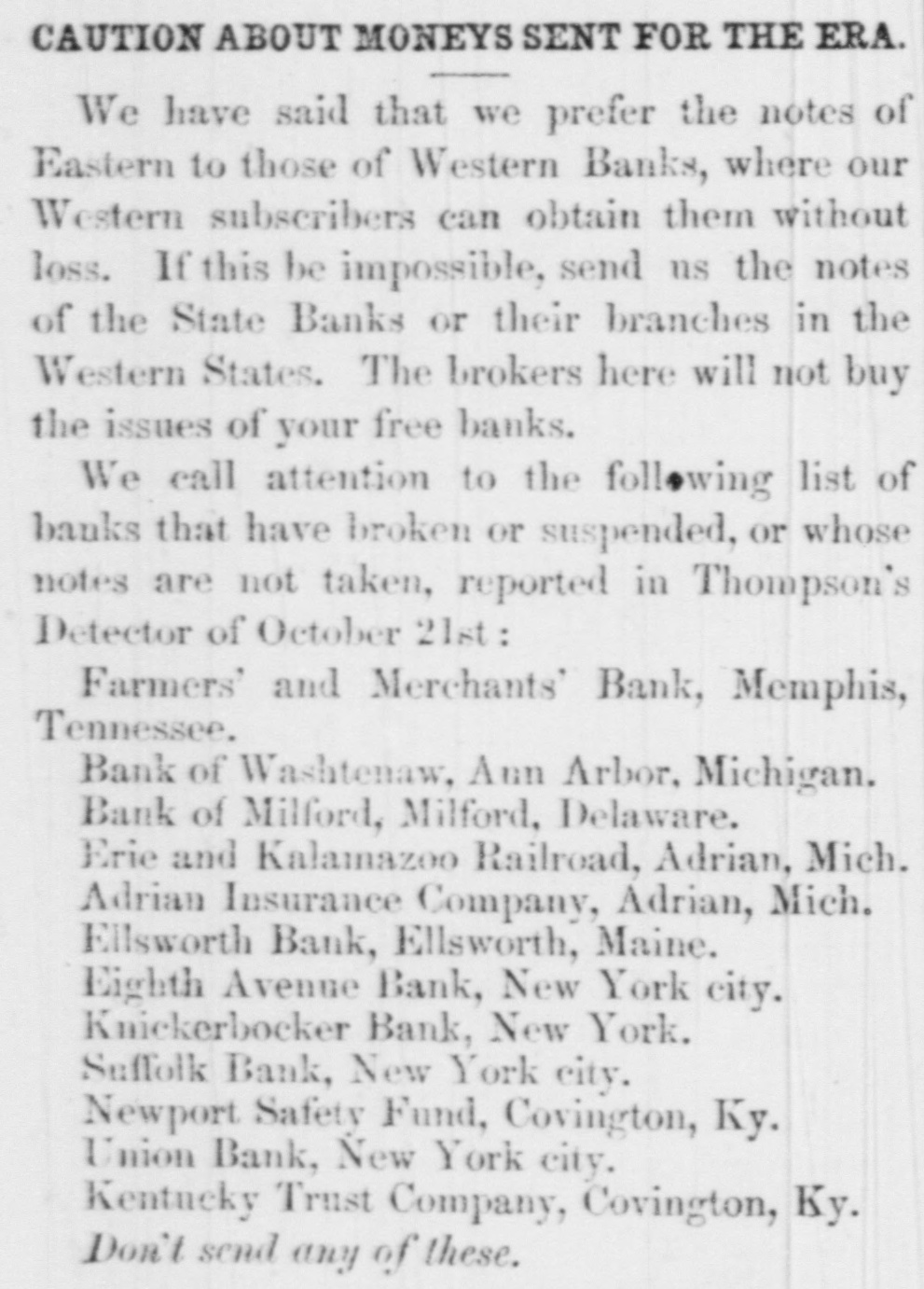
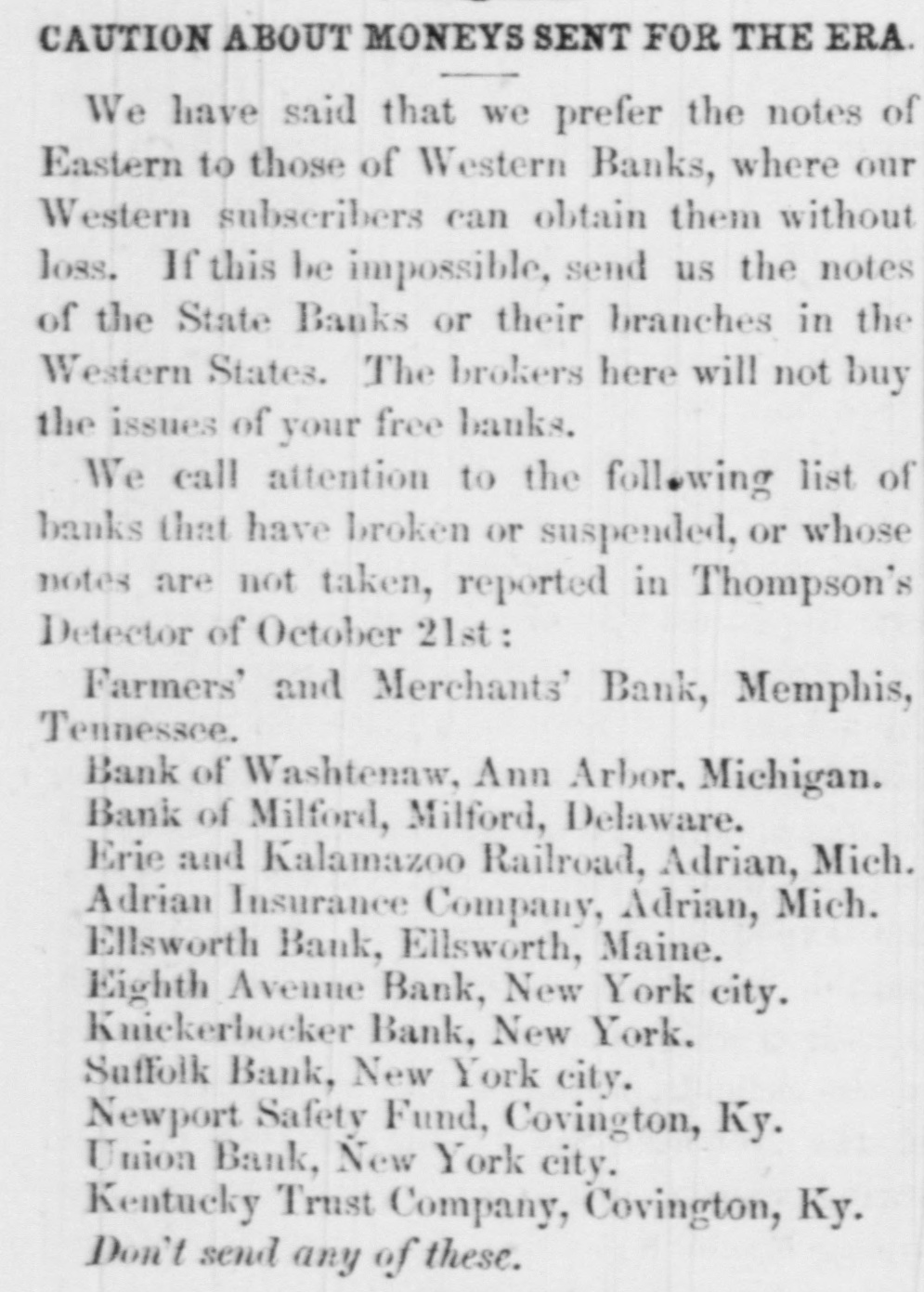
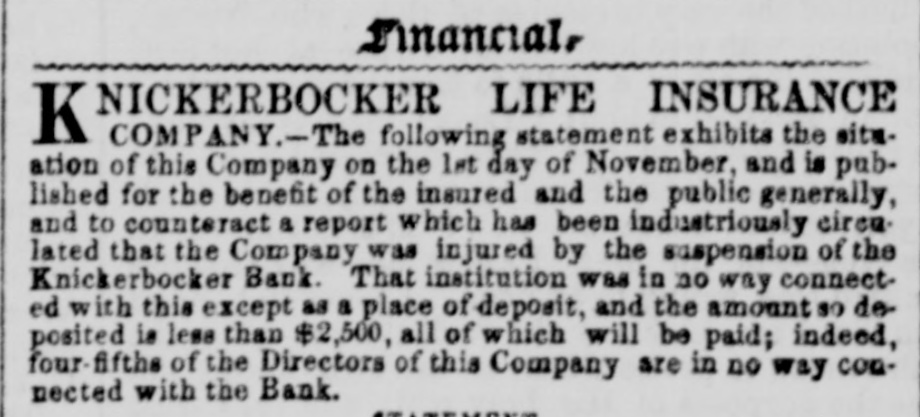
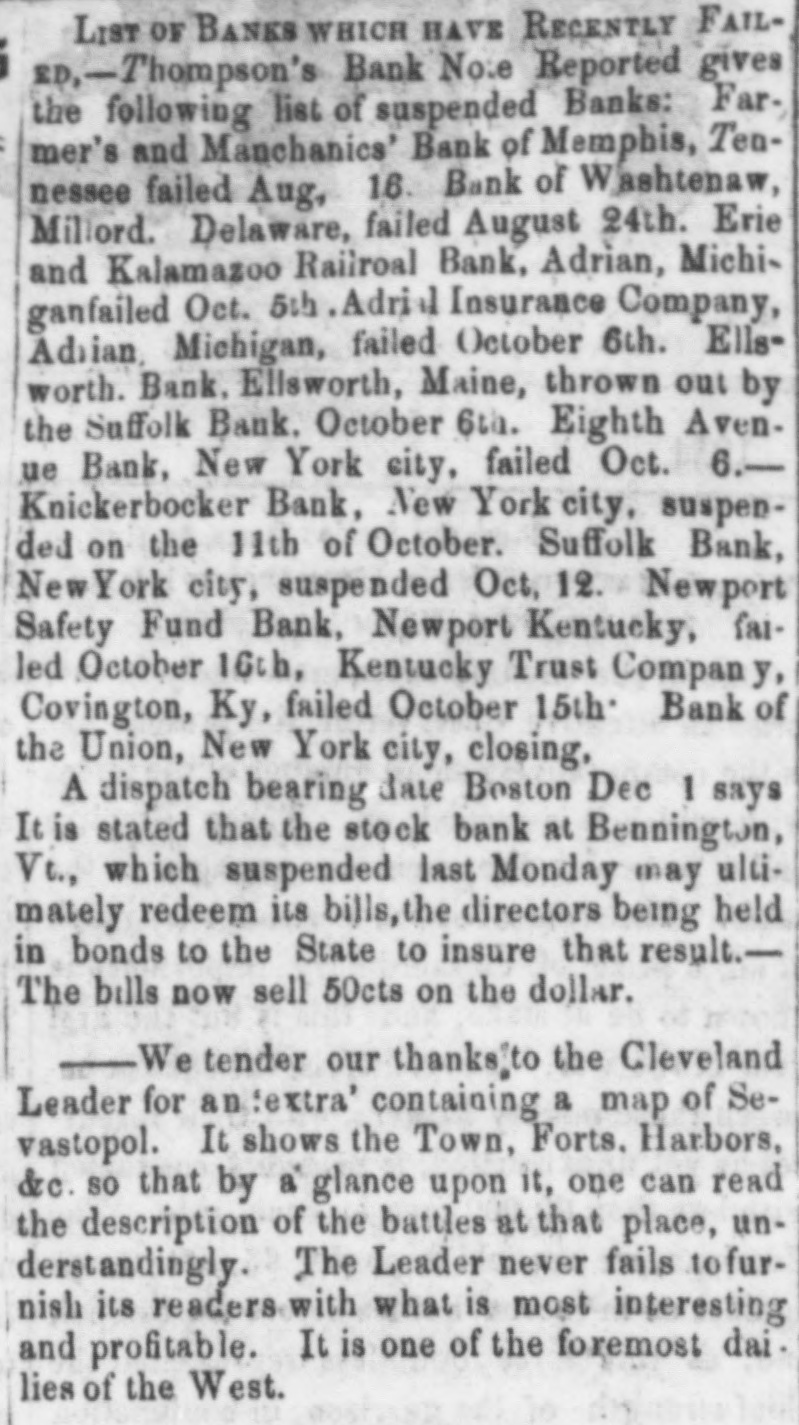
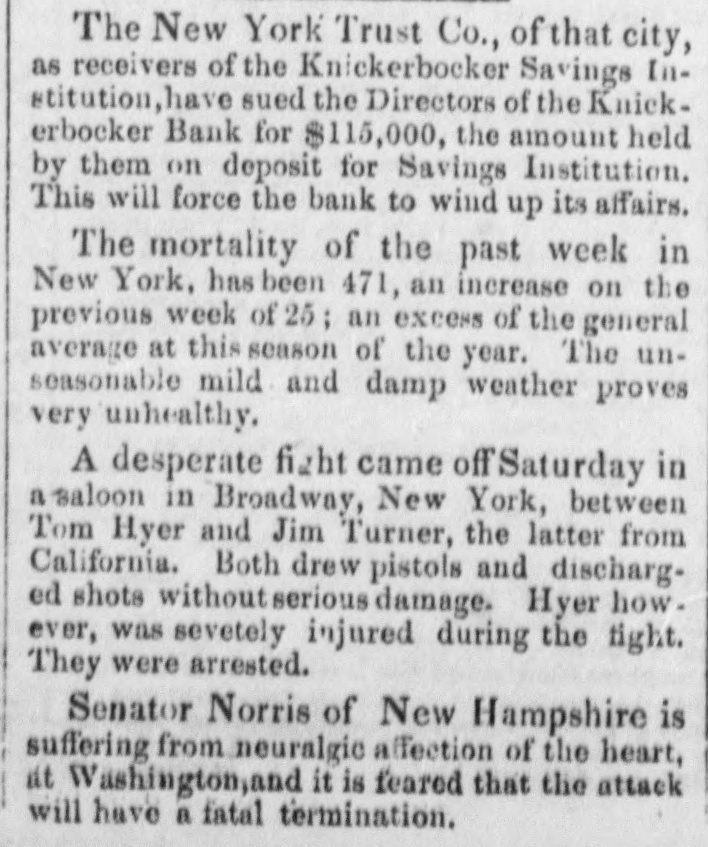
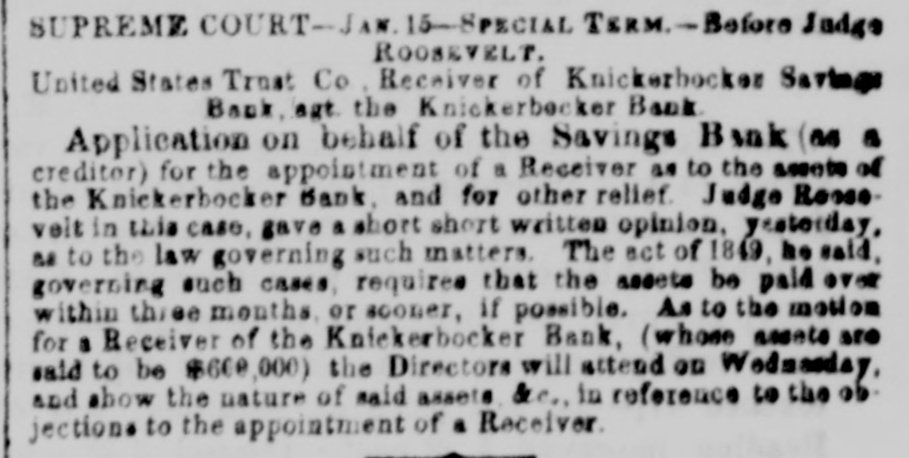
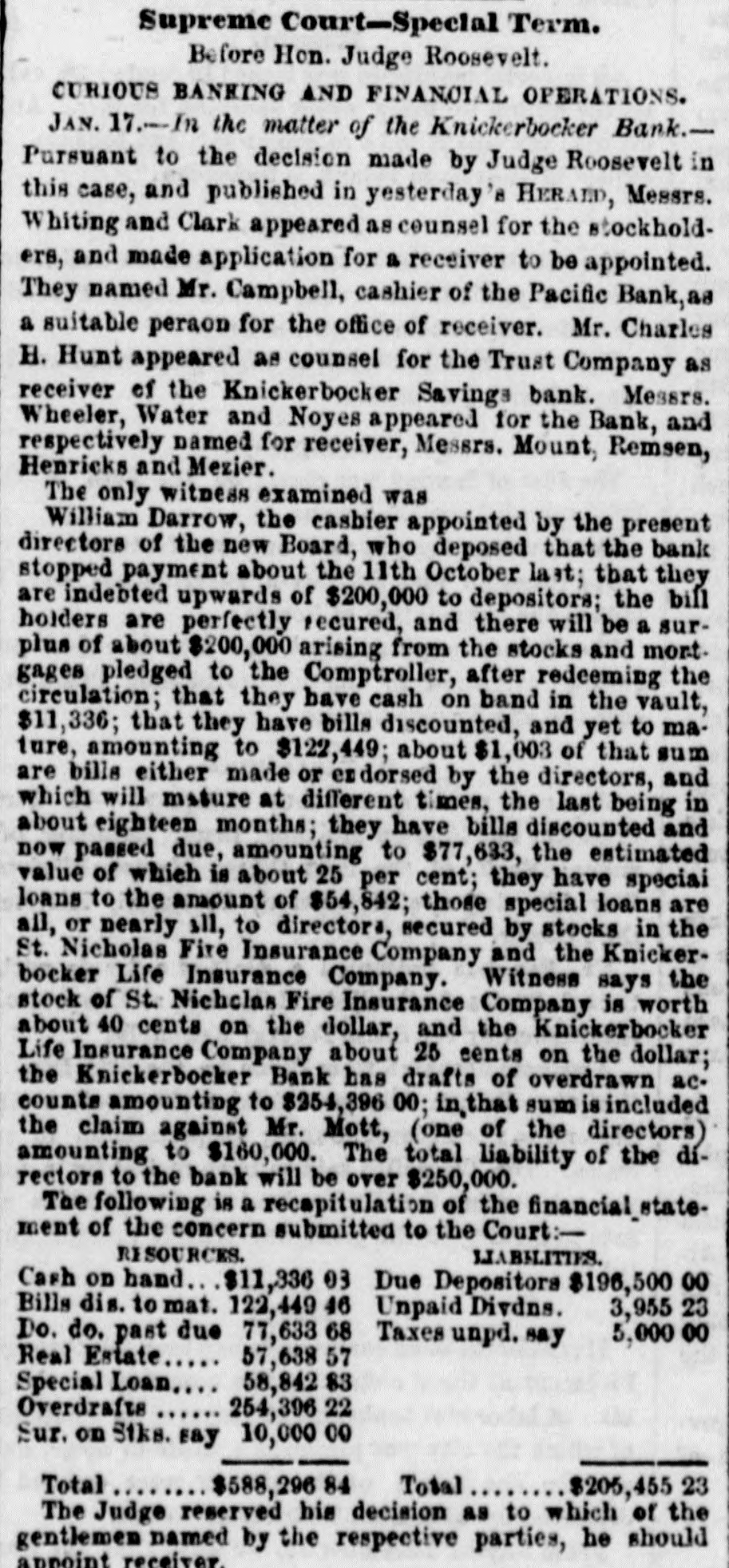
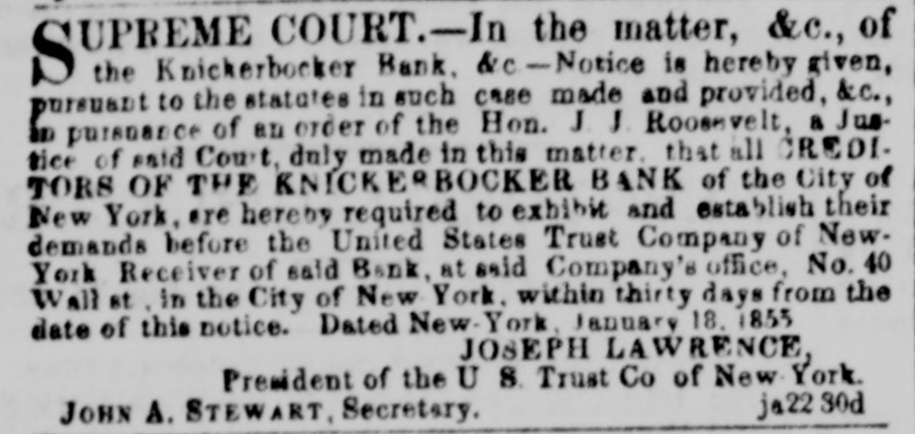
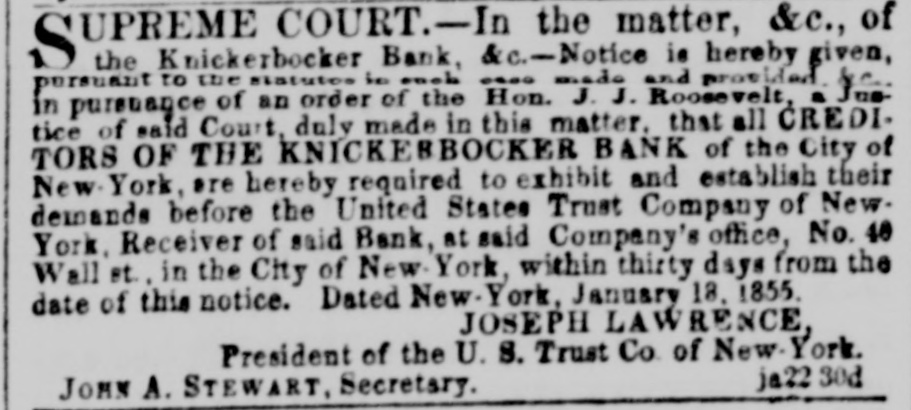
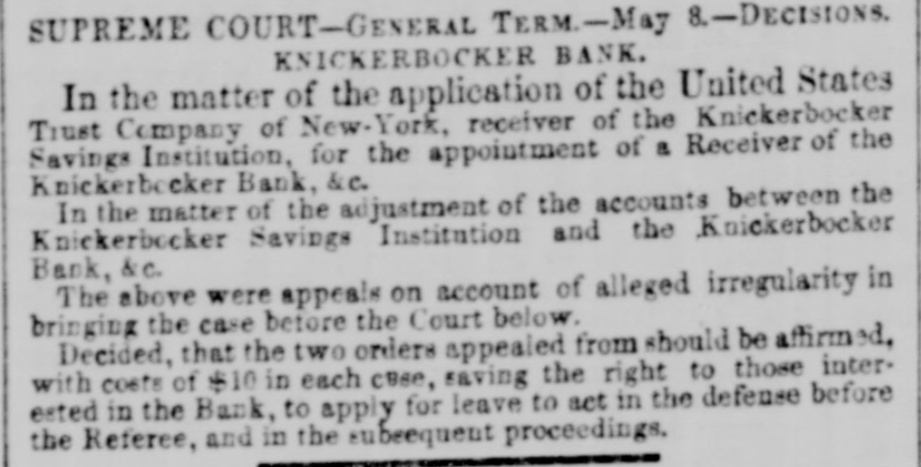
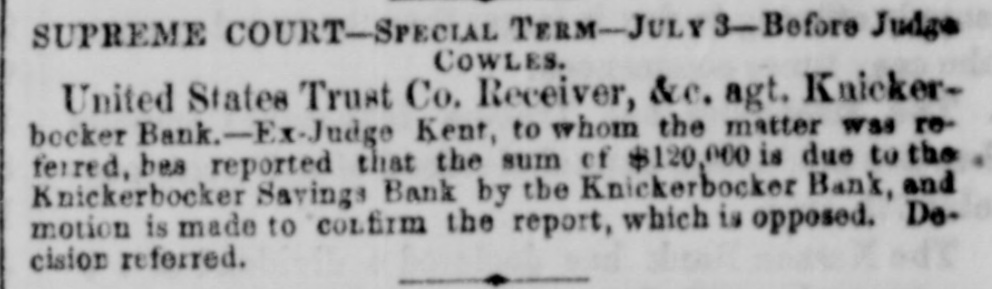
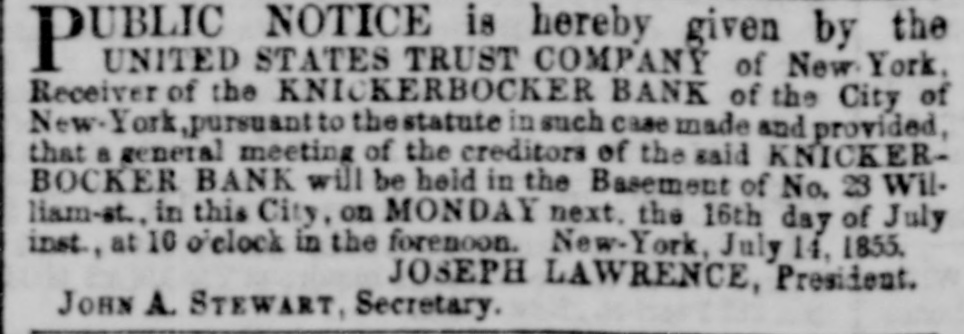
At a meeting of the Board of Directors of the Knickerbocker Bank last evening the President and Cashier resigned. An effort is making to enable the Bank to resume business.
The foreign orders by the Baltic are not large for our Securities. The letters generally are hopeful, although they speak of an active demand for Money. The temporary suspension of Mr. Edward Oliver of Liverpool, is spoken of, and the belief expressed that after paying all his liabilities he will still have a very large surplus. Mr. Oliver is one of the largest ship-owners in the world, having three million dollars invested in ships. We understand that this temporary suspension will not at all embarrass Mr. Oliver's agent in this City.
We annex an extract from the circular of Messrs. Marie & Kaur, prepared for the steamer:
Two of our small banks of the third class, located at a distance from the business part of the town, almost without influence, and for some time past of doubtful credit, have been compelled lately to go into liquidation; and the old banks, for the sake of guarding against too great loss of specie, as well as against the possibility of increasing suspensions on the part of the public, have greatly curtailed their ordinary loans. Beside the exportation of specie to Europe, there is a temporary demand from the West, arising from the new law of the State of Ohio, in regard to bank-notes. This law prohibits the circulation of any note under $10, issued by the banks of other States. In consequence of this law, the banks of Indiana have been obliged to cancel a part of their circulation, and to offer for sale about $500 000 Indiana Five P Cents, as well as other State funds, which they had deposited as the basis of their circulation in the hands of the Controller. Hence the great decline for some time back in Indiana, Virginia, and other securities. These different causes have increased the demand for money here, and stocks have generally been falling until the publication of the report of the Erie Railroad, produced a decided rise in most of our speculative stocks, Erie securities in particular. Other securities, except Illinois Central, are tranquil.
Among the new Directors of the Erie Railroad elected on the 10th inst., are Mr. Charles Moran (of Moran Brothers) and Louis Von Hoffman (of L. Von Hoffman & Co.) The presence of these gentlemen cannot but inspire confidence in the holders of Erie securities in Europe.
The business of the Cumberland Coal Company for the week was 3,858 tuns.
At Philadelphia the money market is unchanged.
### AT BOSTON THE POST SAYS:
The money market exhibited a decided improvement last week. Rates on strictly first-class paper fell from 12 to 10 ct., and on every sort of loan there was a marked reduction in price, with a less active and feverish demand. Our leading domestic houses are refusing money at above 9 ct.; and with a considerable increase of specie in our banks, and the large contraction heretofore noticed, it is probable that these same houses will soon be fairly supplied at 8 ct. The banks generally have increased their discounts for some days. The October receipts and payments are heavy, but, thus far the market has improved in the face of them. New-York funds continue abundant, and considerable coin is arriving here daily. $100,000 came on Saturday morning. Sterling exchange rules lower. The bankers have purchased very good bills for 9 1/4, and 9 1/2 is now the best they will pay. As far as Boston is concerned, it will be perceived that money matters look favorably for the future. But, in view of all the circumstances, it is not probable that money can average much lower, until the cotton bills pour in upon us.
The Directors of the Vermont Central Railroad Company have elected J. Francis Tuckerman, Esq., as Treasurer and Transfer Officer of the corporation. A vote has been passed to open the transfer books in mediately, but the President and Treasurer were instructed to transfer no shares unless they shall be considered genuine by these two officers, under the advice of J. P. Putnam, Esq., the attorney of the corporation.
The whole funded debt of the city of St. Louis is $3,553,096, on which there is an annual interest accruing of $214,483; $1,250,000 of this indebtedness is caused by subscriptions to railroads, and on this amount the companies pay the interest into the city treasury equal to a deduction from the aggregate interest account of $75,000. The debt proper is $2,123,096.
The quantity of Flour, Wheat, Corn and Barley left at tide water during the 2d week in Oct., in the year 1853 and 1854, is as follows:
Flour, bbis. Wheat, bush. Corn, bush. Barley, bush. 1853118,825 528,208 196,124 212,980 1854... 52,126 69,810 475,002 181,694 Dec... 61,697 Dec. 458,398 Ine. 287,273 Dec. 31,286
The aggregate quantity of the same articles left at tide water from the commencement of navigation to the 14th of October, inclusive, during the years 1853 and 1854, is as follows:
Flour, bbls, Wheat, bush. Corn, bush. Barley, bush. 18531,953,571 5,209,862 2,339,531 1,112,629