Article Text
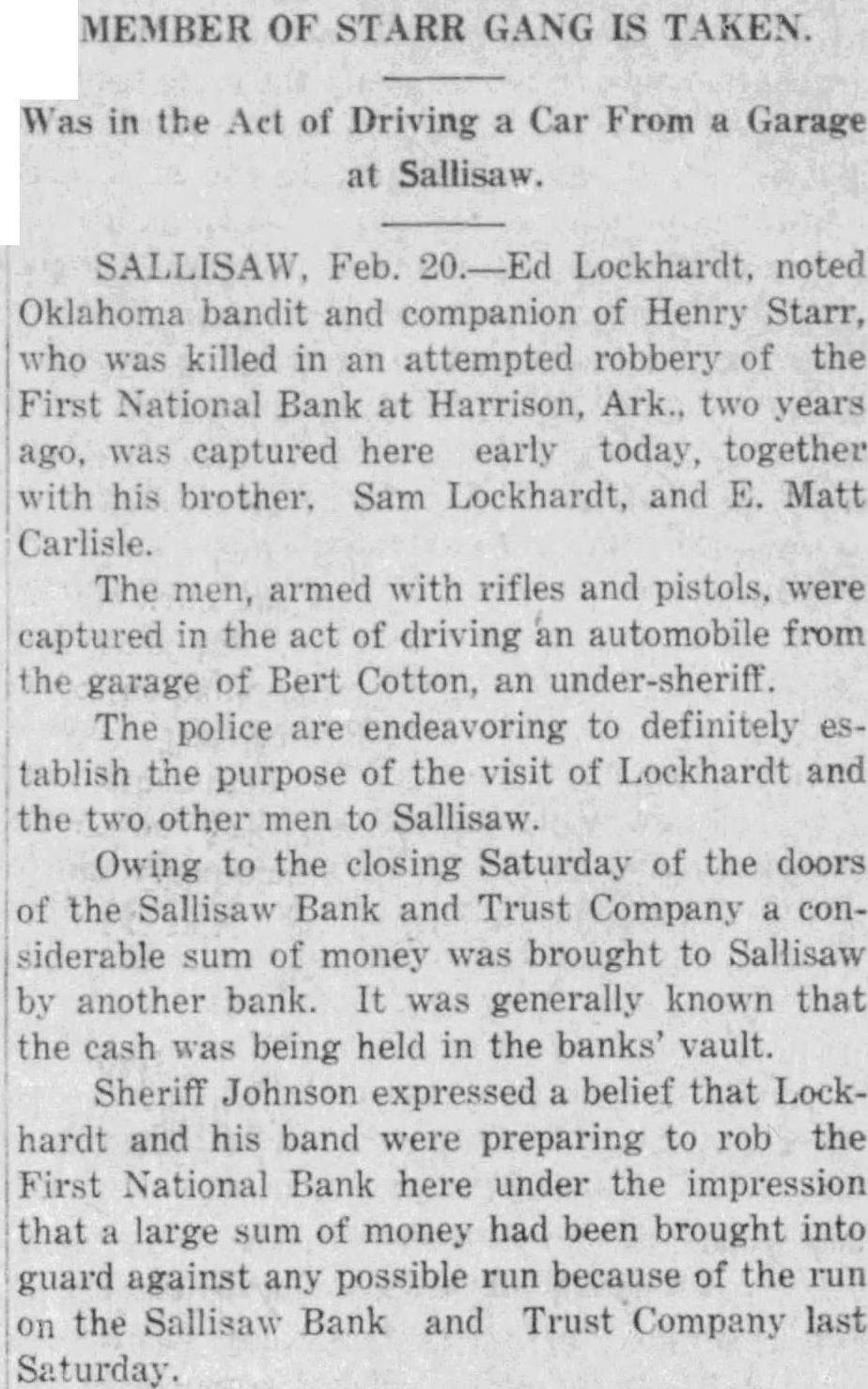
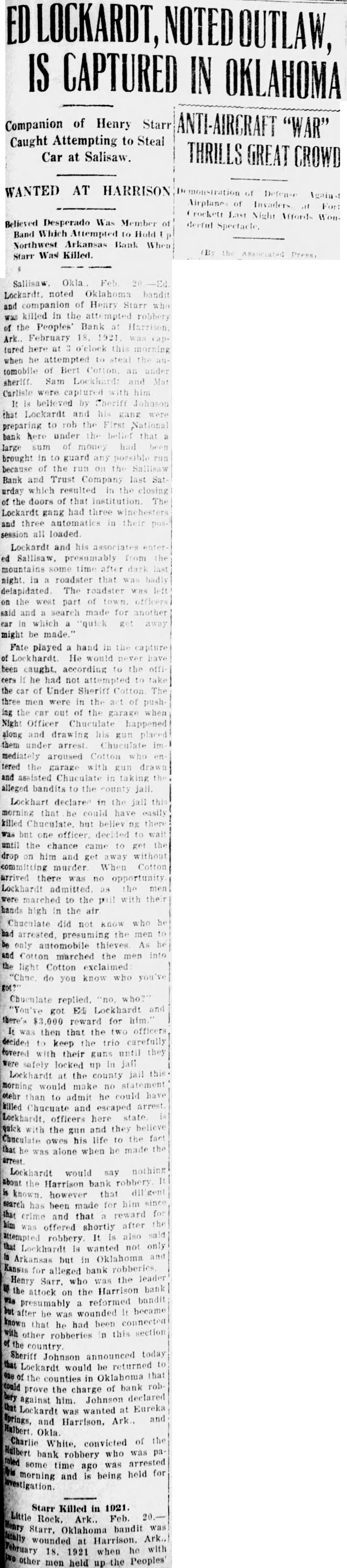
ED LOCKARDT, NOTED OUTLAW, IS CAPTURED IN OKLAHOMA
Companion of Henry Starr Caught Attempting to Steal Car at Salisaw.
WANTED AT HARRISON
Believed Desperado Was Member of Band Which Attempted to Hold Up Northwest Arkansas Bank When Starr Was Killed.
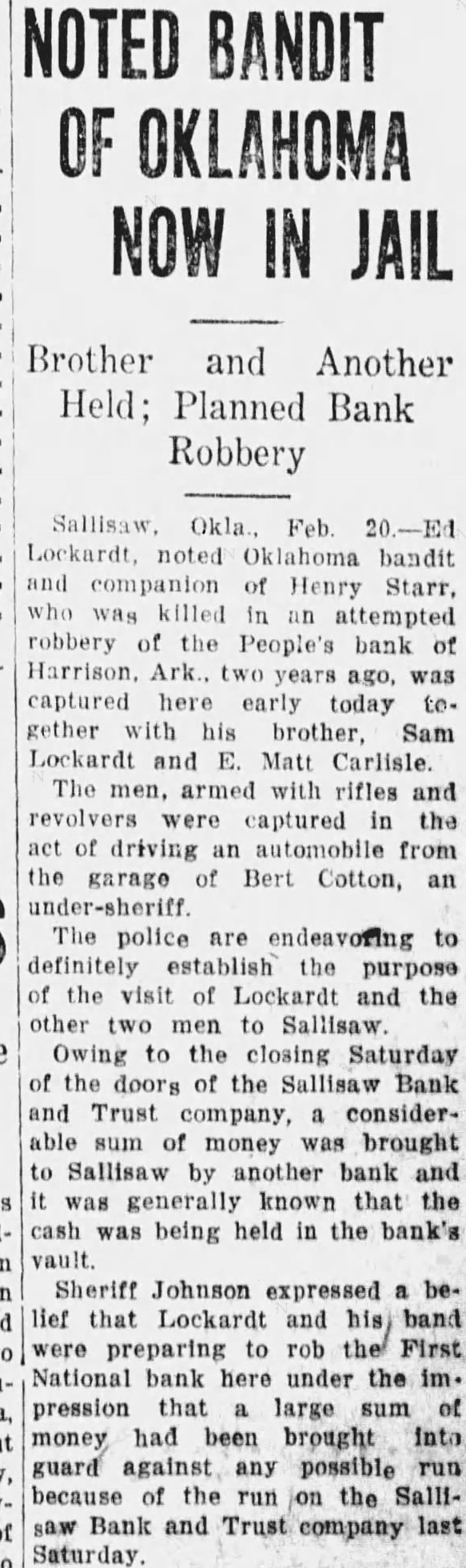
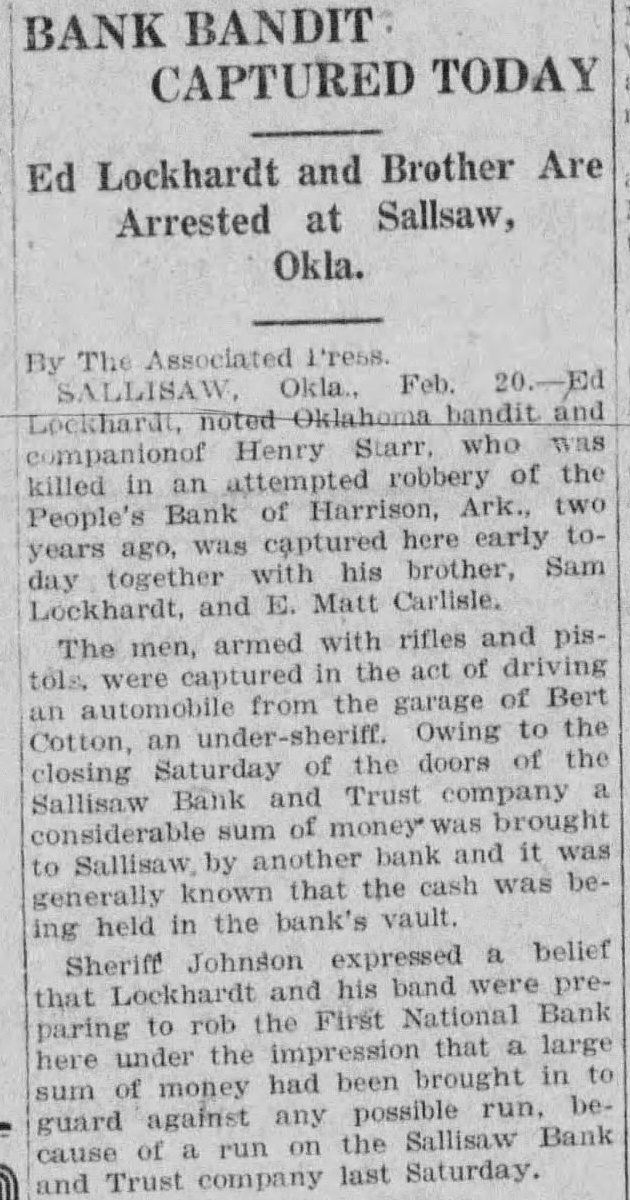
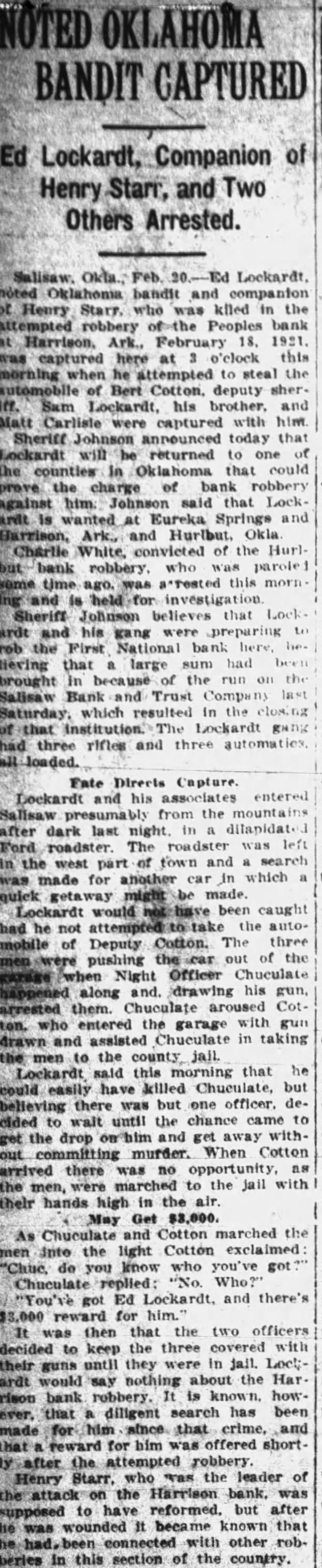
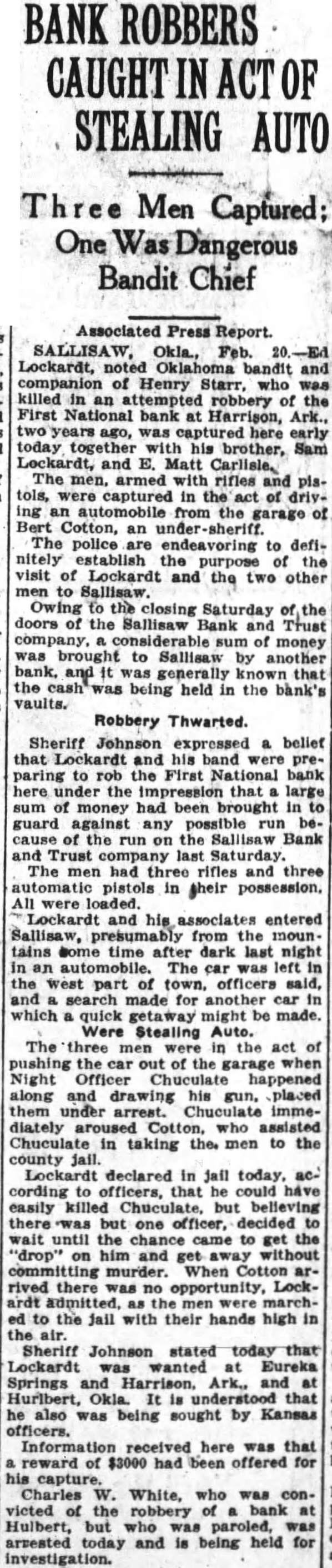
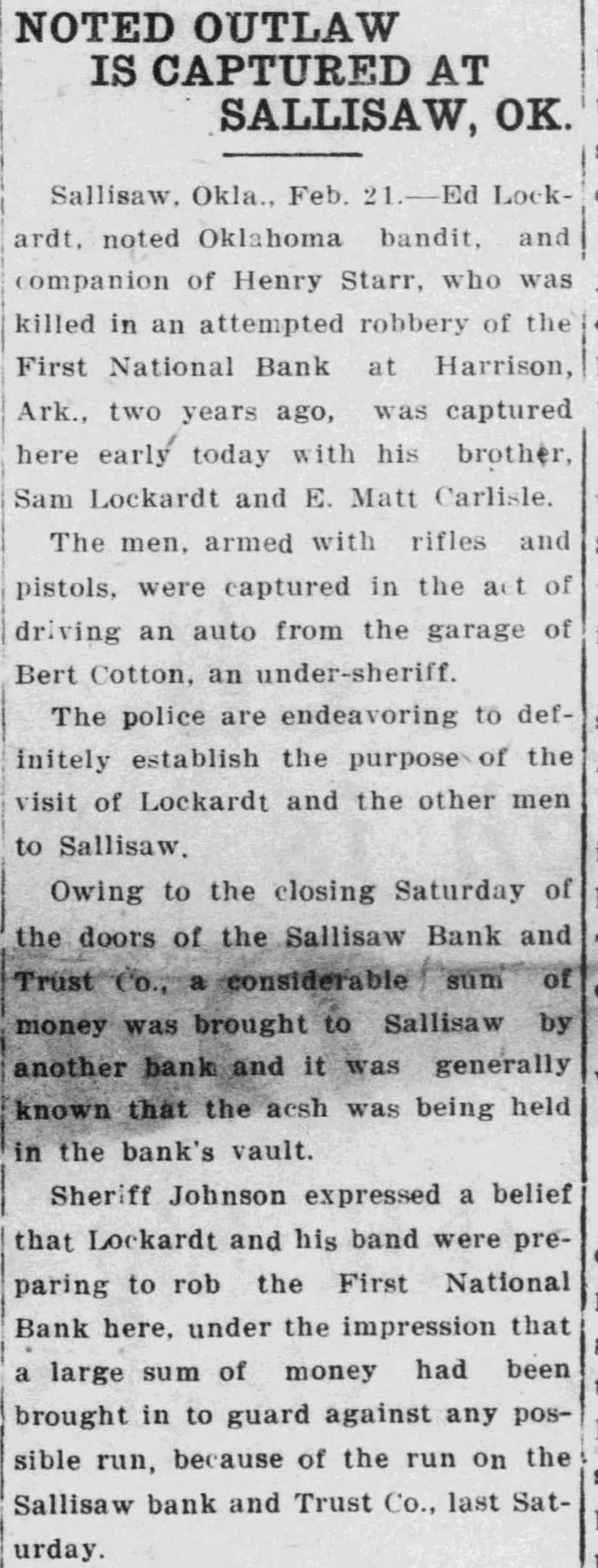
Sallisaw, Okla., Feb. 20.—Ed. Lockardt, noted Oklahoma bandit and companion of Henry Starr who was killed in the attempted robbery of the Peoples' Bank at Harrison, Ark., February 18, 1921, was captured here at 3 o'clock this morning when he attempted to steal the automobile of Bert Cotton, an under sheriff. Sam Lockhardt and Mat Carlisle were captured with him.
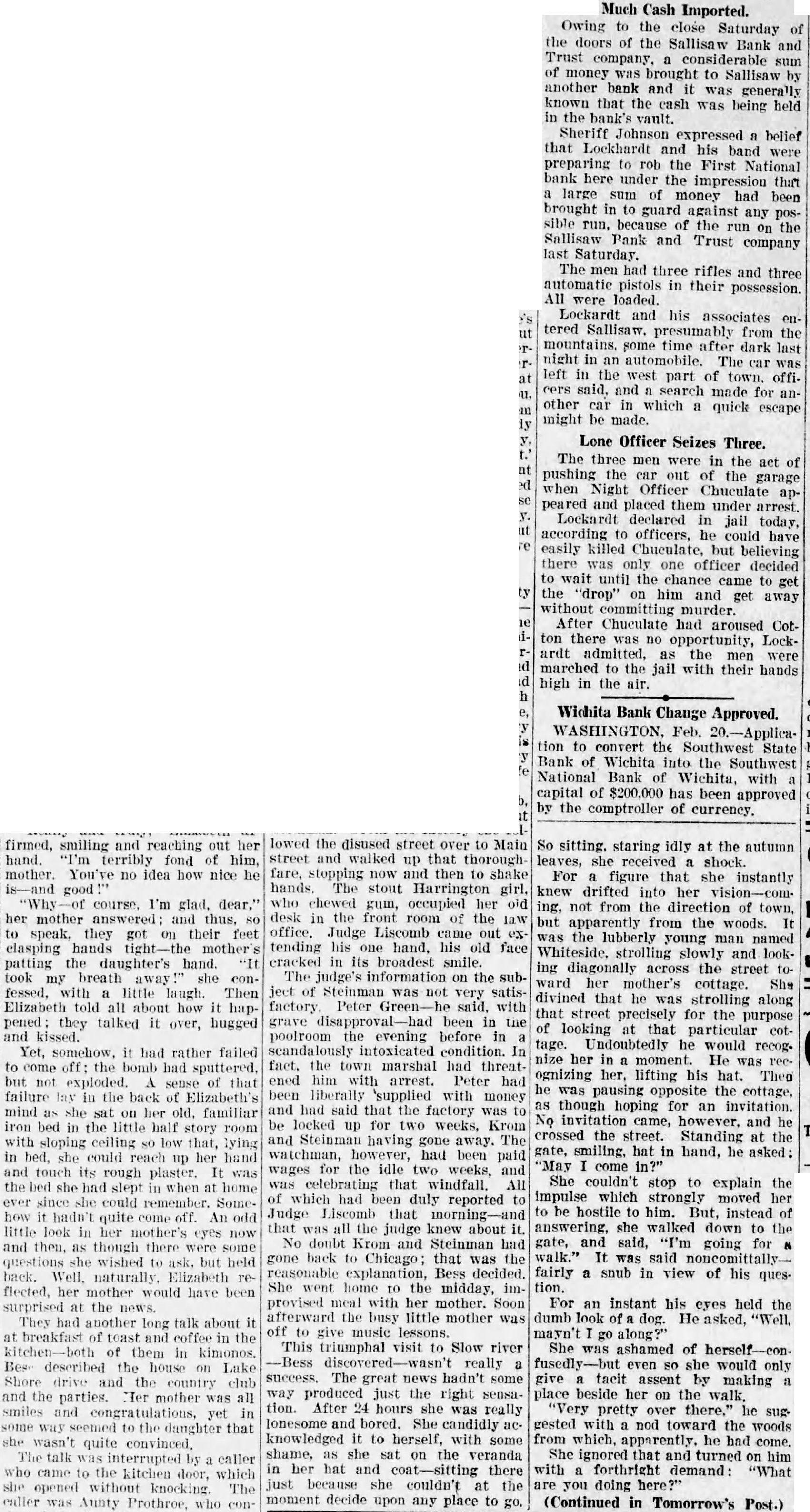
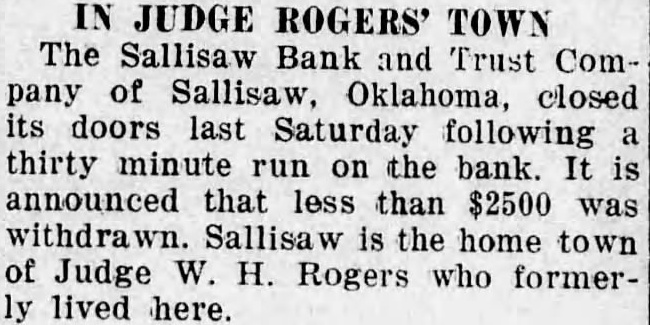
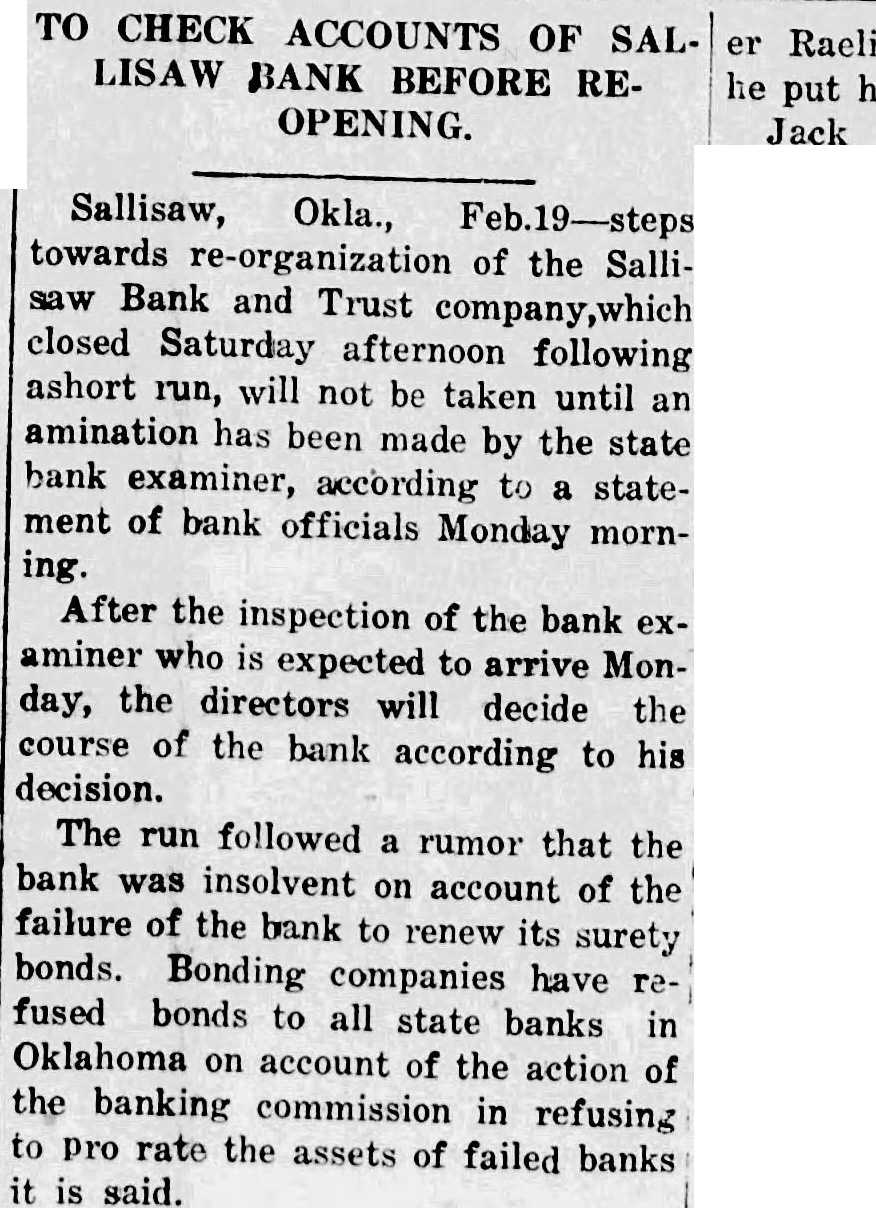
It is believed by Sheriff Johnson that Lockardt and his gang were preparing to rob the First National bank here under the belief that a large sum of money had been brought in to guard any possible run because of the run on the Sallisaw Bank and Trust Company last Saturday which resulted in the closing of the doors of that institution. The Lockardt gang had three winchesters and three automatics in their possession all loaded.
Lockardt and his associates entered Sallisaw, presumably from the mountains some time after dark last night, in a roadster that was badly delapidated. The roadster was left on the west part of town, officers said and a search made for another car in which a "quick get away might be made."
Fate played a hand in the capture of Lockhardt. He would never have been caught, according to the officers if he had not attempted to take the car of Under Sheriff Cotton. The three men were in the act of pushing the car out of the garage when Night Officer Chuculate happened along and drawing his gun placed them under arrest. Chuculate immediately aroused Cotton who entered the garage with gun drawn and assisted Chuculate in taking the alleged bandits to the county jail.
Lockhart declared in the jail this morning that he could have easily killed Chuculate, but believing there was but one officer, decided to wait until the chance came to get the drop on him and get away without committing murder. When Cotton arrived there was no opportunity, Lockhardt admitted, as the men were marched to the jail with their hands high in the air.
Chuculate did not know who he had arrested, presuming the men to be only automobile thieves. As he and Cotton marched the men into the light Cotton exclaimed:
"Chuc, do you know who you've got?"
Chuculate replied, "no, who?"
"You've got Ed Lockhardt and there's $3,000 reward for him."
It was then that the two officers decided to keep the trio carefully covered with their guns until they were safely locked up in jail.
Lockhardt at the county jail this morning would make no statement other than to admit he could have killed Chucuate and escaped arrest. Lockhardt, officers here state, is quick with the gun and they believe Chuculate owes his life to the fact that he was alone when he made the arrest.
Lockhardt would say nothing about the Harrison bank robbery. It is known, however that diligent search has been made for him since that crime and that a reward for him was offered shortly after the attempted robbery. It is also said that Lockhardt is wanted not only in Arkansas but in Oklahoma and Kansas for alleged bank robberies.
Henry Starr, who was the leader in the attack on the Harrison bank was presumably a reformed bandit but after he was wounded it became known that he had been connected with other robberies in this section of the country.
Sheriff Johnson announced today that Lockardt would be returned to one of the counties in Oklahoma that could prove the charge of bank robbery against him. Johnson declared that Lockardt was wanted at Eureka Springs, and Harrison, Ark., and Hulbert, Okla.
Charlie White, convicted of the Hulbert bank robbery who was paroled some time ago was arrested this morning and is being held for investigation.
Starr Killed in 1921.
Little Rock, Ark., Feb. 20.—Henry Starr, Oklahoma bandit was fatally wounded at Harrison, Ark., February 18, 1921 when he with two other men held up the Peoples'